
A roof permit is required for almost every reroof, roof replacement, and structural roof repair in Florida, and pulling one is not optional for work of any real size. Under Florida law, roofing is regulated at the state level through the Florida Building Code and Florida Statute 553.844, and the two things that surprise homeowners most are the so-called 25 percent roof rule and the product approval paperwork a roofer has to attach to the application. Understanding both before you sign a contract keeps you from paying for a job that cannot pass inspection.
Key takeaways
- Almost every reroof or roof replacement in Florida requires a building permit pulled by a licensed roofing contractor or a qualifying owner-builder.
- The 25 percent rule (Florida Statute 553.844) generally says no more than 25 percent of a roof section can be repaired or replaced in a 12-month period unless the whole section is brought up to current code.
- A 2022 law (Senate Bill 4-D) added an exception: if the roof was built or replaced under the 2007 Florida Building Code or later, only the repaired or replaced portion must meet current code.
- Every roofing product installed must carry a valid Florida Product Approval or, in high-velocity hurricane zones, a Miami-Dade Notice of Acceptance (NOA); missing approval numbers stall permits.
- Reroofing without a permit can lead to stop-work orders, fines, a failed home sale, and denied insurance or wind-mitigation credits.
On this page
- Do I need a permit to replace my roof in Florida?
- What is Florida's 25 percent roof rule?
- How does F.S. 553.844 treat repair versus replacement?
- Does the 2007 code exception change the 25 percent rule?
- What is product approval and why does it catch homeowners off guard?
- Florida Product Approval versus Miami-Dade NOA
- What documents does a roofing permit application need?
- What inspections does a reroof require?
- How does the wind-borne debris region affect my roof?
- Can I pull my own roofing permit as an owner-builder?
- How much does a roof permit cost and how long does it take?
- Worked example: a reroof in Orange County
- What happens if I reroof without a permit?
Do I need a permit to replace my roof in Florida?
Yes. In Florida, replacing a roof covering, tearing off and re-covering, or making structural roof repairs requires a building permit from your local building department. Roofing is one of the trades the Florida Building Code regulates most closely because the roof is the home's first defense in a hurricane. Very minor patches can sometimes fall below the permit threshold, but the safe assumption is that any reroof, full replacement, or repair that touches more than a small area needs a permit.
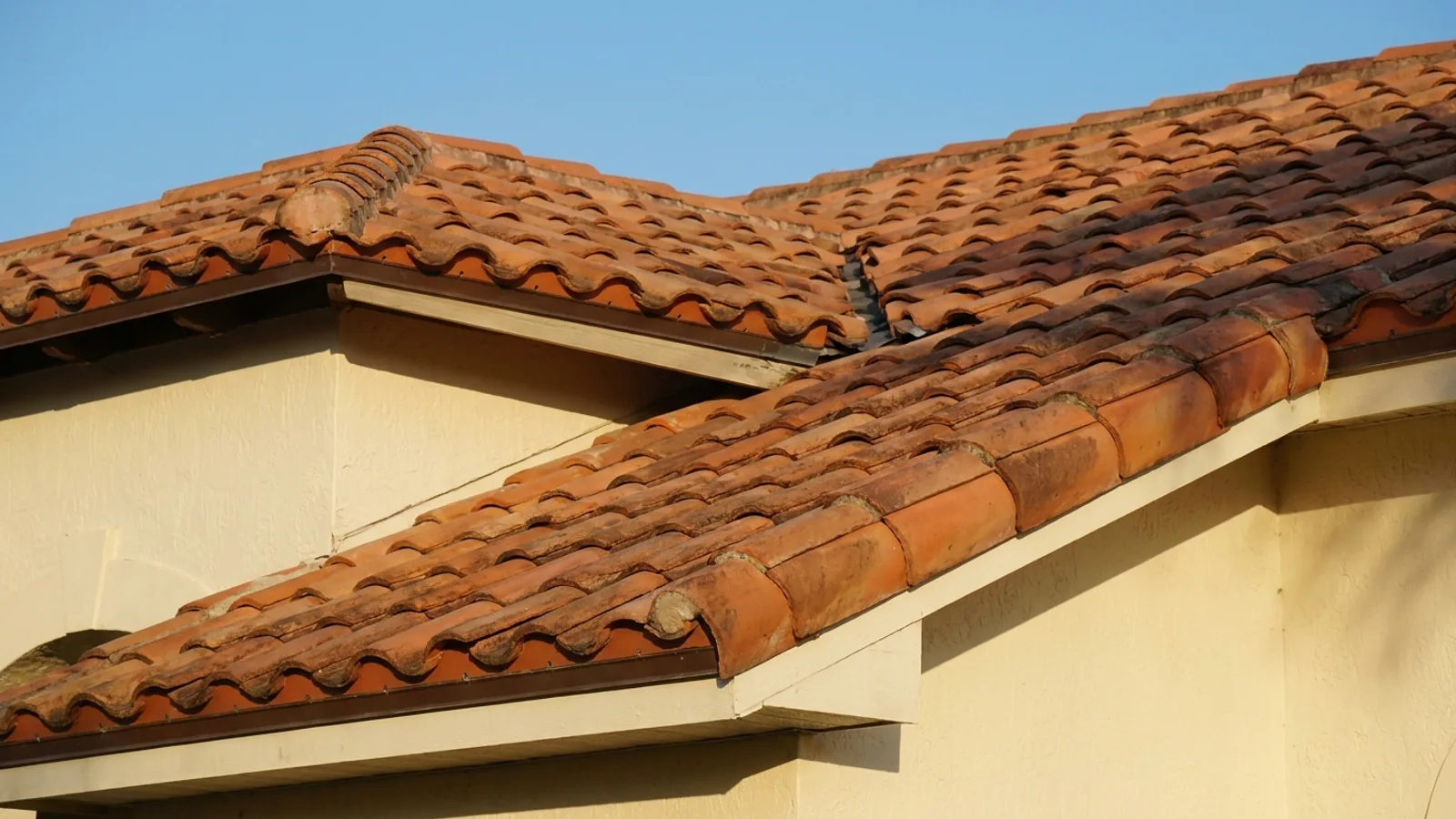
Who pulls the permit matters. A licensed roofing contractor normally pulls it in their name and carries the liability. If you are considering handling it yourself, read the owner-builder section below first. Either way, you can start by running your project through our free permit checker to see what your specific jurisdiction expects.
What is Florida's 25 percent roof rule?
The 25 percent rule is a provision in Florida Statute 553.844 that limits how much of a roof you can repair or replace before the whole section has to meet current code. In plain terms, not more than 25 percent of the total roof area or roof section of an existing building may be repaired, replaced, or recovered in any 12-month period unless the entire existing roofing system or roof section is replaced to conform to the requirements of the current code.
The practical effect is that a large repair can trigger a much bigger job. If a storm damages 40 percent of a roof section, the rule can require you to bring that entire section up to current code rather than patching only the damaged part. That is why homeowners are sometimes told a repair they expected has become a full replacement.
How does F.S. 553.844 treat repair versus replacement?
Florida Statute 553.844 draws the line at the 25 percent threshold within a rolling 12-month period, measured per roof section. Below that threshold, a like-for-like repair is generally allowed. At or above it, the default requirement is to reconstruct the affected roof section to current code.
This is a state law, not a local ordinance, so the framework is the same across Polk, Orange, and every other Florida county. Local building departments administer it, but they cannot loosen it. The nuance that changes the outcome for most homes built or reroofed recently is the exception described next.
Does the 2007 code exception change the 25 percent rule?
Yes, for many homes. In 2022, Senate Bill 4-D amended Florida Statute 553.844 to add an exception. If a roofing system or roof section was built, repaired, or replaced in compliance with the 2007 Florida Building Code or any later edition, and 25 percent or more of it is being repaired or replaced, only the repaired or replaced portion must be constructed to the code currently in effect. The rest of the section does not have to be torn off.
The practical dividing line is roughly March 1, 2009, when the 2007 Florida Building Code took effect. A roof properly permitted on or after that date may qualify for this exception, which can turn a mandatory full replacement back into a targeted repair. A roof permitted before then may still fall under the older, stricter reading. Your building department verifies which applies based on permit history.
Our take: Never assume the 25 percent math works in your favor based on the age of the house you remember buying. The exception hinges on documented permit history, and only your building department can confirm it. If a roofer promises a cheap partial repair on a large storm loss, ask them in writing how it complies with F.S. 553.844. A wrong guess here means a failed inspection and a torn-off roof you pay for twice.
What is product approval and why does it catch homeowners off guard?
Product approval is documentation proving that a specific roofing material has been tested and approved for use under the Florida Building Code. Every shingle, tile, underlayment, and fastening system installed on your roof must carry a valid approval number, and your roofer has to list those numbers on the permit application. Homeowners are caught off guard because they assume any product sold at a supply house is automatically legal to install; it is not until it has the right approval on file.
The Florida Product Approval System is a statewide program that took effect October 1, 2003 and covers eight categories of building envelope and structural products, including roofing. When a contractor applies for a roofing permit, they must supply the Florida Product Approval number and show the roofing system complies with the current code. If a chosen product lacks a valid approval, the permit stalls until an approved substitute is selected. We cover the mechanics in depth in our guide to Florida product approval and NOA.
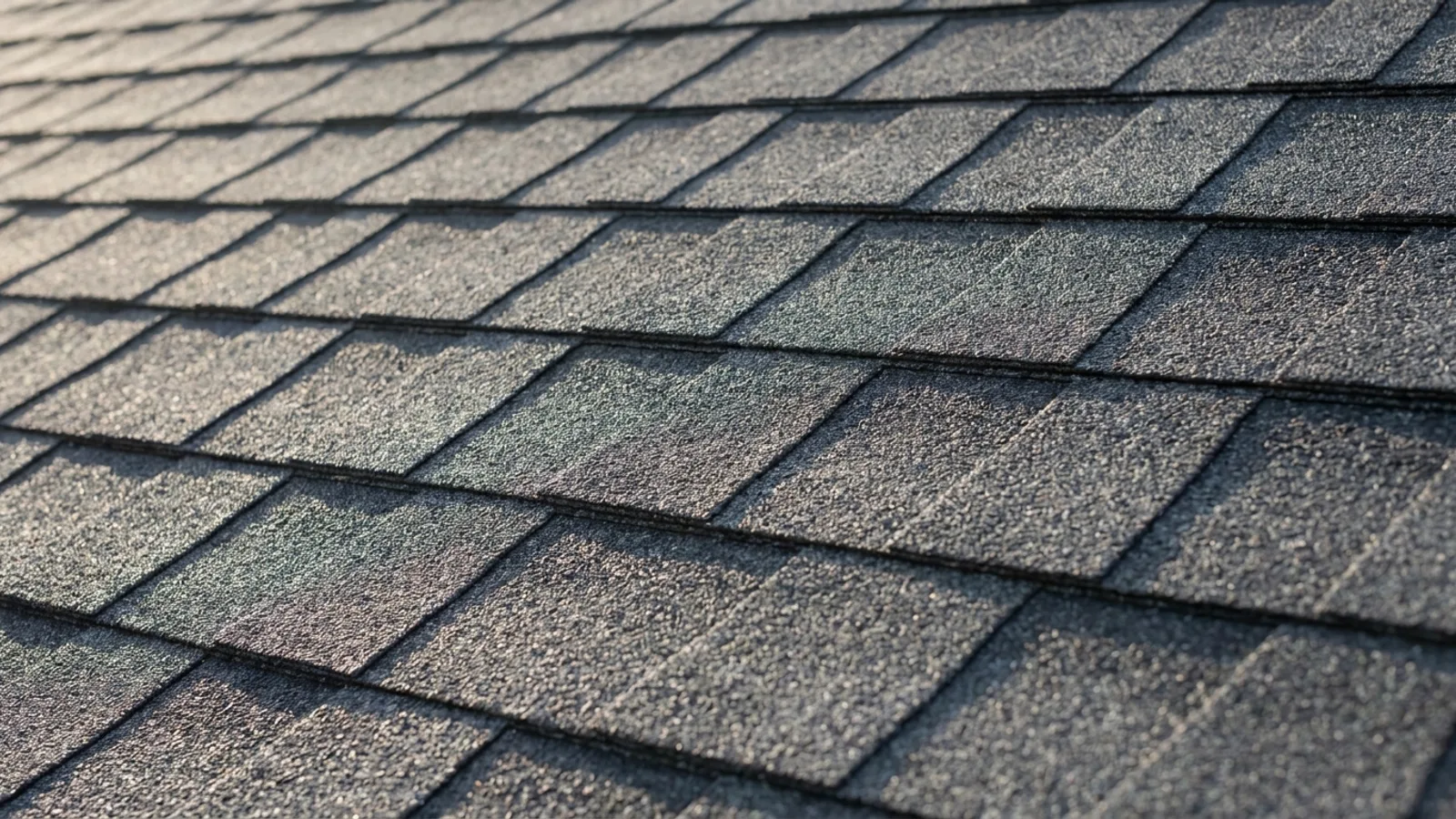
Florida Product Approval versus Miami-Dade NOA
There are two parallel approval systems in Florida, and which one applies depends on where you live. Florida Product Approval is the statewide track. A Miami-Dade Notice of Acceptance (NOA) is a separate, stricter approval used in high-velocity hurricane zones, where wind-borne debris testing is more demanding.
| Feature | Florida Product Approval | Miami-Dade NOA |
|---|---|---|
| Set by | State of Florida | Miami-Dade County |
| Coverage | Statewide, including hurricane zones | High-velocity hurricane zone standard |
| Approves | Individual products and components | The complete installed system |
| In effect since | October 1, 2003 | Pre-dates the statewide system |
| Where it is required | Most of Florida | HVHZ counties and where the local code calls for it |
Many roofing products list both numbers, but an NOA is not automatically equivalent to a Florida Product Approval, and vice versa. Polk and Orange counties are not in the high-velocity hurricane zone, so statewide Florida Product Approval typically governs there, but always confirm with your building department which documentation your permit reviewer wants to see.
What documents does a roofing permit application need?
A roofing permit application typically needs the property information, the contractor's license and workers' compensation details, a description of the work, and the product approval numbers for every material in the assembly. Some jurisdictions also ask for an attachment detail and, for tile or metal, a signed and sealed engineering document.
Gathering these before you apply prevents a rejected submittal. Our permit application documents checklist walks through the paperwork most Florida building departments expect.
What inspections does a reroof require?
Most Florida reroofs require at least two inspections: an in-progress inspection (often called a dry-in or nailing inspection) after the underlayment and fasteners are on but before the final covering, and a final inspection once the roof is complete. The in-progress inspection is critical because it verifies the sheathing attachment and secondary water barrier that the covering will hide.
Skipping or failing an inspection leaves the permit open, which becomes a problem at closing. If an inspection does not pass, our guide on what to do after a failed inspection explains the correction and re-inspection process.
How does the wind-borne debris region affect my roof?
If your home is in the wind-borne debris region, the roof assembly and its fasteners must meet higher wind-resistance standards, and product approval documentation matters even more. This region covers coastal and high-wind areas defined by the Florida Building Code, and being inside it changes which products and attachment methods are acceptable.
The reroof is also the moment to capture insurance value. A code-compliant roof documented through a wind mitigation inspection can qualify you for premium credits, and our guide to the wind-borne debris region helps you confirm whether your address falls inside it.
Can I pull my own roofing permit as an owner-builder?
In many Florida jurisdictions a homeowner can pull an owner-builder permit for work on their own residence, but roofing is a demanding, safety-critical trade and the liability falls entirely on you. As an owner-builder you take on the contractor's responsibilities: the code compliance, the inspections, and any injury or defect claims. You also cannot legally hire unlicensed labor to do the work under your permit.
Because roof failures are catastrophic in a hurricane, most homeowners are better served by a licensed roofing contractor. If you are weighing it anyway, read our comparison of owner-builder permits in Florida before deciding.
How much does a roof permit cost and how long does it take?
Roof permit fees and review times vary by jurisdiction and by the value of the work, so there is no single statewide figure. Fees are generally tied to the job's valuation, and many counties add a small state surcharge. Straightforward reroof permits often move quickly, while jobs needing engineering review take longer.
Because the numbers change by county and project size, check your building department's fee schedule directly. The roof replacement project page and the free checker route you to the right local office.
Worked example: a reroof in Orange County
Consider a homeowner in unincorporated Orange County whose 2015 tile roof loses about 35 percent of one slope in a storm. Because more than 25 percent of that roof section is affected, the 25 percent rule in F.S. 553.844 is in play, and the homeowner assumes the whole slope must be torn off.
However, the roof was permitted in 2015, well after March 1, 2009, so the 2007-code exception applies. Under it, only the damaged portion must be rebuilt to current code, provided the roofer documents the original permit history and installs a product with valid Florida Product Approval numbers. The licensed roofer pulls the permit, lists the approved tile and underlayment, and passes the inspections. The outcome hinges entirely on documented permit history and correct product approval, not on guesswork.
What happens if I reroof without a permit?
Reroofing without a permit exposes you to stop-work orders, fines, and an unpermitted roof that surfaces at sale or insurance renewal. An open or missing roof permit can derail a closing, and insurers increasingly ask for permitted-roof documentation and wind-mitigation reports before they write or renew a policy.
Unpermitted roof work also forfeits any wind-mitigation premium credits, since those depend on a documented, code-compliant assembly. If you have already had unpermitted work done, our guide on getting an after-the-fact permit explains how to bring it into compliance before it costs you a sale.
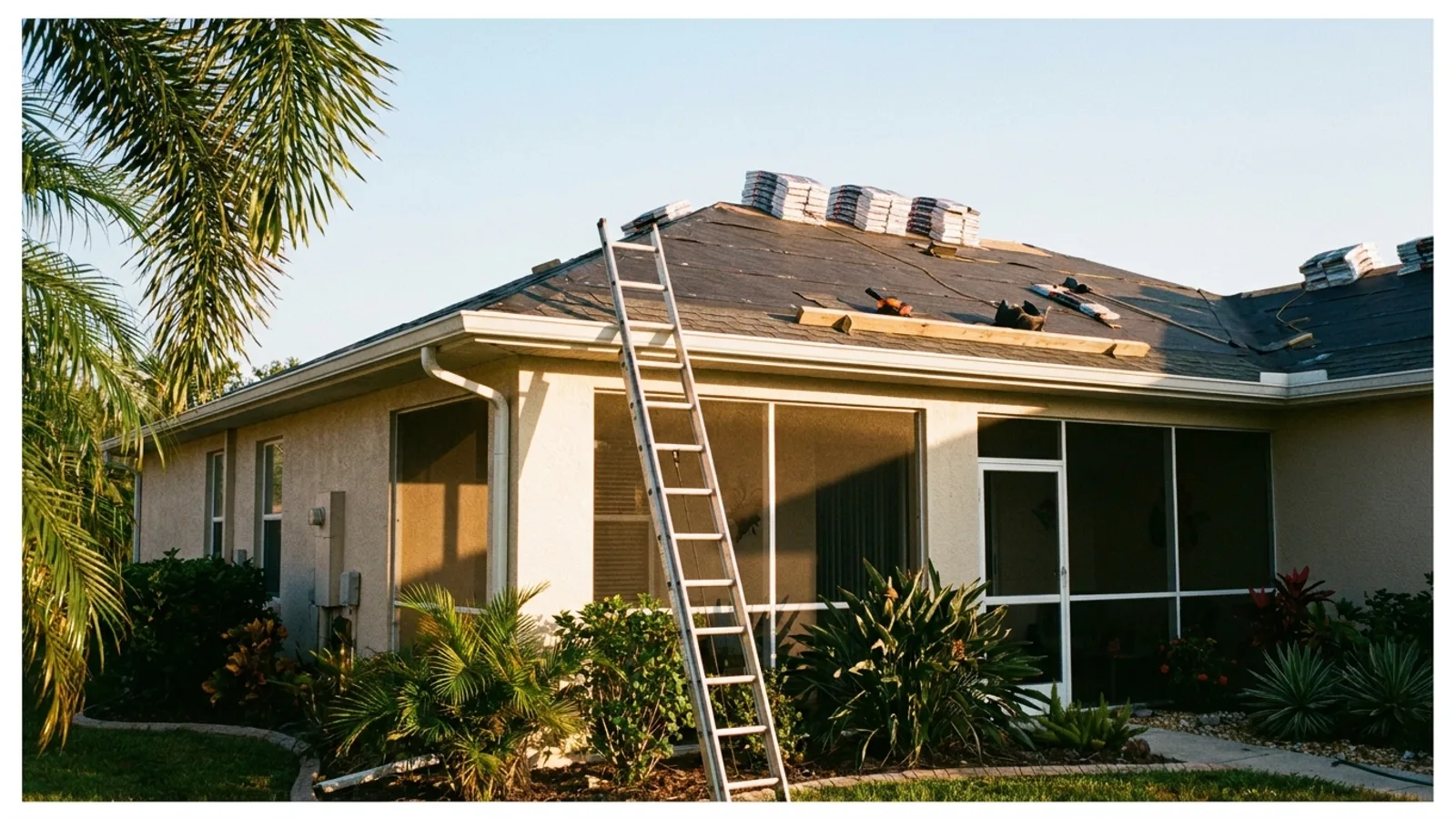
The bottom line: treat a Florida roof permit as mandatory, confirm how the 25 percent rule and its 2007-code exception apply to your specific roof, and make sure every product on the job carries valid approval. Start with the free permit checker to see exactly what your county requires before you sign a roofing contract.