
An owner-builder permit in Florida lets you act as your own contractor on your own home instead of hiring a licensed one. Florida law allows this through the owner-builder exemption in Florida Statutes 489.103, but pulling your own permit means you take on the contractor's legal responsibilities: direct on-site supervision, code compliance, worker safety, and liability. It is a real option for homeowners in Polk and Orange counties, and it is also a decision worth understanding fully before you personally appear and sign the disclosure at your building department.
Key takeaways
- The owner-builder exemption in Florida Statutes 489.103 lets a property owner build or improve their own one-family or two-family residence without hiring a licensed contractor, but the work still needs a permit.
- You must personally appear and sign the building permit application, and you must provide direct on-site supervision of the work.
- You cannot hire an unlicensed person to act as your contractor or to supervise the job, and doing so can expose you to serious financial risk.
- If you sell or lease the home within one year of finishing, Florida law presumes you built it to sell, which can violate the exemption.
- When you sign as owner-builder, you accept the code-compliance and liability responsibilities that would otherwise fall on a licensed contractor.
In this guide
- What is an owner-builder permit in Florida?
- Who qualifies for the owner-builder exemption?
- Do you still need a permit as an owner-builder?
- What is the owner-builder disclosure statement?
- Can you hire workers as an owner-builder?
- What responsibilities and risks do you take on?
- Owner-builder vs licensed contractor: which is right for you?
- Can you sell a home you built as an owner-builder?
- What projects make sense to owner-build?
- Worked example: a garage conversion in Polk County
- How do you apply as an owner-builder in Polk or Orange County?
- What happens if you skip the permit entirely?
What is an owner-builder permit in Florida?
An owner-builder permit is a building permit you pull under your own name, using Florida's owner-builder exemption from contractor licensing. Normally, only a licensed contractor can pull a building permit for construction work. The exemption in Florida Statutes 489.103 carves out an exception for owners improving their own property, so you can legally stand in the place of the contractor for your own project.
The key thing to understand is what the exemption does and does not remove. It removes the requirement to hold a state contractor license for that specific job. It does not remove the requirement to get a permit, pass inspections, or build to the Florida Building Code. You are not skipping the process, you are running it yourself.
Who qualifies for the owner-builder exemption?
You qualify if you own the property and are building or improving a one-family or two-family residence for your own use, not for sale or lease. Florida Statutes 489.103 limits the owner-builder exemption to work on your own property that you occupy or intend to occupy. The residence cannot be built or substantially improved for the purpose of selling or leasing it.
The statute frames this around occupancy and intent. If the structure is a home you plan to live in, you generally fit the exemption. If it is a spec house or a rental you are putting up to lease out, you generally do not, and you would need a licensed contractor instead. Whether a specific project qualifies can depend on the details, so confirm with your local building department before you rely on it.
Do you still need a permit as an owner-builder?
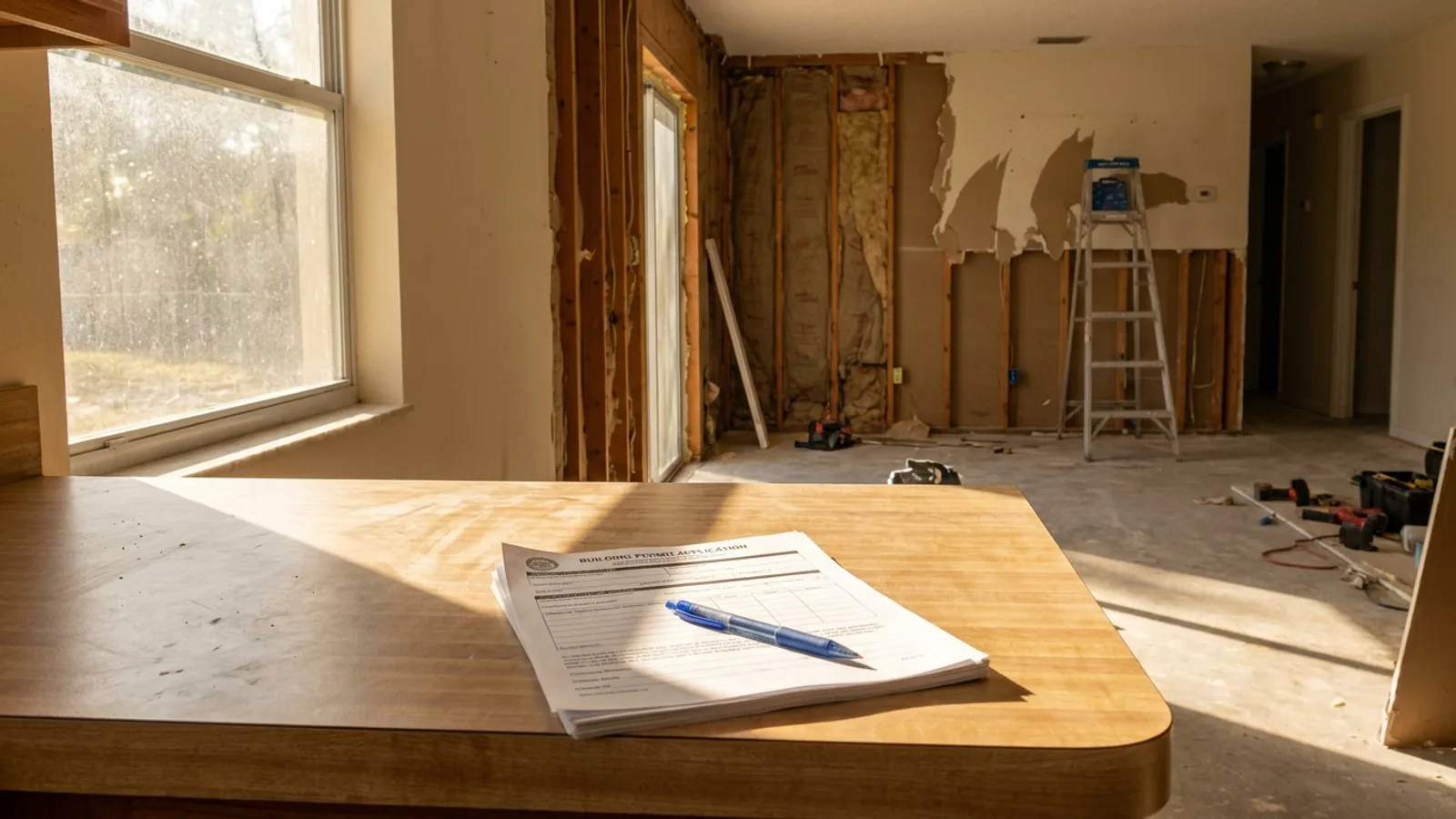
Yes. The owner-builder exemption is an exemption from the contractor license requirement, not from the permit requirement. You still submit a permit application, plans or documentation as required, pay the fees, and schedule inspections. To use the exemption, the statute requires that you personally appear and sign the building permit application and satisfy your local permitting agency's requirements.
That personal-appearance step matters. Your building department will not let someone else sign the application on your behalf under the exemption. You are the applicant of record, which is exactly why the responsibilities land on you. If you are unsure whether your specific project needs a permit at all, start with our free permit checker and confirm the requirement before you apply.
What is the owner-builder disclosure statement?
The owner-builder disclosure statement is a required notice you sign acknowledging that you understand the responsibilities and risks of acting as your own contractor. Florida Statutes 489.103 requires the local building department to have you sign this disclosure as a condition of the exemption. It is not a formality, it is the state making sure you know what you are agreeing to.
The disclosure spells out points like these: you are acting as your own contractor, you may not hire an unlicensed person to act as your contractor or to supervise the work, and you may face serious financial risk if an unlicensed worker is injured on your project. Read every line before you sign, because signing is your acknowledgment that the responsibilities in it are now yours.
Can you hire workers as an owner-builder?
You can hire licensed subcontractors and you can hire your own employees, but you cannot hire an unlicensed person to act as your contractor or to supervise the job. Florida Statutes 489.103 is explicit that the owner-builder must provide direct on-site supervision, and that you may not delegate that supervision to an unlicensed person posing as your contractor.
This is the trap most owner-builders need to avoid. Bringing in a licensed electrician, plumber, or roofer to do their trade under their own license is normal and expected. Handing the whole project to an unlicensed handyman who runs the job and manages the crew, while you sign as owner-builder, is what the law prohibits. If an unlicensed person is directing the work, you have likely stepped outside the exemption. When you do bring in trades, verify licensure first through the Florida DBPR; our guide on a licensed contractor versus a handyman covers how to check.
What responsibilities and risks do you take on?
As an owner-builder, you accept the legal and practical responsibilities that a licensed contractor would normally carry. That includes making sure the work meets the Florida Building Code, that inspections pass, and that the job is done safely. If something is built wrong, the responsibility traces back to you, not to a contractor you can hold accountable.
The financial and liability exposure is the part homeowners underestimate. A licensed contractor carries insurance and, in many cases, workers' compensation coverage for their crew. As an owner-builder, if an uninsured worker is hurt on your project, you can be exposed to those costs directly. You are also responsible for building code violations, failed inspections, and correcting work before you can close the permit. None of that makes owner-building a bad choice, but it does make it a decision to enter with your eyes open. Before you commit, it is worth reading how building without a permit in Florida can compound these risks if any step is skipped.
Our take: The owner-builder exemption is a legitimate, useful right, but it is not a shortcut around the code. The danger is always the same direction: a homeowner treating it as permission to skip permits or hand the job to an unlicensed crew. If you sign as owner-builder, own the whole responsibility, pull the permit, and get every inspection.
Owner-builder vs licensed contractor: which is right for you?
The choice comes down to how much responsibility, risk, and hands-on management you want to take on. An owner-builder saves the contractor's markup and keeps control, but carries the liability. A licensed contractor costs more and cedes some control, but shifts the code, insurance, and warranty responsibility off you.
| Factor | Owner-builder | Licensed contractor |
|---|---|---|
| Who pulls the permit | You, in person | The contractor |
| License required | No, under the exemption | Yes, state or local |
| Code compliance responsibility | You | The contractor |
| Insurance and worker injury exposure | Falls on you | Carried by the contractor |
| On-site supervision | You must provide it directly | The contractor provides it |
| Cost | Lower, no contractor markup | Higher |
| Best for | Owners who will actively manage the job | Owners who want the risk handled for them |
For a deeper side-by-side, see our guide on contractor versus owner-builder in Florida.
Can you sell a home you built as an owner-builder?
You can sell it, but timing matters. Florida Statutes 489.103 creates a presumption that if you sell or lease a home you built or substantially improved as an owner-builder within one year of completing it, you built it for sale or lease, which is not what the exemption allows. That presumption can put you on the wrong side of the exemption you used.
The practical takeaway is not that selling is forbidden, but that selling quickly invites scrutiny. If your genuine intent was to live in the home and your circumstances later changed, that is a different situation from building to flip. If a near-term sale is likely, talk to your building department, and consider whether a licensed contractor is the cleaner path for that project.
What projects make sense to owner-build?
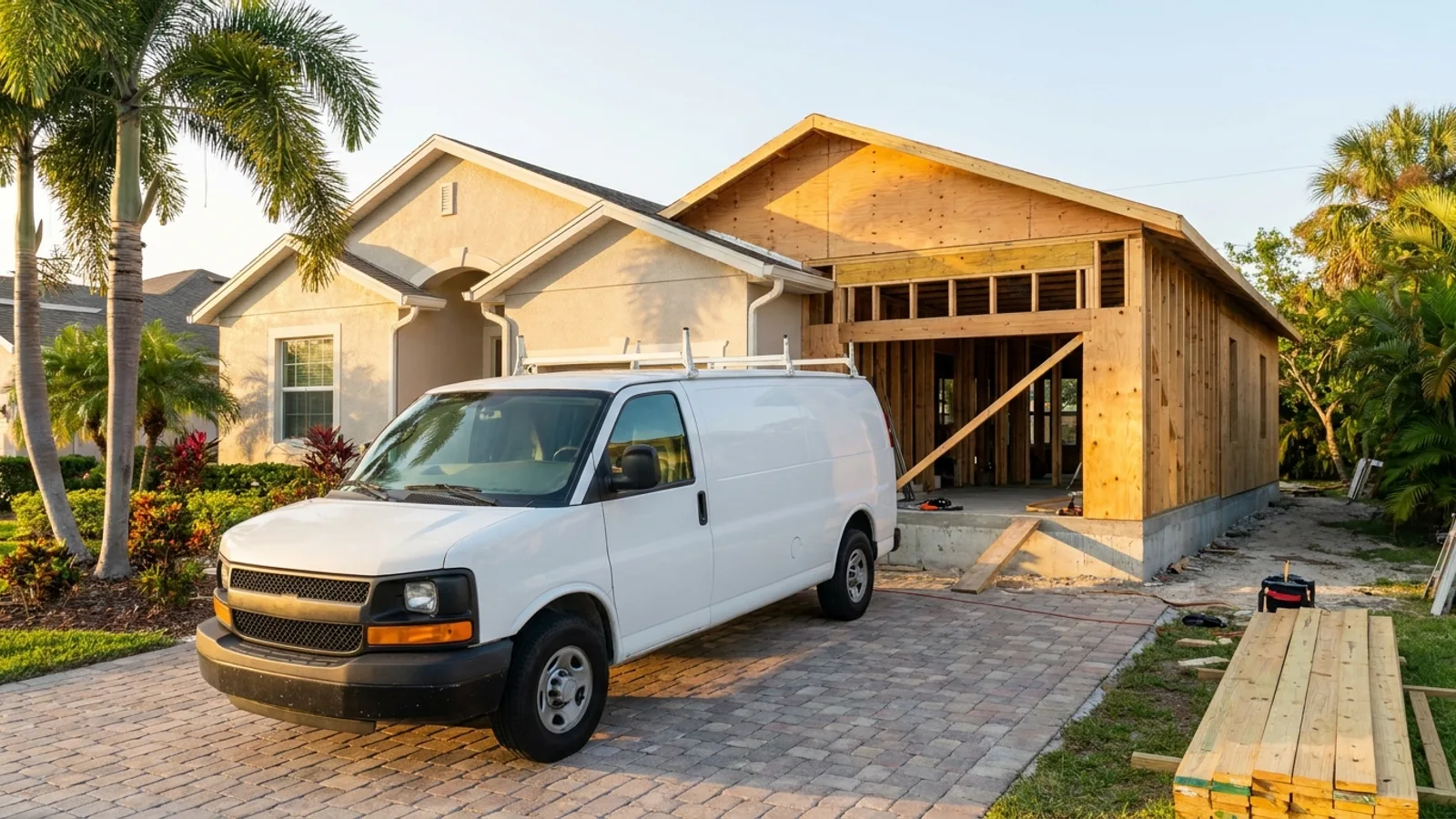
Owner-building tends to make the most sense on projects you can realistically supervise and where you will coordinate licensed trades yourself. Interior remodels, additions, and detached structures are common owner-builder projects. Work that is heavily trade-specific, like a full electrical or plumbing job, is usually still done by a licensed sub even when you are the owner-builder of record.
A good filter is whether you can genuinely provide direct on-site supervision. If you travel constantly or cannot be present, the supervision requirement becomes hard to meet honestly. Project pages like interior remodels and additions and alterations walk through what each project typically involves before you decide to run it yourself.
Worked example: a garage conversion in Polk County
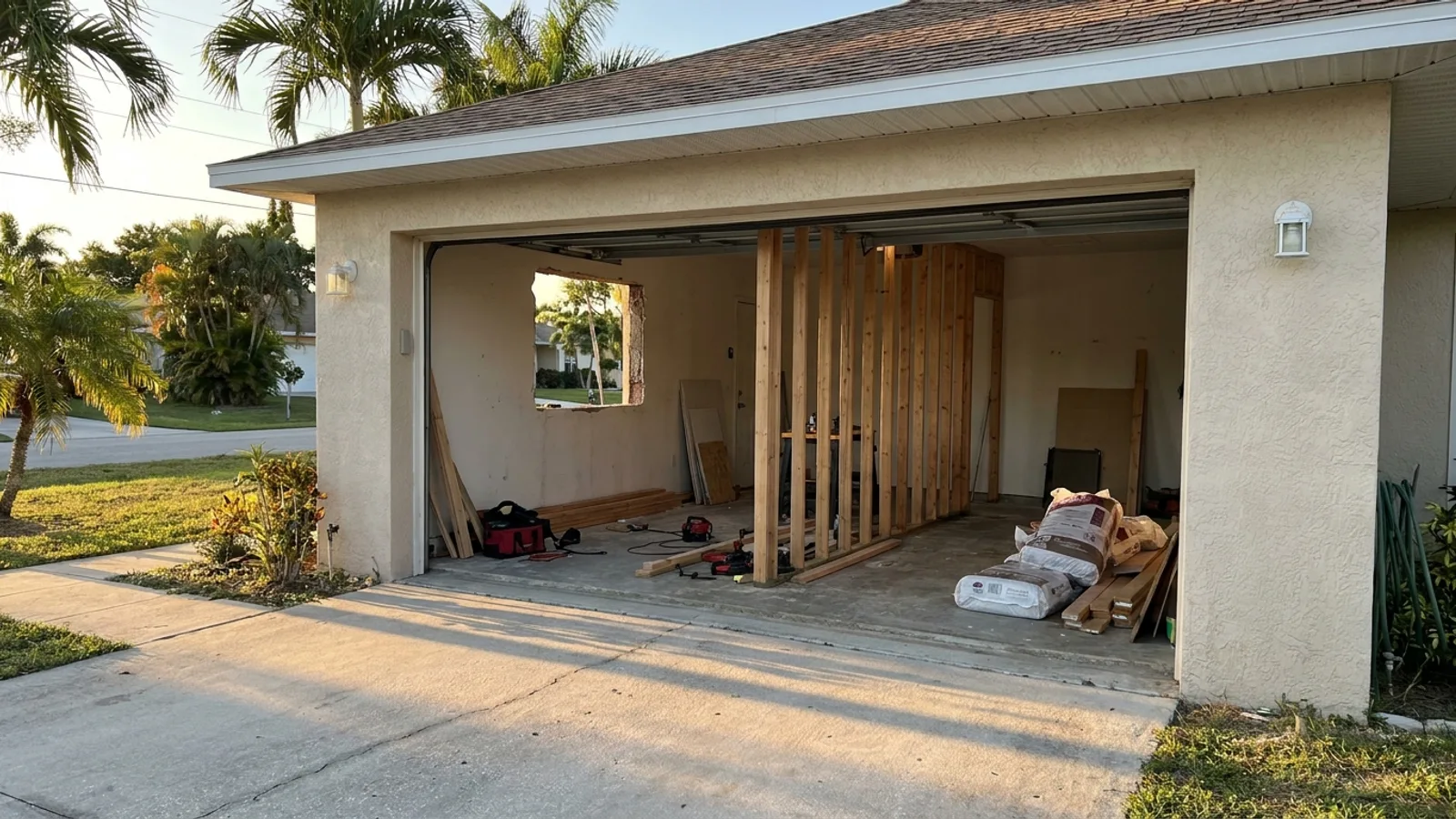
Consider a homeowner in unincorporated Polk County converting an attached garage into a living space they intend to live in. Because it is their own residence and not for sale, they qualify to apply under the owner-builder exemption. They personally appear at the building department, sign the permit application and the owner-builder disclosure, and become the applicant of record.
They hire a licensed electrician to run the new circuits and a licensed HVAC contractor to extend the system, each working under their own license. The homeowner handles framing, insulation, and drywall themselves and provides direct on-site supervision throughout. They schedule and pass each inspection, then close the permit. Because they plan to live there and are not selling, the one-year presumption is not a concern. This is the exemption working as intended: owner control, licensed trades for licensed work, and a fully permitted result.
How do you apply as an owner-builder in Polk or Orange County?
You apply at your local building department, in person, because the exemption requires you to personally appear and sign. The exact forms, the disclosure wording, and the documentation each county wants can vary, so start from the county's building division rather than assuming. Our Polk County permit hub is a useful starting point for local specifics.
At a high level, the steps are: confirm the project needs a permit, gather the required plans or documentation, appear in person to sign the application and owner-builder disclosure, pay the fees, and schedule inspections as the work progresses. Because owner-builder applications get extra attention, having your documentation in order speeds things up. Our Permit Prep Pack organizes the paperwork most Florida building departments ask for.
What happens if you skip the permit entirely?
Skipping the permit is a separate and more serious problem than choosing owner-builder over a contractor. The owner-builder exemption is about who pulls the permit, not about whether one is needed. If you do unpermitted work, you can face stop-work orders, fines, after-the-fact permit costs, and trouble at resale when the missing permit surfaces during a sale or appraisal.
The cautious path is always to permit the work, whether you use a contractor or act as owner-builder. If work has already been done without a permit, an after-the-fact permit is usually the way to bring it back into compliance rather than leaving it unresolved.