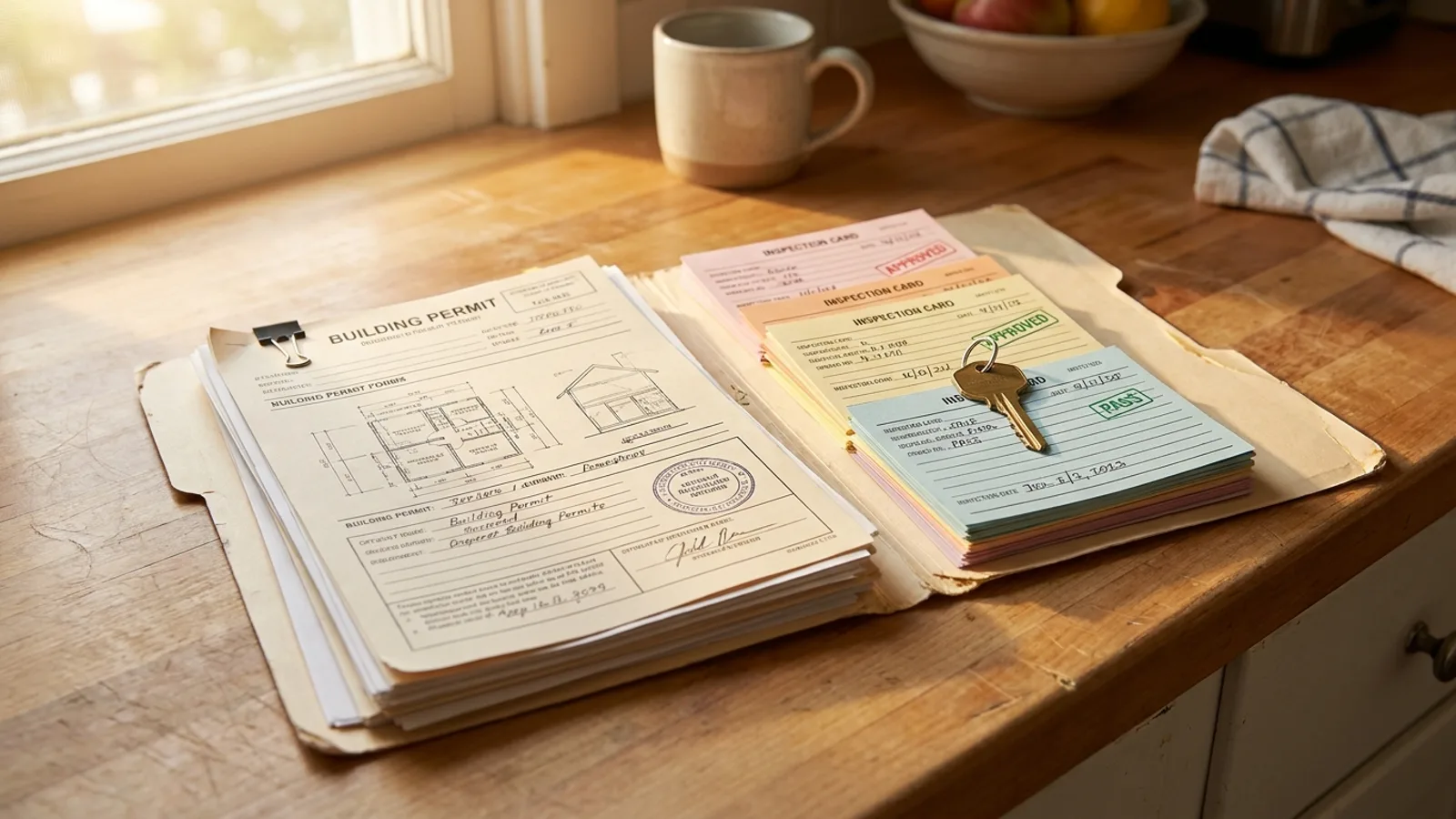
Building without a permit in Florida does not usually end with a knock on the door the next morning, which is exactly why it is a trap. The consequences of unpermitted work tend to surface later, when you sell, insure, or renovate the home, and by then they are harder and more expensive to fix. State law makes unpermitted construction unlawful, local departments can issue a stop-work order and charge increased after-the-fact fees, insurers can decline coverage or deny claims, and a buyer's lender can stall a closing until the work is legalized. The good news is that almost all of it is fixable through an after-the-fact permit. This guide covers the real risks and the practical path back to clean records.
Key takeaways
- Unpermitted work is unlawful under Florida Statute 553.79, and local departments can issue a stop-work order and require you to legalize the work.
- After-the-fact permits typically cost more than a standard permit (often double the normal fee), and can require opening finished walls so inspectors can verify hidden work.
- Florida sellers must disclose known unpermitted work that materially affects value, so the problem usually resurfaces at sale.
- Insurers can decline a policy or deny a claim tied to unpermitted work, and open permits can stall a buyer's financing at closing.
- The fix is almost always to apply for an after-the-fact permit and bring the work up to code, not to hope it stays hidden.
Table of contents
- Is it illegal to build without a permit in Florida?
- What are the immediate penalties for unpermitted work?
- How much does an after-the-fact permit cost?
- Will unpermitted work stop me from selling my house?
- Can unpermitted work void my homeowners insurance?
- Permitted vs. unpermitted: the cost of skipping it
- How do I legalize work that was already done?
- Worked example: an unpermitted screen enclosure surfaces at closing
- What if I bought a house with unpermitted work I did not do?
- How do I avoid this in the first place?
Is it illegal to build without a permit in Florida?
Yes. Florida Statute 553.79 makes it unlawful to construct, erect, alter, modify, repair, or demolish a building without first obtaining a permit from the local enforcing agency. Skipping a required permit is a code violation, not a gray area.
Enforcement happens at the county or city level. A department can act on a complaint, an inspector's observation, or something as ordinary as a records check during a later sale. Because the violation attaches to the property and the work itself, time does not cure it: unpermitted work from years ago is still unpermitted work today. If you are unsure whether your project needed a permit at all, start with do I need a permit in Florida and the free permit checker.
What are the immediate penalties for unpermitted work?
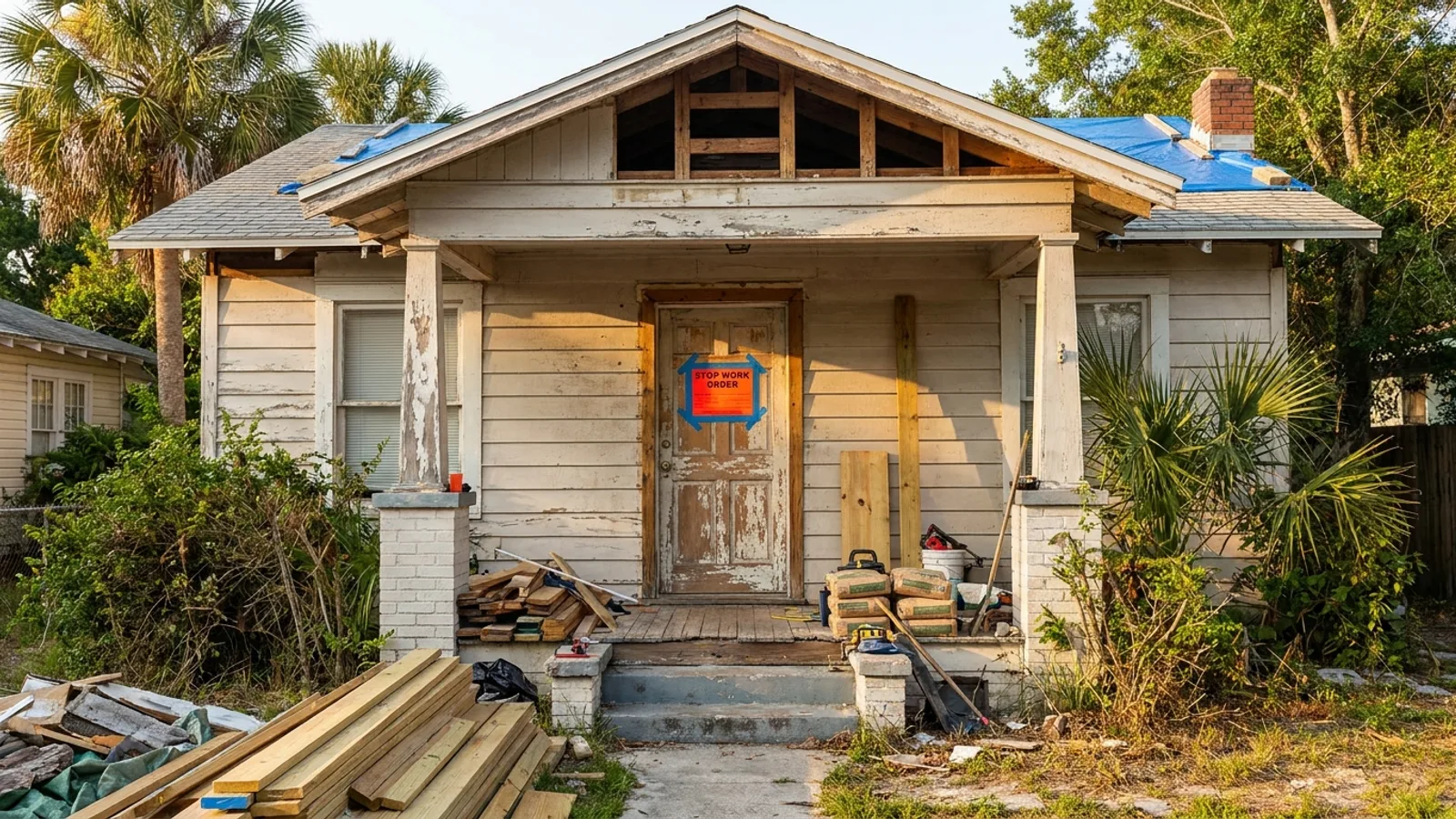
The most common immediate consequences are a stop-work order and an increased permit fee to legalize the job. A stop-work order halts all activity on the project until the permit issues are resolved, which can strand a half-finished renovation.
Beyond stopping the work, local departments apply penalty fees for work started without a permit. These penalty fees are set locally under the Florida Building Code administrative provisions, authorized by Florida Statute 553.80, and are commonly structured as a multiple of the normal permit fee, with repeat violations escalating further. The exact amount varies by jurisdiction, so confirm the penalty schedule with your building department rather than assuming a figure.
How much does an after-the-fact permit cost?
An after-the-fact permit generally costs more than the same permit pulled up front, and the total is hard to predict because it has several moving parts. Many Florida departments charge roughly double the standard permit fee as a penalty for unpermitted work, and some escalate for repeat offenses.
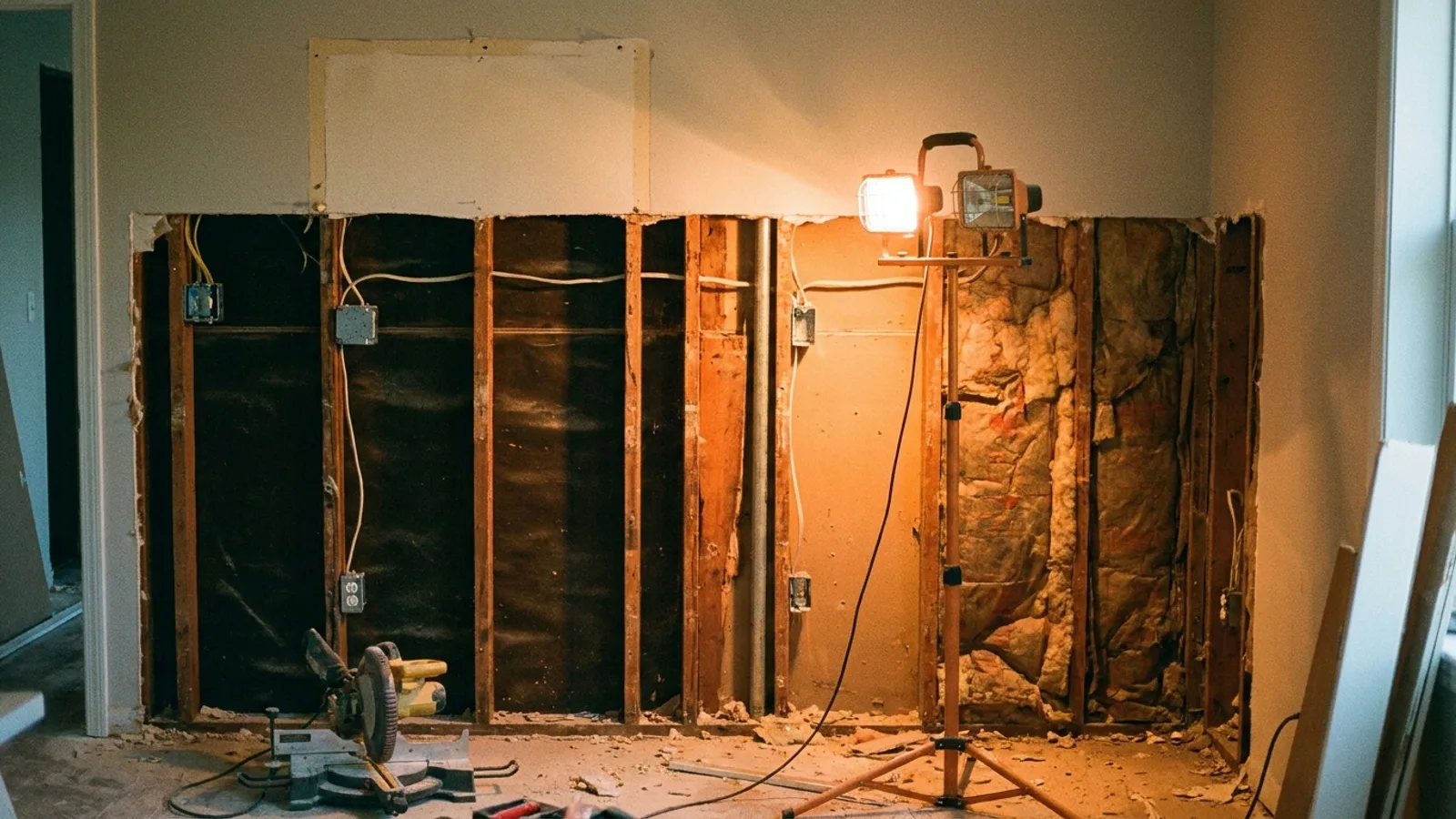
The fee is only part of the cost. To approve work that is already built, an inspector has to verify what is hidden behind the finishes, which can mean opening drywall, exposing wiring or plumbing, or providing engineering documentation for structural work. If the work was not done to code, you also pay to correct it. In the hardest cases, work that cannot be inspected or corrected has to be removed. For a full walkthrough of the process, see the after-the-fact permit guide, and for a realistic view of standard fees and timelines see what Florida permits cost and how long they take.
Will unpermitted work stop me from selling my house?
It frequently complicates the sale, and Florida law requires you to disclose it. Under the standard set by Johnson v. Davis, sellers must disclose facts they know that materially affect the property's value and are not readily observable by the buyer, which includes unpermitted work you are aware of.
Once disclosed, unpermitted or open permits become a negotiation point or a deal-breaker. Buyers and their lenders may require the work to be permitted and closed before closing, the price may be discounted to cover the buyer's remediation risk, and title insurance does not cover unpermitted or open permits. Our guides on selling a house with permit issues in Florida and closing an open permit cover the seller-side steps in detail.
Can unpermitted work void my homeowners insurance?
It can affect both getting a policy and getting a claim paid. Florida insurers review permit history during underwriting, often through a four-point inspection, and unpermitted systems can be flagged as higher risk or lead an insurer to decline coverage.
The sharper risk is at claim time. If a loss such as a fire or water damage originates in an area where unpermitted, uninspected work was done, the insurer can investigate whether that work caused or contributed to the loss and deny the claim if it finds non-compliant work. Unpermitted electrical and plumbing carry the most exposure here because they are common sources of loss and are exactly the trades a permit inspection is meant to verify.
Our take: The danger of unpermitted work is not the odds of getting caught tomorrow, it is that the bill arrives at the worst possible moment, at a sale or after a loss, when you have the least leverage. Legalizing work on your own schedule is almost always cheaper and calmer than doing it under a closing deadline or a denied claim.
Permitted vs. unpermitted: the cost of skipping it
The table below compares the same project handled two ways. The unpermitted path can look cheaper at the start and rarely stays that way.
| Factor | Permitted up front | Unpermitted, discovered later |
|---|---|---|
| Permit fee | Standard fee | Often double, plus penalties |
| Inspection | Scheduled during work | May require opening finished walls |
| Rework risk | Caught early, cheap to fix | Corrections after finishing, expensive |
| Home sale | Clean records | Disclosure, negotiation, or stalled closing |
| Insurance | Normal underwriting | Possible declined policy or denied claim |
| Timeline control | You choose the schedule | Often forced by a closing deadline |
How do I legalize work that was already done?
The path back is an after-the-fact permit, applied for through the same building department that would have issued the original permit. The goal is to get the existing work inspected, corrected if needed, and signed off so the records are clean.
The typical steps
First, gather what you have: photos, receipts, and any drawings of the work. Second, apply for the after-the-fact permit and pay the fee, expecting a penalty multiple. Third, expect the department to require access to hidden work, which can mean opening walls or ceilings, and possibly engineered plans for structural items. Fourth, pass the inspections, correcting any code deficiencies. Once the final inspection passes, the permit closes and the record is clean.
When to bring in a professional
If the work involved a regulated trade or anything structural, a licensed contractor or engineer can document and, where needed, correct the work so it will pass. The Permit Prep Pack can help you assemble the paperwork a department expects for your project type.
Worked example: an unpermitted screen enclosure surfaces at closing
Consider a homeowner in Orange County who added an aluminum screen enclosure over the back patio a few years ago without a permit. Nothing went wrong, so it faded from mind, until a buyer's inspection and a county records check flagged that the enclosure has no permit on file.
Now it is on the closing critical path. The buyer's lender wants the structure legalized, so the seller applies for an after-the-fact permit through the Orange County building department, pays the higher fee, and has an inspector verify the enclosure's attachment and wind-load compliance. Because it was built to code, it passes with minor documentation, and the sale proceeds a couple of weeks later than planned. Had the enclosure not met the wind-load requirements of the region, the fix could have meant reworking the structure under deadline pressure. The screen enclosure project page explains what these permits normally require.
What if I bought a house with unpermitted work I did not do?
Unfortunately the problem follows the property, not the person who did the work. If you discover unpermitted work after buying, you generally become the one responsible for legalizing it, because it now affects your ability to insure, sell, or renovate the home.
That is frustrating, but the response is the same: document what you found, contact the building department to understand what is on file, and pursue an after-the-fact permit to clear it. If the prior seller knew and failed to disclose, that is a separate legal question worth raising with a real estate attorney, but it does not pause the department's expectations about the work itself.
How do I avoid this in the first place?
Confirm the permit requirement before you start, and let the licensed contractor pull the permit on permitted work. The entire problem is avoidable at the front end for a fraction of what it costs to unwind later.
Before any project, run the scope through the free permit checker and confirm with your county or city building department. If a contractor offers to skip the permit to save time or money, treat it as a reason to pause, because the unpermitted work will stay attached to your home long after they are gone. Paying for the permit and the inspections is not bureaucratic overhead, it is the record that protects your sale, your insurance, and your safety.