
Florida permit costs and timelines vary widely because both are set locally, but the structure behind them is consistent enough to plan around. Most residential permit fees are built from your project's value plus separate plan-review and inspection charges, and larger new construction can add impact fees on top. On timing, state law gives building departments a defined window to act on a complete residential application, and the biggest delays almost always come from incomplete submittals and failed inspections rather than the department being slow. This guide explains how the fees are calculated, what timelines are realistic, and where the avoidable delays hide.
Key takeaways
- Permit fees in Florida are set by each county or city, and are commonly based on the project's construction value plus plan-review and inspection charges.
- Under Florida Statute 553.80, local fees must relate to the cost of enforcing the building code, which is why departments publish fee schedules rather than one statewide price.
- Florida Statute 553.79 requires departments to approve, approve with conditions, or deny a complete residential application for a structure under 7,500 square feet within 30 business days.
- Impact fees are separate from permit fees and generally apply to new construction or added living space, not to most repairs and replacements.
- The costliest delays come from incomplete applications, missing product approvals, and failed inspections, all of which are avoidable with preparation.
Table of contents
- How much does a building permit cost in Florida?
- How are permit fees actually calculated?
- Why do fees vary so much between counties and cities?
- What are impact fees, and do they apply to me?
- How long does it take to get a permit in Florida?
- Typical costs and timelines by project type
- What causes the most expensive delays?
- How can I speed up my permit?
- Worked example: a re-roof in Orange County
- How do I budget for permits without guessing?
How much does a building permit cost in Florida?
There is no single statewide permit price, because Florida permit fees are set by each local building department. A minor residential permit is usually a modest flat or minimum fee, while larger projects scale with the value of the work and can add plan-review and inspection charges.
Because the number depends on your jurisdiction and your project's value, the reliable way to get a real figure is to check your local fee schedule or use your department's fee calculator, not to rely on a rule-of-thumb dollar amount. Many Florida counties, including Orange and Polk, publish fee schedules and offer online estimators. You can start scoping your project with the free permit checker and then confirm the fee with the department that will issue it.
How are permit fees actually calculated?
Most residential permit fees are assembled from a few components rather than a single charge. The largest piece is usually tied to the construction value of the work, with additional line items for plan review and required inspections.
The common building blocks
A typical residential permit fee includes some or all of the following: a base or minimum permit fee, a valuation-based building fee that rises with the declared value of the work, a plan-review fee (often a percentage of the permit fee), separate trade permit fees for electrical, plumbing, or mechanical work, and per-inspection charges. Some departments also collect small state surcharges. This is why a single flat number rarely matches your final bill, and why the department's fee schedule is the source of truth.
Valuation matters
Because the building fee scales with declared construction value, an accurate value on the application matters. Under-declaring to lower the fee can backfire during review, and a realistic value keeps the permit clean.
Why do fees vary so much between counties and cities?
Fees vary because Florida law ties them to the cost of enforcing the building code in each jurisdiction, not to a statewide price. Under Florida Statute 553.80, local governments may set a fee schedule, the fees must relate to the level of service provided, and the revenue may not exceed the cost of code-enforcement activities such as plan review, inspections, and permit processing.
The practical result is that two neighboring jurisdictions can charge different amounts for the same project because their staffing, service levels, and cost structures differ. It also means the fee is not arbitrary: it is meant to cover the review and inspection your permit actually consumes. Our Orange County permits guide and Polk County permits guide point to where each department publishes its current schedule.
What are impact fees, and do they apply to me?
Impact fees are a separate charge from permit fees, meant to help fund the public infrastructure that new development draws on, such as roads, schools, and utilities. They are not part of the building permit fee and are calculated differently.
For most homeowners doing repairs, replacements, or remodels within the existing footprint, impact fees usually do not apply, because you are not adding new demand. They typically come into play with new construction or projects that add living space or dwelling units. If your project is an addition or a new accessory dwelling, ask specifically about impact fees, and see impact fees in Florida explained for how they are assessed.
How long does it take to get a permit in Florida?
For a complete residential application, state law sets a defined ceiling. Under Florida Statute 553.79, a building department must approve, approve with conditions, or deny a complete and sufficient application for a residential structure under 7,500 square feet within 30 business days, and single-family dwellings within 30 working days, unless unusual circumstances apply.
In practice, many simple residential permits move faster than that, and some jurisdictions issue certain minor permits over the counter or online the same day. The clock, however, starts on a complete application. An incomplete submittal, or one that fails plan review, resets your timeline and is the most common reason a permit takes far longer than the statutory window suggests.
Typical costs and timelines by project type
The table below gives a general shape of what to expect. Treat the ranges as directional, not quotes, and confirm both fee and timeline with your local department.
| Project type | Fee structure | Typical timeline (complete application) |
|---|---|---|
| Water heater or minor trade swap | Low flat or minimum fee | Often same day to a few days |
| Window or door replacement | Valuation-based plus product approval review | Days to a few weeks |
| Re-roof | Valuation-based plus inspection | Days to a few weeks |
| Deck or screen enclosure | Valuation-based plus plan review | One to a few weeks |
| Room addition | Valuation-based, plan review, possible impact fees | Several weeks or more |
| After-the-fact (any of the above) | Often double the standard fee plus penalties | Longer, may require opening walls |
What causes the most expensive delays?
The costliest delays are almost never the fee itself; they are the do-overs. An incomplete application, missing documentation, or a failed inspection can add weeks and force paid rework.
Incomplete applications
The single biggest avoidable delay is submitting before the package is complete. Missing site plans, unsigned forms, or an unclear scope sends the application back before the review clock even starts. A permit application documents checklist helps you submit complete the first time.
Missing product approvals
For windows, doors, roofing, and shutters, Florida requires approved products rated for the wind loads in your area. Submitting without the correct product approval or NOA is a frequent rejection, especially in the wind-borne debris region along much of the coast.
Failed inspections
A failed inspection means a correction and a re-inspection, each adding time and sometimes fees. Reading up on what building inspectors check in Florida before your inspection is one of the cheapest ways to avoid a second trip.
Our take: Homeowners fixate on the permit fee, but the fee is rarely what hurts. The expensive part is the delay and rework that follow a rushed, incomplete submittal. Spending an extra day to file a complete, honestly valued application is the highest-return move in the whole process.
How can I speed up my permit?
The fastest permits are the well-prepared ones. You control most of the timeline by submitting a complete, accurate application and by scheduling inspections tightly.
A few reliable accelerators: submit a complete package with all required plans and product approvals, declare an honest construction value, respond to any plan-review comments quickly, and, where your jurisdiction allows it, consider private provider inspections, which use a qualified third party to speed plan review and inspections. Confirming your project's requirements up front on the permit checker helps you assemble the right documents before you file.
Worked example: a re-roof in Orange County
Consider a homeowner in Orange County replacing an aging asphalt-shingle roof. They want to know the cost and how long it will take before they sign with a roofer.
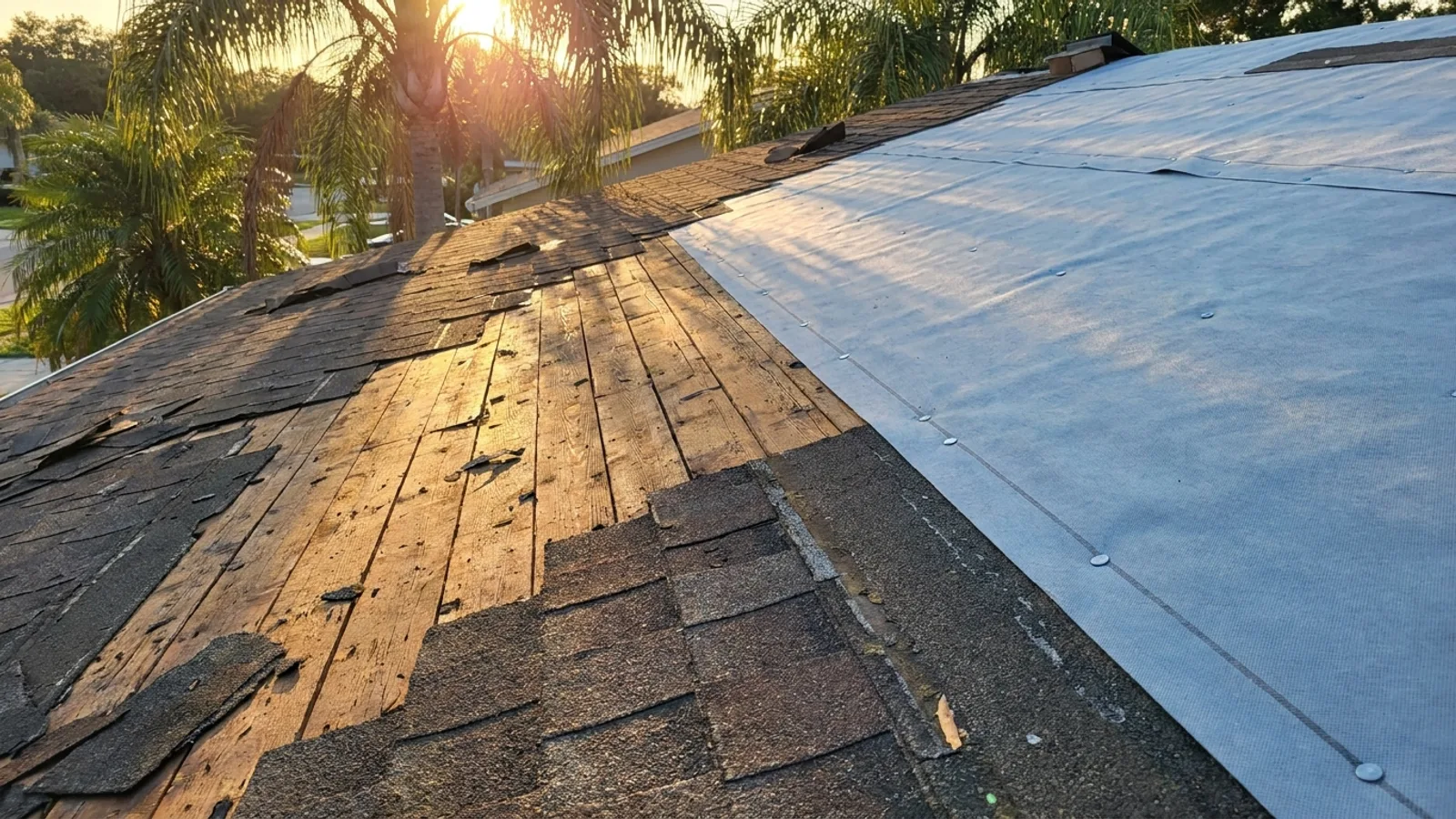
The roofer pulls the permit through Orange County's permitting portal, declaring the job's construction value, which drives the valuation-based building fee, plus plan-review and inspection charges from the county's fee schedule. Because a re-roof needs approved roofing products rated for the area's wind loads, the roofer includes the product approval documentation up front, avoiding the most common rejection. With a complete application, the permit issues well inside the statutory window, often within days for a straightforward re-roof, and inspections are scheduled as the work reaches each stage. The roof replacement project page outlines what these permits typically involve.
How do I budget for permits without guessing?
Build your budget from your department's real numbers, not a national average. Get the construction value of the work, look up the local fee schedule or run the department's fee estimator, and add likely inspection charges and, for new space, a check on impact fees.
Then give yourself a realistic time buffer: plan around the statutory review window, but assume at least one round of plan-review comments and build in a few extra days. If you want the paperwork organized for your specific project, the Permit Prep Pack assembles the checklist and documents a department expects, so you file complete and keep your timeline on your terms.
When you are ready to scope your project's requirements, start with the free permit checker.