
Impact fees in Florida are one-time charges local governments collect on certain new construction to help pay for the public infrastructure that growth demands, such as roads, schools, parks, and utilities. They are separate from your building permit fee and typically apply when a project adds new residential capacity, like a new home or an accessory dwelling, rather than to most repairs or replacements. Whether impact fees apply to your project, and how much, is set by your local jurisdiction, so confirm before you budget.
Key takeaways
- Impact fees are one-time charges on certain new construction to fund infrastructure that growth requires.
- They are separate from and usually larger than the permit fee itself.
- They most often apply when a project adds dwelling units or new residential capacity, not to typical repairs or like-for-like replacements.
- The amounts and what triggers them are set locally, so your building department is the authority for your project.
Table of contents
- What are impact fees in Florida
- How are impact fees different from permit fees
- When do impact fees apply to a residential project
- What projects usually avoid impact fees
- How much are impact fees
- Impact fees versus permit fees at a glance
- A worked example for an accessory dwelling unit
- How do you find out what applies to you
What are impact fees in Florida
Impact fees are charges local governments impose on new development to offset its share of the cost of expanding public infrastructure. The idea is that new growth pays toward the roads, schools, and services it will use rather than shifting that cost entirely to existing residents.
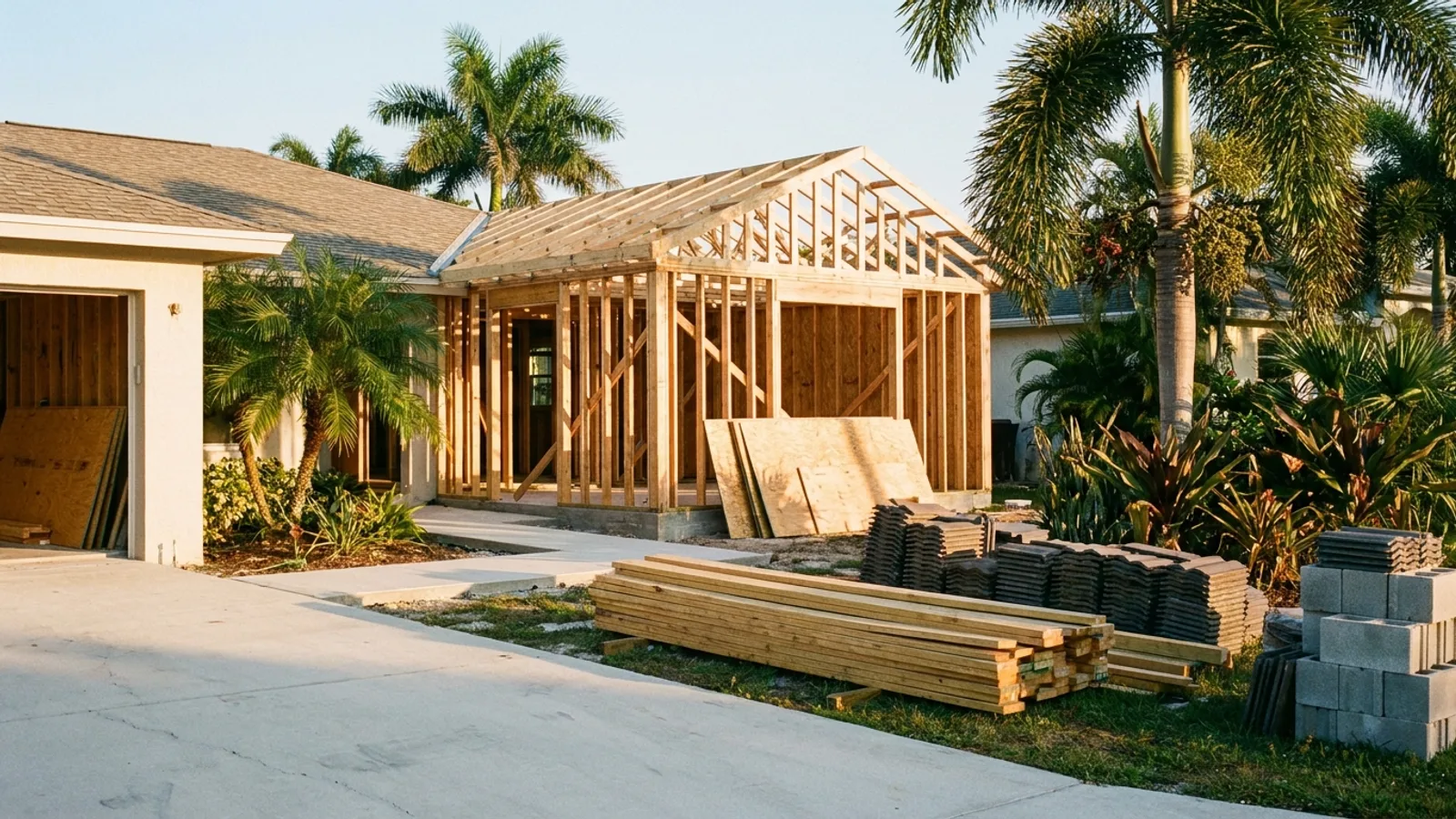
Florida law governs how local governments adopt and administer impact fees, and the specific categories and amounts are set by each county or city. Because they are tied to growth, they focus on projects that add capacity, not on maintaining what already exists.
How are impact fees different from permit fees
Impact fees are different because they fund external infrastructure, while permit fees cover the building department's cost to review and inspect your project. They are two separate charges, and impact fees are often the larger of the two on qualifying projects.
Your permit fee is based on the work's valuation and pays for plan review and inspections. Impact fees are calculated separately, by category, based on the new capacity you add. Our florida permit costs and timelines guide covers how these charges stack up in a project budget.
When do impact fees apply to a residential project
Impact fees generally apply when a project creates new residential capacity, such as building a new house, adding a dwelling unit, or in some cases significantly expanding living space. Adding a household or new demand on services is the common trigger.
That is why projects like an accessory dwelling unit or a new home are the classic impact-fee situations. A conversion that creates a separate living unit can also trigger them. Because the triggers are local, confirm with your building department rather than assuming your specific project qualifies or does not.
What projects usually avoid impact fees
Most repairs, replacements, and remodels that do not add a dwelling unit or new capacity usually do not trigger impact fees. Replacing a roof, swapping a water heater, or remodeling a kitchen typically affects only the permit fee, not impact fees.
The distinction is capacity. A roof replacement or a water heater swap maintains the existing home, so there is no new demand to offset. Interior remodels that keep the same number of dwelling units generally follow the same logic, though local rules govern the edge cases.
How much are impact fees
How much you pay depends entirely on your jurisdiction, the fee categories it has adopted, and the type and size of your project. There is no single statewide impact fee amount, so any figure only applies to a specific place and project type.
Because the numbers vary widely and change over time, the only reliable way to know your cost is to ask your local building or development office. Never budget from a figure you saw for a different county. The free permit checker helps you frame the project so you know which questions to ask.
Impact fees versus permit fees at a glance
| Feature | Permit fee | Impact fee |
|---|---|---|
| What it pays for | Plan review and inspections | Public infrastructure from growth |
| Based on | Project valuation | New capacity added, by category |
| Typical trigger | Any permitted work | New dwelling units or capacity |
| Relative size | Usually smaller | Often larger on qualifying projects |
| Who sets it | Building department schedule | Local impact fee ordinance |
A worked example for an accessory dwelling unit
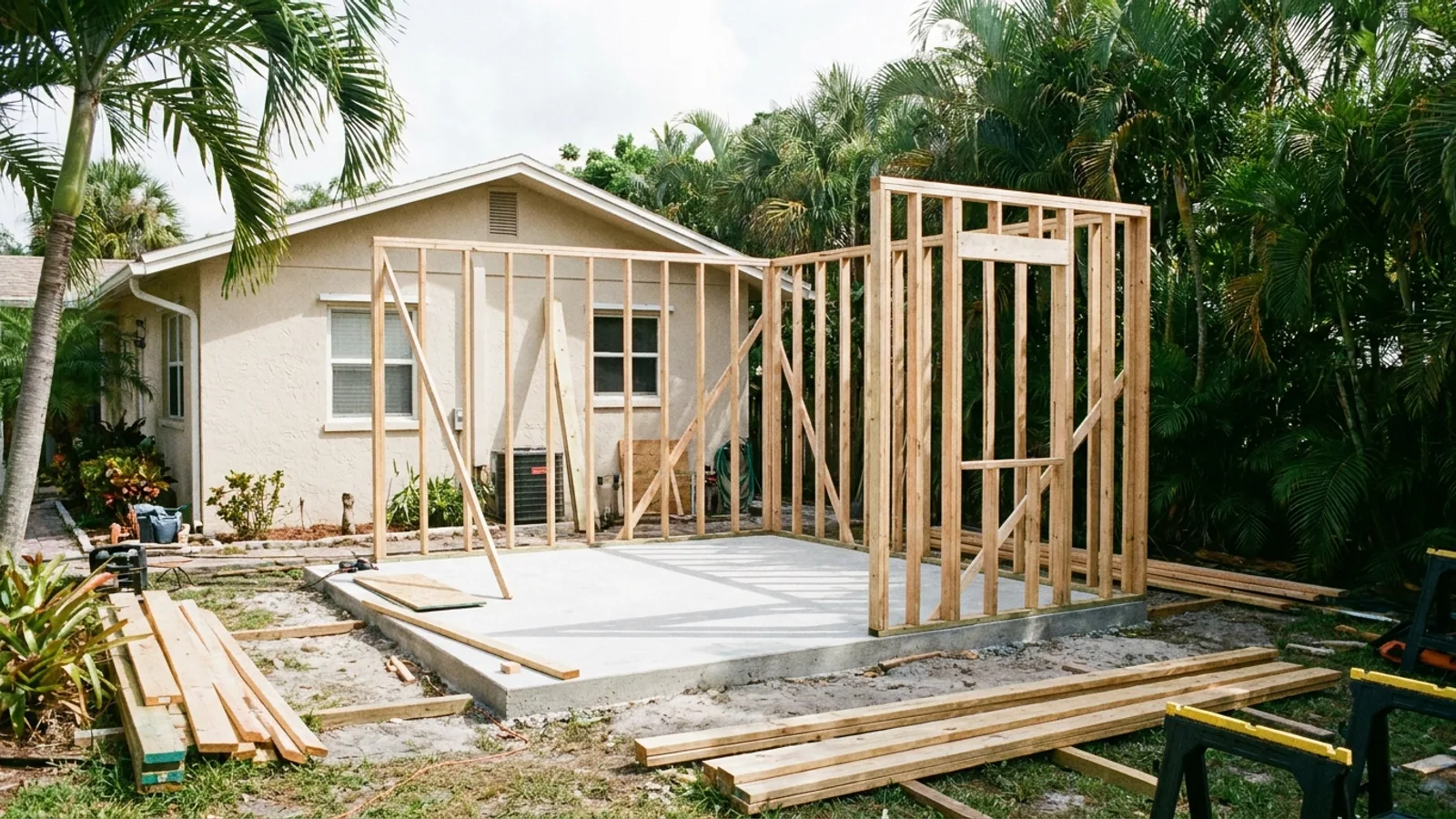
Imagine a homeowner in Orange County building a small accessory dwelling unit in the backyard for a family member. They budget for the permit fee but are surprised by an additional charge.
Because the accessory dwelling unit adds a new living unit, the jurisdiction assesses impact fees for the categories it has adopted, on top of the permit fee. The homeowner asks the building office for the impact fee schedule during planning, learns the amount for their unit type, and folds it into the budget before starting. Had they only planned for the permit fee, the impact fees would have been an unwelcome mid-project surprise.
Our take: Impact fees are the line item that most often blows up a project budget, because homeowners plan for the permit fee and never hear about impact fees until later. If your project adds any kind of dwelling unit, ask about impact fees on day one. It is far better to know the number before you commit than after the slab is poured.
How do you find out what applies to you
Find out by asking your local building or development services office whether your project triggers impact fees and for the current fee schedule that applies. This is a planning-stage question, not a closing-stage surprise.
Start with the free permit checker to define your scope, then use the Polk or Orange county resources to reach the right office. Confirming impact fees early lets you budget accurately and decide whether the project pencils out before you begin.