
If you are asking whether you need a permit in Florida, the safe starting assumption is yes: state law makes it unlawful to construct, alter, repair, or demolish a building without a permit from your local enforcing agency, and most work that changes a structure or its electrical, plumbing, mechanical, or gas systems needs one. A short list of cosmetic and finish work is exempt, and a new 2026 exemption for small residential projects narrows things further, but the exact line is drawn by your county or city building department, not by the state alone. This guide walks through what usually needs a permit, what does not, and how to confirm the answer for your exact project.
Key takeaways
- Florida Statute 553.79 makes it unlawful to construct, alter, modify, repair, or demolish a building without first obtaining a permit from the local enforcing agency.
- Cosmetic finish work such as painting, flooring, wallpaper, cabinets, and countertops is generally exempt, as long as you are not relocating electrical, plumbing, or mechanical systems.
- The 2026 HB 803 exemption lets single-family homeowners skip permits on some general work under $7,500, but it excludes electrical, plumbing, mechanical, structural, and gas work, and does not apply in flood hazard areas.
- The final answer depends on your specific county or city building department, so the exemptions above are a starting point, not a guarantee.
- When you are unsure, treat the project as if it needs a permit and confirm with your building department before you start.
Table of contents
- What does Florida law say about building permits?
- What home projects usually require a permit?
- What work is exempt from a permit in Florida?
- Does the $7,500 HB 803 exemption let me skip the permit?
- Permit or exempt: how common projects compare
- Who decides whether I need a permit?
- How do I find the answer for my exact project?
- Do I still need a permit if I hire a licensed contractor?
- Do flood zones and HOA rules change the answer?
- Worked example: replacing a water heater in unincorporated Polk County
- What happens if I get it wrong?
What does Florida law say about building permits?
Florida law starts from the position that a permit is required. Under Florida Statute 553.79, it is unlawful for any person to construct, erect, alter, modify, repair, or demolish a building in the state without first obtaining a permit from the appropriate enforcing agency, which is your county or city building department.
The Florida Building Code adds the operational detail. Its administrative provisions require a permit to construct, enlarge, alter, repair, move, demolish, or change the occupancy of a building or structure, and to install, alter, or replace any electrical, gas, mechanical, or plumbing system regulated by the technical codes. A useful rule of thumb: if the work needs an inspection to prove it meets code, it needs a permit.

What home projects usually require a permit?
Most projects that change the structure, envelope, or major systems of your home require a permit. This is the large middle of the map, and it covers the projects homeowners most often ask about.
Work that typically needs a permit includes roof replacement, room additions and structural alterations, window and door replacement, decks and screen enclosures, pools and spas, fences above a certain height, water heater replacement, HVAC changeouts, electrical panel upgrades, re-piping, and solar. You can review specific project types on the project pages, each of which explains what the permit usually involves. When in doubt, run the details through the free permit checker before you buy materials or schedule a contractor.
What work is exempt from a permit in Florida?
A defined list of cosmetic and finish work is exempt from permitting statewide. These are jobs that do not touch the structure or the regulated systems of the house.
The Florida Building Code exempts finish work such as painting (interior and exterior), wallpapering, tiling, carpeting and other floor coverings, cabinetwork, countertops, shelving, and similar decorative or furnishing work. The key limit is that the exemption covers the finish only. The moment you relocate or add plumbing, electrical, mechanical, or gas as part of the job, that portion needs a permit even if the surrounding cosmetic work does not. Replacing kitchen cabinets in the same layout is generally exempt; moving the sink and its supply lines is not.
Our take: Treat the exempt list as narrow and literal. "Cosmetic" ends the instant a wire, pipe, duct, or gas line moves. A false "no permit needed" is the expensive direction to be wrong in, because it is the one that leaves unpermitted work on your record.
Does the $7,500 HB 803 exemption let me skip the permit?
Sometimes, but the exemption is narrower than the headlines suggest. Florida House Bill 803, effective July 1, 2026, allows owners of single-family homes, or their contractors, to perform certain qualifying residential work valued under $7,500 without pulling a building permit.
The carve-outs matter more than the dollar figure. The exemption does not apply to electrical, plumbing, mechanical, structural, or gas work, all of which still require permits regardless of cost. It does not apply to property in a flood hazard area. Owners or contractors must still submit a written request to the local building department describing the work and its value, and the law prohibits splitting one larger project into smaller pieces to stay under the threshold. Because most meaningful home projects involve a regulated trade, far fewer jobs qualify than the number alone implies. You can test a specific project against the rule with the HB 803 exemption tool, and read the full breakdown in our guide to the $7,500 HB 803 permit exemption.
Permit or exempt: how common projects compare
The table below shows how typical projects usually fall. Treat it as a starting point and confirm locally, because your city or county can be stricter than the statewide baseline.
| Project | Usually needs a permit? | Why |
|---|---|---|
| Interior painting | No | Cosmetic finish work, exempt |
| New flooring or carpet | No | Floor covering is exempt |
| Replace cabinets in same layout | No | Finish work, if no plumbing or electrical moves |
| Move a sink or add an outlet | Yes | Plumbing and electrical are regulated trades |
| Replace a water heater | Yes | Plumbing, gas, or electrical connection |
| Replace windows or exterior doors | Yes | Structural opening and wind-load code |
| Re-roof | Yes | Structural and code compliance, inspected |
| Build a deck or screen enclosure | Yes | Structure attached to the home |
| Small non-structural repair under $7,500 | Maybe | Possible HB 803 exemption if no regulated trade and not in a flood zone |
Who decides whether I need a permit?
The state sets the floor, and your local building department sets the rest. Florida adopts a statewide building code, but permitting is administered and enforced at the county and municipal level, and jurisdictions can add requirements.
This is why the same shed can need a permit in one city and clear an exemption in the next. If your address is inside city limits, the city usually issues your permit; if it is in an unincorporated area, the county does. Our Orange County permits guide and Polk County permits guide explain how each of those departments handles common residential work, including who to call and where to apply.
How do I find the answer for my exact project?
The fastest reliable path is to check the specific work, location, and value together, then confirm with the department that will issue the permit. Guessing from a general list is where homeowners get into trouble.
Use the free checker first
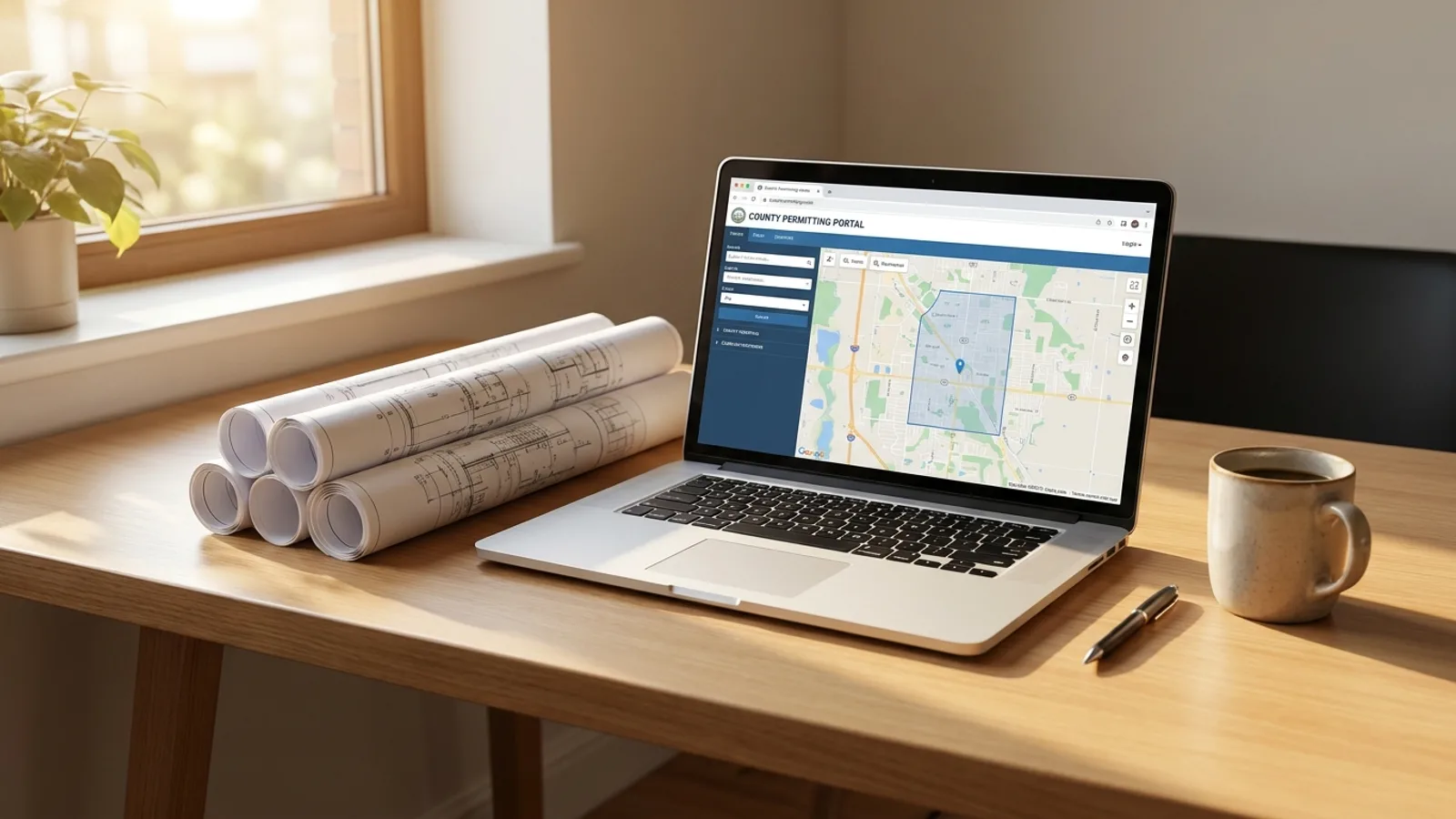
Start with the permit checker. It walks through your project type and jurisdiction and gives a plain-language read on whether a permit is likely required, so you go into any phone call already knowing the right questions. For a deeper record of an existing permit, see how to look up a permit in Florida.
Then confirm with your building department
Building departments answer these questions every day. Have your address, a short description of the work, and a rough project value ready. Ask directly: does this scope require a permit, and if so, which type. Write down who you spoke with and when.
Do I still need a permit if I hire a licensed contractor?
Yes. Hiring a licensed contractor does not remove the permit requirement; it changes who is responsible for pulling it. On permitted work, your contractor should apply for the permit under their license and schedule the inspections.
This is a point worth watching. If a contractor suggests skipping the permit to save time or money, that is a warning sign, because the unpermitted work stays attached to your property, not theirs. A licensed professional pulling the permit is one of the protections you are paying for. If you are weighing doing the work yourself, read owner-builder permits in Florida before you decide, since owner-builders take on the contractor's liability.
Do flood zones and HOA rules change the answer?
They can both make the answer stricter, never more lenient. A flood hazard area adds elevation and floodplain requirements and, notably, removes eligibility for the HB 803 under-$7,500 exemption. If you are near water or in a designated flood zone, assume the review is more involved, not less.
A homeowners association is a separate layer. HOA approval is a private contract matter and does not replace a government permit, and a government permit does not satisfy your HOA. Some projects need both, in either order. When your project is exterior and visible, plan for the possibility that you clear the county but still need architectural approval from the association.
Worked example: replacing a water heater in unincorporated Polk County
Consider a homeowner in unincorporated Polk County replacing a failed 50-gallon electric water heater with a similar unit. It feels like a simple swap, so the instinct is to skip the paperwork.
It still needs a permit. A water heater changeout involves the plumbing connection and an electrical or gas connection, all regulated trades, so neither the cosmetic exemption nor the HB 803 under-$7,500 exemption applies. In practice the homeowner (or their licensed plumber) applies to the Polk County Building Division, the unit is installed to code, and an inspector verifies the connections, the relief valve, and the safety pan. The permit fee is modest relative to the cost of a denied insurance claim or a flag on the property later. You can see the specifics on the water heater project page.
What happens if I get it wrong?
Guessing "no permit" when one was required creates a lasting problem, not a one-time risk. Unpermitted work can trigger a stop-work order, an after-the-fact permit at increased fees, difficulty selling or insuring the home, and in the worst case orders to open finished walls or remove work that cannot be inspected.
That is the asymmetry at the center of every permit question: over-estimating and pulling a permit you did not strictly need costs a little time and money now, while under-estimating and skipping a required permit can cost far more later. When the two options are close, choose the permit. For the full picture of the downside, read what happens if you build without a permit in Florida.

When you are ready to check your specific project, the free permit checker is the fastest place to start.