
Florida's $7,500 permit exemption comes from HB 803, signed May 7, 2026 and effective July 1, 2026. It lets owners of single-family homes, or their contractors, do certain residential work valued under $7,500 without pulling a building permit. That is a real change, but it is narrower than it sounds. The exemption does not cover electrical, plumbing, structural, mechanical, or gas work, it does not apply in flood hazard areas, and you still have to file a written request and build to the Florida Building Code. This guide breaks down exactly what the $7,500 exemption qualifies, and the exceptions that catch people.
Key takeaways
- HB 803 exempts certain single-family residential work valued under $7,500 from the building permit requirement, effective July 1, 2026.
- The exemption does not cover electrical, plumbing, structural, mechanical, or gas work, and it does not apply to property in a flood hazard area.
- It is an exemption from the permit, not from the Florida Building Code, so the work must still comply with the code.
- You must still submit a written exemption request plus documentation of the nature and value of the work to your local building department.
- You cannot split one job into smaller pieces to get each part under the $7,500 threshold.
In this guide
- What is the HB 803 $7,500 permit exemption?
- When does the exemption take effect?
- What work qualifies under the $7,500 exemption?
- What work is excluded from the exemption?
- Why are flood hazard areas excluded?
- Is this an exemption from the building code too?
- Do you still have to tell the building department?
- Can you split a project to stay under $7,500?
- How is the $7,500 value calculated?
- What does HB 803 change for HOAs?
- Worked example: a $6,800 fence and paint project
- How do you use the exemption safely?
What is the HB 803 $7,500 permit exemption?
The HB 803 exemption is a Florida law that lets owners of single-family homes, or their contractors, perform qualifying residential work valued at $7,500 or less without obtaining a building permit. It was created by CS/CS/HB 803, a broad building-permit reform bill. The exemption applies to single-family residential property specifically, and it is capped at the $7,500 project value.
It helps to see the exemption for what it is: a narrow permit waiver for smaller, non-technical residential jobs. It does not turn permitting off across the board, and it does not touch commercial property or multifamily buildings. If you are not sure whether a given project fits, our free HB 803 exemption checker walks you through the specific tests before you rely on it.
When does the exemption take effect?
The exemption takes effect July 1, 2026. HB 803 was signed into law on May 7, 2026, and its provisions, including the $7,500 single-family exemption, became effective at the start of July. Work done before that date was under the old rules, so the exemption is not retroactive.
If you did unpermitted work before July 1, 2026, the exemption does not clean it up after the fact. That is a different situation, usually handled through an after-the-fact permit. The exemption is forward-looking for qualifying work going forward.
What work qualifies under the $7,500 exemption?
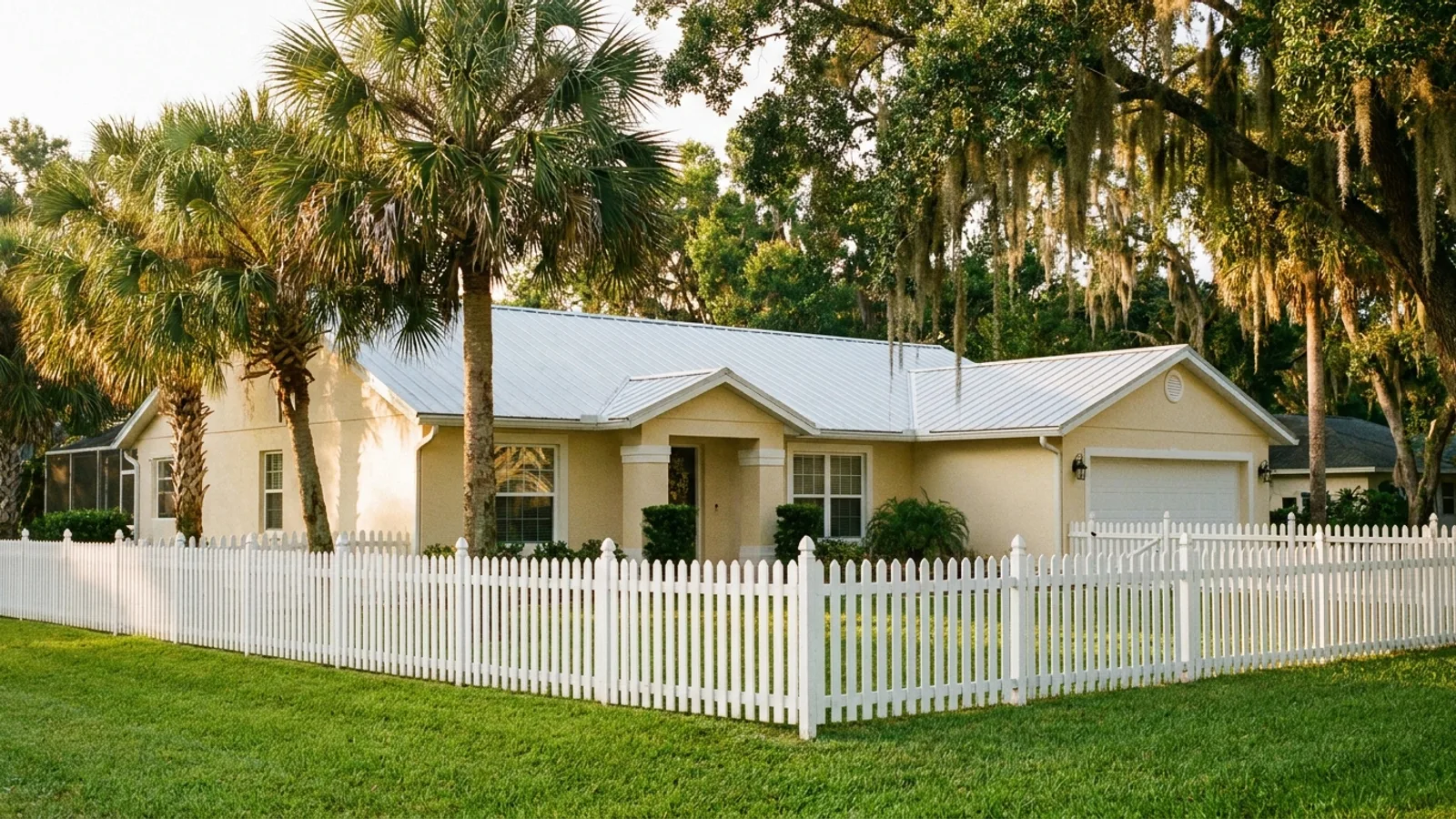
Qualifying work is single-family residential work valued under $7,500 that does not involve any of the excluded trades and is not in a flood hazard area. In practice, that points toward cosmetic and non-technical projects: interior and exterior painting, drywall repair, trim and molding, cabinet replacement, deck refinishing, fence repair, and similar work that does not touch electrical, plumbing, structural, mechanical, or gas systems.
The cleanest mental model is this: if the job stays away from the five excluded trades, stays out of a flood hazard area, and comes in under $7,500 in total value, it likely qualifies. If it crosses any of those lines, it does not. Our guide on what counts as cosmetic under HB 803 goes deeper on the borderline projects.
What work is excluded from the exemption?
Five categories of work are always excluded: electrical, plumbing, structural, mechanical, and gas. If your project involves any of these trades, it does not qualify for the $7,500 exemption no matter how small or cheap it is. This is the single biggest reason a project people expect to be exempt turns out not to be.
The reason for the carve-out is safety. These are the systems where a mistake can start a fire, cause a leak, weaken the structure, or create a gas hazard, which is exactly why they stay under permit review. Swapping a light fixture, moving a drain, altering a load-bearing wall, or touching a gas line all fall on the excluded side. If you are unsure whether your work is electrical in nature, see does HB 803 cover electrical work.
| Category | Typically qualifies (under $7,500) | Excluded regardless of cost |
|---|---|---|
| Painting | Interior and exterior painting | None |
| Drywall and trim | Drywall repair, trim, molding | Structural wall changes |
| Cabinets | Cabinet replacement | Plumbing or gas hookups behind them |
| Fencing | Fence repair | Work in a flood hazard area |
| Electrical | None | Any electrical work |
| Plumbing | None | Any plumbing work |
| Gas | None | Any gas work |
Why are flood hazard areas excluded?
Property in a flood hazard area is excluded from the exemption entirely. Even qualifying, non-technical work under $7,500 still needs a permit if the home sits in a designated flood hazard area. The exemption simply does not apply there.
Flood hazard areas carry federal and local floodplain-management rules, and building departments track work in those zones closely to keep the community's flood insurance standing intact. That is why HB 803 left them out. If you are not certain whether your property is in a flood hazard area, do not assume, and read our detail on the HB 803 flood zone exclusion before you skip a permit.
Is this an exemption from the building code too?
No. HB 803 exempts qualifying work from the building permit, not from the Florida Building Code. The work still has to comply with the code even when no permit is required. Skipping the permit does not lower the standard the work has to meet.
This distinction matters at resale and if there is ever a problem. If exempt work is done poorly and does not meet code, you are still responsible for it, and you no longer have an inspection record showing it was done right. Treat the exemption as removing a form, not removing the standard.

Do you still have to tell the building department?
Yes. Even for qualifying work, HB 803 requires you or your contractor to submit a written exemption request to your local building department, along with documentation of the nature and value of the work. The exemption is not a silent skip, it is a documented one.
That written request is what protects you later. It creates a record that you claimed the exemption for a specific, described, valued scope of work, and it lets the building department confirm the project actually qualifies. Our guide on how to file an HB 803 exemption request walks through what to include, and our free permit checker can confirm whether your project needs a permit or fits the exemption in the first place.
Can you split a project to stay under $7,500?
No. HB 803 prohibits dividing a larger project into smaller pieces to get each part under the $7,500 threshold. If the true, combined scope of the work is over $7,500, it does not qualify just because you break it into separate invoices or phases.
The test is the real scope of the job, not how it is billed. A $12,000 renovation is a $12,000 renovation whether it is one invoice or three, and structuring it to look like three sub-$7,500 jobs does not create three exemptions. Building departments can look at the actual work, so plan around the genuine total value.
How is the $7,500 value calculated?
The $7,500 figure is the value of the work, and you document that value in your written exemption request. Because the anti-splitting rule ties the threshold to the true combined scope of the project, the honest full value of the job is what counts, not a carved-down piece of it.
When the value is close to the line, treat that as a signal to confirm rather than guess. A project you estimate at $7,200 that grows once you start is a project that may cross the threshold and need a permit. If you are near $7,500, ask your building department how they want the value documented before you begin.
What does HB 803 change for HOAs?
HB 803 amended Chapter 720 so that a homeowners' association cannot require a building permit as a precondition for its architectural review. In other words, an HOA cannot make you obtain a permit just to get their approval to do the work.
This matters for exempt projects: if your work qualifies for the $7,500 exemption and needs no permit, your HOA cannot demand one anyway as a gate to their review. The HOA can still run its own architectural approval process on things like design, color, and materials, so you may still need their sign-off even when no permit is required. For how those two approvals differ, see HOA approval versus a building permit.
Our take: The $7,500 exemption is helpful, but the safe assumption is that fewer projects qualify than homeowners hope. The excluded trades and the flood-zone carve-out knock out a lot of common jobs. When a project is near the line, involves any wiring, plumbing, gas, structure, or mechanical work, or sits in a flood area, treat it as needing a permit and confirm before you skip one.
Worked example: a $6,800 fence and paint project

Consider a homeowner in unincorporated Orange County, on property that is not in a flood hazard area, who wants to repair an existing wood fence and repaint the exterior of the house. The total value comes to $6,800. None of the work involves electrical, plumbing, structural, mechanical, or gas trades. This project fits the profile the exemption is meant for.
To use the exemption, the homeowner submits a written exemption request to the county building department describing the fence repair and painting and documenting the $6,800 value. They do not phase or split it to manage the number, because the true scope is already under $7,500. They still do the work to code. If they had also wanted to add a new electrical outlet on the fence for a light, that piece would be excluded, and the exemption would no longer cover the electrical portion.
How do you use the exemption safely?
Use the exemption safely by confirming the project qualifies, filing the written request, keeping the work to code, and documenting everything. Run the project against the three tests first: no excluded trades, not in a flood hazard area, and honestly under $7,500. Then file your written exemption request with documentation of the nature and value of the work.
The cautious homeowner treats the exemption as a documented process, not a free pass. Confirm your property's flood status, keep your scope and value records, and when anything is uncertain, get a permit instead. You can pressure-test a specific project with our HB 803 exemption checker, and the Permit Prep Pack helps you assemble the documentation if you do need to permit the work.