
Under Florida's HB 803, cosmetic work generally means finish-level improvements that do not touch electrical, plumbing, mechanical, gas, or structural systems, on single-family residential property valued at $7,500 or less and not in a flood hazard area. Think painting, flooring, cabinets, and trim, rather than anything that changes wiring, pipes, load paths, or the building envelope.
Key takeaways
- HB 803 creates a limited permit exemption for qualifying single-family residential work valued at $7,500 or less, effective July 1, 2026.
- Cosmetic work under HB 803 excludes electrical, plumbing, mechanical, gas, and structural work.
- The exemption does not apply to property that is partially or entirely in a flood hazard area.
- Exempt from the permit does not mean exempt from the building code, so the work must still be done correctly.
Table of contents
- What counts as cosmetic work under HB 803
- What does HB 803 actually change
- Which projects tend to qualify as cosmetic
- Which projects do not qualify
- Cosmetic versus non-cosmetic at a glance
- A worked example: a kitchen refresh
- Does cosmetic mean I can ignore the code
- How do I confirm my project qualifies
What counts as cosmetic work under HB 803
Cosmetic work under HB 803 is finish work that leaves the home's core systems untouched. If a project only changes surfaces and fixtures without altering electrical, plumbing, mechanical, gas, or structural elements, and it meets the value and location conditions, it is the kind of work the exemption is aimed at.

The line is drawn at the trades. The moment a project reaches into wiring, pipes, gas lines, load-bearing structure, or mechanical systems, it leaves the cosmetic category regardless of cost. Use the exemption checker to walk your specific project through the conditions.
What does HB 803 actually change
HB 803 requires jurisdictions to exempt qualifying single-family residential work valued at $7,500 or less from the building permit, with key exclusions. It took effect July 1, 2026, and it is the basis for what people call the $7,500 exemption.
The exemption is narrow by design. It applies to single-family property, excludes several trades, and does not apply in flood hazard areas. Our pillar guide on the HB 803 $7,500 exemption covers the full picture.
Which projects tend to qualify as cosmetic
Projects that only change finishes and non-system fixtures are the strongest candidates. These are improvements you could undo without touching the home's wiring, plumbing, gas, or structure.
Common examples that tend to fit the cosmetic idea include:
- Interior and exterior painting
- Installing flooring over an existing subfloor
- Replacing cabinets without moving plumbing or electrical
- Trim, baseboard, and molding work
- Non-structural drywall repair and finishing
Each still has to meet the value and location conditions, so confirm the full picture before you rely on the exemption.
Which projects do not qualify
Anything involving the excluded trades does not qualify, no matter how minor it looks. Swapping a light fixture is electrical, moving a sink is plumbing, and relocating a wall is structural, so these fall outside cosmetic work.
Value and location also disqualify projects. Work over $7,500, work on property in a flood hazard area, and work on anything other than single-family residential property fall outside the exemption. See does HB 803 cover electrical work for a trade-specific example.
Cosmetic versus non-cosmetic at a glance
| Project | Cosmetic under HB 803 outlook | Why |
|---|---|---|
| Interior painting | Likely qualifies | No system or structure touched |
| Flooring over subfloor | Likely qualifies | Finish work only |
| Replacing a light fixture | Excluded | Electrical work |
| Moving a sink | Excluded | Plumbing work |
| Removing a wall | Excluded | Structural work |
| New gas range line | Excluded | Gas work |
A worked example: a kitchen refresh
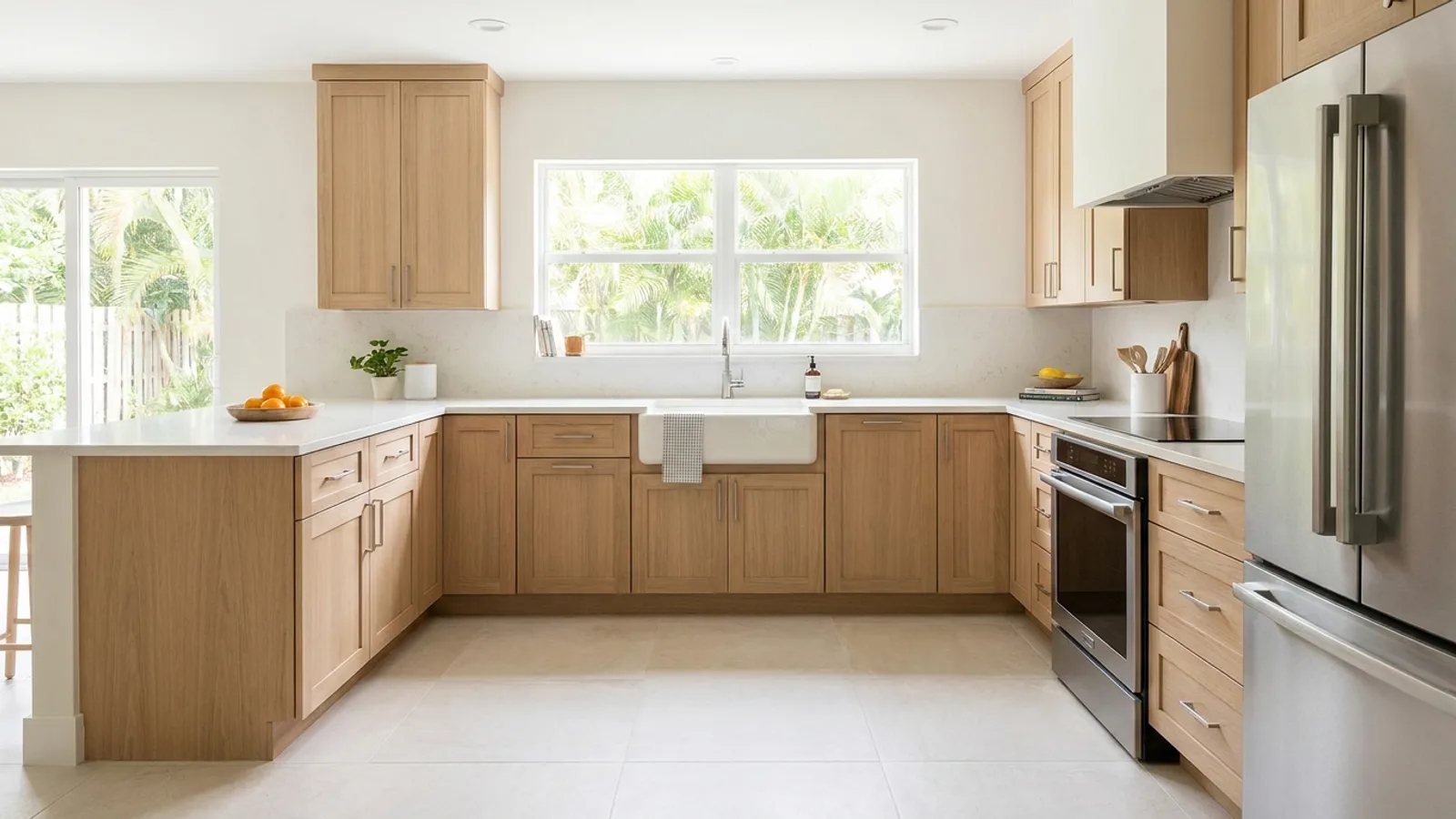
Consider a homeowner refreshing a kitchen with new paint, new cabinet doors on the existing layout, and new flooring, all totaling under $7,500, on a single-family home not in a flood hazard area. The finish-only scope, kept clear of plumbing and electrical, is the type of project HB 803 targets.
If that same homeowner decides to add an outlet or relocate the sink, those elements are electrical and plumbing work that fall outside the exemption. The interior remodel project page explains how trade work changes the permitting picture.
Does cosmetic mean I can ignore the code
No. HB 803 can remove the permit requirement for qualifying work, but it does not remove the requirement that the work comply with the building code. Exempt from a permit is not the same as exempt from doing the job correctly.
That distinction matters if you sell or file an insurance claim later, because non-compliant work can still cause problems even when no permit was required. Our guide on HB 803 and code compliance explains why.
Our take: Treat cosmetic as a narrow category defined by what the work avoids, not by how small it feels. If a project reaches into any of the excluded trades or the structure, plan for a permit and confirm with your building department.
How do I confirm my project qualifies
Run your project through the exemption checker, confirm it stays clear of the excluded trades, verify it is under $7,500 on single-family property, and check that the property is not in a flood hazard area. When any condition is uncertain, ask your building department.
Because HB 803 is implemented locally, your city or county may have its own process to document a claimed exemption. If any part of the project falls outside the exemption, the free permit checker helps you see what permit applies. Confirming before you start protects you if questions come up later.