
HB 803 removes the building permit for qualifying single-family residential work valued at $7,500 or less, but many Florida building departments still ask homeowners to document that a project qualifies. Because HB 803 is implemented locally, the exact paperwork varies, so the practical first step is to ask your building department how it wants a claimed exemption documented.
Key takeaways
- HB 803 exempts qualifying single-family work valued at $7,500 or less from the building permit, effective July 1, 2026.
- The law is implemented locally, so the way you document a claimed exemption varies by jurisdiction.
- Many departments want records showing the work qualifies, such as a value estimate and a description that avoids the excluded trades.
- Keeping your own documentation protects you if the exemption is ever questioned at sale or claim time.
Table of contents
- How do I file a HB 803 exemption request
- Does HB 803 require any paperwork
- What should my documentation include
- How do I document project value
- Exemption documentation checklist
- A worked example: documenting a flooring project
- What if my building department has no form
- What mistakes should I avoid
How do I file a HB 803 exemption request
Start by contacting the building department for your jurisdiction and asking how it wants qualifying HB 803 work documented. Some departments have created a simple form or notice, while others rely on the homeowner to keep records, so there is no single statewide form to file.

The safest approach is to confirm the local process first, then follow it exactly. Do not assume that no permit means no paperwork, and do not assume a form from another city applies to yours. Use the exemption checker to confirm the project qualifies before you contact the department.
Does HB 803 require any paperwork
HB 803 removes the permit requirement for qualifying work, but it does not necessarily remove every local step. Because jurisdictions administer the exemption, some may ask for a short written notice or a value estimate to document that a project fits the exemption.
The point of any documentation is to show the work met the conditions: single-family property, valued at $7,500 or less, not in a flood hazard area, and clear of the excluded trades. Our pillar guide on the HB 803 $7,500 exemption covers those conditions in full.
What should my documentation include
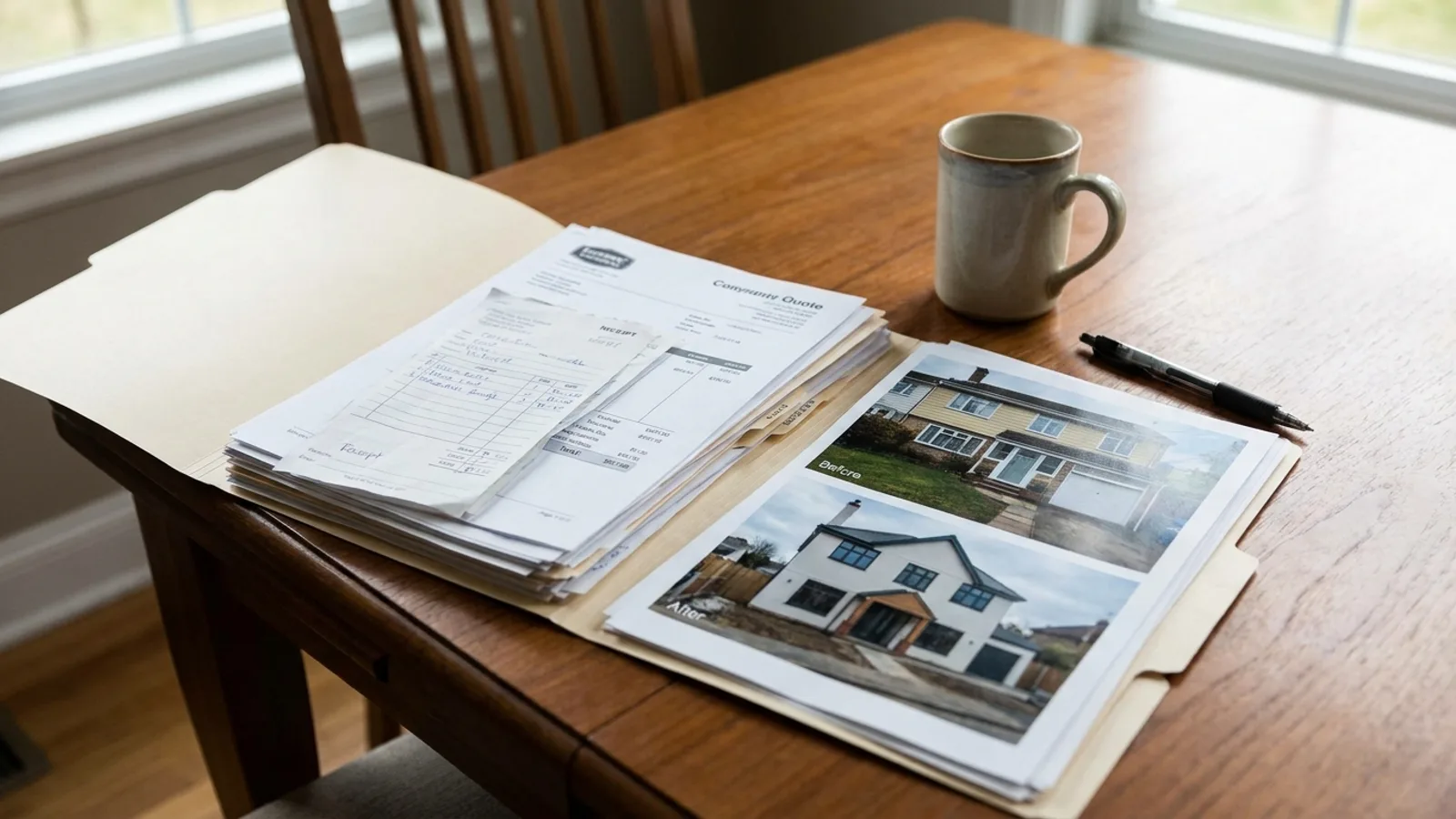
Good documentation describes the work plainly and shows it meets each condition. Even if your department does not require a form, keeping this record protects you later.
A useful file includes:
- A clear description of the scope, worded to show it avoids electrical, plumbing, mechanical, gas, and structural work
- An estimate of the total project value with backup, such as material receipts and any labor quote
- Confirmation the property is single-family and not in a flood hazard area
- Dates and photos before and after the work
Our guide on what counts as cosmetic under HB 803 helps you word the scope correctly.
How do I document project value
Document value by keeping receipts and quotes that add up to the total cost of the work, including materials and labor. The $7,500 threshold is a total, so a credible value estimate is the core of any exemption claim.
Do not try to lower the number by splitting one project into artificial pieces, since departments look at the true scope of the work. Keep the math honest and the paperwork simple.
Exemption documentation checklist
| Item | Why it matters |
|---|---|
| Scope description | Shows the work avoids excluded trades |
| Value estimate and receipts | Supports the $7,500 or less condition |
| Property type confirmation | Exemption is single-family only |
| Flood zone confirmation | Exemption excludes flood hazard areas |
| Before and after photos | Documents what was actually done |
A worked example: documenting a flooring project
Imagine replacing flooring throughout a single-family home for about $6,000, over an existing subfloor, with no plumbing or electrical work, on a property outside any flood hazard area. The homeowner confirms with the building department that this qualifies and asks whether any local notice is expected.
They keep a folder with the flooring quote, material receipts, and photos, and file whatever short notice the department requests. If none is required, the folder still stands as proof the work qualified. The interior remodel project page shows where trade work would change this.
What if my building department has no form
If there is no form, you generally do not need to invent one, but you should still keep your own records. Ask the department to confirm, ideally in writing or by email, that the project does not require a permit under HB 803.
That written confirmation, plus your own documentation, is the strongest position. It shows you asked, followed the local process, and kept proof the work qualified. If part of your project turns out to fall outside the exemption, the free permit checker helps you see what permit that portion needs.
Our take: File whatever your building department asks for, and keep a clean record even when nothing is required. The small effort now is cheap insurance against a buyer, inspector, or claims adjuster questioning the work years later.
What mistakes should I avoid
Avoid assuming the exemption applies without checking the conditions, splitting a project to fit under $7,500, and skipping documentation because no permit is required. Each of these can turn a valid exemption into a dispute.
Confirm the project qualifies with the exemption checker, verify the local process, and keep your paperwork. If any part of the scope touches the excluded trades, treat that portion as permitted work.