
An after-the-fact permit is a permit you apply for after work was already done without one, and it is the standard way Florida homeowners bring past projects into compliance. The building department reviews the completed work, often requires inspections of concealed elements, and issues the permit once the work is shown to meet code, usually with an added penalty fee.
Key takeaways
- An after-the-fact permit legalizes work that was completed without the required permit.
- The process usually involves an application, plan review, inspections, and a penalty fee set by the jurisdiction.
- Inspectors may need to open walls or other concealed areas to verify the hidden work meets code.
- Resolving unpermitted work is almost always better than leaving it, especially before a sale.
Table of contents
- What is an after-the-fact permit in Florida
- When do I need an after-the-fact permit
- How does the after-the-fact process work
- What does an after-the-fact permit cost
- After-the-fact permit versus doing nothing
- A worked example: an unpermitted screen room
- What if the work does not meet current code
- How do I start an after-the-fact permit
What is an after-the-fact permit in Florida
An after-the-fact permit is simply a regular permit applied for after the work is already complete. Florida building departments use it to bring unpermitted projects into the official record and confirm the work meets code.

The name describes the timing, not a separate type of permit. You still submit the same kind of application, but the department knows the work exists already, which usually means added scrutiny and a penalty fee. The goal is the same as a normal permit: verified, code-compliant, recorded work.
When do I need an after-the-fact permit
You need one when work that required a permit was done without it. Common examples include a room addition, an electrical or plumbing change, a water heater swap, or a structure like a shed or screen room that should have been permitted.
If you are unsure whether the original work needed a permit, the free permit checker can help you decide before you contact the department. Our guide on building without a permit explains the risks that make resolving it worthwhile.
How does the after-the-fact process work
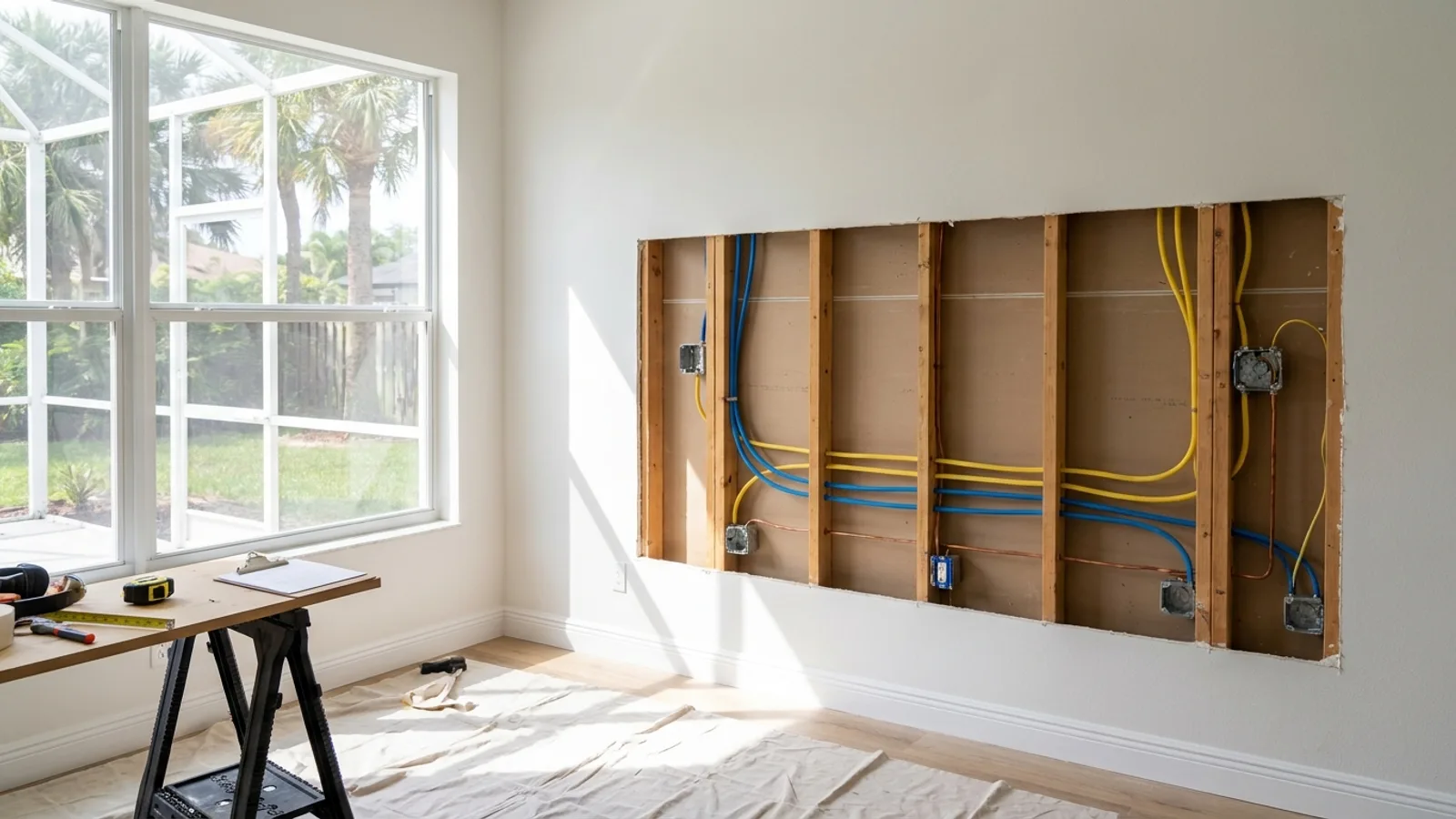
You apply, the department reviews, inspectors verify the work, and the permit is finalized once everything passes. Because the work is already built, inspectors often need to see concealed elements, which can mean opening a wall, ceiling, or other covered area.
The typical sequence looks like this:
- Submit an application describing the completed work, often with drawings.
- Pay the permit fees and any after-the-fact penalty.
- Schedule inspections, including exposing concealed work if required.
- Correct anything that does not meet code.
- Receive the finalized permit once inspections pass.
Our overview of the permit inspection order shows how inspections normally sequence.
What does an after-the-fact permit cost
Costs vary by jurisdiction and project, but an after-the-fact permit generally includes the normal permit fees plus a penalty that is often a multiple of the base fee. There can also be costs to open and restore concealed work so inspectors can see it.
Because fees are set locally, do not rely on a number from another city. Contact your building department for the exact penalty structure, and see the Polk County Building Division page as an example of where local fee information lives.
After-the-fact permit versus doing nothing
| Consideration | After-the-fact permit | Leaving it unpermitted |
|---|---|---|
| Code compliance | Verified by inspection | Unknown, possibly unsafe |
| Selling the home | Cleared from the record | Often a deal obstacle |
| Cost | Fees plus penalty now | Potential fines or rework later |
| Insurance | Work is documented | Claims can be complicated |
| Peace of mind | Resolved | Ongoing exposure |
A worked example: an unpermitted screen room
Imagine a homeowner who added a screen room years ago without a permit and now wants to sell. They apply for an after-the-fact permit, submit drawings of the enclosure, and the inspector checks the footings and frame anchoring.
If the anchoring cannot be verified without exposing it, the inspector may require a section to be opened. Once the work is shown to meet the wind requirements, the permit is finalized. The screen enclosure project page outlines what these structures normally require.
What if the work does not meet current code
If the completed work does not meet code, you will generally need to correct it before the permit can be finalized. That can mean upgrading connections, adding anchoring, or in some cases redoing part of the work.
This is the honest downside of skipping a permit the first time: fixing concealed work after the fact is more expensive than doing it right up front. Still, correcting it now is better than carrying an unresolved liability.
Our take: An after-the-fact permit can feel like a punishment, but it is the responsible path. It converts an unknown risk into documented, code-compliant work, which protects you at sale, at claim time, and for the safety of everyone in the home.
How do I start an after-the-fact permit
Contact the building department for your jurisdiction, describe the work honestly, and ask for the after-the-fact application and fee schedule. Gather any records you have, such as contractor invoices or photos taken during the work.
If the original project also has related open permits, resolve them together. Our guide on closing an open permit pairs naturally with this process when both issues exist on the same home.