
Closing an open permit in Florida means getting the final inspection passed so the building department marks the permit finaled. An open permit is one that was issued but never finalized, usually because the final inspection was never called. You close it by identifying the permit, resolving any missing inspections, and passing the final, though older permits sometimes need extra steps if the original contractor is gone or the work was never inspected.
Key takeaways
- An open permit was issued but never finalized, most often because the final inspection was never requested.
- You close it by passing the required final inspection so the building department marks the permit finaled or closed.
- Open permits commonly surface during a home sale, refinance, or insurance review, so resolving them early avoids closing delays.
- Older or contractor-abandoned permits may need reactivation, a transfer, or an after-the-fact review before they can be finaled.
Table of contents
- What is an open permit in Florida
- How do you find an open permit on your property
- Why is an open permit a problem
- How do you close a straightforward open permit
- What if the contractor is gone or the permit is old
- Ways to close an open permit at a glance
- A worked example for an inherited open permit
- How do you avoid open permits in the first place
What is an open permit in Florida
An open permit is a permit the building department issued but never closed, meaning the final inspection has not been recorded as passed. The work may be fully finished in reality, yet the record still shows the job as incomplete.

This is different from an expired permit, which lapsed for inactivity, though the two often overlap. Both leave the permit in an unfinalized state, and both are closed by getting the required inspections done.
How do you find an open permit on your property
You find open permits by searching your address in the county or city building department's online permit portal, or by calling the building department directly. The record shows each permit's status, and anything not marked finaled or closed is open.
Many title companies also run a municipal lien and permit search during a sale, which is when open permits often first appear. Our guide on how to look up a permit walks through searching the portals. Use the Polk or Orange county resources to reach the right office.
Why is an open permit a problem
An open permit is a problem mainly because it signals unfinished or uninspected work, which can stall a sale, refinance, or insurance decision. A buyer's title search can flag it, and lenders and insurers may want it resolved.
There is also a safety angle. An open permit can mean a required inspection never verified concealed work like wiring or plumbing. Resolving it confirms the work is safe and clears the record, which is why our guide on selling a house treats open permits as a pre-sale task.
How do you close a straightforward open permit
For a recent permit where the work is done, you close it by requesting the final inspection, passing it, and confirming the department updates the status to finaled. If the permit is still active, this can be a single visit.
If the permit lapsed, you may first need to reactivate it, as our expired permit guide explains, then schedule the final. When the inspector passes the work, the permit finals and the record closes. The free permit checker helps you frame what inspections a project involves.
What if the contractor is gone or the permit is old
If the original contractor is no longer available or the permit is years old, closing it takes extra steps such as transferring the permit, reactivating it, or having the department inspect existing work. The building department decides which path fits.
When a contractor pulled the permit and disappeared, the permit may need to be transferred to you or a new licensed contractor before it can be finaled. If work was done but never inspected, the department may require an after-the-fact review to verify it meets code.
Ways to close an open permit at a glance
| Scenario | Path to close | Typical requirement |
|---|---|---|
| Recent permit, work finished | Request final inspection | Pass the final |
| Permit lapsed for inactivity | Reactivate, then final | Fee plus re-inspection |
| Contractor gone | Transfer, then final | New responsible party |
| Work done, never inspected | After-the-fact review | Verification of existing work |
A worked example for an inherited open permit
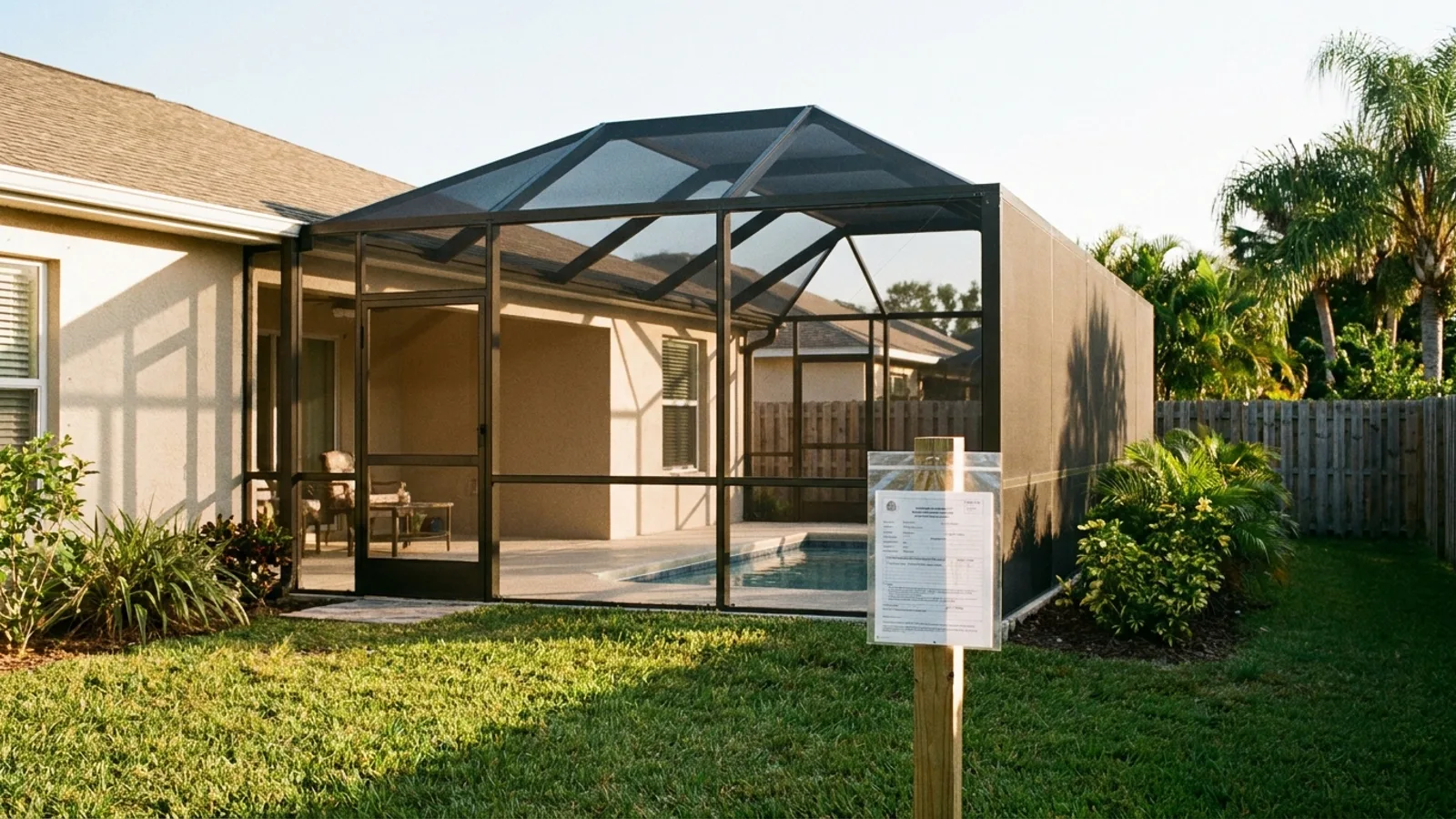
Imagine buyers in Orange County discover, during their purchase, an open permit from a prior owner's screen enclosure. The work looks complete, but the final inspection was never called.
They confirm the permit status on the county portal, learn it lapsed, and ask the building department how to close it. The department allows reactivation, so they pay the fee, schedule the final, and the inspector verifies the enclosure. It passes, the permit finals, and the title issue clears. Handling it before closing kept the sale on track. Our screen enclosure project page covers what that permit typically involves.
Our take: Never let an open permit ride, especially one you inherited. It is far cheaper and simpler to close a permit now than to scramble during a sale when a buyer's title search flags it and the clock is running on your closing.
How do you avoid open permits in the first place
You avoid open permits by making sure every permit you pull gets its final inspection and finaled status before you consider the project done. A finished-looking job is not truly finished until the permit is closed.
Keep the permit number, track your inspections, and confirm the final was recorded. If you hire out the work, verify the contractor closed the permit rather than assuming. Our guide on contractor versus owner-builder covers who is responsible for finaling the permit in each case.