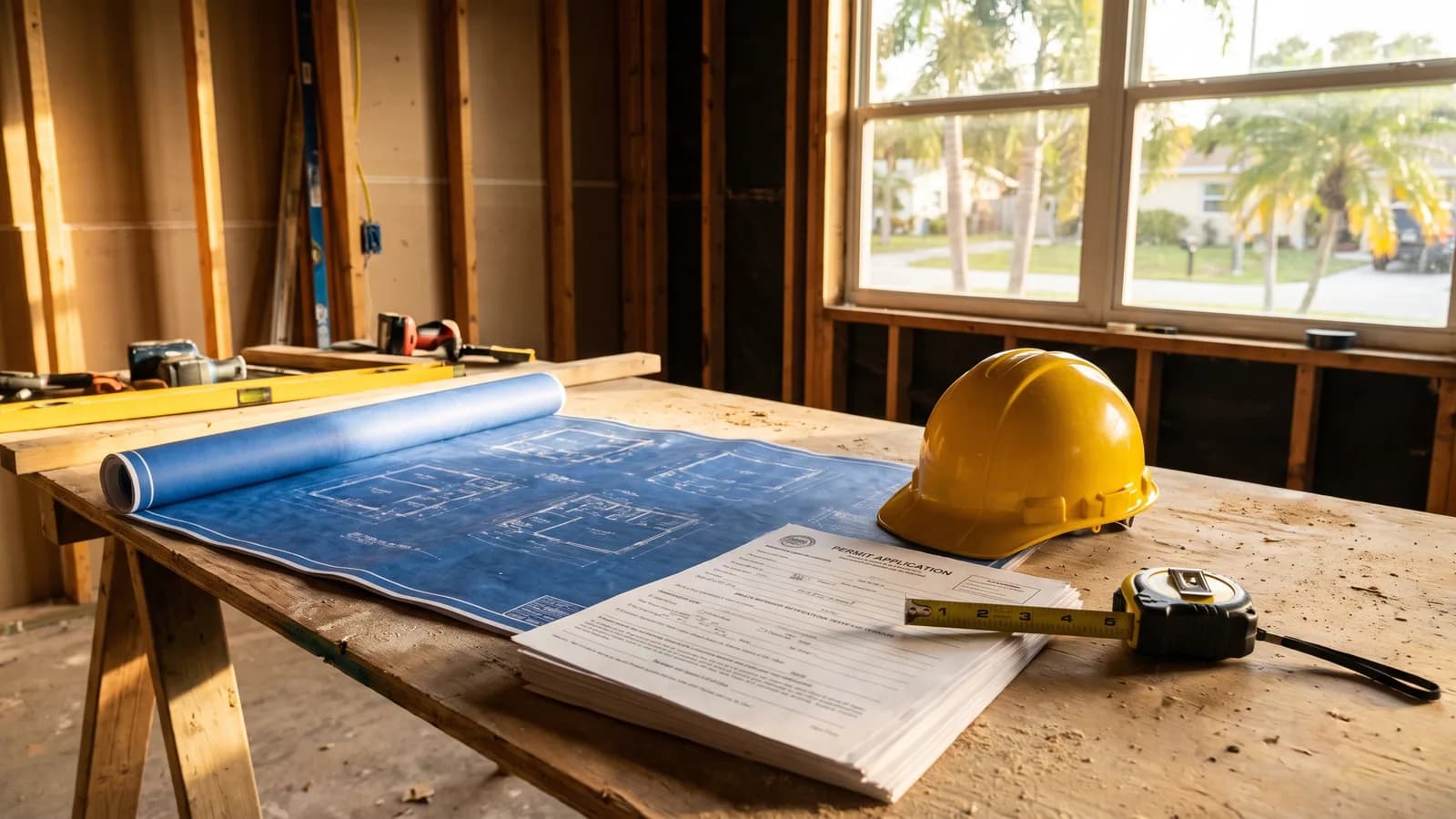
In Florida you generally have two ways to permit a home project: hire a licensed contractor who pulls the permit and carries responsibility, or use the owner-builder exemption to pull the permit yourself. A contractor brings licensing, insurance, and code knowledge, while the owner-builder path saves the contractor's markup but puts legal and safety responsibility squarely on you. Choosing between contractor and owner-builder comes down to your project's complexity, your skills, and how much liability you are willing to hold.
Key takeaways
- A licensed contractor pulls the permit and carries responsibility for code compliance, licensing, and insurance.
- Florida's owner-builder exemption, under Florida Statutes 489.103, lets you permit work on your own home, but you take on the contractor's legal responsibilities.
- The owner-builder path can save money but exposes you to liability for the work, subcontractors, and any code violations.
- Complex, structural, or code-heavy projects usually favor a licensed contractor, while simple work may suit a capable owner-builder.
Table of contents
- Contractor or owner-builder, which should you choose
- What does a licensed contractor bring
- What is the owner-builder exemption
- What responsibilities do you take on as owner-builder
- When does each option make sense
- Contractor versus owner-builder at a glance
- A worked example for a garage conversion
- How do you decide for your project
Contractor or owner-builder, which should you choose
Choose a licensed contractor when you want a professional to carry the licensing, insurance, and responsibility, and consider owner-builder only for work you can genuinely manage and are willing to be legally accountable for. Both are legitimate paths in Florida; the right one depends on the project and your risk tolerance.
The decision is not only about cost. It is about who is responsible if something goes wrong, who handles inspections, and who is liable for subcontractors. Weigh those honestly before you pull a permit.
What does a licensed contractor bring
A licensed contractor brings state licensing, insurance, and accountability for the work. They pull the permit, know the code, coordinate inspections, and are the responsible party if the work does not comply.
You can verify a contractor's license through the Florida DBPR, which is the state agency that licenses the construction industry. Licensing and insurance mean recourse if problems arise, which is exactly what the owner-builder path gives up. Our guide on licensed contractor versus handyman covers which work legally requires that license.
What is the owner-builder exemption
The owner-builder exemption, in Florida Statutes 489.103, lets a homeowner act as their own contractor to build or improve their own property without holding a contractor license. It is intended for owners doing or directly supervising work on a home they own and occupy or intend to occupy.
The exemption comes with conditions and disclosures the owner must sign, acknowledging they take on the contractor's responsibilities. It is a real option, not a loophole, but it is narrow. Our dedicated owner-builder permits guide covers the eligibility rules and disclosures in depth.
What responsibilities do you take on as owner-builder
As an owner-builder you take on the legal and safety responsibilities a licensed contractor would normally hold, including code compliance, proper permitting, inspection coordination, and liability for the work. You also become responsible for anyone you hire.
That last point catches people off guard. If you hire unlicensed help, you can be liable as their employer and for their injuries and errors. You are also responsible if the work fails inspection or violates code. This is why the free permit checker and careful planning matter more, not less, when you go owner-builder.
When does each option make sense
A licensed contractor makes sense for structural, electrical, plumbing, mechanical, and code-heavy work where mistakes are dangerous or costly. Owner-builder can make sense for simpler, well-understood projects you can manage and are prepared to be accountable for.
Project complexity is the clearest signal. A load-bearing wall removal or a major addition leans strongly toward a contractor, while a straightforward shed or fence may suit a capable owner-builder. Match the choice to the risk.
Contractor versus owner-builder at a glance
| Factor | Licensed contractor | Owner-builder |
|---|---|---|
| Who pulls the permit | The contractor | You |
| Responsibility for code | The contractor | You |
| Licensing and insurance | Carried by contractor | Not required, so no built-in recourse |
| Cost | Includes contractor markup | Saves markup, adds your time and risk |
| Best for | Complex, structural, code-heavy work | Simpler work you can manage |
A worked example for a garage conversion
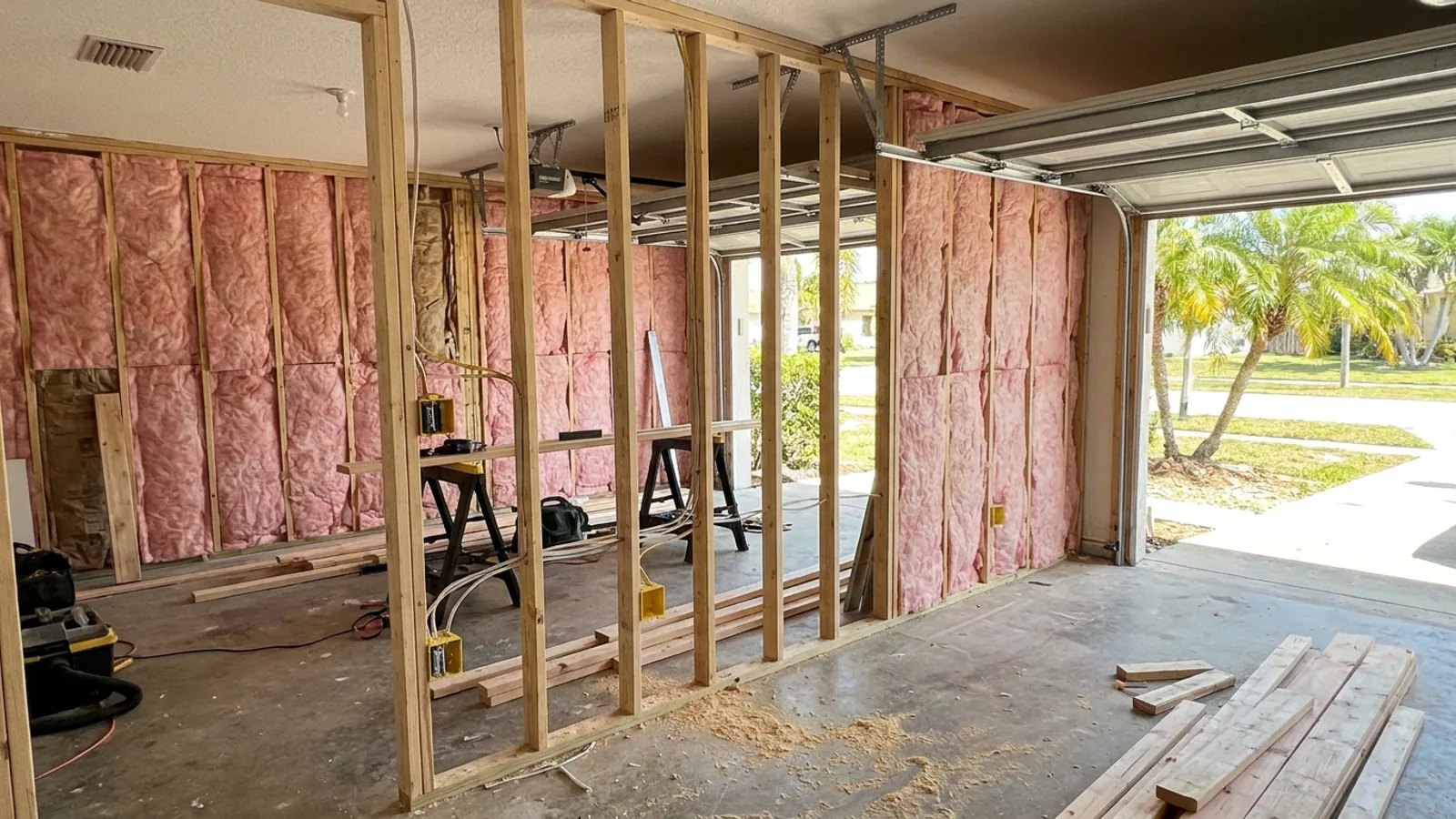
Consider a homeowner in Polk County converting a garage into a living space, which involves framing, electrical, insulation, and mechanical work. They compare paths.
As owner-builder, they would pull the permit, coordinate every inspection, and be liable for the electrical and structural work and any helpers they hire. Given the electrical and code complexity, they decide to hire a licensed contractor, who pulls the permit, carries insurance, and manages inspections. They trade the markup for professional responsibility on a project where mistakes carry real safety risk. For simpler work later, they might revisit the owner-builder route.
Our take: The owner-builder exemption is a genuine money-saver on simple projects, but it is not free. You are trading dollars for legal and safety responsibility. On anything structural or involving electrical, gas, or major plumbing, the protection a licensed contractor provides is usually worth the cost.
How do you decide for your project
Decide by weighing the project's complexity, your own skills, and how much liability you are prepared to hold, then confirm requirements with your building department. Some jurisdictions also limit how owner-builder permits can be used, so check locally.
Start with the free permit checker to understand the scope, review the Polk or Orange county resources, and read the owner-builder permits guide before signing any owner-builder disclosure. The honest question is not just what saves money, but who should be responsible if the work goes wrong.