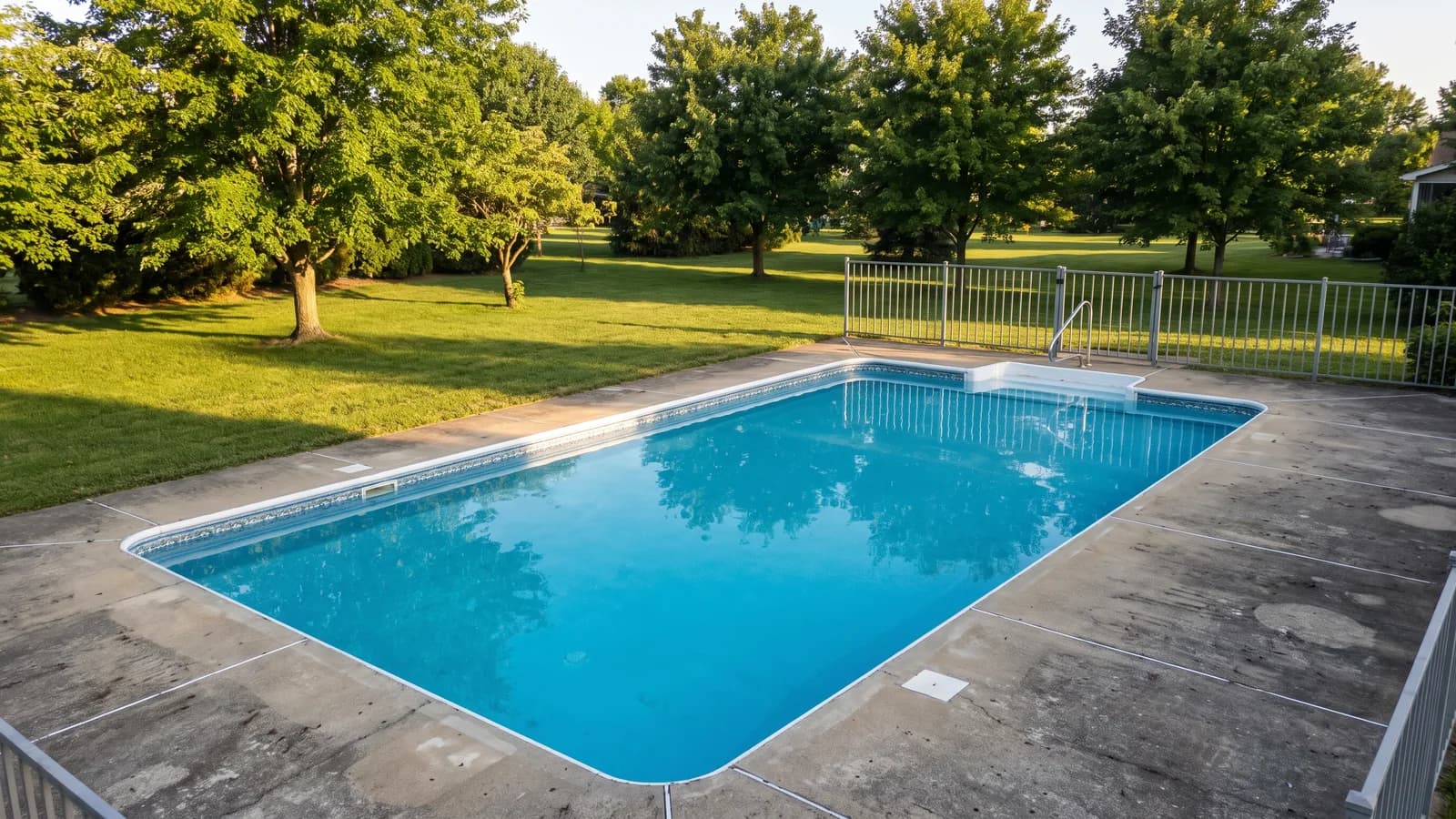
A residential swimming pool in North Carolina needs a building permit, and usually electrical and plumbing permits alongside it. State law requires a permit before commencing construction of any building or structure, and a pool brings in bonding, circulation equipment and a barrier. The barrier is the part inspectors treat as non-negotiable, because it is the life safety element rather than a landscaping choice.
Key takeaways
-
NCGS 160D-1110(a) requires permits for construction of a structure and for the electrical and plumbing work a pool brings with it.
-
The barrier is a code requirement reviewed and inspected with the pool, not a fence you choose afterwards.
-
Electrical bonding around a pool is inspected before it is covered, so it belongs to the rough stage.
-
North Carolina has a homeowner electrical exemption, but it does not remove the permit or the inspections.
-
In the twenty CAMA coastal counties, a pool in an Area of Environmental Concern needs a CAMA permit too.
Do I need a permit for a swimming pool in North Carolina?
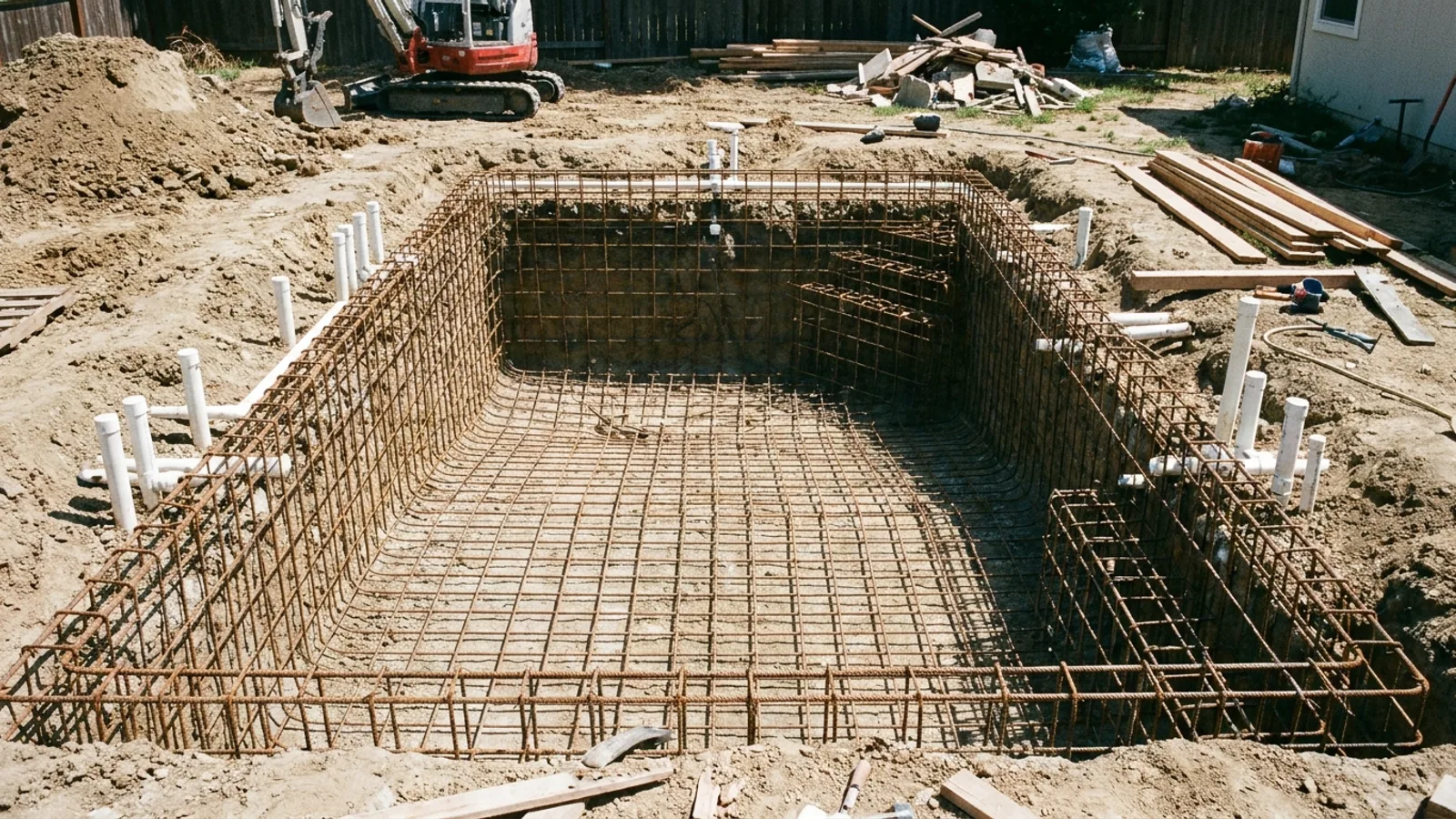
Yes, and usually more than one. NCGS 160D-1110(a) requires a permit before commencing the construction of any building or structure, and separately before the installation, extension or general repair of any plumbing system and before the installation, extension, alteration or general repair of any electrical wiring, devices, appliances or equipment.
A pool touches all three. There is the structure itself, the circulation plumbing, and the electrical work for pumps, lighting and the bonding grid. Expect the project to carry several permits or at least several inspection disciplines, and expect the trades to gate each other in the way the inspection order guide describes.
Above-ground pools are not automatically outside this. Whether a given above-ground installation needs a building permit is a local question, but the electrical work for its pump almost always needs one, and the barrier requirement does not disappear because the pool is portable.
Why is the barrier treated so seriously?
Because it is the life safety element of the whole project. A pool barrier is specified by code rather than by preference, covering things like minimum height, restrictions on climbable features and openings, and gates that are self-closing and self-latching with the latch positioned out of easy reach.
That is a different standard from the fence rules in your zoning ordinance. A fence that satisfies your local height and setback rules will not automatically satisfy a pool barrier requirement, and the inspector checking the barrier is checking it against the code. The fence permit guide covers the zoning side, and the two need to be reconciled in the design rather than at inspection.
Plan the barrier as part of the pool from the start. Treating it as landscaping to sort out afterwards is how projects end up with a finished pool that cannot be approved or safely filled.
What does the electrical inspection cover?
Bonding first. A pool creates a large conductive environment, and the bonding grid that ties the shell, the deck reinforcement, the ladders and rails, and the equipment together exists to eliminate voltage differences that would otherwise be dangerous. It is installed early and it gets buried, which puts it squarely in the rough inspection.
North Carolina's Administrative Code defines rough-in as being made when the parts of the electrical system that will be hidden from view have been placed, but before any wall or ceiling finish or insulation is installed, and its commentary treats underground components as rough-in work inspectable at any point before covering. On a pool that means the bonding and any underground conduit are inspected before the deck goes over them.
| Element | What it involves | When it is inspected |
|---|---|---|
| Excavation and shell | Structure, reinforcement | Before concrete or backfill |
| Bonding grid | Ties shell, deck steel, rails and equipment together | Before it is covered |
| Circulation plumbing | Suction and return lines, pressure testing | Before backfill |
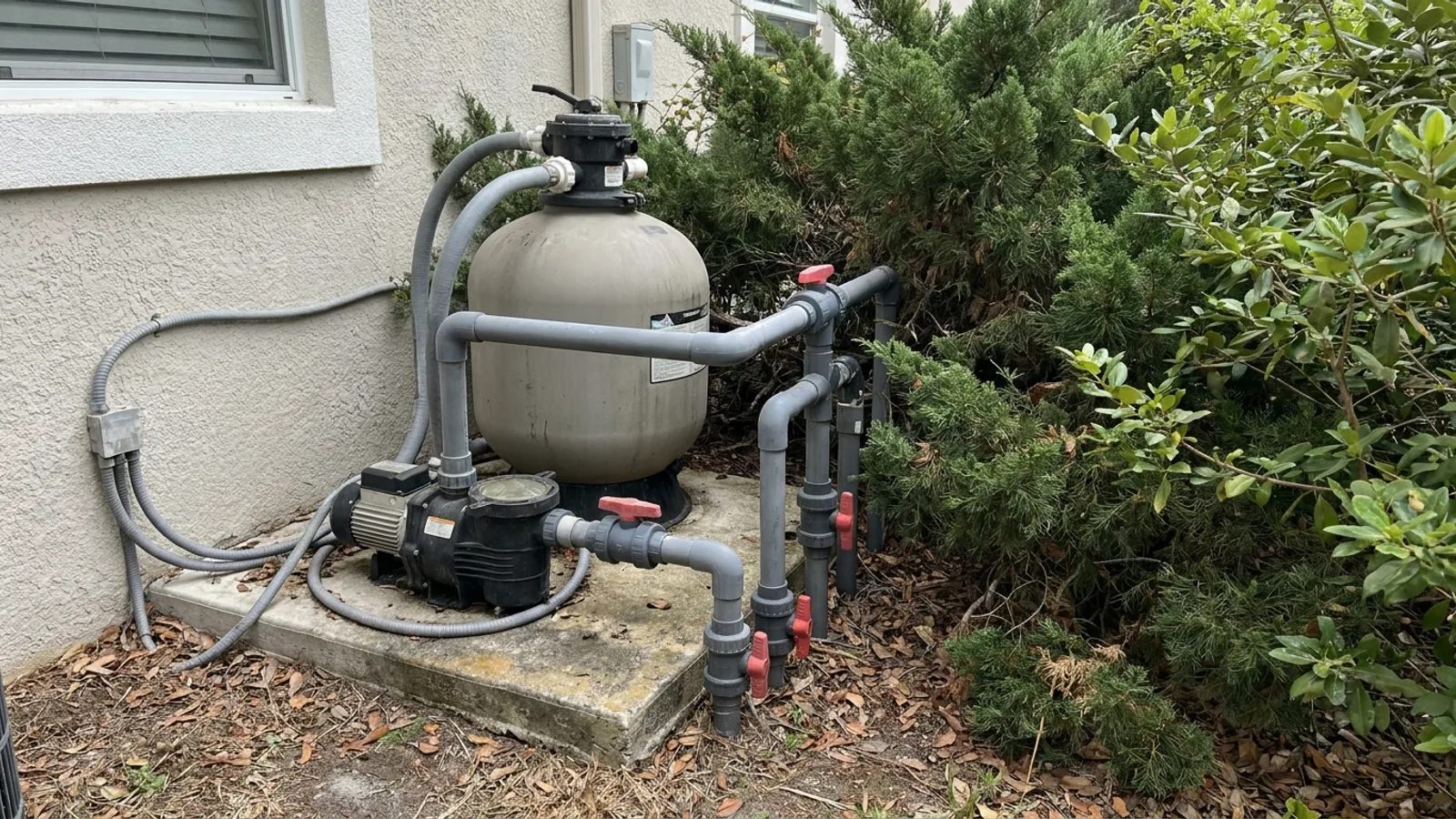
| Equipment and circuits | Pump, heater, lighting, disconnect | Rough and final |
| Barrier and gates | Height, climbability, openings, self-closing self-latching gates | Before use, with the final |
Can I do the work myself?
On the electrical licensing question, North Carolina is more permissive than most states. NCGS 87-43.1(5a) exempts a person installing, maintaining, altering or repairing electric work upon that person's own property and for that person's own benefit, when the property is not intended at the time for rent, lease or sale.
That is a licensing exemption and not a permit exemption. The permit sits in Chapter 160D and still applies, and a homeowner cannot use the narrow no-permit exceptions in 160D-1110 because each of them requires a licensed person. Pool bonding is also an unusually unforgiving thing to learn on, since a defect is invisible and the consequence is electric shock in water.
The plumbing and heating side is stricter again. NCGS 87-21(c) applies the licensing article to the business of plumbing and heating contracting and exempts only minor repairs and minor replacements, defined as parts that need no change in energy source, fuel type, or routing or sizing of venting or piping.
What about setbacks and the coast?
Pools count as structures for zoning in most ordinances, so setbacks, lot coverage and easements apply, and the location is normally checked before concrete. A pool placed inside a setback needs a variance under NCGS 160D-705(d) or has to move, which is why the setbacks and zoning guide is worth reading at the design stage.
On the coast there is another layer. The Coastal Area Management Act designates twenty coastal counties by statute, and development in an Area of Environmental Concern needs a CAMA permit as well. Excavation and filling both count as development, which a pool involves by definition. Areas of Environmental Concern cover only a small share of the land, so most coastal homes are unaffected, but proximity to water is the trigger to check.
Our take: settle the barrier and the equipment location on the drawing, not on site. Those two decisions cause more late redesign than anything else in residential pool work, and both are cheap to get right while the project is still lines on paper.
What should I do before signing a contract?
Ask which permits the project needs and who is pulling them. Ask how the barrier will be achieved and whether it doubles as your boundary fence, because the two rule sets differ. Confirm your setbacks and lot coverage with planning, and ask about easements, since a pool over a utility easement is a serious problem.
If you are in a coastal county, ask whether your parcel touches an Area of Environmental Concern. Then run the free permit checker for your project and county, read what a North Carolina inspector checks, and check the office details for your North Carolina county.