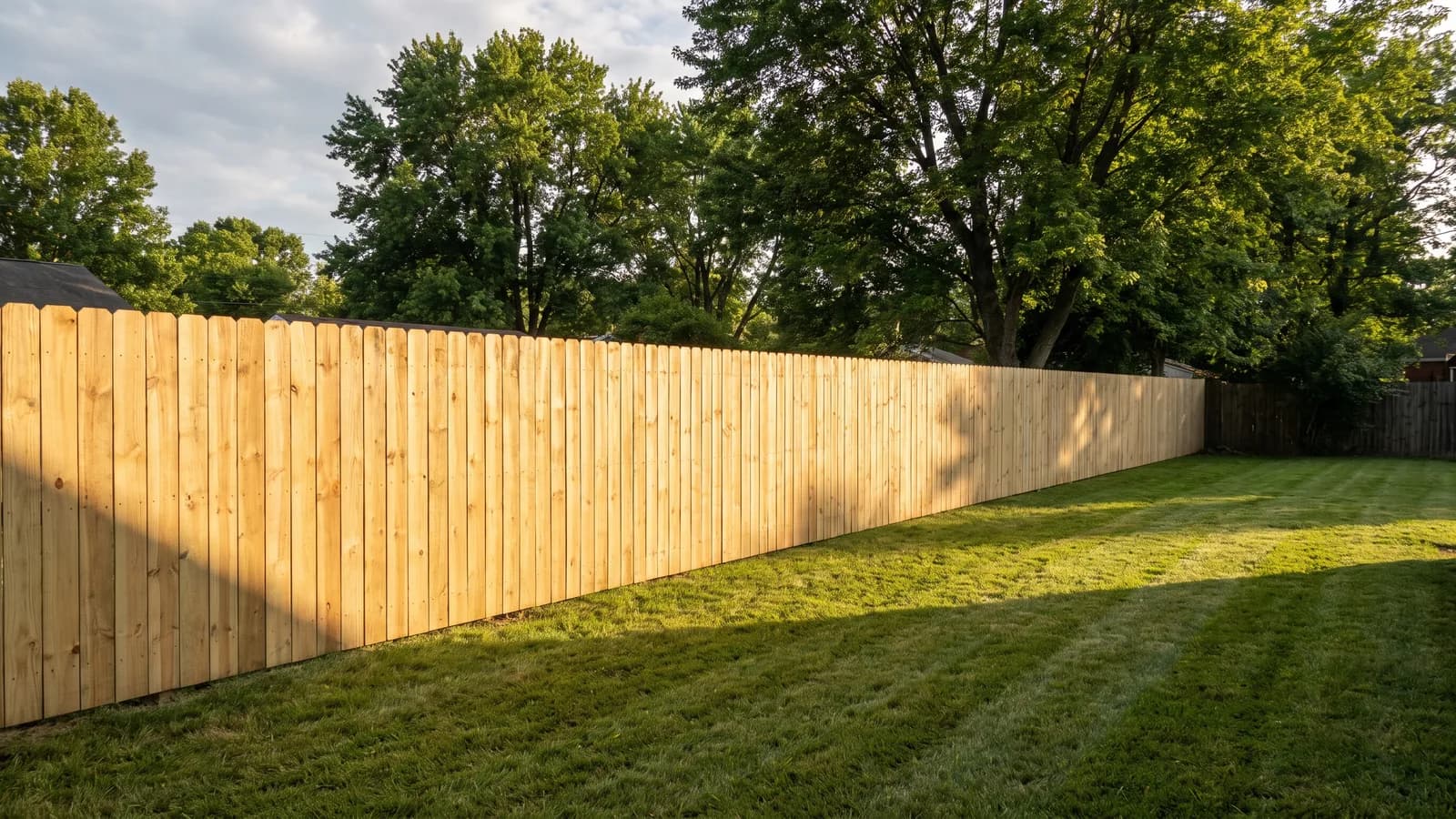
A fence in North Carolina is usually a zoning question rather than a building code one. The State Building Code governs how structures are built, and a typical residential fence is not the kind of structure it regulates, so whether you need a permit turns on your local ordinance. Some North Carolina towns require a fence permit outright. Pool barriers are the exception that is genuinely regulated.
Key takeaways
-
Fence rules in North Carolina are local. Height limits, corner visibility and which side faces out all come from the zoning ordinance.
-
Some North Carolina municipalities require a fence permit for residential property, including within the extraterritorial jurisdiction.
-
A pool barrier is different. That is a safety requirement tied to the pool, not a fence preference.
-
The property line matters more than the fence. A survey costs less than moving one.
-
Private covenants can be stricter than the ordinance, and the county will not enforce or mention them.
Do I need a permit to build a fence in North Carolina?
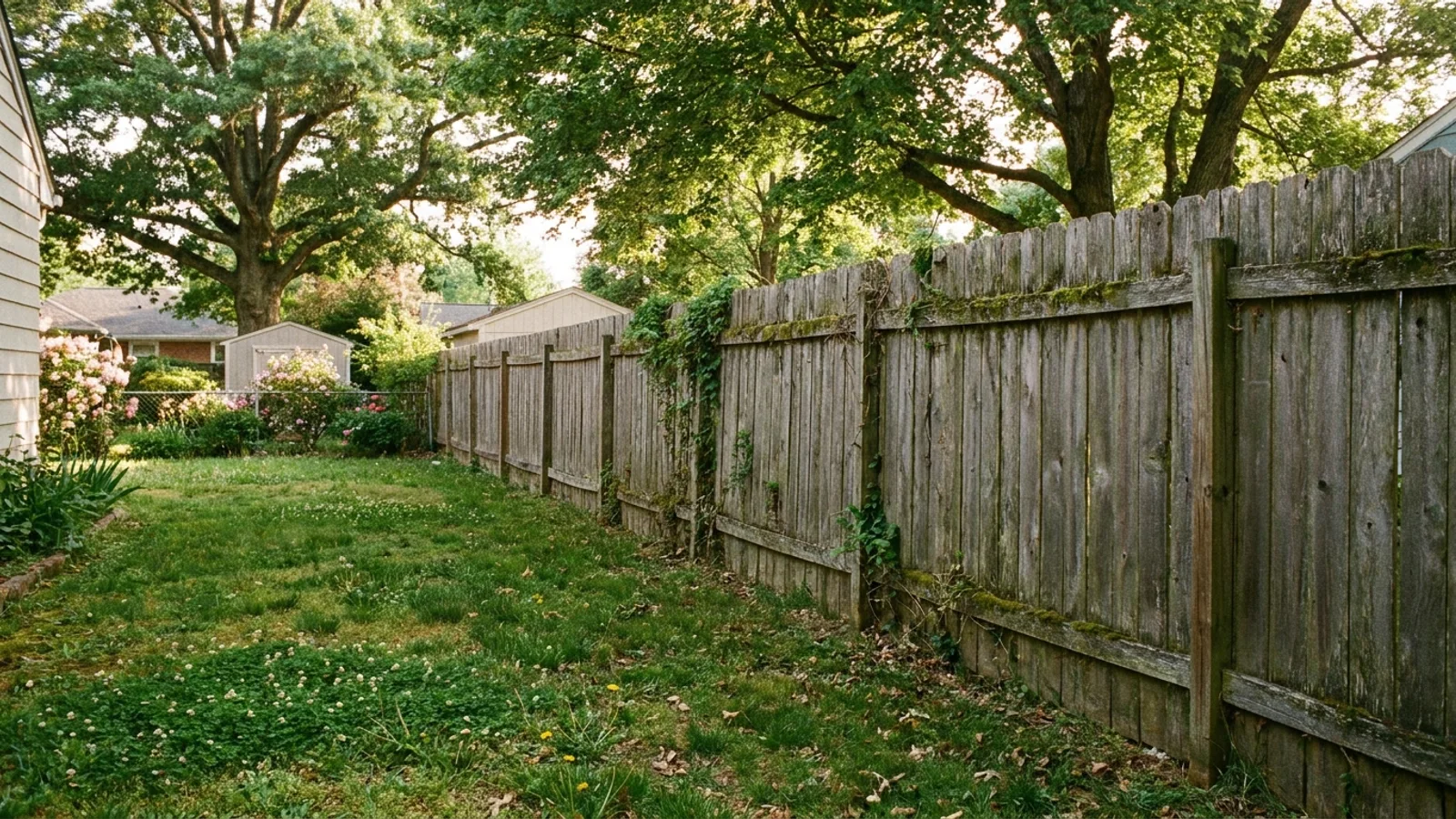
Ask your city or county, because there is no statewide answer and the practice genuinely varies. Fences are regulated primarily through zoning, and under NCGS 160D-403(a) no person may commence or proceed with development without first securing any required development approval from the local government with jurisdiction, with that approval in writing.
Some North Carolina municipalities require a fence permit explicitly. Wake Forest, for example, requires a fence permit for residential uses within its corporate limits and its extraterritorial jurisdiction. That last part catches people, because a property outside the town limits can still sit inside the town's planning jurisdiction.
Other jurisdictions treat an ordinary residential fence as exempt and only get involved where it affects sight lines, a floodplain or a pool. The only reliable move is to call before you buy materials.
What do local fence rules usually control?
Four things, and they are dimensional rather than structural.
Height is the main one, and it is normally different in a front yard than in a side or rear yard. Corner lots attract a separate rule, because a fence near an intersection can block a driver's view, so ordinances often impose a sight triangle with a lower height limit. Location relative to the property line and to any easement is third. And many ordinances specify orientation, requiring the finished side to face outward toward the neighbour or the street.
None of that is in the building code. It is in your zoning ordinance, and it changes between districts within a single county.
Where exactly is my property line?
Not where the old fence is, and not where the mowing stops. This is the single most expensive assumption in fence building, because a fence set on the wrong side of a line is a private dispute with your neighbour rather than a code problem your inspector can resolve.
Get your recorded plat and, if there is any doubt, have the line surveyed before posts go in. Check the plat for easements too. A utility or drainage easement can run along exactly the line you were planning to fence, and an easement holder may be entitled to remove anything blocking access.
| Question | Who answers it | Where it comes from |
|---|---|---|
| Do I need a fence permit | City or county planning | Local zoning ordinance |
| How tall can it be | City or county planning | Zoning, by district and by yard |
| Where is my line | Surveyor, recorded plat | Your deed and plat |
| Pool barrier requirements | Building department | State Building Code, tied to the pool |
| Style, colour, materials | Homeowner association | Private covenants |
Is a pool fence different?
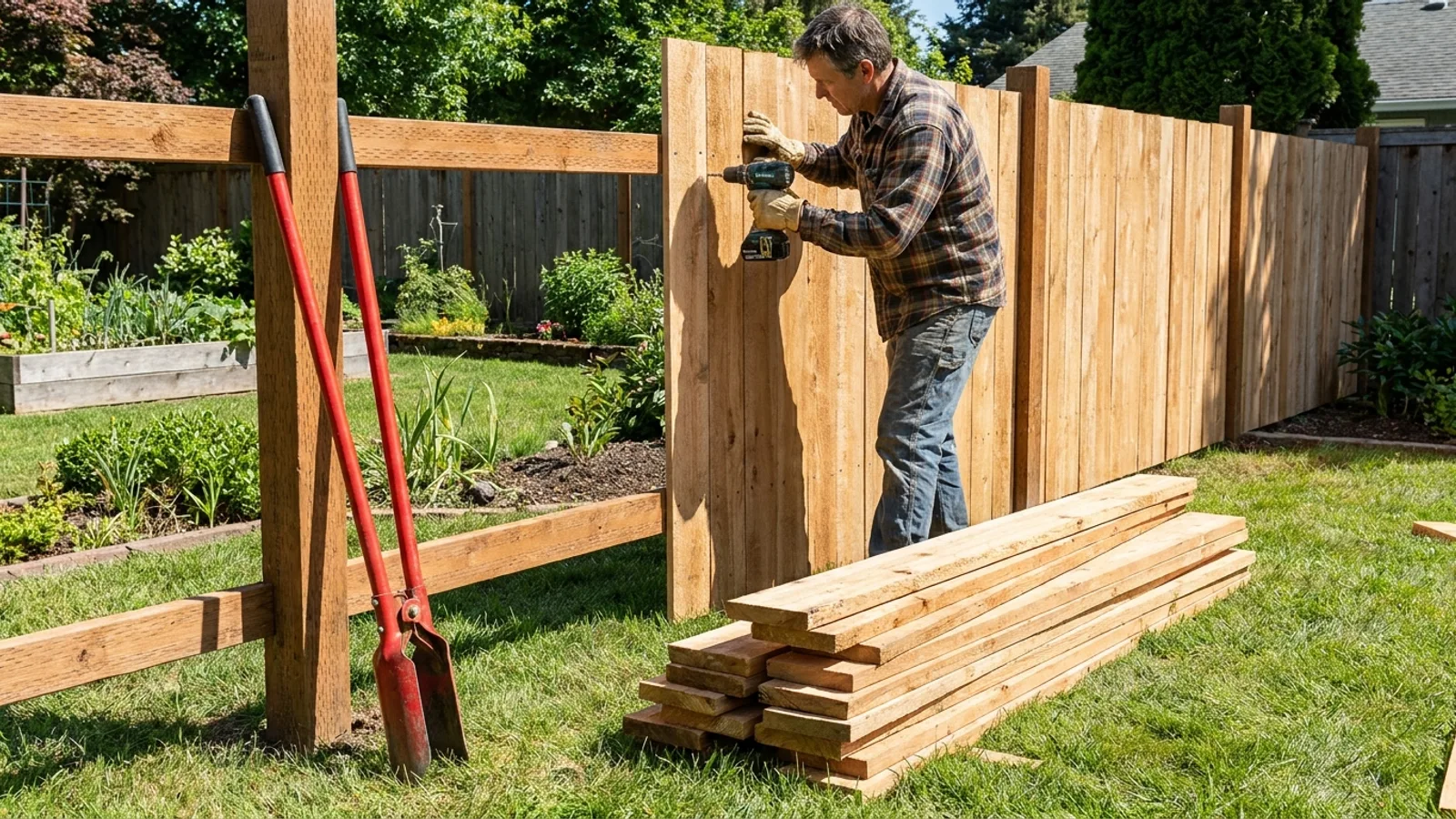
Yes, and this is the one fence question that is genuinely a code matter. A barrier around a swimming pool is a life safety requirement attached to the pool rather than a boundary preference, so it is reviewed with the pool permit and inspected as part of that work.
That means the pool barrier is specified: things like minimum height, restrictions on climbable features and gaps, and self-closing and self-latching gate hardware are set by the code rather than by what looks reasonable. A fence that satisfies your zoning ordinance for a back yard will not automatically satisfy a pool barrier requirement, and the inspector checking it is checking against the code, not the ordinance.
If a pool is in your plans, treat the barrier as part of the pool project from the start rather than as landscaping to sort out afterwards.
Does a fence need inspections?
An ordinary residential fence permitted through zoning usually gets a zoning review rather than the trade inspections a building permit brings. Where a fence is part of a permitted structure or a pool barrier, it is inspected with that work, and the sequence in what a North Carolina inspector checks applies.
Watch for the setback check either way. North Carolina departments commonly confirm location in the field, and a fence sitting inside an easement or over a line is easier to correct before the posts are set in concrete.
Our take: two phone calls before you buy lumber. One to planning for the height limit, the permit question and any corner sight rule, one to your neighbour if the line is at all unclear. Fence disputes are the most common neighbour conflict in residential construction and almost all of them trace back to nobody checking the plat.
What about my homeowner association?
Separate, private and often stricter. Covenants routinely control fence material, height, colour and style, and an association can require approval even where your city does not. The local government will not enforce covenants and generally will not mention them, so a permit is not permission from your association.
Read the covenants before you design, and get any association approval in writing. It is the same principle that runs through the setbacks and zoning guide: several different authorities can each say no, and satisfying one says nothing about the others.
What should I do first?
Call planning and ask three questions: does a fence need a permit here, what is the maximum height in each yard, and is there a corner or sight triangle rule on my lot. Pull your plat and confirm the lines and easements. Check your covenants. Then confirm whether a pool barrier is in play, since that changes the specification entirely.
Run the free permit checker for your project and county, read how to find your North Carolina building department if you are unsure which office covers your address, and check the details for your North Carolina county.