In North Carolina, somebody always inspects. State law does not leave building code enforcement to local discretion the way some states do: NCGS 160D-1102 requires every local government to provide inspection services, and if one fails to do so or stops, the State Fire Marshal steps in. What varies is not whether you have a building department, but which one covers your parcel, and North Carolina gives local governments four different ways to arrange that.
Key takeaways
-
Every North Carolina local government shall perform building inspection duties, under NCGS 160D-1102(a). There is no opt-out.
-
It may do so four ways: its own inspection department, a joint department with other units, a contract with another unit of government, or arranging for the county to perform inspections inside a city's jurisdiction.
-
That fourth option is why a North Carolina city address is often permitted by the county. Charlotte is the well-known example, where Mecklenburg County Code Enforcement is the authority.
-
If a local government fails to provide or ceases to provide inspection services, the State Fire Marshal shall arrange for them, and the local government must give two years' written notice to take the function back.
-
Your mailing city is not proof of jurisdiction. Confirm with the parcel, then confirm with the office.
-
Does every part of North Carolina have a building department
Does every part of North Carolina have a building department
Effectively yes, and that is a statutory guarantee rather than a courtesy. NCGS 160D-1102(a) provides that every local government shall perform the duties and responsibilities set out in NCGS 160D-1104, and it lists the four permitted arrangements for doing so.
The backstop in subsection (b) is the part worth knowing. If a local government fails to provide inspection services, or ceases to provide them, the State Fire Marshal shall arrange for the provision of those services, either through Department of Insurance personnel or through an arrangement with other units of government. Once the State Fire Marshal has intervened, the local government may resume providing services only after two years' written notice, unless the Fire Marshal waives that.
So in North Carolina the question is never "does anyone enforce here." It is only "which office."
The four ways your jurisdiction may be arranged
This is the list that explains almost every confusing answer you will get on the phone.
| Arrangement | What it looks like to you |
|---|---|
| The local government runs its own inspection department | You deal with your city or county directly |
| A joint department with one or more other units | One shared office serves several jurisdictions |
| A contract with another unit of local government | Your city's permits are handled by someone else's staff |
| The county performs inspections inside the city | You are in a city, but the county is the authority |
That last row catches the most people. A city can arrange for the county it sits in to perform inspection services within the city's jurisdiction. Charlotte works this way: the authority is Mecklenburg County Code Enforcement rather than a City of Charlotte building department. Being inside city limits does not mean the city permits your work.
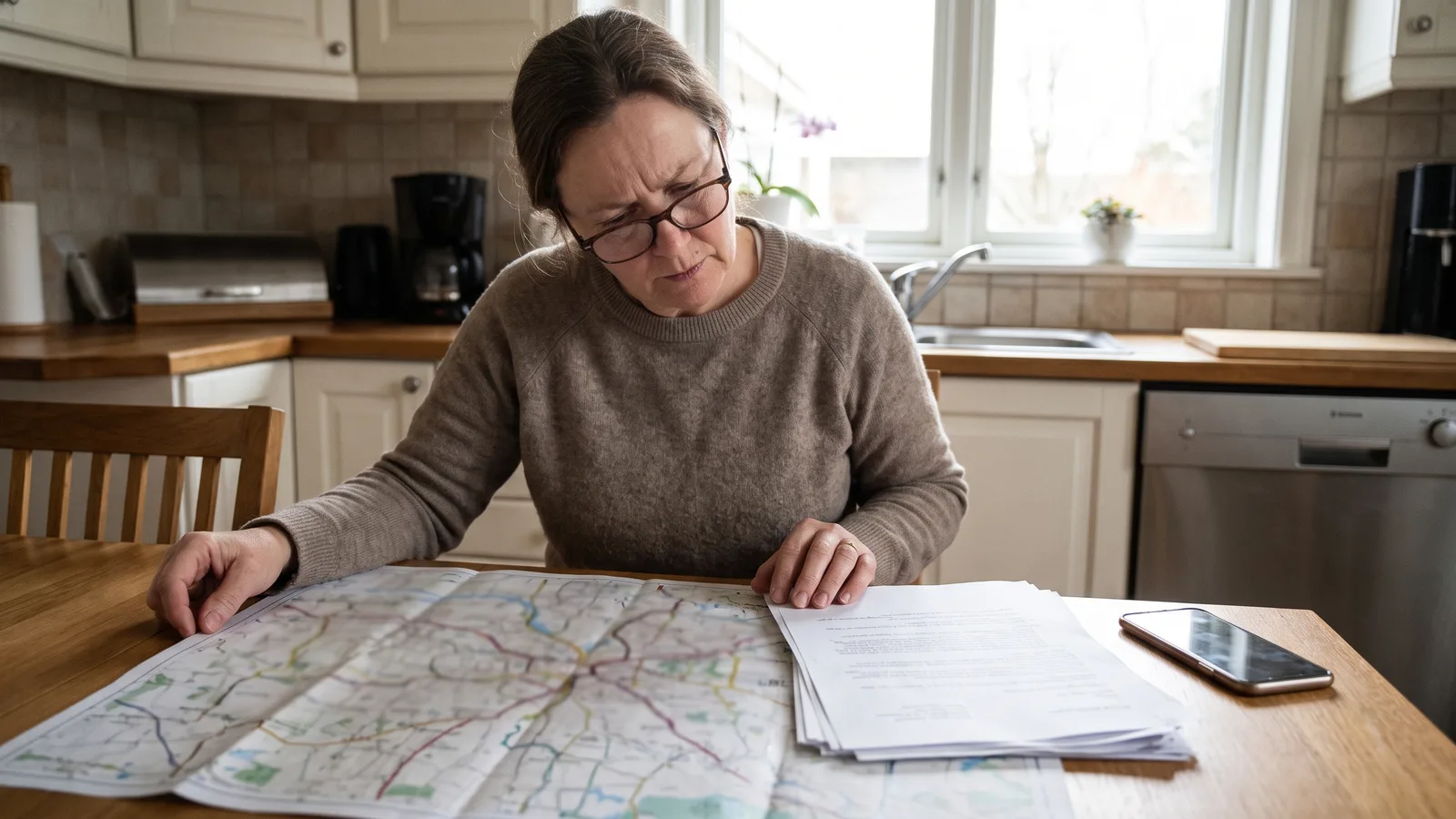
How to identify your authority in a few minutes
- Find your parcel number in the county tax office or GIS property records. Every North Carolina county publishes one.
- Determine whether the parcel is inside a municipality, which the parcel record normally shows as a municipal or taxing jurisdiction field.
- Check whether that municipality runs its own inspections, or has one of the other three arrangements. The city's own website usually says, and if it does not, call the county inspections office and ask who covers the parcel.
- Confirm using the parcel number, not the street address. Departments file by parcel.
- Ask the direct question: "Does your office issue building permits for this parcel, and if not, who does."
What to ask once you reach the right office
Make one call do the work of several, and write down who you spoke to and when.
- Does this project need a permit, and are building, electrical, plumbing and mechanical separate permits?
- What do you require at application, and do you need a site plan or a recorded plat?
- Is the project cost forty thousand dollars or more, and if so what licensing proof do you need?
- If I am pulling this as an owner, what affidavit do you require?
- Which inspections will there be, and in what order?
- What are the zoning setbacks for this structure type on this parcel?
- Do you require a lien agent for this project?
The forty thousand dollar question matters in North Carolina specifically, because that is the threshold at which the general contractor licensing requirement and the permit conditions in NCGS 87-14 engage. Our North Carolina owner-builder guide covers the affidavit that comes with claiming the owner exemption.
One thing owner-builders should know before scheduling
If you pull a permit as an owner claiming the licensure exemption, you have to be there. NCGS 160D-1113 provides that where a building permit has been obtained by an owner exempt under NCGS 87-1(b)(2), no inspection shall be conducted without the owner being present, unless the plans for the building were drawn and sealed by an architect licensed under Chapter 83A.
That is a scheduling constraint, not a formality. It means every inspection has to fit your calendar, not just your builder's, and it is worth raising with the department when you apply.
Our take: in North Carolina the wasted phone calls come from assuming the city on your mail is the authority. It often is not, and the four statutory arrangements mean a neighbor two miles away can legitimately deal with an entirely different office. Ten minutes with your parcel record removes the guesswork before you ever pick up the phone.
What to do next
- Pull your parcel number from the county tax or GIS records.
- Establish whether the parcel is inside a municipality.
- Confirm which office actually issues permits for it, using the parcel number.
- Ask the questions above in a single call and record the answers.
- Browse your county from the North Carolina coverage page, or start with a large one such as Wake or Mecklenburg.
- Run your project through the free permit checker to see which permits it triggers.
The Permit Prep Pack assembles the department contact, documents and inspection sequence for your specific address.