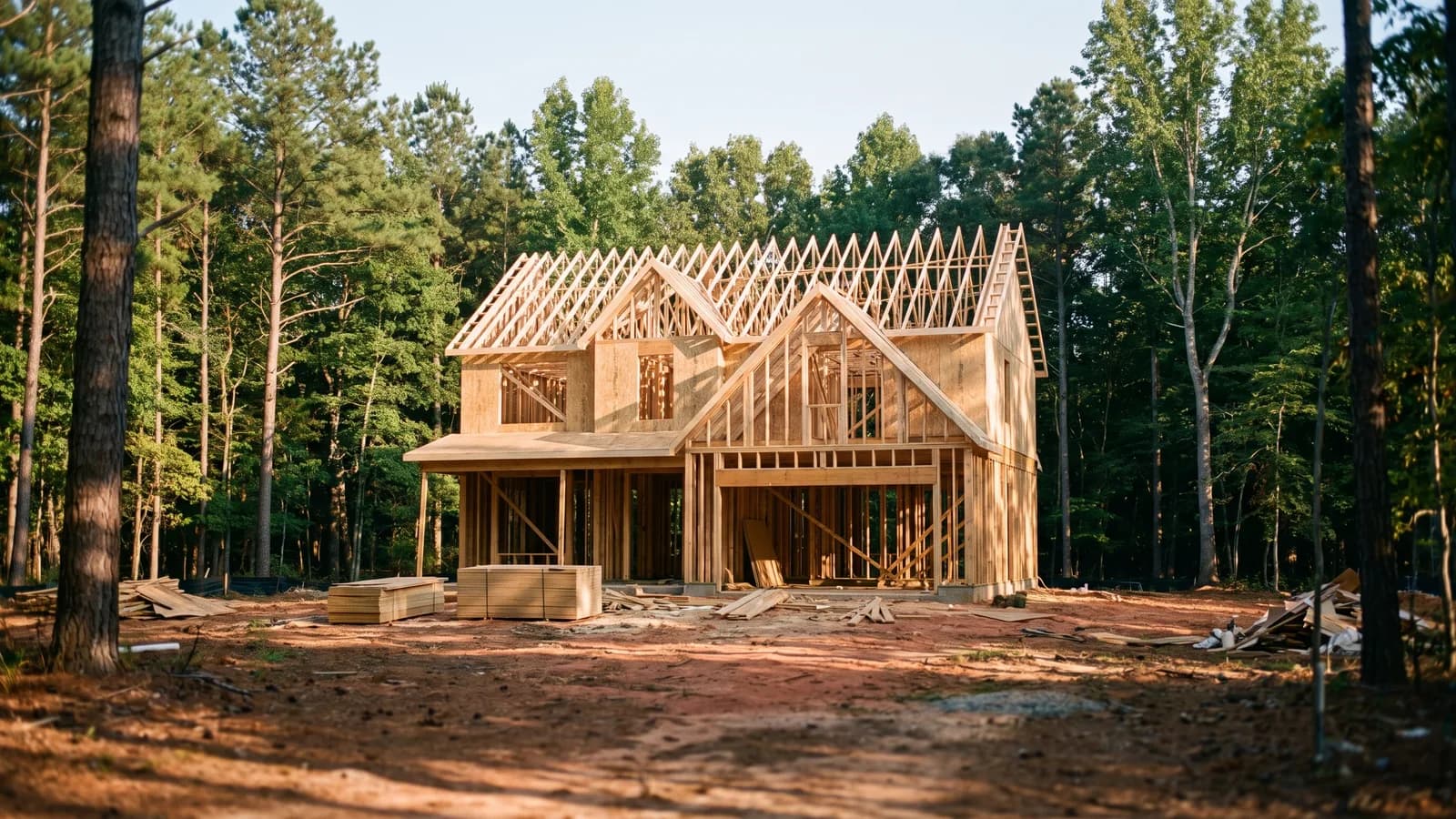
In North Carolina you can build or substantially alter a building on land you own without holding a general contractor license, but the owner-builder exemption is narrower than most homeowners expect. It applies only when the building is intended solely for you and your family to occupy, and claiming it means signing a sworn affidavit that a state licensing board will read. The exemption itself sits in NCGS 87-1(b)(2). The paperwork that makes it real sits in NCGS 87-14.
Key takeaways
-
North Carolina's general contractor license requirement begins when the cost of the undertaking is forty thousand dollars or more, under NCGS 87-1(a).
-
The owner exemption in NCGS 87-1(b)(2) applies only if the building is intended solely for occupancy by you and your family, firm or corporation after completion.
-
To claim it you must execute a verified affidavit swearing that you own the property, that you will personally superintend and manage all aspects of the construction, and that you will be personally present for every inspection the state building code requires.
-
The building inspector transmits that affidavit to the State Licensing Board for General Contractors, and if the Board finds you were not entitled to the exemption, the permit is revoked under NCGS 160D-1115.
-
If the building is not occupied solely by you and your family for at least 12 months after completion, the law presumes you never intended it as your own home.
-
Do I need a contractor license to build my own house in North Carolina
Do I need a contractor license to build my own house in North Carolina
Not if you qualify for the owner exemption and the building is genuinely for you to live in. NCGS 87-1(b)(2) exempts a person who constructs or alters a building on land they own, provided the building is intended solely for occupancy by that person and their family after completion, and provided they comply with NCGS 87-14.
Two things trip people up here. The exemption is about who will live in the building, not about how handy you are. And it is a licensing exemption only. It does not exempt you from needing permits, from inspections, or from the North Carolina State Building Code. You still apply to the same building department, you still get the same inspections, and your work is held to the same standard as a licensed contractor's.
There is a separate exemption in NCGS 87-1(b)(3) for a person in the business of farming who builds on farmland they own and will use themselves. If that describes your project, it is a different route with different conditions.
What counts toward the forty thousand dollar threshold
The statute measures "the cost of the undertaking," which means the whole job, not each individual permit or each trade. That distinction decides whether you need the exemption at all.
If your project comes in under forty thousand dollars, NCGS 87-1 simply does not reach it, and there is no general contractor licensing question to answer. You still need permits, and you still need licensed tradespeople where the trade statutes require them, but you are not claiming an exemption from anything.
Consider a homeowner in Guilford County adding a bedroom and bathroom. If the framing, roofing, electrical, plumbing and finish work together come to fifty-two thousand dollars, that is a single undertaking over the line, and an unlicensed person managing it needs the owner exemption. Splitting it into a thirty thousand dollar shell permit and a twenty-two thousand dollar interior permit does not change the cost of the undertaking.
What the owner-builder affidavit actually requires
This is the part almost nobody reads before they show up at the counter. Under NCGS 87-14(a)(1), an applicant claiming the 87-1(b)(2) exemption must execute a verified affidavit attesting to three specific things:
- That the applicant owns the property on which the building is being constructed. If the applicant is a firm or corporation, that the person submitting the application is an owner, officer or member of the entity that owns the property.
- That the applicant will personally superintend and manage all aspects of the construction, and that this duty will not be delegated to any person not licensed under the Article.
- That the applicant will be personally present for all inspections required by the North Carolina State Building Code.
The third attestation has one carve-out worth knowing: it does not apply if the plans for the building were drawn and sealed by an architect licensed under Chapter 83A of the General Statutes. If you are hiring a licensed architect anyway, that removes a real scheduling burden.
Read the second attestation carefully before you sign. You are swearing you will run the job. An owner who signs this and then hands day to day management to an unlicensed builder has sworn to something untrue, in a document that goes to a licensing board.

Why the licensing board reviews your affidavit
Because the statute tells the inspector to send it. NCGS 87-14(a)(1) directs the building inspector or other authority to transmit a copy of the affidavit to the State Licensing Board for General Contractors, which verifies that the applicant was validly entitled to claim the exemption.
If the Board determines the applicant was not entitled to it, the statute is blunt about the consequence: the building permit shall be revoked pursuant to NCGS 160D-1115. This is not a discretionary warning letter. It is a permit revocation with a statutory trigger, and it can arrive after work has already started.
That review is the single biggest practical difference between North Carolina's owner exemption and the informal owner-builder arrangements homeowners hear about from friends in other states. Someone at a state board actually checks.
What the 12 month occupancy rule means if you might sell
NCGS 87-1(b)(2) closes with a presumption. If the building is not occupied solely by you and your family for at least 12 months following completion, it shall be presumed that you did not intend the building solely for your own occupancy.
In plain terms, the exemption is written to stop unlicensed people from building houses to sell. If you complete a house under the owner exemption and list it four months later, the presumption runs against you, and you are the one who has to overcome it.
This matters most for people whose plans are genuinely uncertain. If there is a real chance you will sell or rent inside the first year, talk to a licensed general contractor before you claim the exemption, not after.
Do you still need workers compensation insurance
Yes, and it is a condition of getting the permit at all. NCGS 87-14(a)(2) requires the applicant to furnish proof of workers compensation insurance as required by Chapter 97 of the General Statutes before a permit issues.
The statute also puts teeth on the inspector's side. Under NCGS 87-14(b), it is unlawful for a building inspector to issue a permit under this section until the applicant has furnished that evidence, and an inspector who violates it is guilty of a Class 3 misdemeanor subject to a fine of not more than fifty dollars. Do not expect a counter clerk to waive it for you.
Do you need a lien agent as an owner-builder
Sometimes, and the carve-out is generous for renovations. NCGS 87-14(a1) requires the applicant to designate a lien agent, and give the building department that agent's name, address, phone, fax and email, for improvements whose combined cost is forty thousand dollars or more.
Two categories are excepted. Improvements to an existing single-family residential dwelling unit that the owner occupies as a residence, and the addition of an accessory building or accessory structure whose use is incidental to that dwelling.
| Your project | Lien agent required at forty thousand dollars or more |
|---|---|
| New house you will live in | Yes |
| Renovation of the home you already occupy | No, excepted by 87-14(a1) |
| Detached garage or shed at the home you occupy | No, accessory structure exception |
| House you will rent out or sell | Yes |
Can you hire subcontractors as an owner-builder
Yes, and for most projects you should. Nothing in the owner exemption requires you to swing a hammer. North Carolina licenses electrical work under NCGS 87-43 and plumbing and heating work under NCGS 87-21, and those trade requirements apply regardless of who holds the building permit.
What you cannot do is delegate the superintending role itself to someone who is not licensed under Article 1. That is the exact wording of the affidavit. Hiring licensed subs is fine. Hiring an unlicensed person to be your de facto general contractor is the thing the exemption is designed to prevent.
How owner-builder projects actually go wrong
The failure modes are consistent, and none of them are about construction skill.
- Signing the affidavit and then leaving the job to someone else, which makes the sworn statement false.
- Not being present for inspections after swearing to be, when no licensed architect sealed the plans.
- Selling or renting inside 12 months and triggering the presumption in 87-1(b)(2).
- Departing substantially from the approved plans. NCGS 160D-1115 lets the inspector revoke a permit for any substantial departure from the approved application, plans or specifications, and also lets them revoke a permit that was mistakenly issued in violation of state or local law.
That last point is worth sitting with. A permit you were issued in error is not a permit you get to keep.
Our take: the owner exemption is real and plenty of North Carolina homeowners use it well, but it is a commitment to run the job personally, sworn under oath and reviewed by a state board. If you want the savings without the superintending, that is the situation the statute is written to catch. Be honest with yourself about which one you are doing.
What to do before you apply
Work through this in order, because a couple of these are hard to undo later.
- Price the whole undertaking, not each permit, and see whether you are actually over forty thousand dollars.
- Decide honestly whether you will occupy the building for at least 12 months after completion.
- Confirm whether your plans will be drawn and sealed by a licensed architect, since that changes your inspection attendance obligation.
- Line up workers compensation coverage before you go to the counter, because the inspector cannot issue without proof.
- Check whether the lien agent requirement applies, using the table above.
- Run your specific project through our free permit checker to see which permits and inspections it triggers in your jurisdiction.
If you want the requirements, documents, inspection sequence and the contact details for the office that will actually handle your address collected in one place, that is what the Permit Prep Pack is for.
Related reading: our North Carolina permit overview covers what needs a permit in the first place, the forty thousand dollar exemption explainer digs into the threshold itself, and the North Carolina coverage page lists every county and city we cover.