
North Carolina has a statewide permit exemption that sounds enormous and behaves modestly. Under NCGS 160D-1110(c), no building permit is required for construction, installation, repair, replacement, or alteration costing $40,000 or less in a single-family residence, farm building, or commercial building, as long as the work is performed to the current North Carolina State Building Code. Then the statute lists six exceptions, and those exceptions are broad enough that a large share of ordinary renovation work falls straight back into permit territory.
Key takeaways
- The threshold is $40,000 or less, and it applies to single-family residences, farm buildings, and commercial buildings.
- Six statutory exceptions override the dollar amount. Load-bearing structure, plumbing design changes, HVAC and electrical changes, non-code materials, added roofing, and anything touching the Fire Code all still require a permit.
- Because the exceptions cover structure and all three major systems, most kitchen, bath, and whole-room remodels need a permit no matter how little they cost.
- Like-for-like replacement is the pattern most likely to stay exempt. Design changes, capacity changes, and additions are the pattern most likely to fall out.
- The exemption is only about the building permit. Zoning, land-use approval, HOA rules, and erosion control are untouched by it.
On this page
- What is the $40,000 permit exemption?
- What work is excluded from the exemption?
- Why do most remodels fall outside it?
- What about water heaters and electrical devices?
- How is the $40,000 measured?
- Does the exemption cover zoning and other approvals?
- What is the lien agent rule at $40,000?
- How quickly must my jurisdiction review plans?
- A worked example
- How do I check my own project?
What is the $40,000 permit exemption?
It is a statewide rule that removes the building-permit requirement for smaller work when that work stays inside code and outside six carved-out categories. The exemption sits in NCGS 160D-1110(c) and applies to any single-family residence, farm building, or commercial building.
The important framing: this is an exemption from the permit, not from the code. The statute conditions the exemption on the work being "performed in accordance with the current edition of the North Carolina State Building Code." Exempt work still has to be built correctly, and it can still be cited later if it is not.
What work is excluded from the exemption?
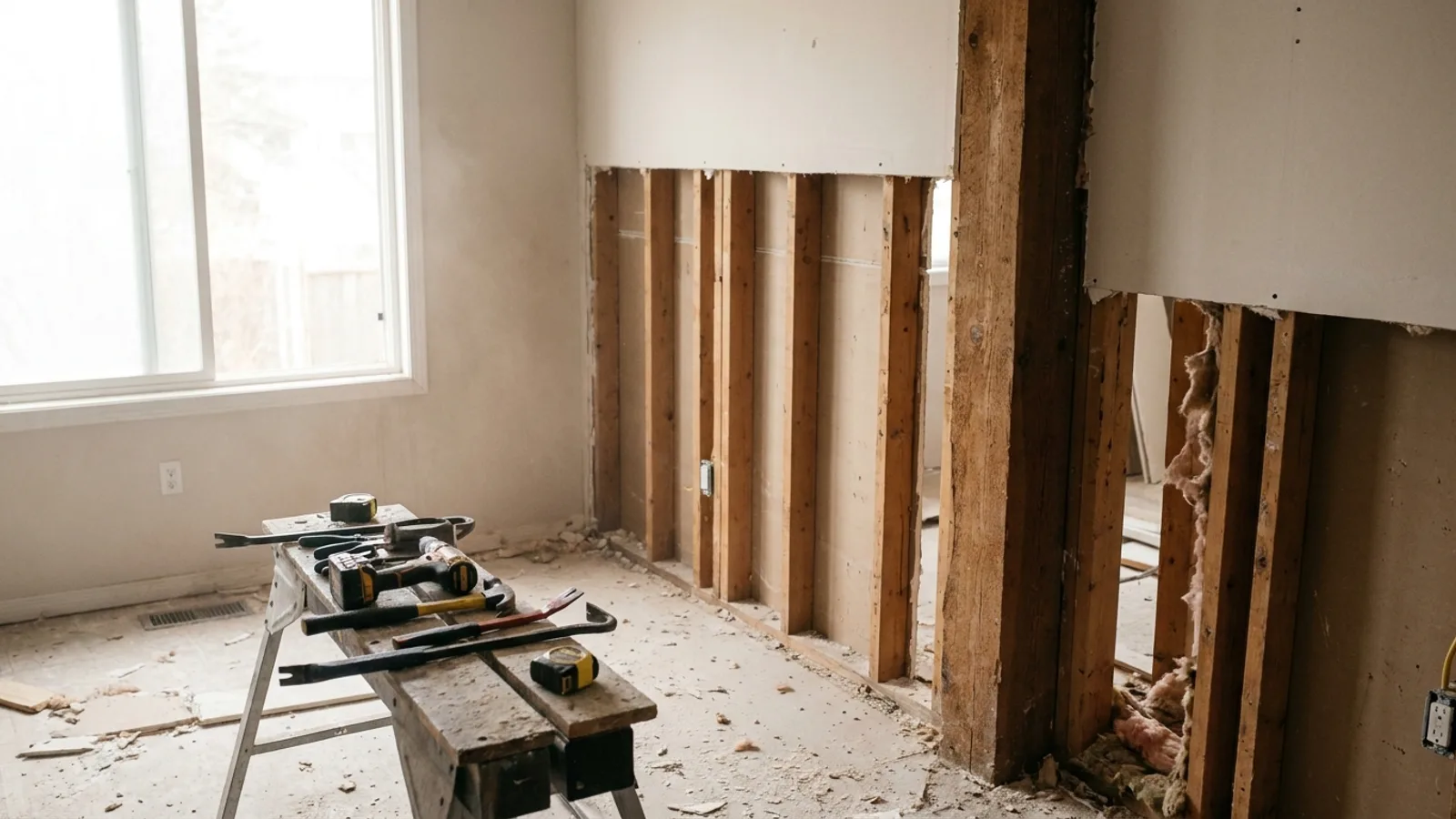
Six categories. If your project involves any of them, the $40,000 figure stops mattering and a permit is required.
| # | Excluded work | Built-in carve-back |
|---|---|---|
| 1 | Addition, repair, or replacement of load-bearing structures | No permit needed for replacing windows, doors, exterior siding, or the pickets, railings, stair treads, and decking of porches and exterior decks |
| 2 | Addition or change in the design of plumbing | No permit for replacements that do not change size or capacity |
| 3 | Addition, replacement, or change in design of heating, air-conditioning, or electrical wiring, devices, appliances, or equipment | Like-kind replacement of electrical devices and lighting fixtures stays exempt |
| 4 | Use of materials not permitted by the North Carolina State Building Code | None |
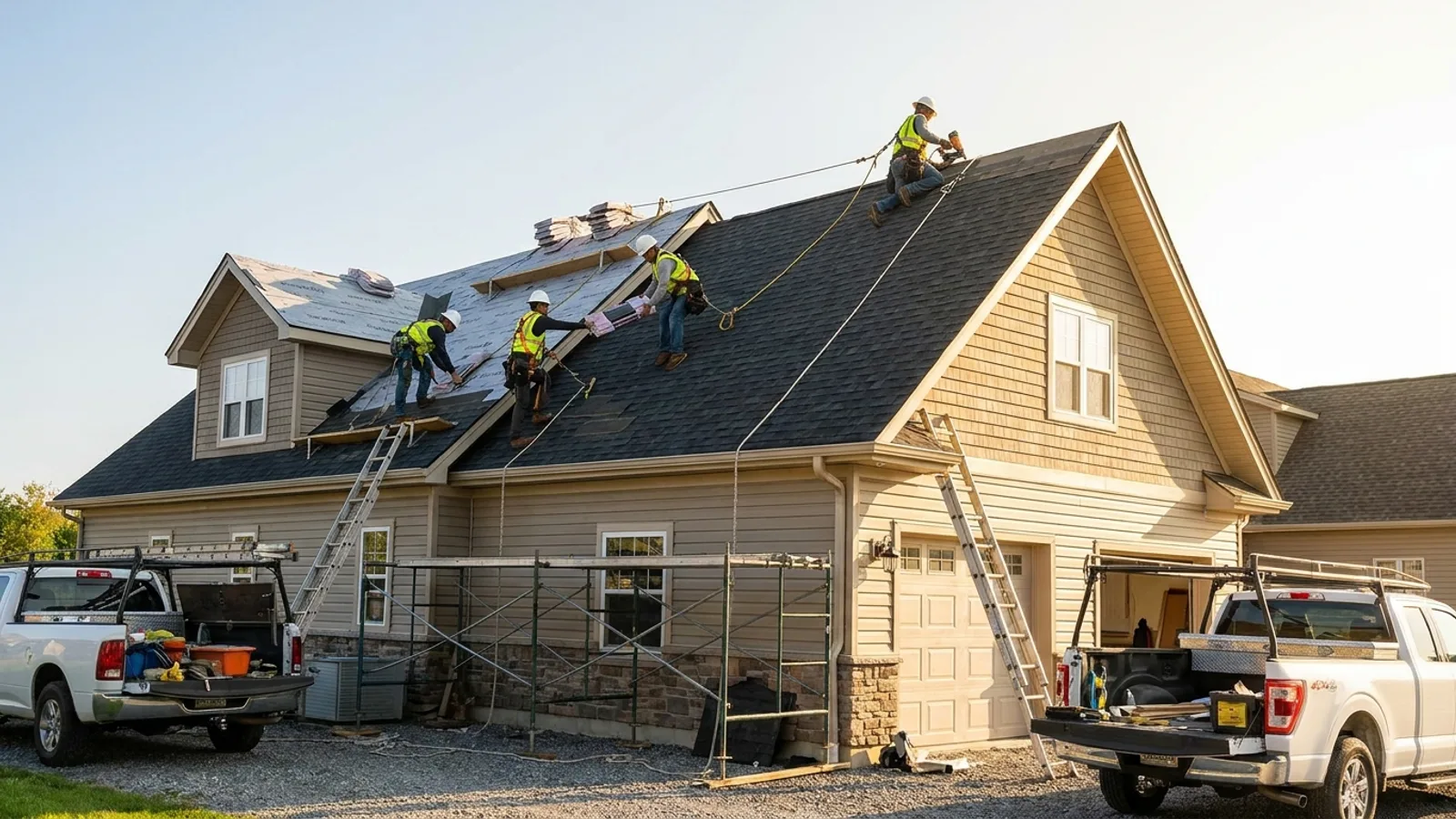
| 5 | The addition of roofing, excluding replacement | Replacement is not an "addition," so a straight reroof can stay exempt |
| 6 | Any changes to which the North Carolina Fire Code applies | None |
Read the carve-backs closely, because they are where the practical answers live. Exception 1 sounds like it captures every exterior project, and then hands back windows, doors, siding, and deck surfaces. Exception 5 sounds like it captures every roof, and then hands back replacement.
Why do most remodels fall outside it?
Because exceptions 1 through 3 together cover structure plus all three major building systems, and a meaningful remodel almost always touches at least one of them.
Move a wall and you are in exception 1. Relocate a sink or add a bathroom and you are in exception 2, since that changes plumbing design rather than replacing like for like. Add a circuit, change a panel, or move a duct and you are in exception 3. A cosmetic refresh of paint, flooring, cabinets, and fixtures can genuinely stay under the exemption. A kitchen remodel that moves the range and the sink almost certainly cannot, even at $12,000.
This is the single most common misunderstanding we see: homeowners hear "$40,000" and assume any project under that number is free of permits. The dollar threshold is a ceiling that only matters once you have already cleared all six exceptions.
What about water heaters and electrical devices?
North Carolina has separate, narrower exemptions for these that sit in NCGS 160D-1110(a) rather than in the $40,000 subsection, and they are worth knowing because they are the two jobs homeowners ask about most.
For a water heater in a one or two-family dwelling, no permit is required to connect a replacement if the work is performed by a person licensed under G.S. 87-21 who personally examines the work at completion and ensures a leak test has been performed on the gas piping, and if there is no increase in energy use rate or thermal input, no change in fuel, energy source, location, capacity, or routing or sizing of venting and piping, and the installation meets the current code.
For electrical work in a one or two-family dwelling, no permit is required to repair or replace lighting fixtures or devices such as receptacles and switches, or to connect an existing branch circuit to a replacement electric water heater, subject to conditions: the replacement water heater goes in the same location at the same or less capacity and electrical rating, a replacement fixture or device has the same voltage and the same or less amperage, and the work is performed by a person licensed under G.S. 87-43.
Both exemptions are built on the same logic as the main one. Identical replacement is exempt. Any upgrade in capacity, change in location, or change in fuel is not.

How is the $40,000 measured?
The statute sets the threshold on the cost of the construction, installation, repair, replacement, or alteration, and subsection (c) does not spell out a valuation method or a documentation standard. In practice that means your local department decides what evidence it wants, whether that is a signed contract, a written estimate, or a materials breakdown.
Two things follow. First, ask your department what it accepts before you rely on the number. Second, do not treat the threshold as something to engineer around by splitting a single project into pieces. Departments look at the scope of work, and the six exceptions usually decide the outcome long before the dollar figure does.
Does the exemption cover zoning and other approvals?
No. It is specific to the building permit, and it leaves every other layer of approval intact.
Zoning setbacks, height limits, and lot coverage still apply. Land-use or zoning permits are separate applications in many jurisdictions. Historic district review, floodplain requirements, and HOA architectural approval are all untouched. Subsection (e) also bars a building permit from being issued for land-disturbing activity unless an erosion and sedimentation control plan has been approved under the Sedimentation Pollution Control Act.
What is the lien agent rule at $40,000?
The same dollar figure shows up again in subsection (g), pointing the other direction. No building permit may be issued for work costing $40,000 or more unless the lien agent designated by the owner is identified on the permit, including name, physical and mailing address, telephone number, facsimile number, and email address.
There is an important exception for homeowners: the requirement does not apply to improvements to an existing single-family residential dwelling unit that the owner occupies as a residence, or to the addition of an accessory building or structure whose use is incidental to that dwelling. So the owner-occupant doing a $60,000 renovation of their own home is outside the lien agent requirement, while the same work on a rental or a new build is not.
How quickly must my jurisdiction review plans?
Faster than most homeowners expect, and the statute puts money behind it. Under subsection (b), if a local government chooses to review residential building plans for permit issuance, all initial reviews must be performed within 15 business days of submission.
If the initial review is not performed within 20 business days, the local government must refund a portion of the permit application fee: ten percent of the total fee for each business day it is late, up to 10 business days. Subsection (b) also bars a local government from requiring residential plans for one and two-family dwellings to be sealed by a licensed engineer or architect unless the building code requires it.
Two further limits sit in subsection (d). A local government cannot require more than one building permit for the complete installation or replacement of a natural gas, propane, or electrical appliance on an existing structure when a licensed person does the work, and cannot require more than one building permit for simultaneous projects applied for at the same time at the same address under the Residential Code.
A worked example
A homeowner in Wake County plans a $22,000 primary-bath renovation: new tile, new vanity, a relocated shower drain, a replacement exhaust fan on the existing circuit, and one added recessed light.
The cost is well under $40,000, so the homeowner assumes no permit. Run it against the exceptions instead. Relocating the shower drain is a change in the design of plumbing, which is exception 2, and the carve-back only protects replacements that do not change size or capacity. Adding a recessed light is an addition to electrical wiring, which is exception 3, and the carve-back only protects like-kind replacement of devices and fixtures. Two exceptions are triggered, so a permit is required despite the price.
Change the scope to tile, vanity, and a like-for-like fan swap with no drain relocation and no new light, and the same project has a real argument for staying exempt. The scope decides it, not the budget.
Our take: read the six exceptions before you read the dollar amount. Nearly every homeowner who gets this wrong got it wrong by starting at "$40,000" and stopping there. And when it is genuinely close, call the department. A permit you did not strictly need costs a fee and some time. Unpermitted structural or system work costs you at resale, at the insurance claim, and sometimes at the point where a department asks you to open a finished wall.
How do I check my own project?
Answer the exception questions first, then the dollar question. North Carolina's threshold tool walks the statutory test for you at the $40,000 exemption check, and the free permit checker goes further by pairing the outcome with the verified contact details for the department that covers your address.
For project-specific detail, see our guides on sheds and accessory buildings and roof permits in North Carolina, or start from the North Carolina permit hub and drill into your county and city.