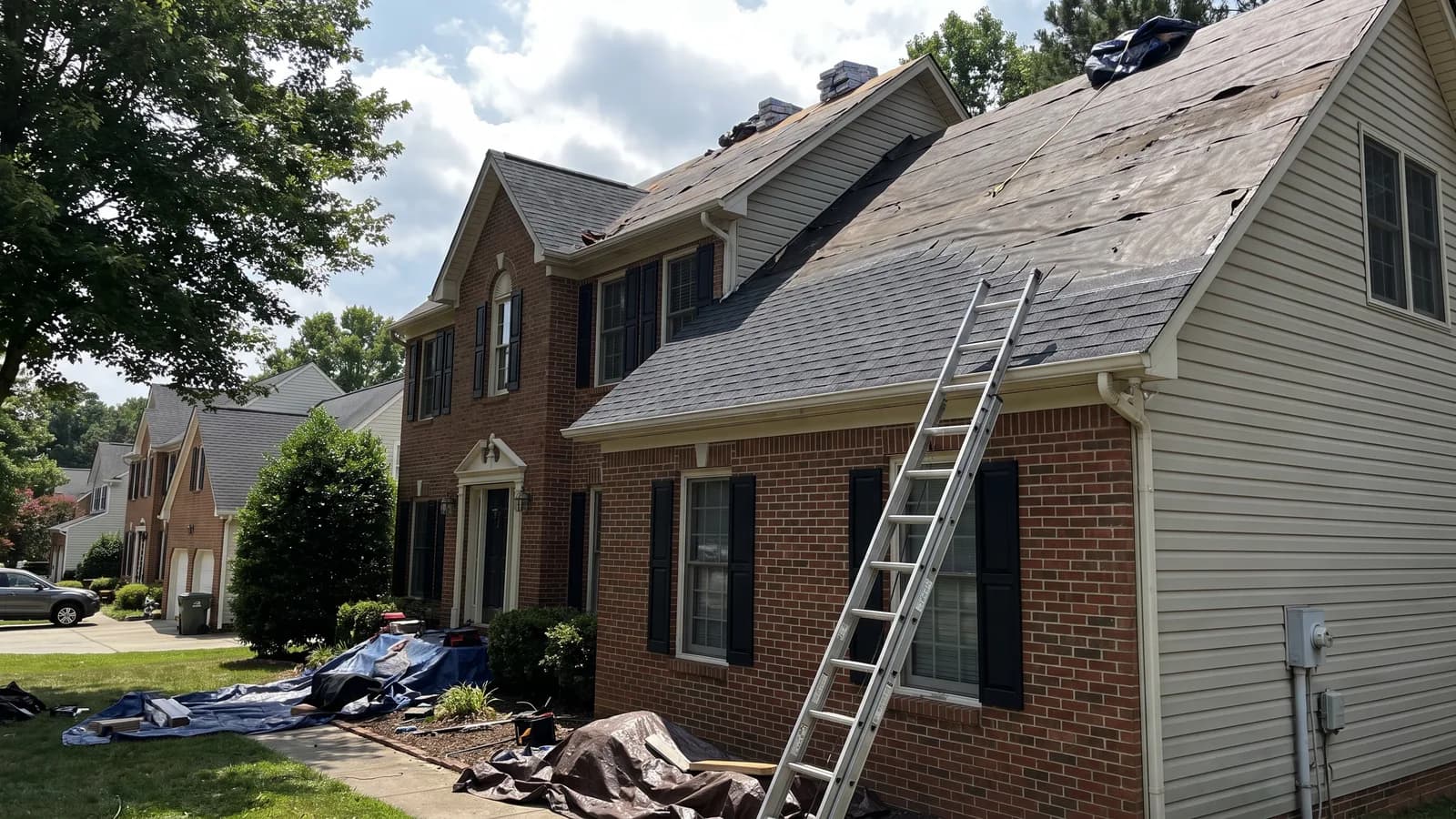
Whether you need a permit to replace a roof in North Carolina usually comes down to a single word in the statute. NCGS 160D-1110(c) lists "the addition of roofing, excluding replacement" as an exception to the $40,000 permit exemption. Adding roofing pulls the job back under the permit requirement. Replacing roofing does not, on its own. Everything else about reroof permitting in North Carolina flows from that distinction, plus how narrowly your local department reads it.
Key takeaways
- The statute excludes the addition of roofing from the $40,000 exemption, but expressly excludes replacement from that exclusion, so a like-for-like reroof can remain exempt.
- The moment the job touches decking, sheathing, rafters, or trusses, it becomes load-bearing work, which is a separate exception and requires a permit.
- A roof-over, a covering change, or added roof structure is an addition rather than a replacement, and needs a permit.
- Local departments read the replacement carve-back narrowly. Mecklenburg County, which issues permits for Charlotte, limits it to replacement with like grade fire-resistance material.
- The exemption is never automatic. Confirm your scope with the department before treating a reroof as permit-free.
On this page
- Do I need a permit to replace a roof in North Carolina?
- What does "addition of roofing, excluding replacement" mean?
- When does a reroof stop being a replacement?
- Does decking or structural repair change the answer?
- How do local departments read the rule?
- What inspections apply to a permitted reroof?
- How do I confirm before the crew arrives?
Do I need a permit to replace a roof in North Carolina?
Frequently no for a straightforward like-for-like replacement under $40,000, and frequently yes once anything about the assembly changes. The statute gives replacement a genuine carve-back, which is unusual and is why North Carolina reroof advice differs from neighboring states.
The catch is that very few reroofs stay purely cosmetic once the old covering comes off, and the exceptions that catch the rest are not roofing-specific.
What does "addition of roofing, excluding replacement" mean?
It means new roofing added to a building requires a permit, while swapping out existing roofing for equivalent roofing does not automatically trigger one. Adding a covered porch roof, extending a roofline, or laying a new layer over an existing one is an addition. Tearing off shingles and installing comparable shingles in the same configuration is a replacement.
The phrasing matters because it is doing real work in the statute. Without the "excluding replacement" language, every reroof in the state would need a permit. With it, ordinary maintenance-grade roof replacement can sit inside the $40,000 exemption.
When does a reroof stop being a replacement?
As soon as the finished assembly differs from what was there. The table below sorts the common scopes.
| Scope of work | Treated as | Permit likely |
|---|---|---|
| Tear off shingles, install comparable shingles, same configuration | Replacement | No, if under $40,000 and nothing structural is touched |
| Install new shingles over the existing layer (roof-over) | Addition of roofing | Yes |
| Change covering material, for example shingle to metal or tile | Addition or altered assembly | Yes |
| Replace rotted decking or sheathing found during tear-off | Load-bearing repair | Yes |
| Add a dormer, extend eaves, or change roof pitch | Added structure | Yes |
| Patch a small area of covering after storm damage | Repair | Depends on scope, confirm locally |
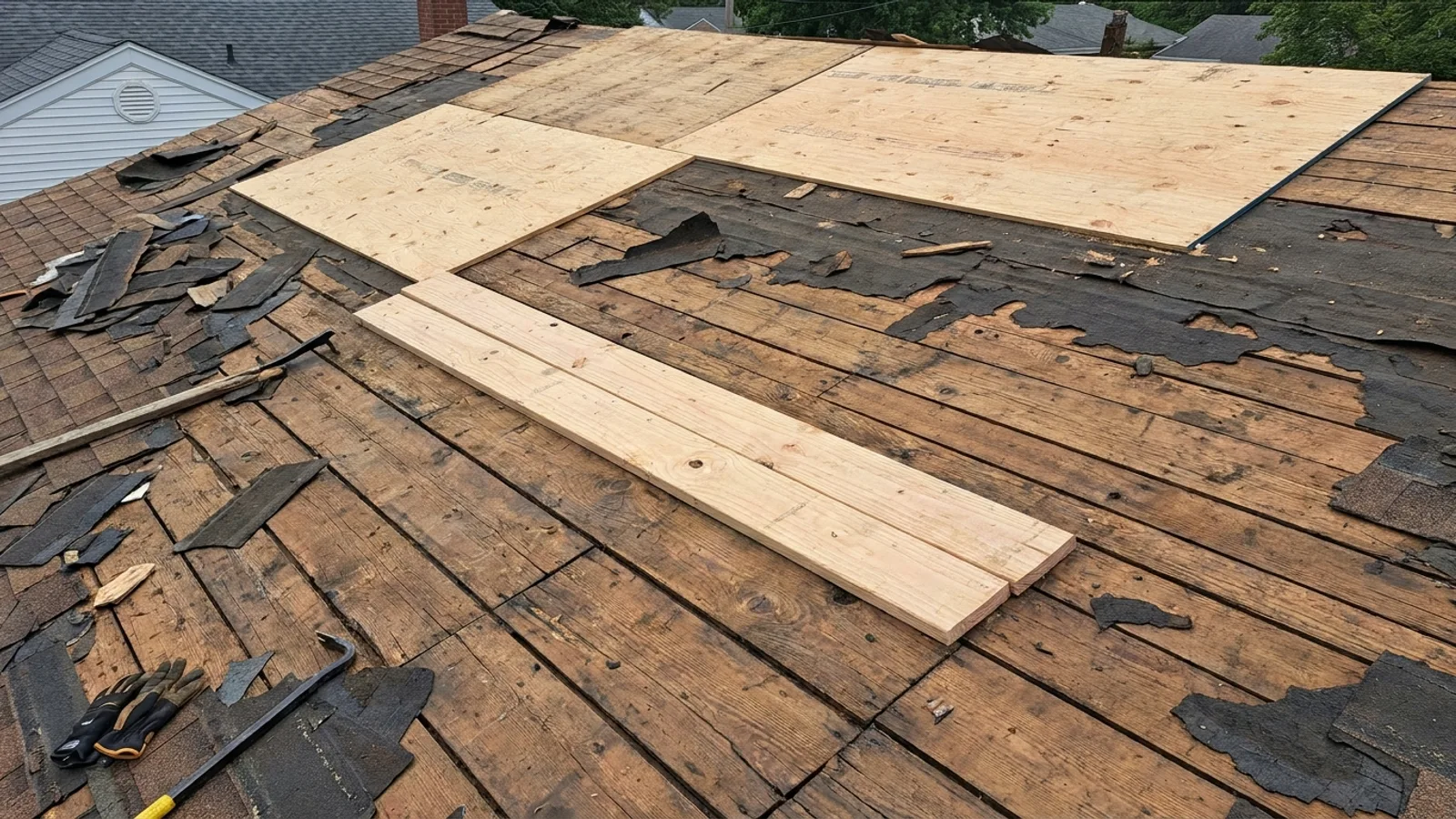
The decking row is the most common surprise, because you usually cannot know how much decking is bad until the tear-off is underway.
Does decking or structural repair change the answer?
Yes, and this is the exception that catches most real reroofs. Exception 1 in NCGS 160D-1110(c) covers "the addition, repair, or replacement of load-bearing structures." Roof decking, sheathing, rafters, and trusses are structural. Replacing a run of rotted decking is therefore load-bearing repair, and load-bearing repair is excluded from the exemption regardless of the project cost.
The carve-back in exception 1 lists windows, doors, exterior siding, and porch and deck surfaces. Roof decking is not on that list.
Practically, this means a reroof can begin as exempt work and become permit-required halfway through the first morning. Talk to your contractor about how they will handle it if decking turns out to be bad, and expect a reputable one to stop and pull a permit rather than cover it up.
How do local departments read the rule?
Narrowly, in our experience across North Carolina jurisdictions. The clearest published example is Mecklenburg County Code Enforcement, which issues residential permits for Charlotte through its AccelaMeck portal rather than a city building department. Its guidance treats the addition of roofing as an exception that still needs a permit and reads the replacement carve-back as covering replacement with like grade fire-resistance material, which is a tighter test than "any replacement."
The lesson generalizes. The statute sets the outer boundary, and departments administer it with their own reading of what counts as equivalent. Two adjacent counties can land differently on the same roof-over question, which is why we publish the verified contact for each jurisdiction alongside the rule rather than a single statewide answer. Start from your local page to see the office that covers your address.
What inspections apply to a permitted reroof?
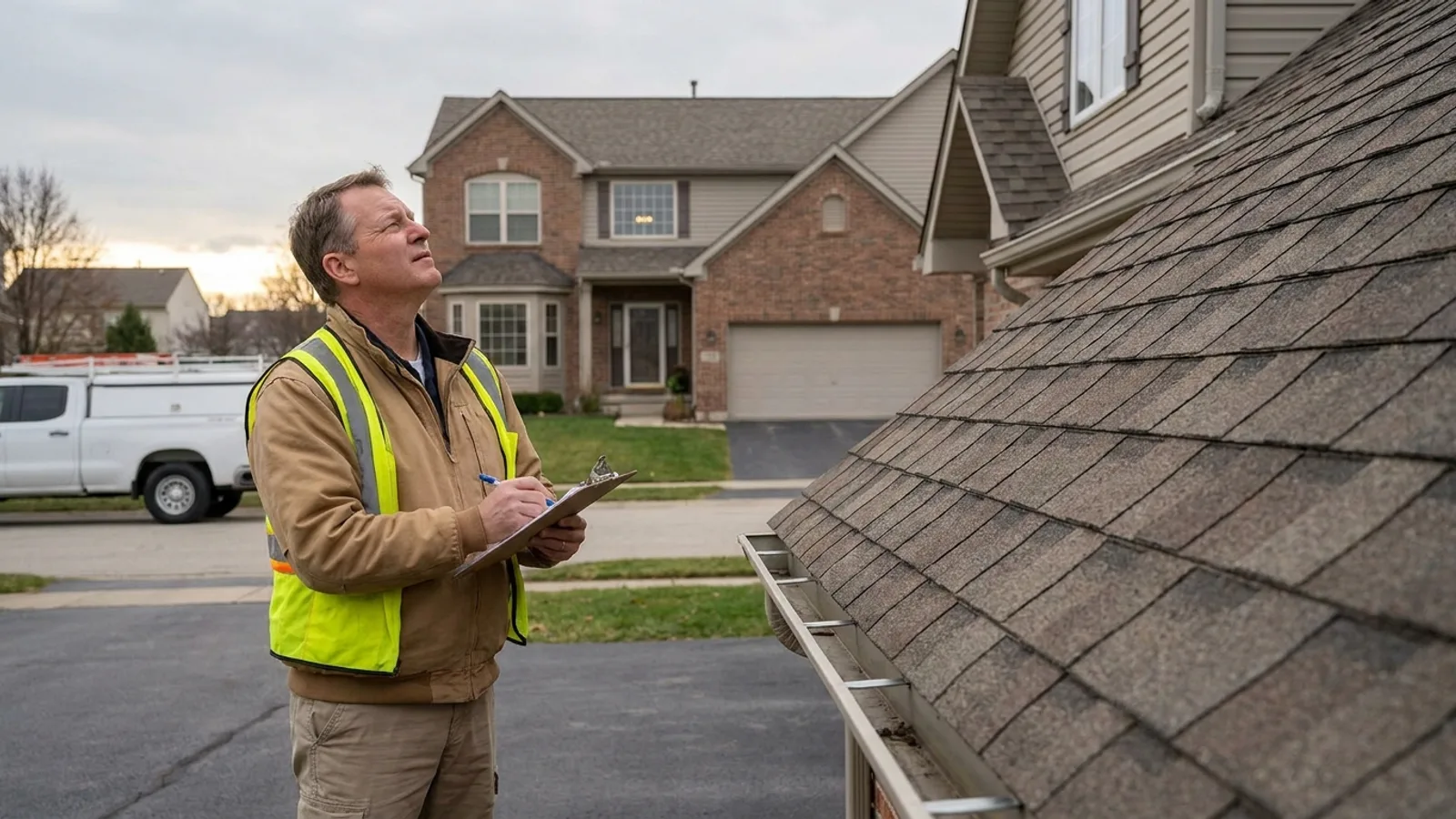
When a permit is required, expect a sheathing or in-progress inspection where decking or framing is replaced, so an inspector can see the structural work before it is covered, plus a final inspection on completion. The in-progress step is the reason unpermitted decking replacement is a genuine problem rather than a paperwork issue: once the new covering is on, the only way to inspect what is underneath is to take it back off.
How do I confirm before the crew arrives?
Ask two questions of your local department, in this order. First: does a like-for-like replacement of my roof covering require a permit here? Second: what do you require if we find and replace bad decking once the roof is open?
Getting the second answer in advance is what keeps a mid-job discovery from becoming a compliance problem. To see the likely outcome and the verified department contact for your address, run the free permit checker or open the roof replacement project page.
Our take: North Carolina genuinely does let many like-for-like reroofs proceed without a permit, and we are not going to pretend otherwise. But the exemption is narrower than roofing sales pitches suggest, decking repair quietly voids it, and a roof is the assembly most likely to be scrutinized at resale or after a storm claim. When the scope is anything other than identical-for-identical, permit it.
For the full statutory picture, including all six exceptions and the separate rules for water heaters and electrical devices, see our guide to North Carolina's $40,000 permit exemption.