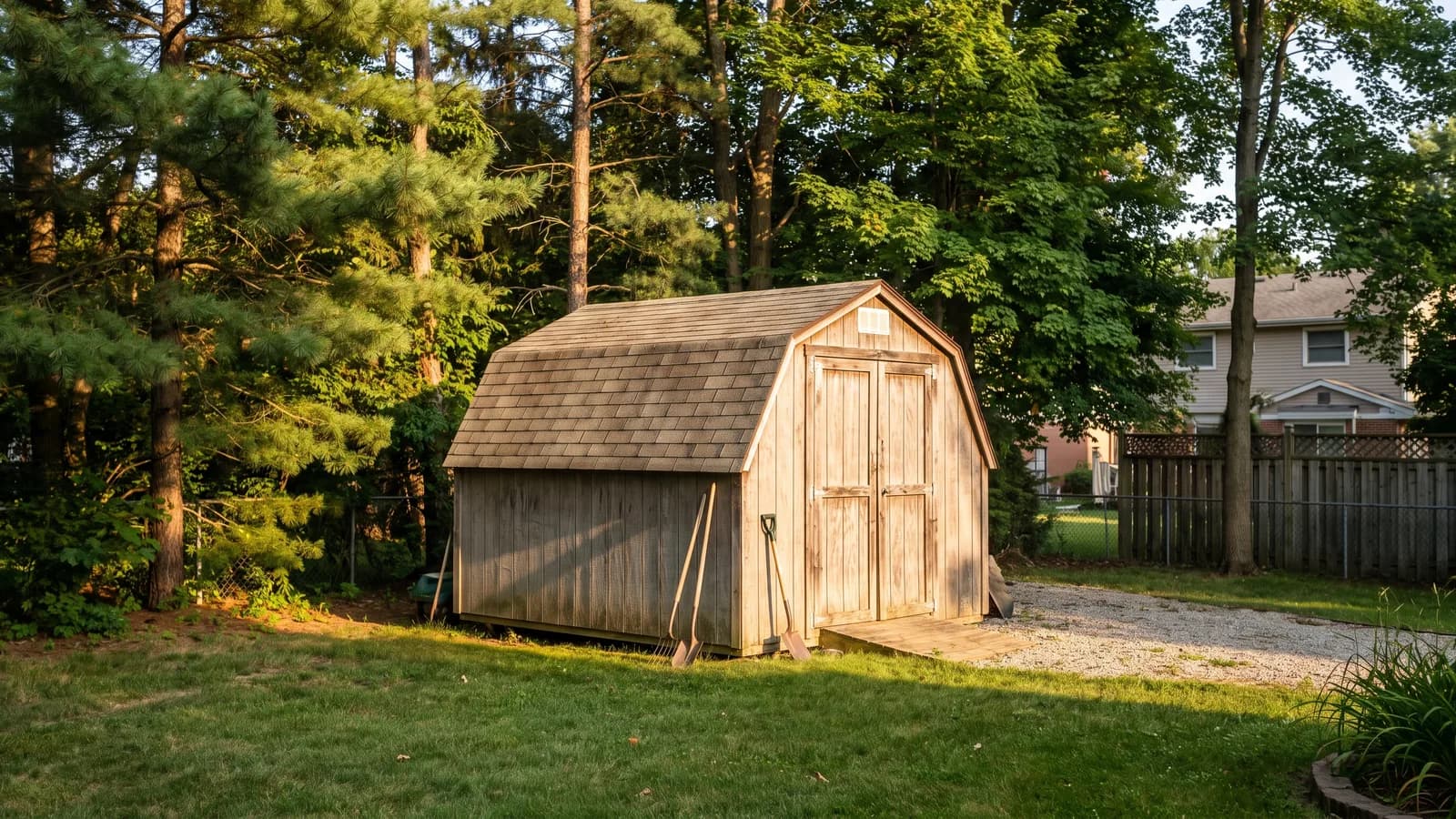
In North Carolina, whether you need a building permit for a shed usually turns on one measurement: whether any dimension of the structure is greater than 12 feet. That test comes from the scope section of the North Carolina Residential Code, not from a square-footage limit, which is why the "under 120 square feet and you are fine" advice you see on national shed-builder sites does not reliably describe North Carolina. On top of that, the permit decision is administered locally, so two counties an hour apart genuinely answer this differently.
Key takeaways
- The North Carolina Residential Code applies to accessory buildings with any dimension greater than 12 feet, so a shed larger than that in any direction is squarely within the code and needs a building permit.
- Falling outside the code's scope is not the same as being told you do not need a permit. Some departments still require an application so they can verify the exemption applies.
- Local practice varies in both directions: Wake County exempts accessory buildings with no dimension over 12 feet from a building permit, while Durham states that a building permit is required to place or build an accessory structure.
- Zoning almost always still applies. Setbacks, lot coverage, and land-use approval are separate from the building permit and survive the exemption.
- Running electrical, plumbing, or gas to the shed is its own permit even when the structure itself is exempt.
On this page
- Do I need a building permit for a shed in North Carolina?
- What is the 12 foot rule for accessory buildings?
- Does the $40,000 exemption cover a shed?
- Do I still need zoning approval if my shed is exempt?
- What if I run power or water to the shed?
- How do the rules differ across North Carolina?
- How do I confirm what my department requires?
Do I need a building permit for a shed in North Carolina?
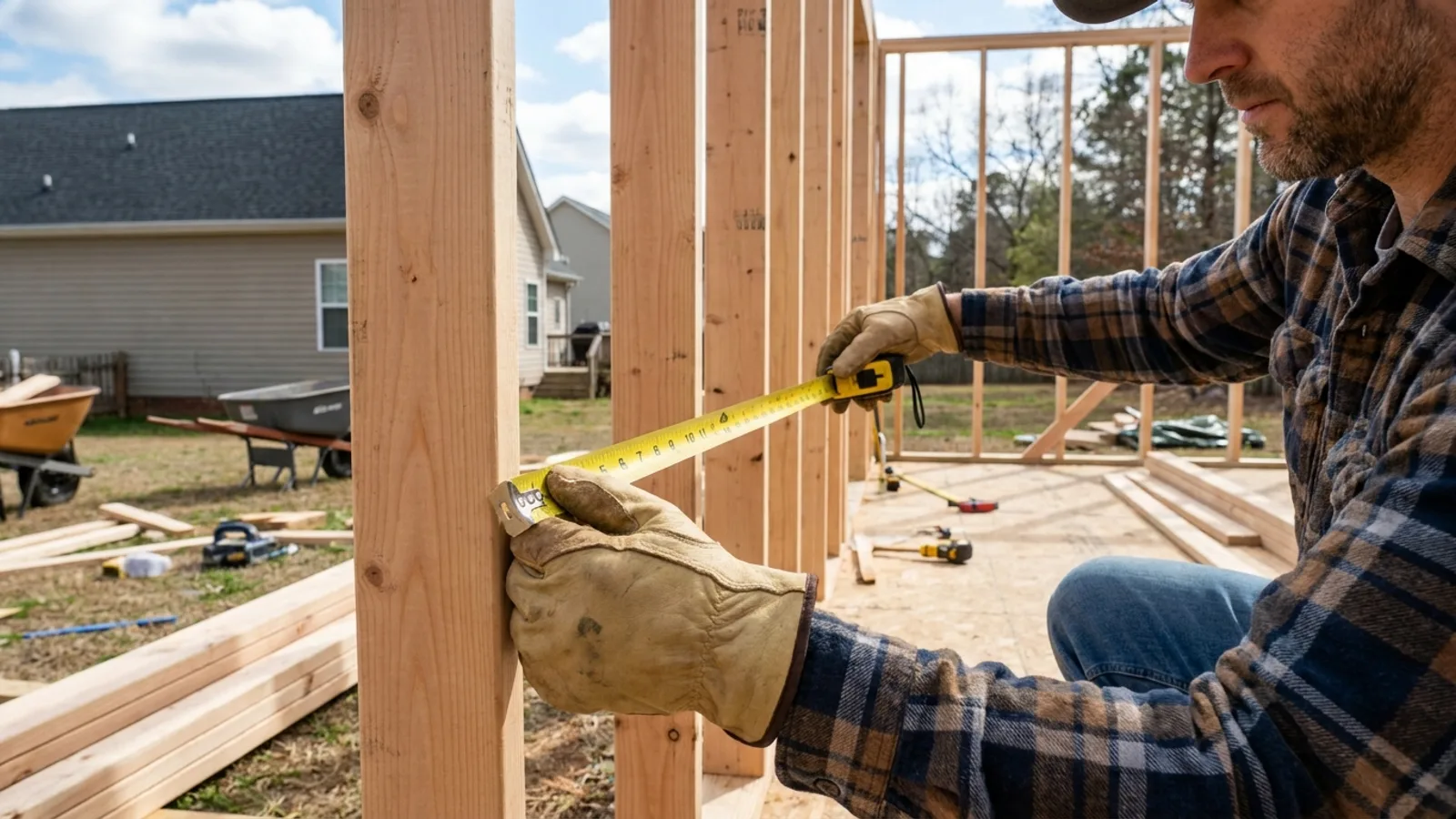
Often yes, and the deciding factor is size in a single direction rather than total floor area. If any dimension of your shed is greater than 12 feet, it must meet the North Carolina Residential Code and you should plan on a building permit. If every dimension is 12 feet or under, the structure sits outside the code's scope, and whether your local department still wants a permit is a local call.
That last sentence is the part homeowners miss. "Outside the scope of the residential code" and "no permit required" are two different statements, and only the first one comes from the code.
What is the 12 foot rule for accessory buildings?
The scope section of the North Carolina Residential Code provides that accessory buildings with any dimension greater than 12 feet (3658 mm) must meet the provisions of the code. A 10 by 12 shed is inside the limit. A 10 by 16 shed is not, even though a national rule of thumb about 120 or 200 square feet might suggest otherwise.
Two practical consequences follow. First, shape matters as much as area: a long narrow shed can break the rule while a larger-area square one does not. Second, because the test is about code applicability, departments frequently ask for a plan or an application to confirm the exception genuinely applies before they agree the structure is exempt.
Does the $40,000 exemption cover a shed?
Sometimes, but it is narrower than it sounds. Under NCGS 160D-1110(c), no permit is required for construction costing $40,000 or less on a single-family residence when the work is done to the North Carolina State Building Code, unless the work falls into one of six listed exceptions.
For a shed, the exceptions that most often bite are the addition, repair, or replacement of load-bearing structures, and the addition or change in design of plumbing, HVAC, or electrical. A new detached building adds load-bearing structure, so a department can reasonably treat a from-scratch shed as outside the exemption regardless of the price tag. Our full breakdown of the $40,000 exemption walks through all six exceptions.
Do I still need zoning approval if my shed is exempt?
Yes, in almost every jurisdiction. Zoning is a separate body of rules from the building code, and a building-permit exemption does nothing to it. Wake County makes this explicit: accessory buildings that do not have a dimension greater than 12 feet may still require a Land Use Permit from Wake County Planning and Zoning.
Zoning is what controls where the shed can sit, how close it can come to side and rear property lines, how tall it can be, and how much of the lot can be covered. It is also the rule most likely to force you to move a finished shed, which is an expensive way to learn it applied.
What if I run power or water to the shed?
Utilities are permitted separately, and an exempt structure does not carry its wiring along with it. NCGS 160D-1110(a) requires permits for the installation or extension of plumbing systems and for the installation or extension of electrical wiring, devices, and equipment, subject to a few narrow replacement exceptions that do not cover a new run to an outbuilding.
So a 10 by 12 shed used purely for storage may need nothing from the building department, while the same shed with a subpanel, a light circuit, and a hose bib needs electrical and plumbing permits. Plan the utilities before you decide the project is permit-free.
How do the rules differ across North Carolina?
Considerably, and the differences are real rather than cosmetic. Three examples from published local guidance:
| Jurisdiction | Building permit for a small shed | Notes |
|---|---|---|
| Wake County | Not required when no dimension exceeds 12 feet | A Land Use Permit from Planning and Zoning may still be required |
| Durham | Stated as required to place or build an accessory structure | Structures over 12 feet on a side also need structural drawings and a plot plan |
| Charlotte | Handled by Mecklenburg County Code Enforcement, not a city building department | Filed through the county's AccelaMeck portal; city zoning applies separately |
The pattern to take away is that the code sets a floor, and your jurisdiction decides how much more it wants. If you are in one of the roughly 200 North Carolina jurisdictions we track, start from your local permit page rather than a statewide summary.
Our take: treat the 12 foot rule as the point where the answer becomes clearly yes, not as a guarantee that anything smaller is free. The cost of a phone call is nothing. The cost of a shed that has to be moved off a setback, or a failed inspection on an unpermitted circuit, is real, and it lands on the homeowner rather than the shed company.
How do I confirm what my department requires?
Ask the department that has jurisdiction over your address, and ask about both permits at once. A useful call sounds like: "I am building a detached storage shed, [dimensions], on a [foundation type], with [no utilities or the utilities you plan]. Do I need a building permit, and do I need a zoning or land use permit?"
Then get it in writing if you can. To see the likely answer and the local contact for your address before you call, run the free permit checker, or start from the shed and accessory structure project page.