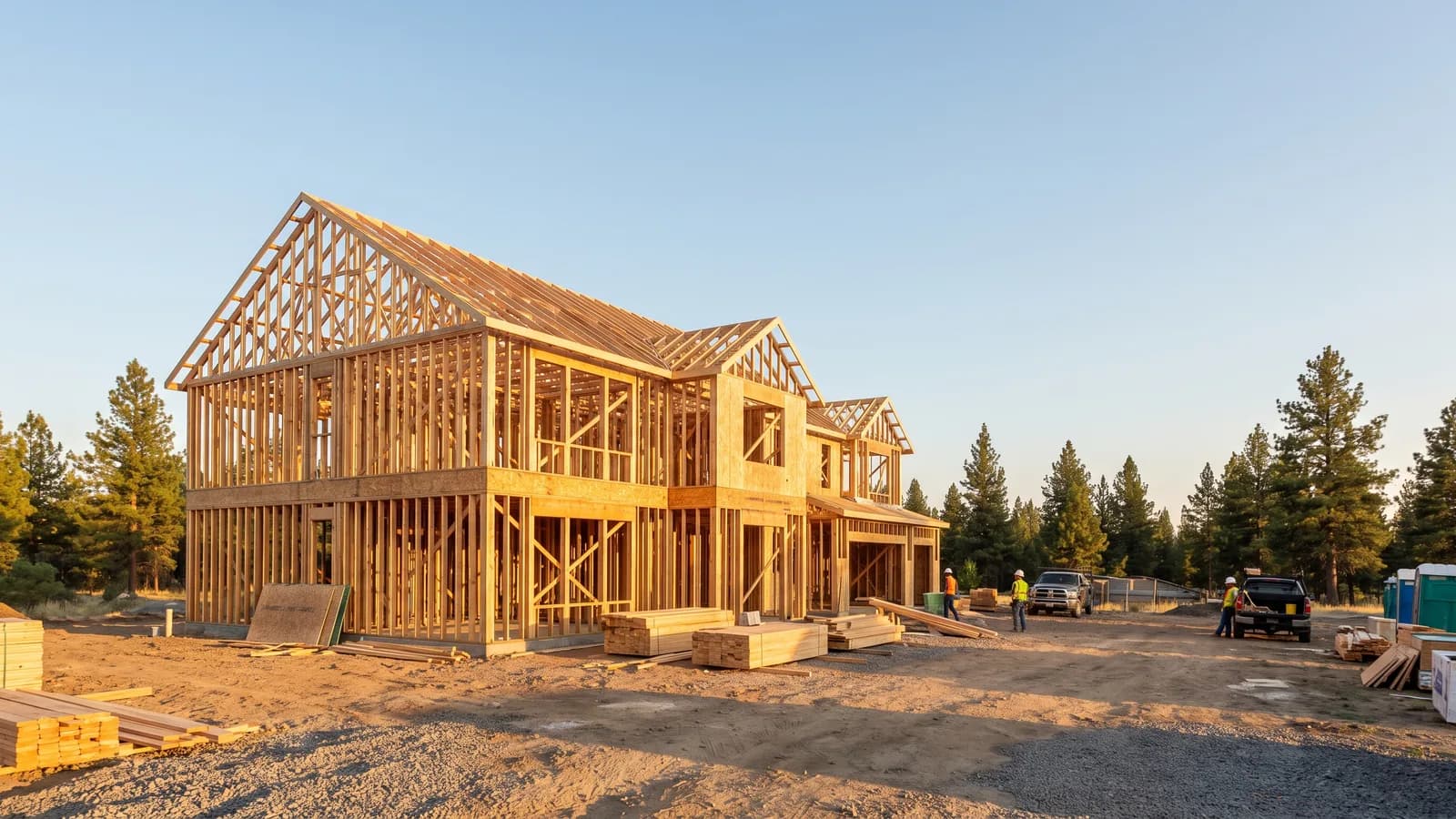
North Carolina runs building inspections in a statutory sequence, and two rules drive the whole calendar: nothing may be covered before the inspection that looks at it, and the framing inspection comes after the trade rough-ins are approved. Because the state's Administrative Code names the required inspections, the order is broadly the same across the state rather than something each county invents.
Key takeaways
-
The order follows concealment: footing, under-slab, foundation, trade rough-ins, framing, insulation, then finals by trade.
-
Framing is requested after the electrical, plumbing and mechanical rough-ins have been approved, not before.
-
Insulation cannot be inspected until framing and rough-in are approved and the permanent roof covering is on.
-
Each trade gets its own final inspection, so a house ends with several finals rather than one.
-
A permit expires six months after issuance if work has not commenced, and immediately if work stops for twelve months.
What order do inspections happen in North Carolina?
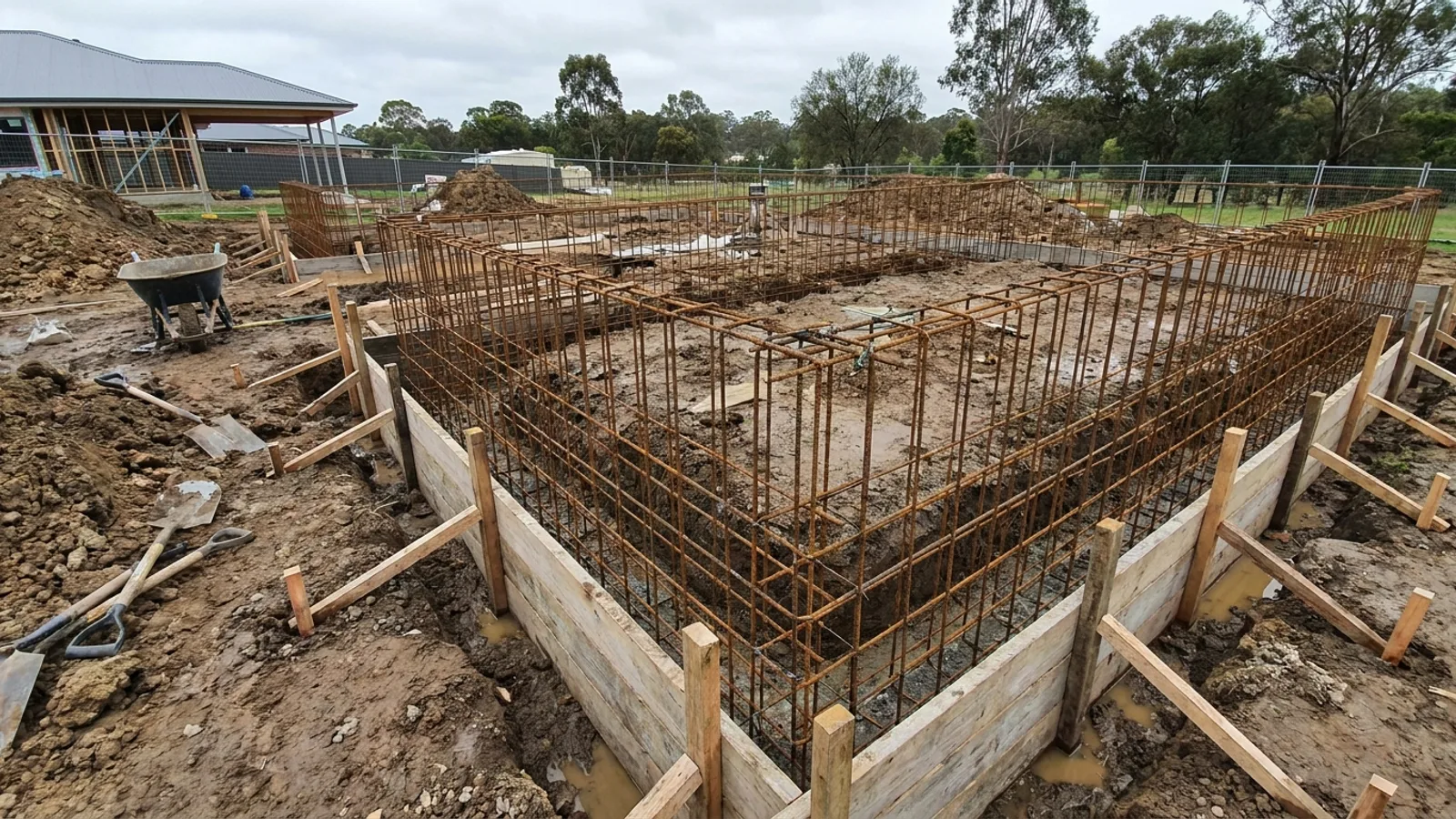
The sequence tracks construction, because an inspector cannot approve what has already been buried. North Carolina's Administrative Code lists the required inspections as footing, under-slab as appropriate, foundation, rough-in, building framing, insulation, fire protection and final.
Wake County's published required inspections guidance shows the residential version in practice, running footing, foundation, under slab, electrical rough-in, plumbing rough-in, mechanical rough-in, framing, insulation, then electrical, plumbing, mechanical and building finals.
| Step | Stage | What it gates |
|---|---|---|
| 1 | Footing | Concrete placement, and setback compliance |
| 2 | Under-slab | Pouring the slab over concealed work |
| 3 | Foundation | Enclosing or backfilling the supports |
| 4 | Trade rough-ins | Everything hidden by finish |
| 5 | Framing | Covering lintels and structural connections |
| 6 | Insulation | Any wall or ceiling covering |
| 7 | Finals, by trade | Use, and the certificate of compliance |
Why does framing come after the rough-ins?
Because framing inspection is partly a check that the trades did not damage the structure getting their work in. Wake County states that framing is requested after all applicable electrical, plumbing and HVAC rough-in inspections have been approved.
That single rule reorders a lot of homeowner schedules. It means the electrician, plumber and mechanical contractor all have to finish their concealed work and pass before the framing inspector is called, and it means one slow trade holds up everyone.
The code also requires specific items to be in place and visible at framing: pipes, chimneys and vents, flashing for roofs and chimneys and wall openings, insulation baffles, and lintels required to be bolted to the framing, which may not be covered by interior or exterior finish before approval.
What can hold up the insulation inspection?
Two prerequisites that are easy to trip over. Insulation inspection is made after an approved building framing and rough-in inspection, and after the permanent roof covering is installed, with all insulation and vapor retarders in place but before any wall or ceiling covering is applied.
The roof covering requirement catches people. A project that is otherwise ready for insulation but still has temporary covering on the roof is not ready. Plan the roofing to land before the insulation call rather than after.
The code commentary is also realistic about the limits. Insulation baffles that cannot be seen at this stage, such as in vaulted ceilings with concealed rafter cavities, should be installed and verified at framing instead, and wall insulation behind tubs, showers and fireplace units on exterior walls may not be observable.
Can I split an inspection into stages?
Yes, where the local department allows it. The code provides that nothing in the individual inspection sections prevents partial inspections of the listed types as requested by the permit holder and allowed by the local inspection department, and that cumulative partial inspections approved by the code official must satisfy the same degree of readiness for viewing as a single inspection.
That is genuinely useful on a phased renovation. It is also a request, not an entitlement, and it does not lower the standard. Ask before you build a schedule around it.
What happens at the end?
A final inspection for each trade, then the certificate. The code requires final inspections to be made for each trade after completion of the work authorized under the technical codes, and its commentary notes that temporary power and a temporary certificate of occupancy may be requested before final inspection.
North Carolina puts the occupancy rule in statute rather than leaving it local, and the consequence is unusually sharp: under NCGS 160D-1116 no new building, or addition, or altered or moved building may be occupied until the certificate of compliance is issued, and occupying or allowing occupancy before it issues is a Class 1 misdemeanor. Do not move in early on a handshake.
How long do I have to get through all this?
Longer than most people think, but the clock is real. Under NCGS 160D-1111 a permit expires by limitation six months after issuance, or any lesser time fixed by local ordinance, if the work has not commenced. If work is discontinued for twelve months after commencing, the permit expires immediately, and no work may proceed under an expired permit until a new one is secured.
Two other statutory points shape the middle of a project. Under 160D-1112, after a permit is issued no changes or deviations from the application, plans and specifications may be made except where clearly permissible under the code, until specific written approval is obtained from the inspection department. And under 160D-1113, where a permit was obtained by an owner claiming the owner exemption, no inspection may be conducted without the owner being present unless the plans were drawn and sealed by a licensed architect. That is a real scheduling constraint, covered in the North Carolina owner-builder guide.
Our take: build your schedule backward from the framing inspection, because it is the choke point. Every concealed trade has to be finished and approved before it, and a single trade running late moves everything downstream. Homeowners who sequence around the finals instead are the ones who end up paying to expose work twice.
What if an inspection fails or work is stopped?
A failed inspection is a correction list, not a violation notice. Fix the item and call again, and expect repeat-visit fees in many jurisdictions after the first one.
A stop work order is different and it has a deadline. Under NCGS 160D-1114 an appeal is made to the State Fire Marshal within five days, in writing, with a copy to the local inspector. Five days is short, so note the date you receive one.
Before you schedule anything, run the free permit checker for your project and county, read what a North Carolina inspector checks for the readiness definitions, and confirm the office details on the page for your North Carolina county.