
A wind-borne debris region is an area of Florida where design wind speeds are high enough that the building code requires exterior openings to resist windborne debris during a storm. In these regions, windows, doors, skylights, and other openings on new or replacement work generally must be either impact-rated or protected by approved shutters. If your project is in a wind-borne debris region, that designation drives the products you can install and the documentation your permit needs.
Key takeaways
- A wind-borne debris region is a high-wind area where the Florida Building Code requires openings to resist storm-driven debris.
- Windows, doors, skylights, and garage doors typically must be impact-rated or protected by approved shutters in these regions.
- Products installed there need documented product approval, such as an FL number or Miami-Dade NOA, matched to the design pressure.
- Whether your address is in a wind-borne debris region is set by code-adopted wind maps and confirmed by your building department.
Table of contents
- What is a wind-borne debris region
- How do you know if your property is in one
- What does the designation require for openings
- Impact windows or shutters, which satisfies the rule
- How does it affect your permit and products
- Protection options at a glance
- A worked example for a window replacement
- How do you confirm your requirements
What is a wind-borne debris region
A wind-borne debris region is a mapped area where design wind speeds are high enough that the code treats flying debris as a real hazard to a building's openings. In these areas, an unprotected window that breaks in a storm can let wind pressure inside and cause far worse structural damage.

The designation comes from the Florida Building Code's adopted wind maps, which reflect the higher wind exposure of certain parts of the state, especially near the coast. It is a code concept, so it applies through the permit and product requirements for openings.
How do you know if your property is in one
You find out by checking the code-adopted wind speed maps for your address and confirming with your building department, which applies the maps to your specific location. Coastal and near-coastal areas are the most likely to fall inside a wind-borne debris region.
Because the boundaries follow wind data and can differ from one part of a county to another, do not assume based on a neighbor or a general impression. Your building department gives the definitive answer, and the Polk and Orange county resources point you to the right office.
What does the designation require for openings
In a wind-borne debris region, exterior openings on covered work generally must resist debris impact, either through impact-rated products or approved shutter protection. This applies to windows, exterior doors, skylights, and garage doors.
The goal is to keep the building envelope intact during a storm so pressure does not build inside. That is why replacing openings in these regions is more involved than a simple swap. Our guides on impact windows and storm shutters cover the two main ways to comply.
Impact windows or shutters, which satisfies the rule
Either impact-rated products or approved shutter systems can satisfy the requirement, and the right choice depends on cost, convenience, and your preferences. Both must carry documented product approval for the required design pressure.
Impact-rated windows and doors build the protection into the product, so there is nothing to deploy before a storm. Shutters protect standard openings but must be installed or closed when a storm approaches. Many homeowners weigh the always-on convenience of impact products against the lower upfront cost of shutters. The free permit checker helps you frame either approach.
How does it affect your permit and products
It affects your permit by requiring product approval documentation and design pressures for each protected opening. The building department verifies that the product you install is approved for the wind load at your location.
This ties directly to Florida's product approval and NOA system, where each approved product lists the pressures and sizes it was tested to. At inspection, the installed products may be checked against those approvals. Gathering the approval reports early keeps the permit moving.
Protection options at a glance
| Option | How it protects | Consideration |
|---|---|---|
| Impact-rated windows and doors | Built-in impact resistance | Higher upfront cost, always ready |
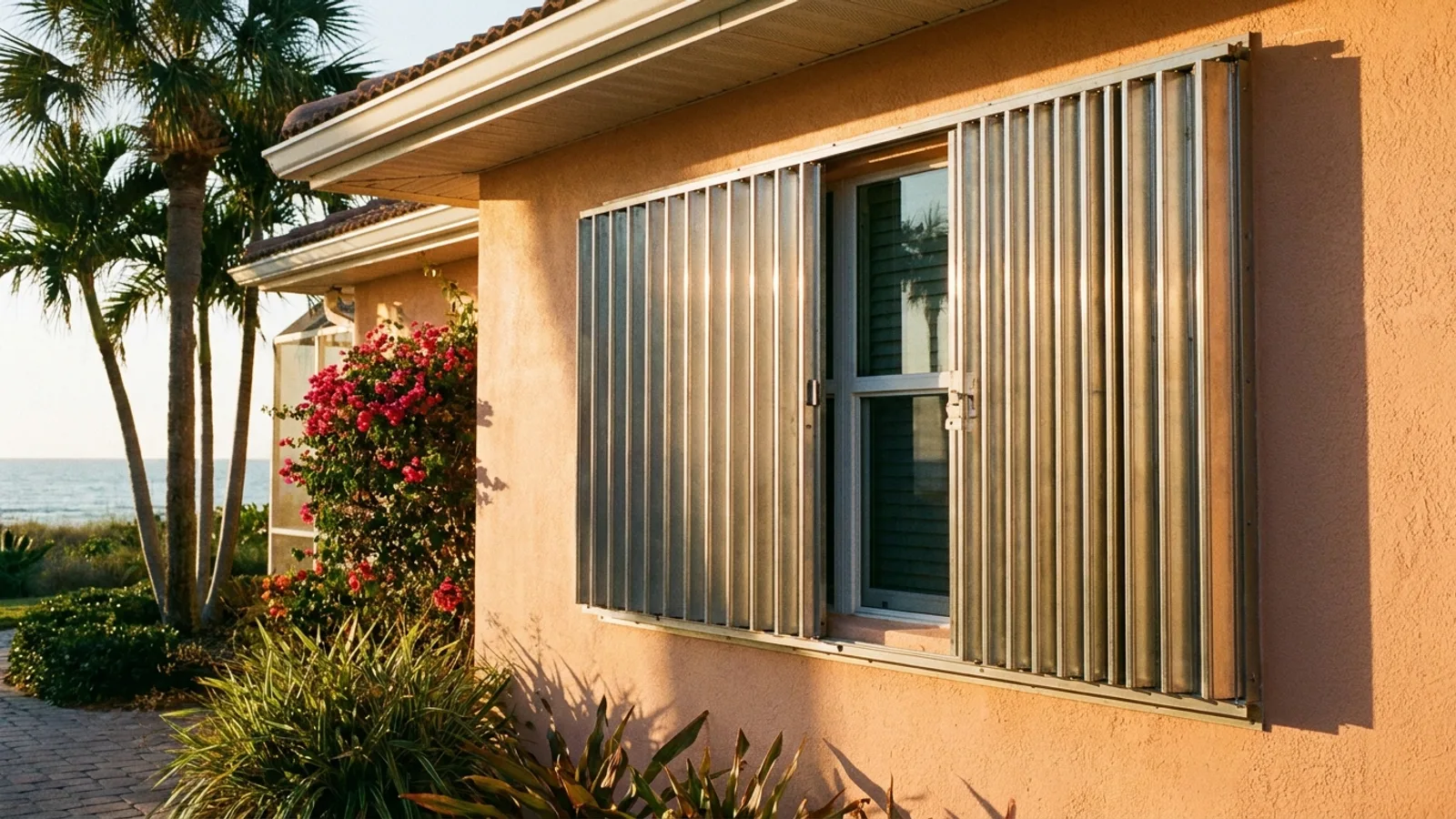
| Approved storm shutters | Cover standard openings | Lower upfront cost, must be deployed |
| Combination | Impact on some openings, shutters on others | Balances budget and convenience |
A worked example for a window replacement
Consider a homeowner near the coast in Orange County replacing older windows. They assume any new window will do, but their address falls in a wind-borne debris region.
The building department confirms the designation and explains the new windows must be impact-rated or the openings must be shutter-protected, with product approvals matching the required design pressures. The homeowner chooses impact-rated units, and the contractor supplies the FL numbers and approval reports for the permit. At the final inspection, the window labels are checked against the approvals. Because they matched the products to the wind zone up front, the project passes cleanly. Our windows and doors project page covers the permit side.
Our take: In a wind-borne debris region, protecting openings is not an upsell, it is what keeps your roof on in a hurricane. When a window fails in high wind, the pressure that rushes in is what lifts roofs and blows out walls. Match your products to the wind zone and never install an unlisted opening to save money.
How do you confirm your requirements
Confirm your requirements by asking your building department whether your address is in a wind-borne debris region and what design pressures apply before you buy any windows, doors, or shutters. That single question shapes the entire project.
Start with the free permit checker to frame the work, then verify locally through the Polk or Orange county resources. Confirming the wind zone first ensures you buy the right products once, rather than replacing non-compliant ones later.