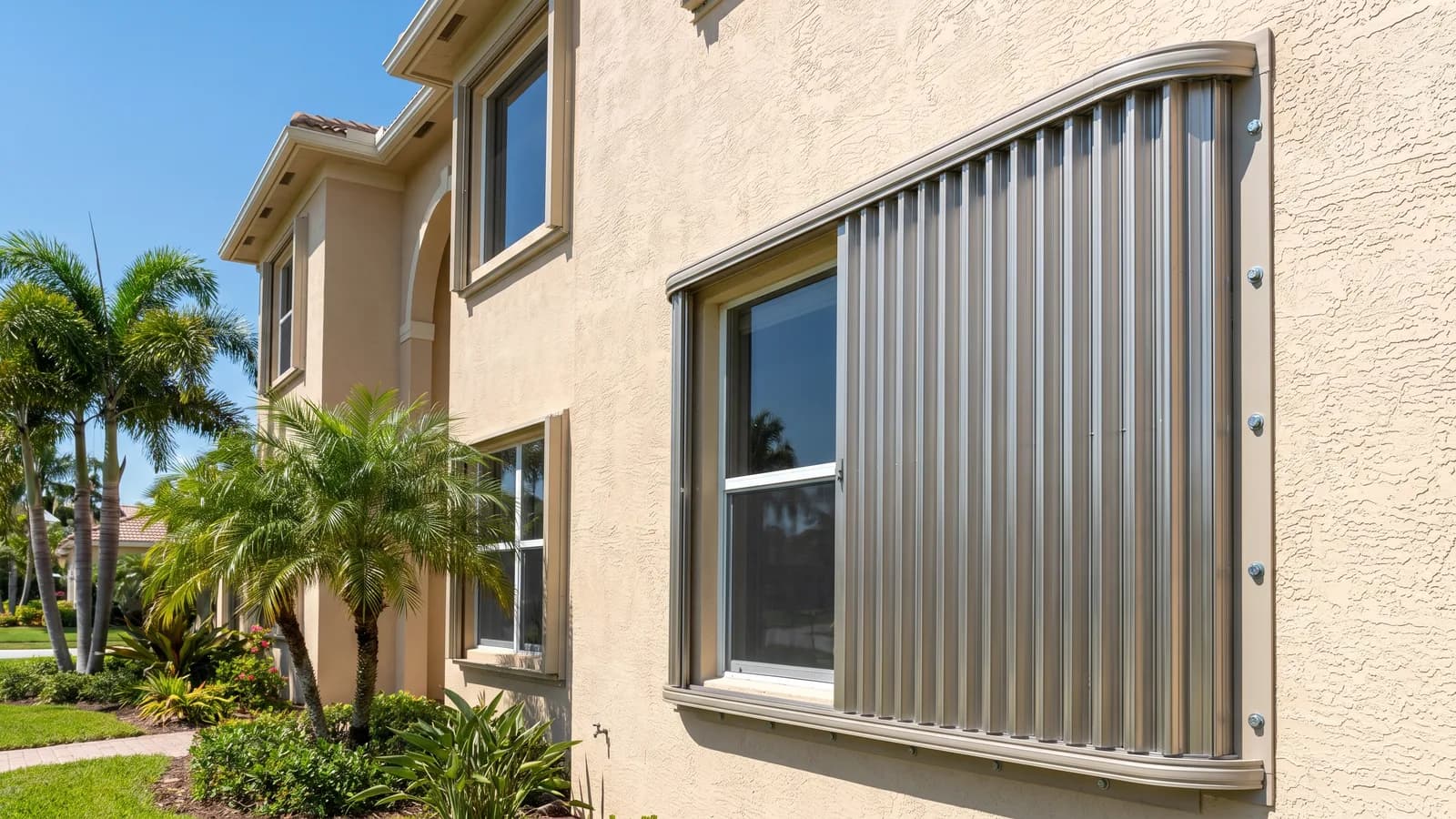
Installing storm shutters in Florida generally requires a permit, because hurricane shutters are rated opening protection permanently attached to your home. A storm shutter permit in Florida lets the building department confirm the shutters are approved products and anchored to resist wind and wind-borne debris. Whether they are accordion, roll-down, or fixed panels, permanently mounted shutters are treated as part of the building envelope, not a temporary add-on.
Key takeaways
- Permanently installed storm shutters in Florida generally require a permit.
- The permit confirms the shutters are approved products anchored to resist wind and debris.
- Product approval documentation is central in the wind-borne debris region.
- Rated opening protection can also matter for insurance and wind-mitigation credits.
Table of contents
- Do you need a permit for storm shutters in Florida?
- Why do shutters count as more than an accessory?
- Why does product approval matter so much?
- Do motorized shutters add electrical work?
- A quick example: accordion shutters in Orange County
- What else should you check before installing?
Do you need a permit for storm shutters in Florida?
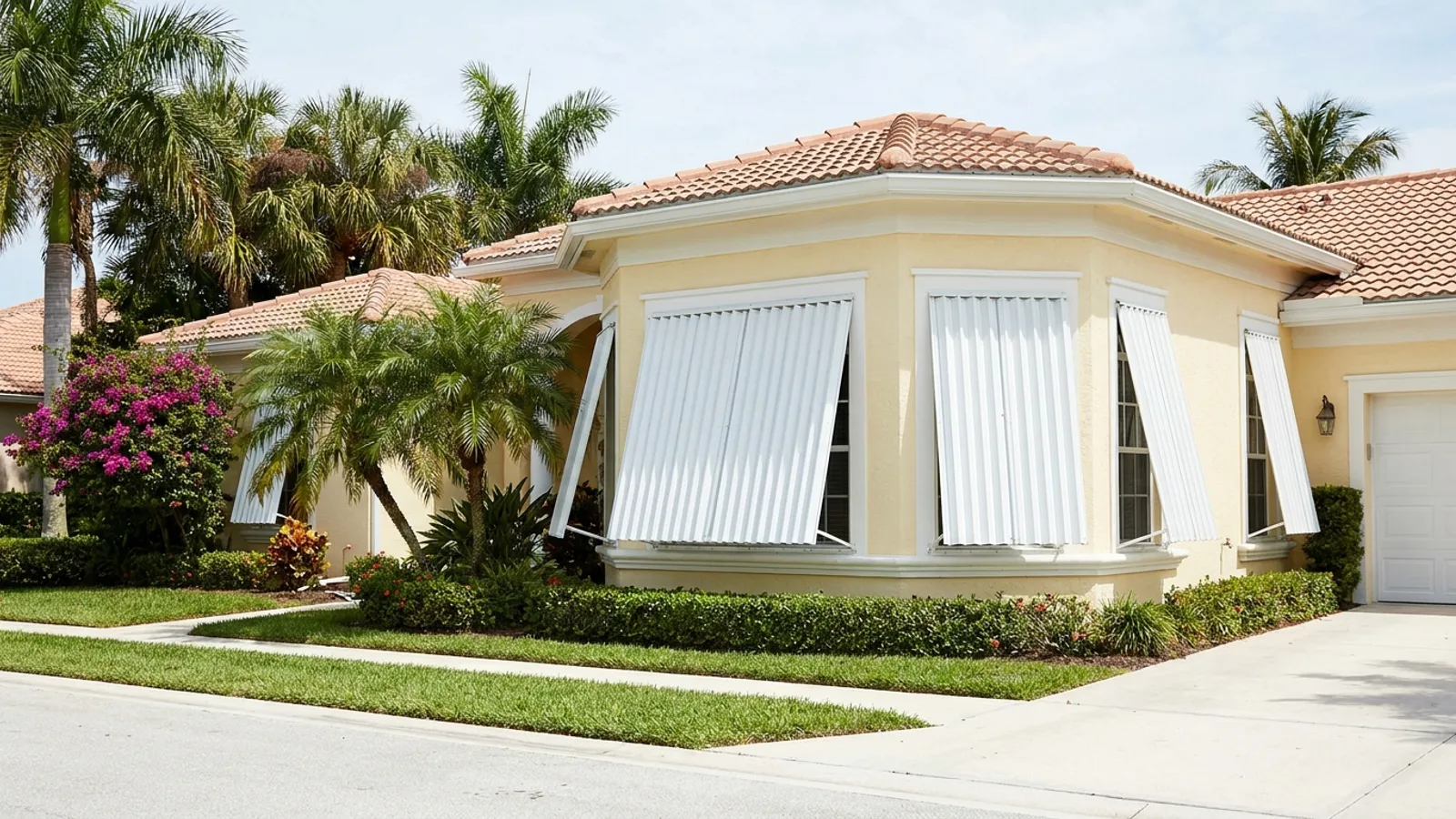
In most jurisdictions, yes. Permanently installed hurricane shutters, accordion, roll-down, Bahama, or fixed panel systems, are rated opening protection attached to the structure, and Florida reviews how they are anchored and whether they carry the required approval. The permit confirms the shutters will actually protect the openings in a storm.
Much of Polk and Orange County sits in the wind-borne debris region, where opening protection is taken seriously. This is closely related to impact windows, which protect openings a different way. Use our permit checker to confirm your situation before installing.
Why do shutters count as more than an accessory?
Storm shutters are part of how the building envelope survives a hurricane. If a window fails in high wind, the house can pressurize and lose its roof, so protecting the openings is a structural safety function, not decoration. That is why shutters are permitted and inspected against approved products and fastening.
The same envelope logic drives window replacement permits and exterior door permits. Anything that protects an opening from wind and debris is treated as a rated component of the wall.
Why does product approval matter so much?
In the wind-borne debris region, shutters generally must carry documented product approval, a Florida Product Approval number or a Miami-Dade NOA, showing they were tested to resist the design pressure and impact for the opening. The permit review uses that documentation to confirm the shutters are rated for your home.
That paperwork is not a formality. It is what proves the shutters will hold, and it is often what an insurer wants to see to grant a wind-mitigation credit. Keep the product approval and the closed permit together.
| Shutter type | Notes |
|---|---|
| Accordion | Permanent, permitted, product approval expected |
| Roll-down | Permanent, permitted, may include a motor circuit |
| Bahama or Colonial | Permanent, permitted, product approval expected |
| Fixed storm panels with permanent tracks | Permitted; tracks are the fixed part |
Do motorized shutters add electrical work?
Yes, sometimes. Motorized roll-down shutters include a motor that needs power, and that electrical connection can require its own permit alongside the shutter installation. If wiring is involved, a licensed electrician typically handles that portion.
This is similar to how other outdoor features with power get an electrical permit for the circuit. The shutter structure and the electrical are each reviewed for their part.
A quick example: accordion shutters in Orange County
A homeowner in Orange County installs accordion shutters across the openings on the front of the house. They pull a permit, provide the shutters' Florida Product Approval, install them to the approved fastener schedule into solid anchoring, and pass a final inspection.
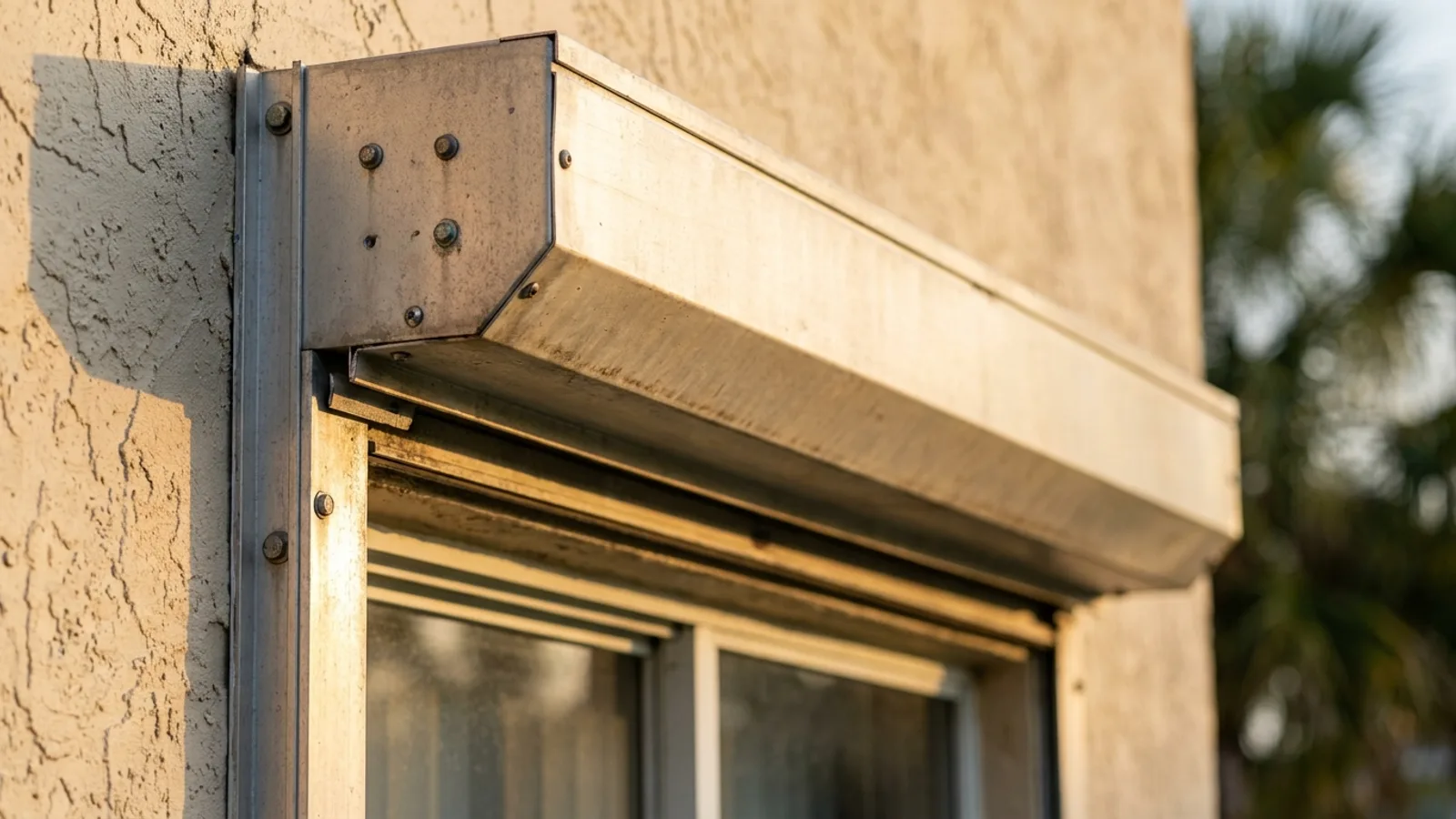
Beyond the storm protection, the documented, rated installation can support a wind-mitigation credit on their insurance, which is a tangible reason to do it by the book.
Our take: Permit your storm shutters. They are life-safety opening protection, and unapproved or poorly anchored shutters can fail exactly when they are needed. The product approval and inspection are what make them real protection, not just hardware.
What else should you check before installing?
Confirm the shutters carry current product approval for your openings, verify the anchoring substrate can hold the required fasteners, and ask your insurer how documented shutters affect a wind-mitigation inspection and any credit. An HOA may also have rules on shutter appearance.
Keep the product approval and closed permit with your records. That documentation is what proves your opening protection is rated, which matters for both storm safety and insurance.
It is worth understanding the difference between permanent shutters and temporary options. Plywood over windows before a storm is an emergency measure, not rated opening protection, and it does not earn an insurance credit or satisfy the code the way an approved, permitted system does. Permanent shutters, by contrast, are always ready, carry documented ratings, and can be closed in minutes when a storm approaches. For a Florida home in the wind-borne debris region, that combination of readiness and documentation is the real value, and the permit is what confirms the system will perform when a hurricane actually arrives rather than simply looking the part.