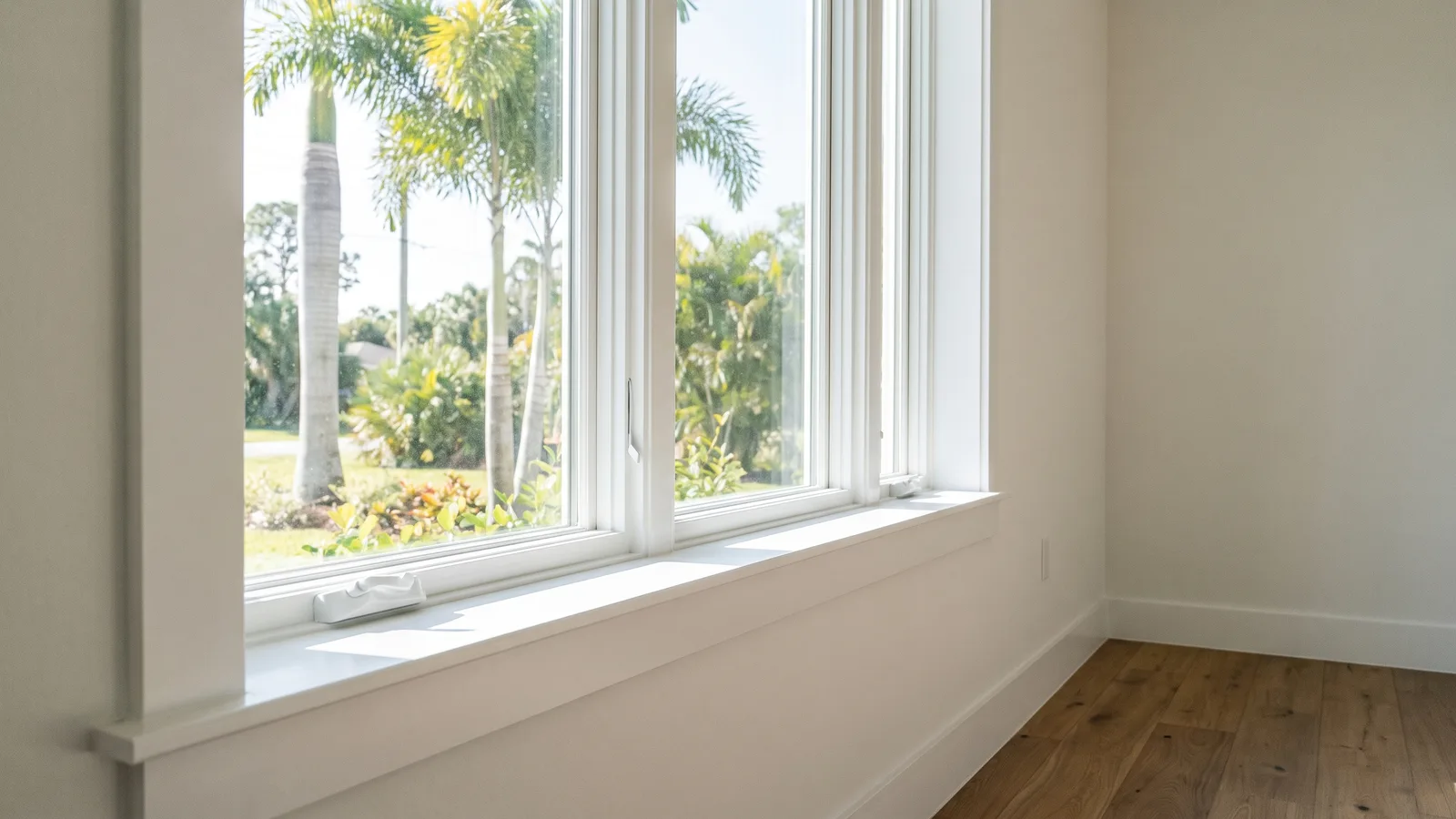
Replacing windows in Florida usually requires a permit. Because replacement windows must meet wind-load and product-approval rules that protect the home in a storm, most Florida jurisdictions treat window replacement as permitted work, even when the opening size does not change. The safe assumption is that a permit is required, then confirm the details locally.
Key takeaways
- Most Florida jurisdictions require a permit to replace windows because of wind-load and product-approval rules.
- Replacement windows generally must carry a Florida product approval or Miami-Dade approval showing they meet the applicable wind standards.
- A like-for-like swap can still require a permit, since the requirement is tied to the product and installation, not just the opening size.
- Confirm the requirement and product-approval documentation with your building department before work starts.
Table of contents
- Do I need a permit to replace windows in Florida
- Why are windows treated as more than cosmetic
- What is product approval and why does it matter
- Does a like-for-like swap need a permit
- Window replacement permit factors at a glance
- A worked example: replacing five windows in Polk County
- What does the inspection usually check
- What should I ask my window contractor
Do I need a permit to replace windows in Florida
In most Florida jurisdictions, yes. Window replacement involves products that must resist wind and, in much of the state, wind-borne debris, so building departments generally require a permit to confirm the right product is installed correctly.
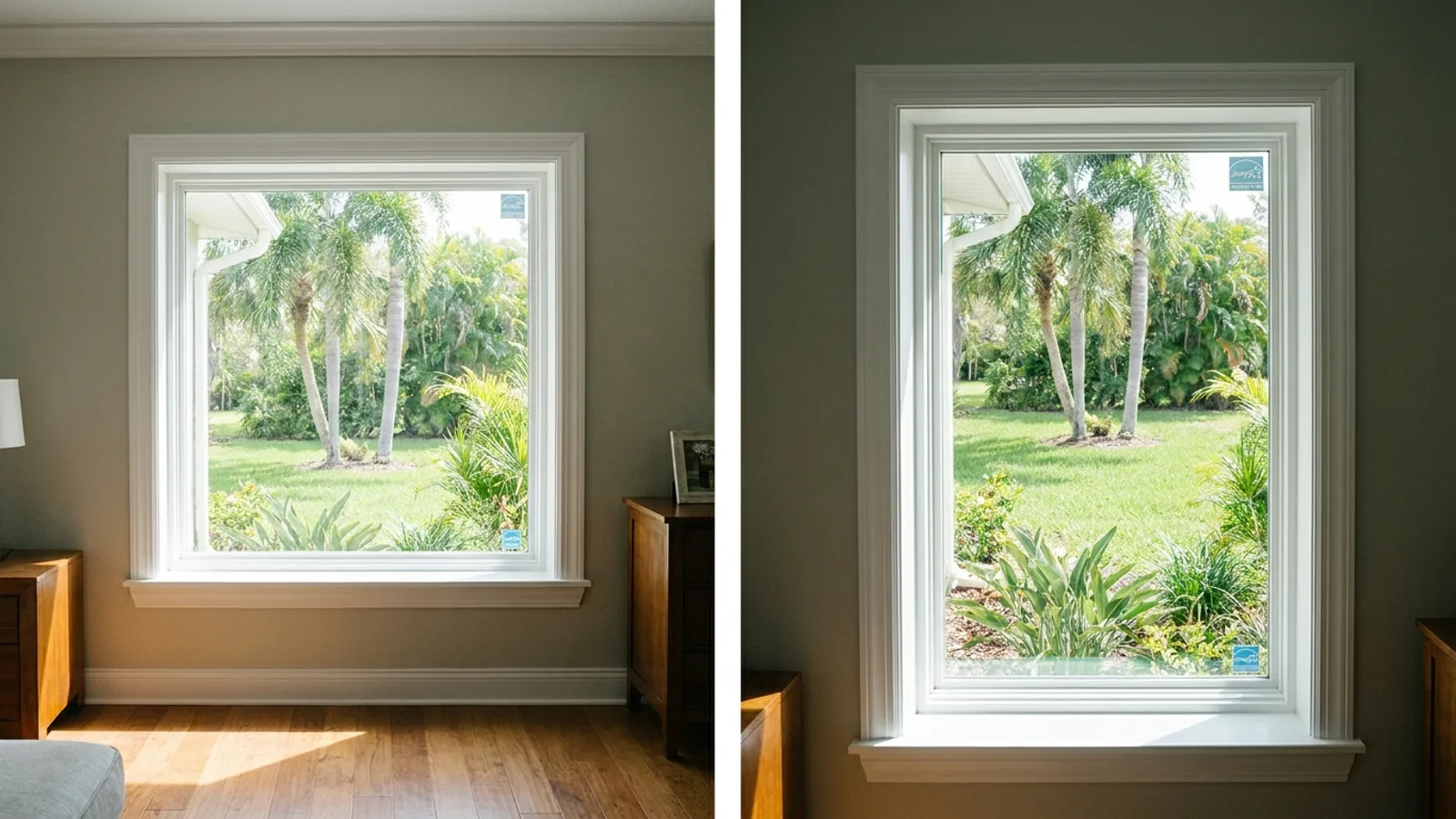
The requirement is about performance, not appearance. Because windows are part of the building envelope that keeps a home intact during a storm, they are reviewed more like a structural component than a finish. Use the permit checker to frame your project before contacting the department.
Why are windows treated as more than cosmetic
Windows are part of the envelope that resists wind pressure and, in wind-borne debris regions, impact. A window that fails in a storm can lead to internal pressurization and much larger structural damage, which is why the code cares how windows are rated and installed.
Much of Florida is a wind-borne debris region with heightened opening-protection requirements. Our guide on the wind-borne debris region explains why coastal and near-coastal homes face stricter window rules.
What is product approval and why does it matter
Product approval is documentation that a specific window model has been tested and approved to meet Florida's wind and, where required, impact standards. Florida uses a statewide product approval system, and Miami-Dade maintains its own approvals that are widely accepted.
Building departments check that the installed window carries a valid approval for your location's requirements. Our guide on Florida product approval and NOA explains how these approvals work and where to find the numbers.
Does a like-for-like swap need a permit
Often yes. Even replacing a window with a similar one in the same opening usually requires a permit, because the requirement follows the product rating and installation method, not the size of the opening.
Some homeowners assume that keeping the same opening avoids a permit, but that is a risky assumption in Florida. The building department still wants to confirm the new window meets current wind requirements and is anchored correctly. Confirm your specific case rather than assuming.
Window replacement permit factors at a glance
| Scenario | Typical permit outlook | Note |
|---|---|---|
| Standard window replacement | Permit required | Product approval and inspection |
| Like-for-like same opening | Usually permit required | Follows product and installation rules |
| Changing opening size | Permit required | Adds structural review |
| Impact window upgrade | Permit required | See the impact windows guide |
A worked example: replacing five windows in Polk County
Consider a homeowner in Polk County replacing five aging windows with new single-hung units. The contractor pulls a permit, provides the product approval numbers for the chosen windows, and schedules the inspection after installation.
The inspector confirms the windows match the approved products and are anchored per the approval and manufacturer instructions. The windows and doors project page summarizes the documents these projects usually involve. If the homeowner later upgrades to impact units, see our impact windows guide.
What does the inspection usually check
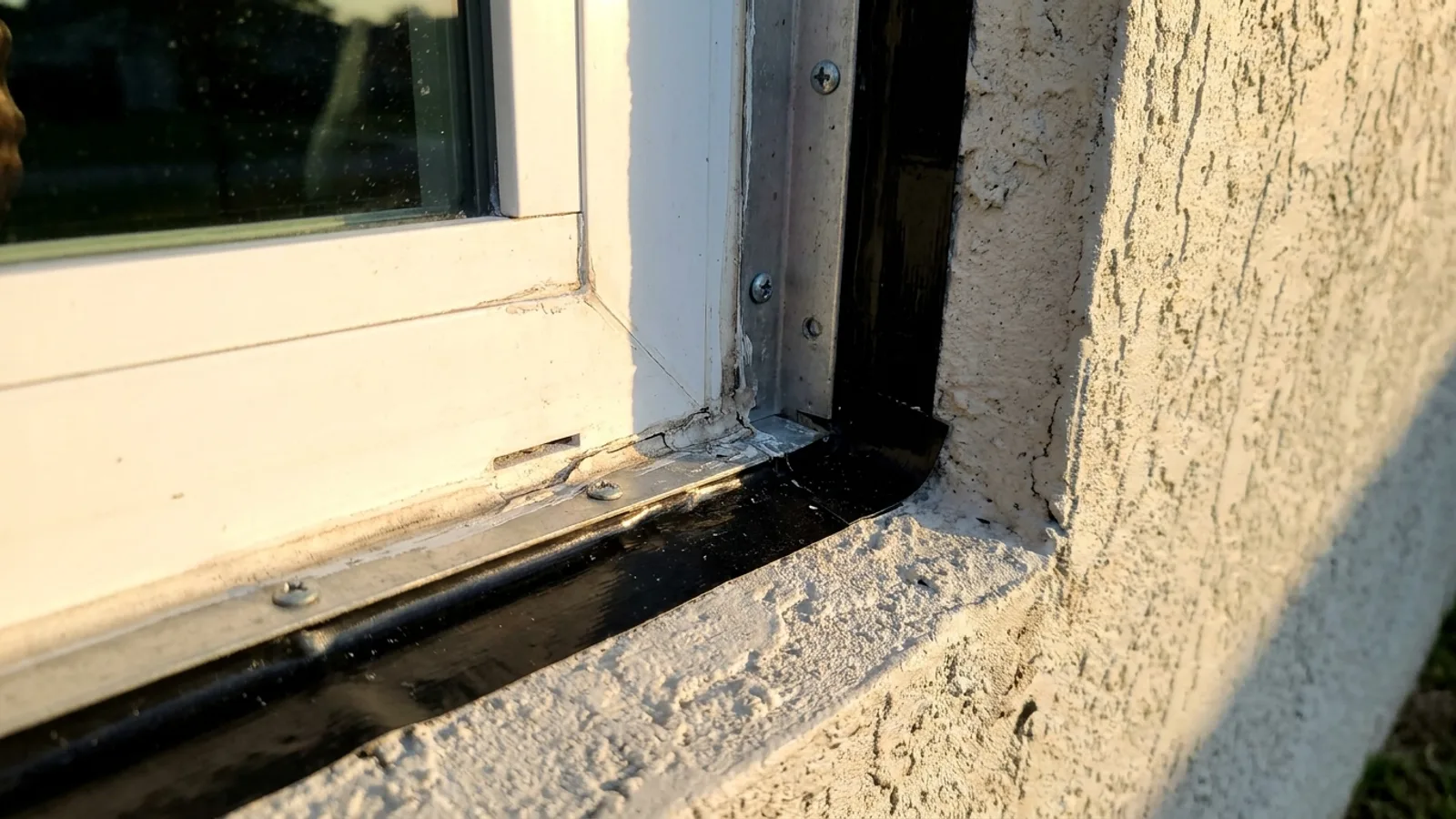
The inspection typically confirms the installed window matches the approved product and that fastening and flashing follow the approval and manufacturer instructions. Proper anchoring is central, because a correctly rated window still fails if it is not fastened as designed.
Inspectors may also check that the installation maintains the water and air barrier around the opening. The goal is a window that performs as its rating promises when a storm arrives.
What should I ask my window contractor
Ask whether the contractor is licensed, whether they will pull the permit, and which product approval numbers apply to your windows. A licensed contractor pulling the permit keeps responsibility for meeting the wind requirements with them.
Confirm you will get the permit number and that the final inspection will be scheduled. Our guide on door replacement permits covers the closely related rules for exterior doors.
Our take: Windows are one of the projects where a permit genuinely protects you, because product approval and correct anchoring are what keep the home intact in a storm. Do not treat a window swap as a cosmetic job, and do not let a contractor skip the permit.