
A failed building inspection in Florida is common and almost always fixable. The inspector issues a correction notice listing what did not pass, you or your contractor fix those specific items, and you schedule a reinspection. A failed inspection is not a fine or a permit revocation, it is a checklist of corrections, so the practical response is to read the notice carefully and address each item.
Key takeaways
- A failed inspection results in a correction notice listing specific items to fix, not a penalty.
- Fix exactly what the notice lists, then schedule a reinspection of the corrected work.
- Ask the inspector or department to clarify anything on the notice you do not understand.
- Repeated reinspections can add fees in some jurisdictions, so fix items thoroughly the first time.
Table of contents
- What happens when you fail a building inspection in Florida
- Why do inspections fail
- How do I read a correction notice
- What are the steps after a failed inspection
- Common failure reasons and fixes
- A worked example: a failed electrical rough-in
- Who is responsible for fixing the issues
- What if I disagree with the inspector
What happens when you fail a building inspection in Florida
When an inspection fails, the inspector documents the reasons on a correction notice and the work cannot proceed past that stage until the items are corrected and reinspected. It is a normal part of construction, not a mark against you.
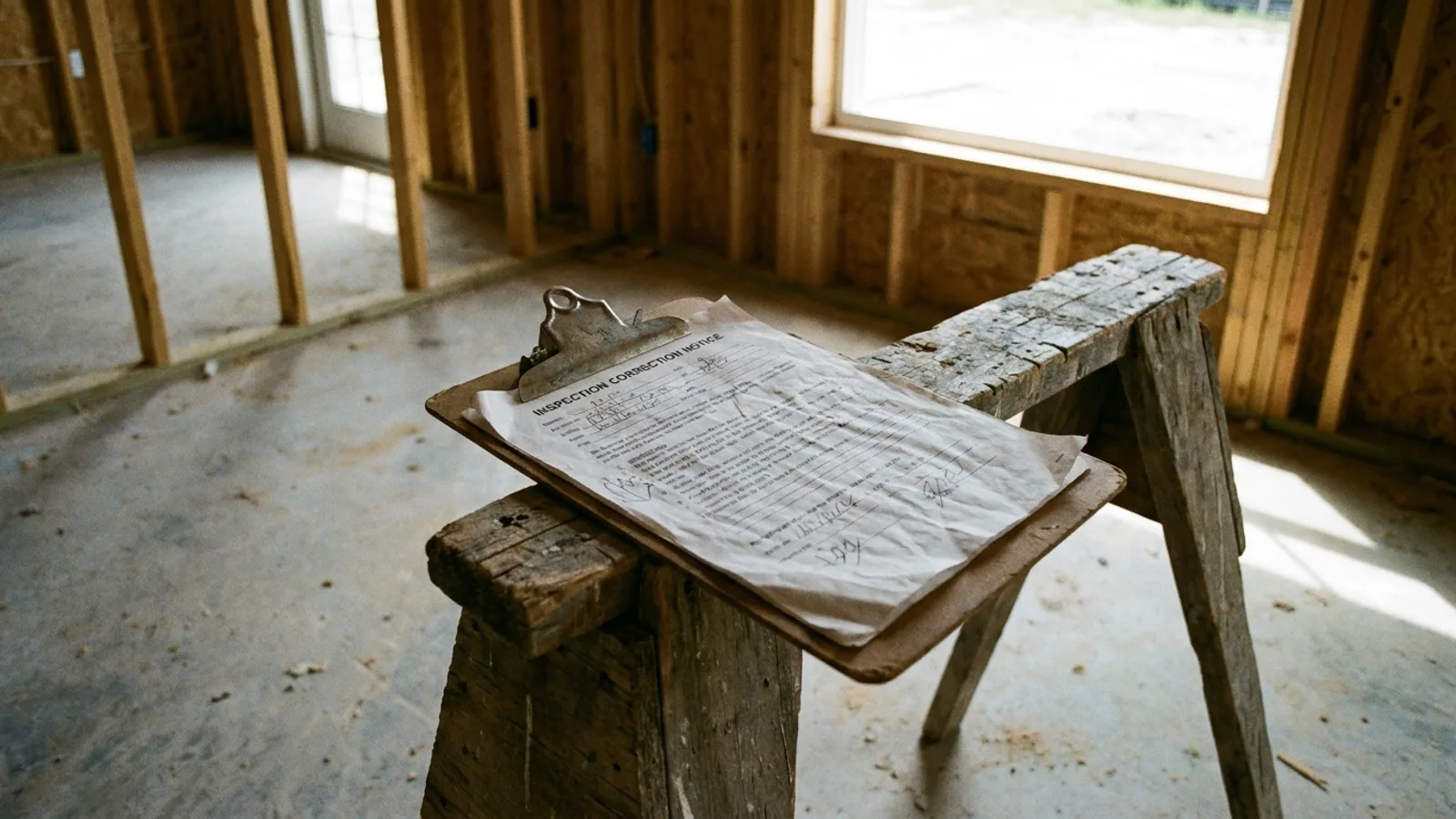
The correction notice is the key document. It tells you exactly what to fix, which turns a failed inspection into a clear to-do list. Our guide on what building inspectors check helps you understand what the inspector was looking for, and if you are still planning a project, the free permit checker helps you frame it from the start.
Why do inspections fail
Inspections commonly fail over specific, correctable details rather than fundamental problems. Missing hardware, incorrect spacing, incomplete work at the time of inspection, or a detail that does not match the approved plans are typical reasons.
Sometimes the work is simply not ready, and calling for an inspection too early leads to a fail. Understanding the permit inspection order helps you call for each inspection at the right stage, which prevents avoidable failures.
How do I read a correction notice
Read the correction notice item by item, and treat each listed item as a required fix. The notice usually references what failed and often the code basis, so you can address it precisely.
If any item is unclear, contact the inspector or the building department and ask for clarification before you start fixing. It is far better to understand the item fully than to guess and fail the reinspection. Do not assume you know what the inspector meant.
What are the steps after a failed inspection
The path back to passing is straightforward once you have the notice. Work through it methodically.
- Read the correction notice and list every item.
- Clarify anything unclear with the inspector or department.
- Correct each item completely, not partially.
- Confirm the corrected work is ready for reinspection.
- Schedule the reinspection and have the notice available.
Completing every item before the reinspection is the single best way to avoid a second failure.
Common failure reasons and fixes
| Common reason | Typical fix |
|---|---|
| Missing connectors or fasteners | Add the required hardware |
| Work not complete at inspection | Finish the work, then reinspect |
| Detail differs from approved plans | Correct to match the plans |
| Access blocked for inspection | Provide clear access, reinspect |
| Called too early in the sequence | Reach the correct stage first |
A worked example: a failed electrical rough-in
Imagine an electrical rough-in inspection fails because a few boxes lack the required securing and one circuit does not match the plan. The correction notice lists these items specifically.
The electrician secures the boxes, corrects the circuit to match the approved plan, confirms the work is complete, and schedules a reinspection. Because every listed item was addressed, the reinspection passes.
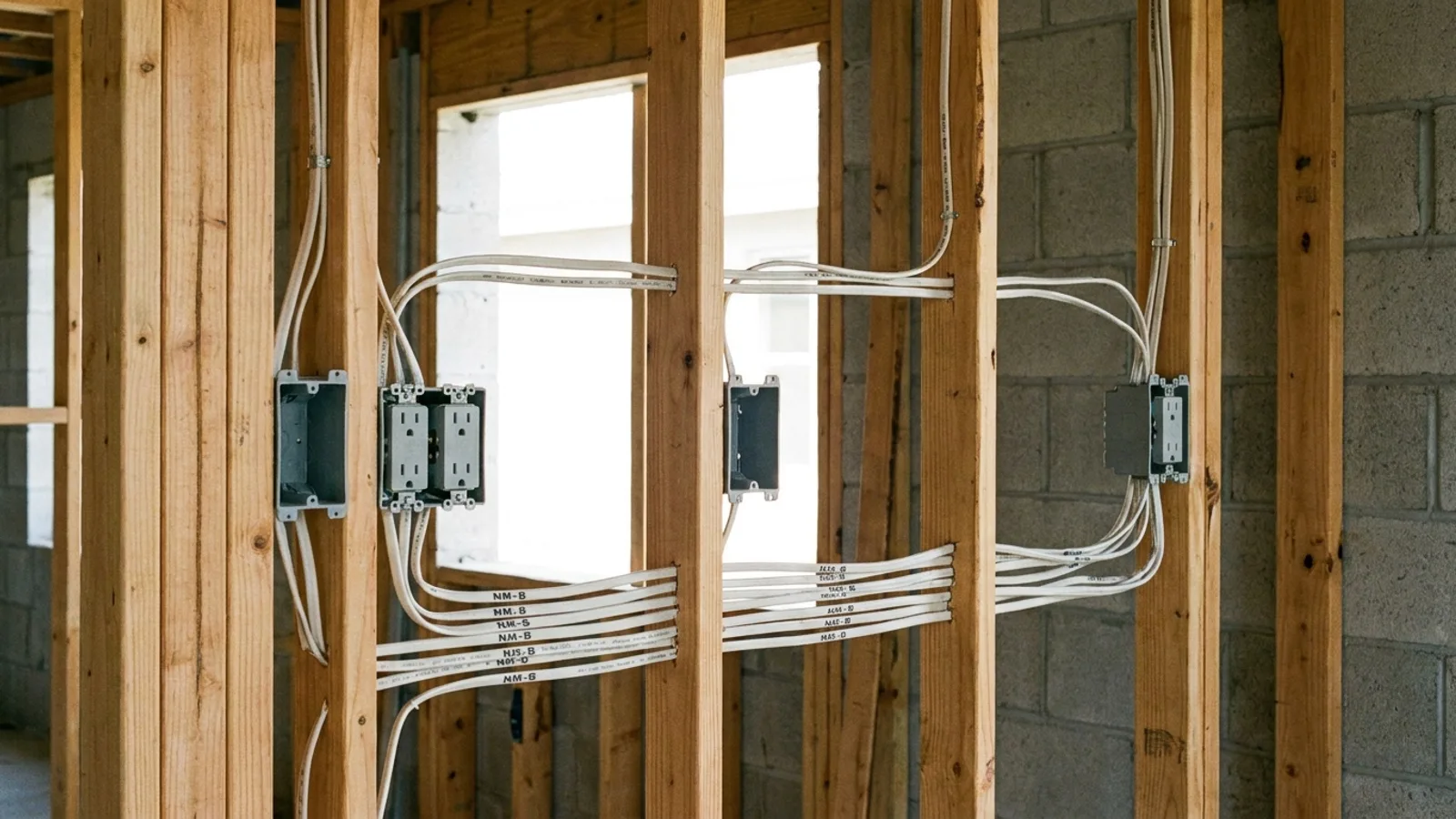 Our electrical panel project page and guide on electrical panel upgrades cover related electrical work.
Who is responsible for fixing the issues
If a licensed contractor pulled the permit, they are generally responsible for correcting the work and scheduling the reinspection. If you are an owner-builder, that responsibility is yours.
This is one reason many homeowners hire licensed contractors, who own the correction process. Our guide on owner-builder permits explains what taking on that responsibility means. Either way, communicate clearly about who is handling each item.
What if I disagree with the inspector
If you believe an inspection item is incorrect, the productive first step is to talk with the inspector or the building department to understand the code basis. Often a short conversation resolves a misunderstanding about what is required.
If a genuine disagreement remains, ask the department about its process for questions or a supervisory review. Approach it as a technical discussion about the code, not a confrontation, since the goal is compliant, safe work.
Our take: A failed inspection feels discouraging, but it is doing its job, catching something before it gets covered up. Read the notice, fix every item completely, and reinspect. Treated as a checklist rather than a setback, it is one of the most routine parts of any project.