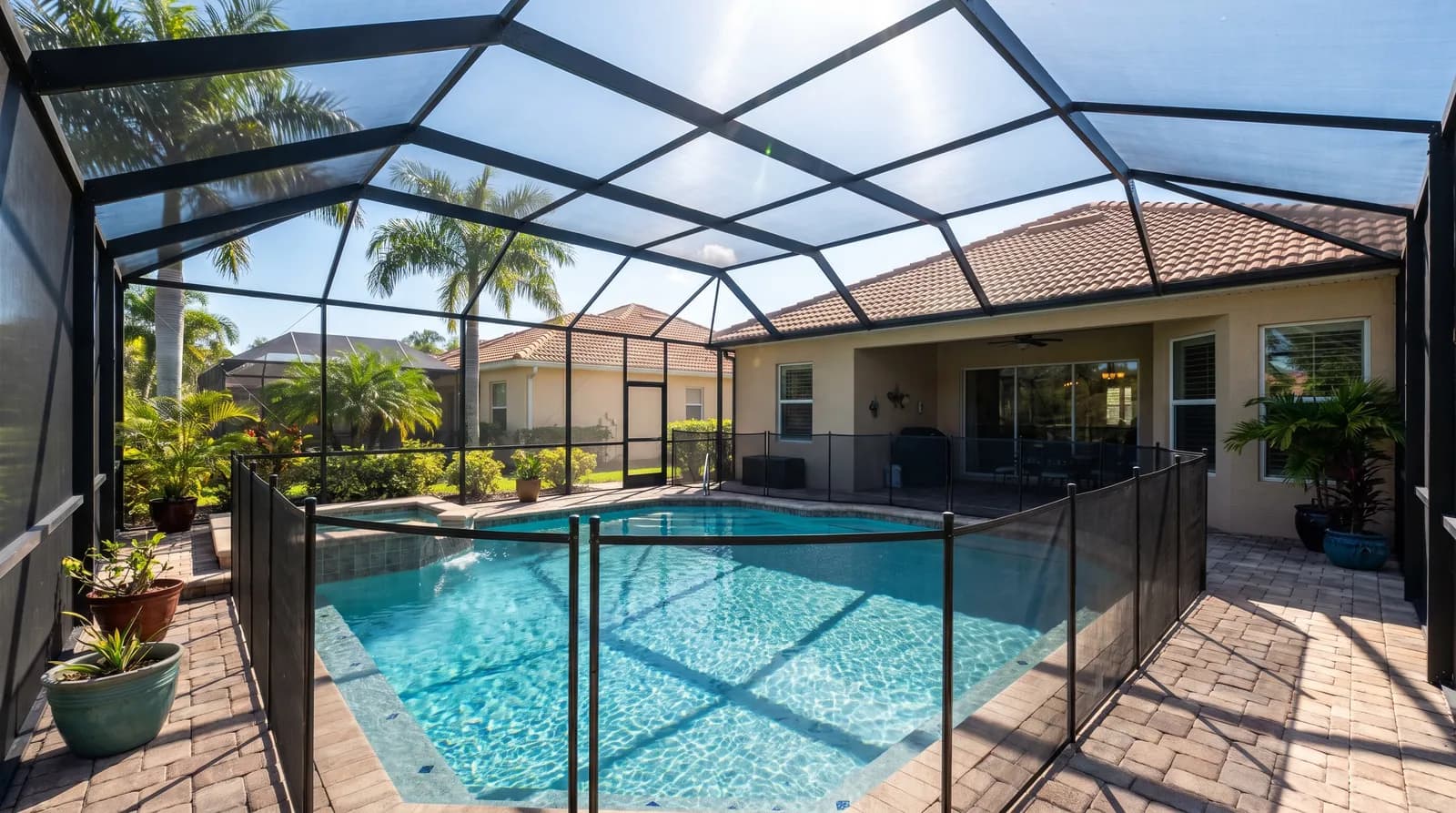
A swimming pool permit is required for every in-ground and above-ground residential pool in Florida, and you cannot pass final inspection until the pool has at least one approved safety feature under the Residential Swimming Pool Safety Act. That law, Chapter 515 of the Florida Statutes, is what catches homeowners off guard: the pool itself can be finished and full of water, but without a qualifying barrier, cover, or alarm, the building department will not close out the permit. Knowing which safety features count before you dig saves you from a finished pool you legally cannot use.
Key takeaways
- Building a residential swimming pool, spa, or hot tub in Florida requires a building permit, and usually related electrical and plumbing permits.
- The Residential Swimming Pool Safety Act (Chapter 515) requires at least one approved safety feature before the pool can pass final inspection and receive a certificate of completion.
- Qualifying features include a code-compliant barrier, an approved safety pool cover, exit alarms on doors and windows, self-closing and self-latching door devices, or a certified pool alarm.
- A qualifying barrier must be at least 4 feet high on the outside with no gaps a young child could crawl under, squeeze through, or climb over, and gates must be self-closing and self-latching.
- Skipping the safety feature is a criminal violation under the statute, and skipping the permit can block a home sale and void insurance.
On this page
- Do I need a permit to build a swimming pool in Florida?
- What is the Residential Swimming Pool Safety Act?
- What safety feature does Florida require before final inspection?
- What counts as an approved pool barrier under s.515.29?
- What are the alternatives to a fence barrier?
- Which safety features qualify: a comparison
- Do spas and hot tubs need the same safety feature?
- What permits does a pool project actually involve?
- Does a screen enclosure or pool fence need its own permit?
- What inspections does a pool require?
- Can I build my own pool as an owner-builder?
- Worked example: a pool in Polk County
- What happens if I skip the safety feature or the permit?
Do I need a permit to build a swimming pool in Florida?
Yes. Every residential swimming pool in Florida, in-ground or above-ground, requires a building permit from the local building department, and a pool usually pulls electrical and plumbing permits alongside it. Pools are regulated for structural, electrical, and safety reasons, and the safety component is written directly into state law.
Because a pool combines several trades and a mandatory safety feature, it is worth mapping the full scope before you sign a contract. You can run your project through our free permit checker to see which permits and inspections your specific jurisdiction requires, and review the swimming pool project page for the typical process.
What is the Residential Swimming Pool Safety Act?
The Residential Swimming Pool Safety Act is Chapter 515 of the Florida Statutes, a state law intended to reduce child drownings by requiring safety features on residential pools, spas, and hot tubs. The Legislature's stated intent is that all new residential pools, spas, and hot tubs be equipped with at least one pool safety feature.
The law works through the permit process. Before a new pool can pass its final inspection and receive a certificate of completion, the building department must confirm that at least one qualifying safety feature is in place. This is not a local ordinance you can negotiate; it is statewide law that Polk, Orange, and every other county administers the same way.
What safety feature does Florida require before final inspection?
Florida requires at least one approved safety feature before a residential pool passes final inspection. Under Florida Statute 515.27, the pool must meet at least one of these options: a barrier meeting the requirements of s.515.29, an approved safety pool cover, exit alarms on all doors and windows with direct pool access, self-closing and self-latching devices on all doors with direct pool access, or a certified swimming pool alarm.
You only need one of the five to pass, but you must have at least one and it must actually meet the statute's specifications. Choosing the feature early matters because it affects your site plan, your fencing, and your budget.
What counts as an approved pool barrier under s.515.29?
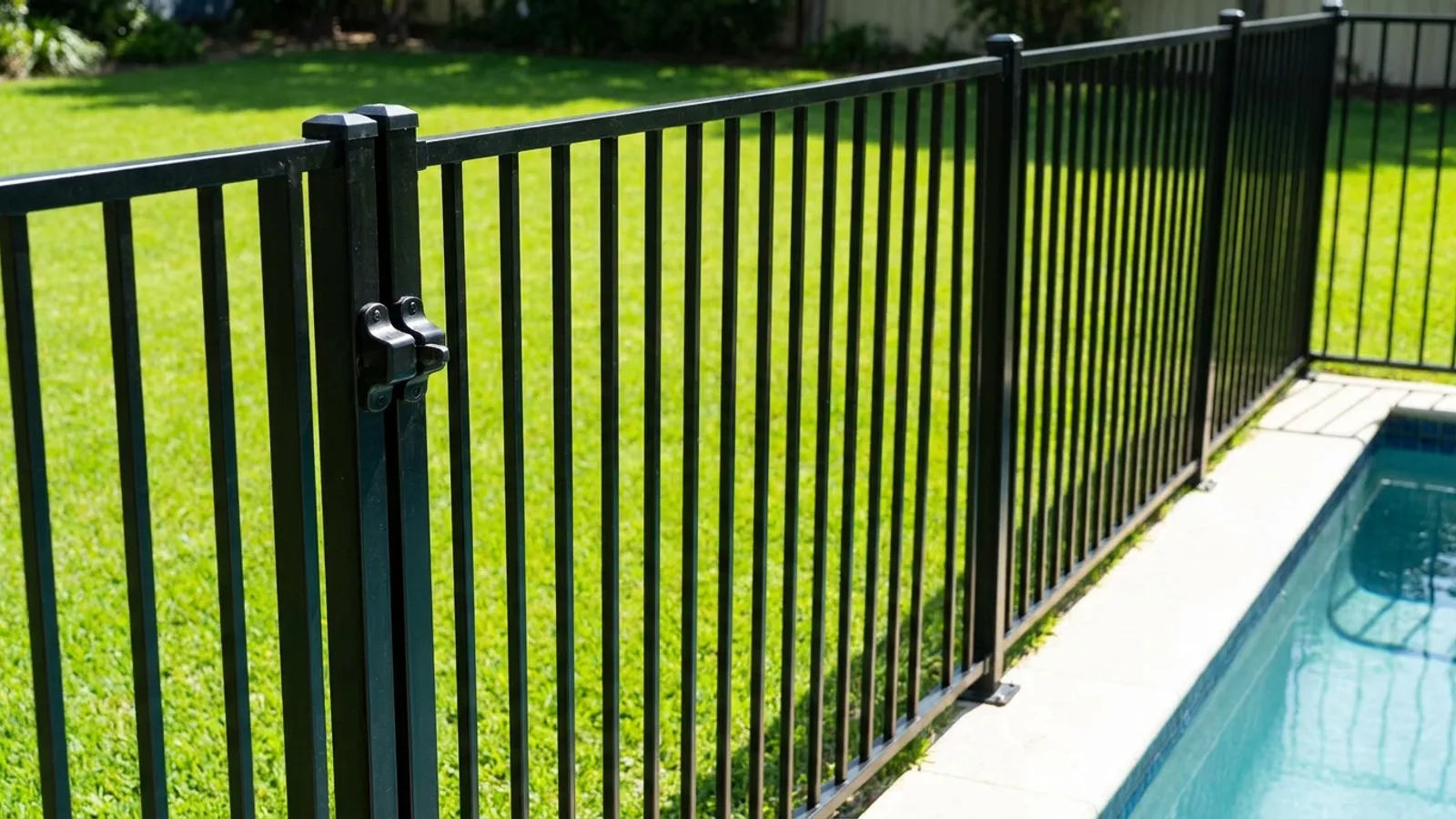
The most common qualifying feature is a barrier, and Florida Statute 515.29 sets its specifics. The barrier must be at least 4 feet high on the outside, and it cannot have gaps, openings, indentations, protrusions, or structural components that would let a young child crawl under, squeeze through, or climb over it.
Gates in the barrier have their own rules. They must open outward away from the pool, be self-closing, and be equipped with a self-latching locking device. The release mechanism must be on the pool side of the gate and placed so a young child cannot reach it over the top or through any gap. A fence that fails any one of these points does not satisfy the statute, even if it looks secure.
What are the alternatives to a fence barrier?
If a perimeter barrier does not fit your yard, Florida law offers four alternatives, each with its own standard. An approved safety pool cover must meet the ASTM F1346-91 performance standard. Exit alarms must be installed on all doors and windows with direct access to the pool and produce a minimum sound pressure of 85 decibels at 10 feet.
Alternatively, all doors with direct pool access can be fitted with a self-closing, self-latching device whose release is placed no lower than 54 inches above the floor, or you can install a swimming pool alarm certified to ASTM F2208 that sounds when someone enters the water. The statute is specific that a personal, wearable alarm does not satisfy this option. Match the alternative to how your home and yard are actually laid out.
Which safety features qualify: a comparison
All five options satisfy the law, but they differ in cost, convenience, and where they physically sit. This table summarizes what each one requires.
| Safety feature | Key requirement | Best when |
|---|---|---|
| Perimeter barrier (s.515.29) | At least 4 ft high, no climbable gaps, self-closing and self-latching gate | You want the pool isolated from the whole yard |
| Approved safety pool cover | Meets ASTM F1346-91 | You want a physical cover over the water |
| Door and window exit alarms | 85 dB at 10 ft on all direct-access openings | The house wall is the main access point |
| Self-closing, self-latching door device | Release no lower than 54 in above the floor | Few doors open directly to the pool |
| Certified pool alarm | Meets ASTM F2208, wearable alarms excluded | You want in-water detection |
Many homeowners combine a barrier with alarms for peace of mind, but only one qualifying feature is legally required to pass. Confirm the exact specification your inspector will check before you buy anything.
Do spas and hot tubs need the same safety feature?
Yes. The Residential Swimming Pool Safety Act applies to residential spas and hot tubs as well as pools, and the Legislature's intent covers all three. A spa or hot tub generally needs a permit and at least one qualifying safety feature, though an approved safety cover is often the practical choice for a small spa.
Because the rules and inspection steps track the pool law closely, our guide on hot tub and spa permits covers the specifics for those smaller installations.
What permits does a pool project actually involve?
A pool project usually involves more than one permit: a building permit for the pool structure, an electrical permit for the pump, lighting, and bonding, and a plumbing permit for the circulation system. If you add a screen enclosure or a fence, those often carry their own permits too.
The electrical side matters because pool equipment must be bonded and grounded to code, and pump circuits sometimes require panel capacity you do not have. If your electrical service is dated, review our guide on electrical panel upgrade permits before you assume the existing panel can carry the pool.
Does a screen enclosure or pool fence need its own permit?
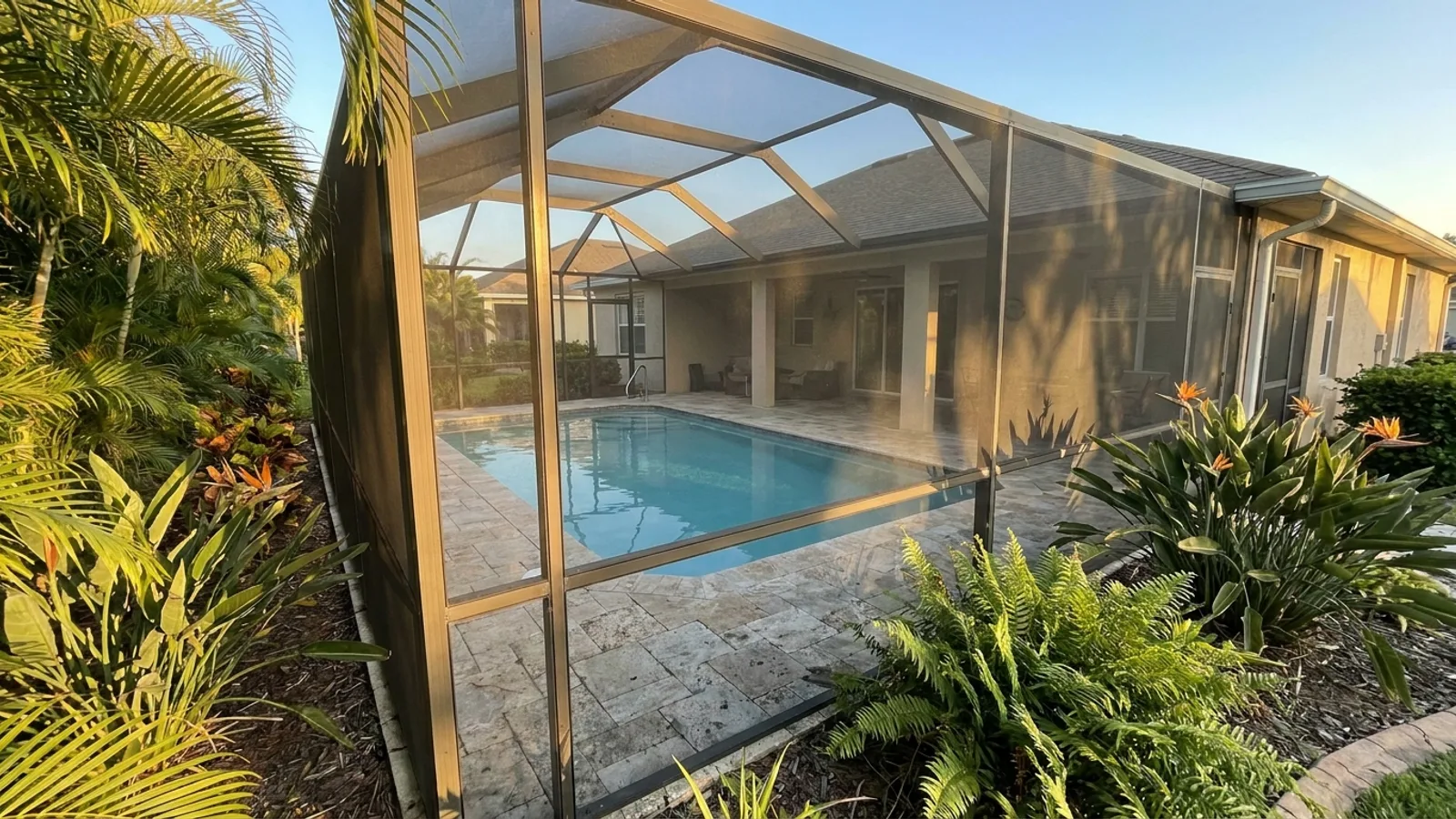
Usually yes. A screen enclosure over a pool is a structure that typically needs its own building permit, and a pool safety fence often does as well, depending on the jurisdiction. These are not automatically bundled into the pool permit, so confirm each one.
Because the screen enclosure also has to meet wind-load requirements, it is worth planning early; see our screen enclosure permit guide. If you are using fencing as your qualifying safety barrier, our fence permit guide explains how permitting works for that.
What inspections does a pool require?
A pool typically requires a sequence of inspections tied to its trades: steel and structural inspections before the shell is poured, electrical bonding and plumbing inspections, and a final inspection that includes verifying the required safety feature is installed. The safety feature check is the one that most often holds up a final.
The key point is timing: the barrier, cover, or alarm must be in place at final inspection, not added later. If your pool is finished but the fence is not, the permit stays open. That open permit becomes a problem at sale, which is why the safety feature should be part of the plan from day one.
Can I build my own pool as an owner-builder?
In many Florida jurisdictions a homeowner can pull an owner-builder permit for a pool on their own residence, but a pool combines structural, electrical, and plumbing work under one of the strictest safety laws in the code. As an owner-builder you take on the contractor's liability, the inspections, and full responsibility for the mandatory safety feature.
Given the drowning-prevention stakes and the multiple trades involved, most homeowners use a licensed pool contractor. If you are weighing it, read our comparison of owner-builder permits in Florida first.
Worked example: a pool in Polk County
Consider a homeowner in unincorporated Polk County installing a 15-by-30 in-ground pool. The licensed pool contractor pulls a building permit plus electrical and plumbing permits, and the project passes its steel, bonding, and plumbing inspections on schedule. The pool is plastered and filled.
At the final inspection, however, the contractor has not yet installed a qualifying safety feature, planning to add a fence "next month." The inspector cannot close the permit, because Chapter 515 requires an approved feature before final. The homeowner installs a 4-foot aluminum barrier with a self-closing, self-latching gate whose release is on the pool side and out of a child's reach, meeting s.515.29. On re-inspection the permit closes and a certificate of completion issues. The lesson: the safety feature is not an afterthought, it is a precondition of passing.
Our take: Decide on your qualifying safety feature during design, not after the pool is full. We consistently see finished pools sitting under an open permit because the barrier was treated as optional decor. Under Chapter 515 it is a legal precondition to closing the permit, and an open pool permit will surface at your closing table and with your insurer. Choosing a compliant barrier or cover up front is cheaper and far less stressful than retrofitting one under inspection pressure.
What happens if I skip the safety feature or the permit?
Skipping the required safety feature is a violation of the Residential Swimming Pool Safety Act, which the statute treats as a criminal offense, though penalties may be waived if the feature is installed within a set correction window and a drowning-prevention education program is completed. Beyond the legal exposure, the pool simply will not pass final inspection.
Skipping the permit entirely is worse: an unpermitted pool can trigger fines, block a home sale, and void insurance coverage if a claim arises. If work was already done without a permit, our guide on after-the-fact permits explains how to bring it into compliance.
The bottom line: budget for the permit, the trades, and a qualifying safety feature from the start, and confirm the exact barrier or alarm specification your inspector will check. Begin with the free permit checker to see what your county requires before you break ground.