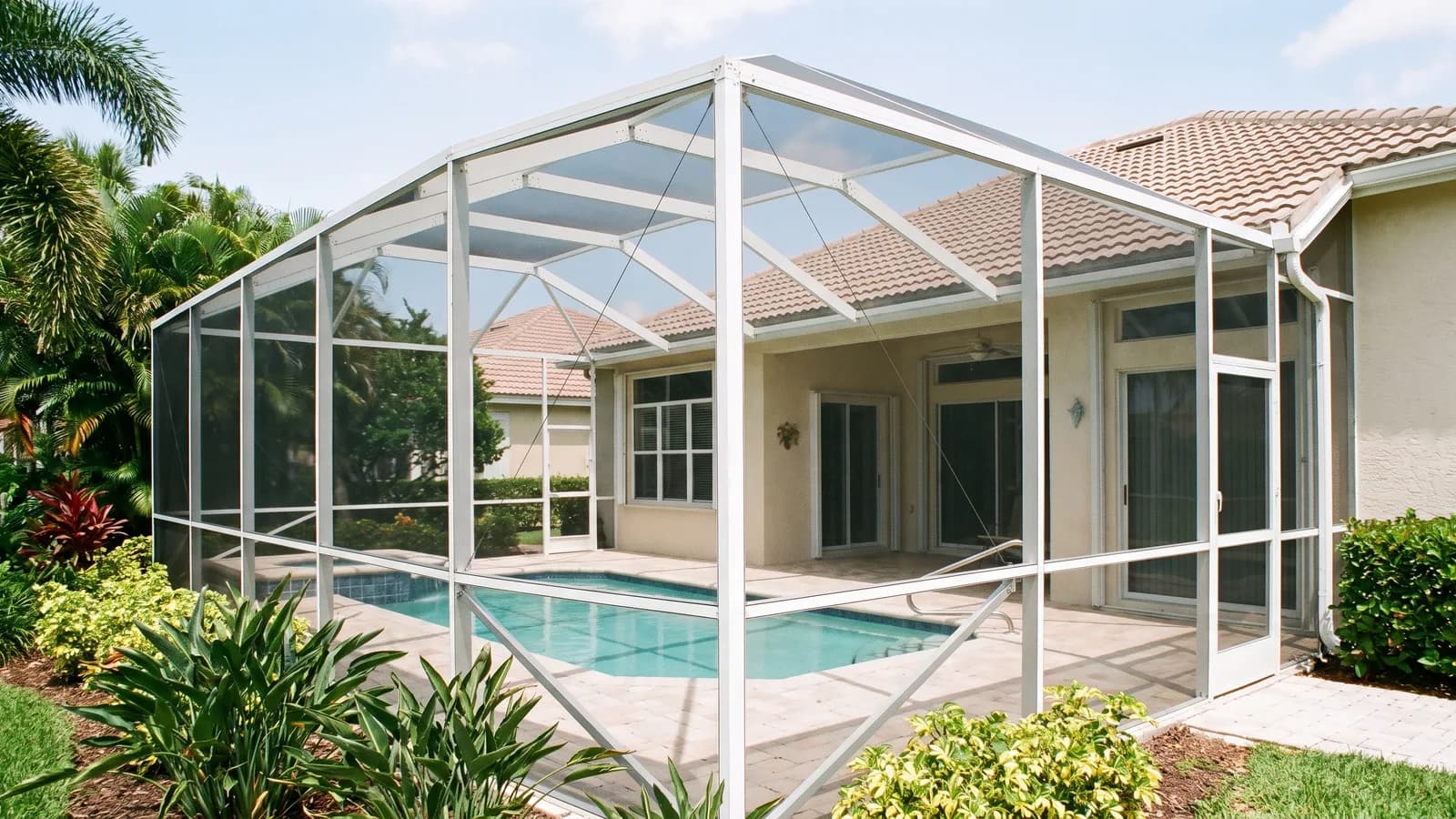
A screen enclosure in Florida almost always requires a building permit. A screen room or pool cage is an engineered structure with an aluminum frame that must resist wind load and attach to your home or a slab, so nearly every Florida jurisdiction treats it as permitted work rather than minor cosmetic work.
Key takeaways
- Most Florida jurisdictions require a building permit for a screen enclosure or pool cage because it is a wind-loaded structure.
- Screen enclosures usually need engineered plans showing they meet the local wind-speed requirements.
- A pool cage often overlaps with pool safety barrier rules, so the two reviews can be connected.
- Confirm the requirement with your building department before signing a contract, and make sure your contractor pulls the permit.
Table of contents
- Do I need a permit for a screen enclosure in Florida
- Why are screen enclosures treated as structures
- What does the permit review usually check
- How do pool cages and screen rooms differ for permits
- Screen enclosure permit factors at a glance
- A worked example: a pool cage in Orange County
- What should I ask my contractor
- What if I am only replacing screens
Do I need a permit for a screen enclosure in Florida
In nearly all Florida jurisdictions, yes. A new screen enclosure, screen room, or pool cage is a structural addition that must be designed for wind, so a building permit is the standard requirement.
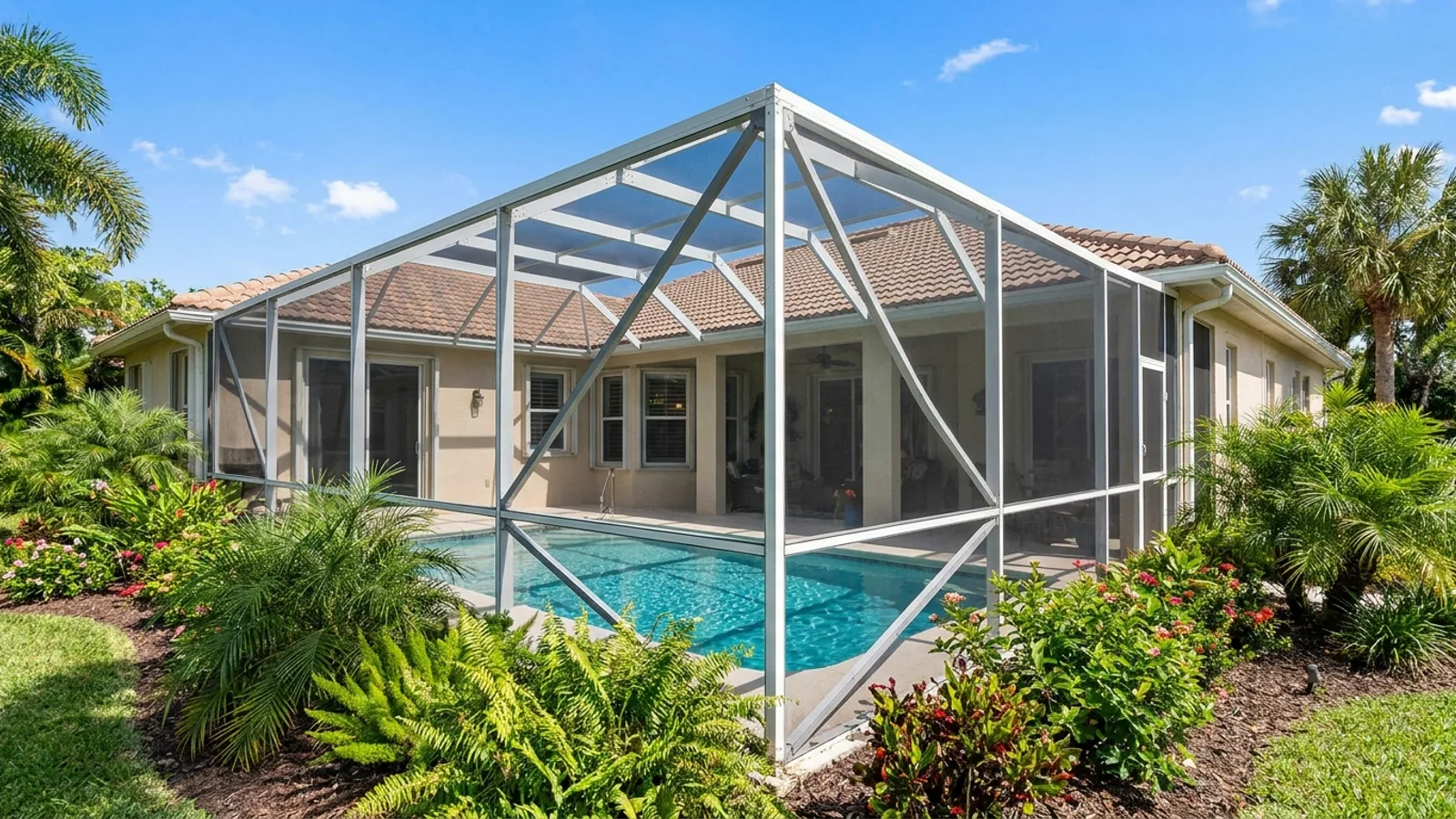
The exact submittal requirements vary, but the underlying reason does not: an aluminum-framed enclosure is engineered to resist uplift and lateral wind forces. That is exactly the kind of work permitting exists to review. Assume a permit is required and confirm the details with your local building department.
Why are screen enclosures treated as structures
A screen enclosure is a framed structure attached to your house or a footing, not a decoration. Florida sits in a high-wind environment, and an enclosure that is not properly anchored can fail and become debris in a storm.
Because of that, building departments review how the frame is sized, how it connects to the home, and how it is anchored to the foundation. Much of Florida is a wind-borne debris region, which raises the design bar further. Our guide on the wind-borne debris region explains why coastal and near-coastal work faces stricter standards.
What does the permit review usually check
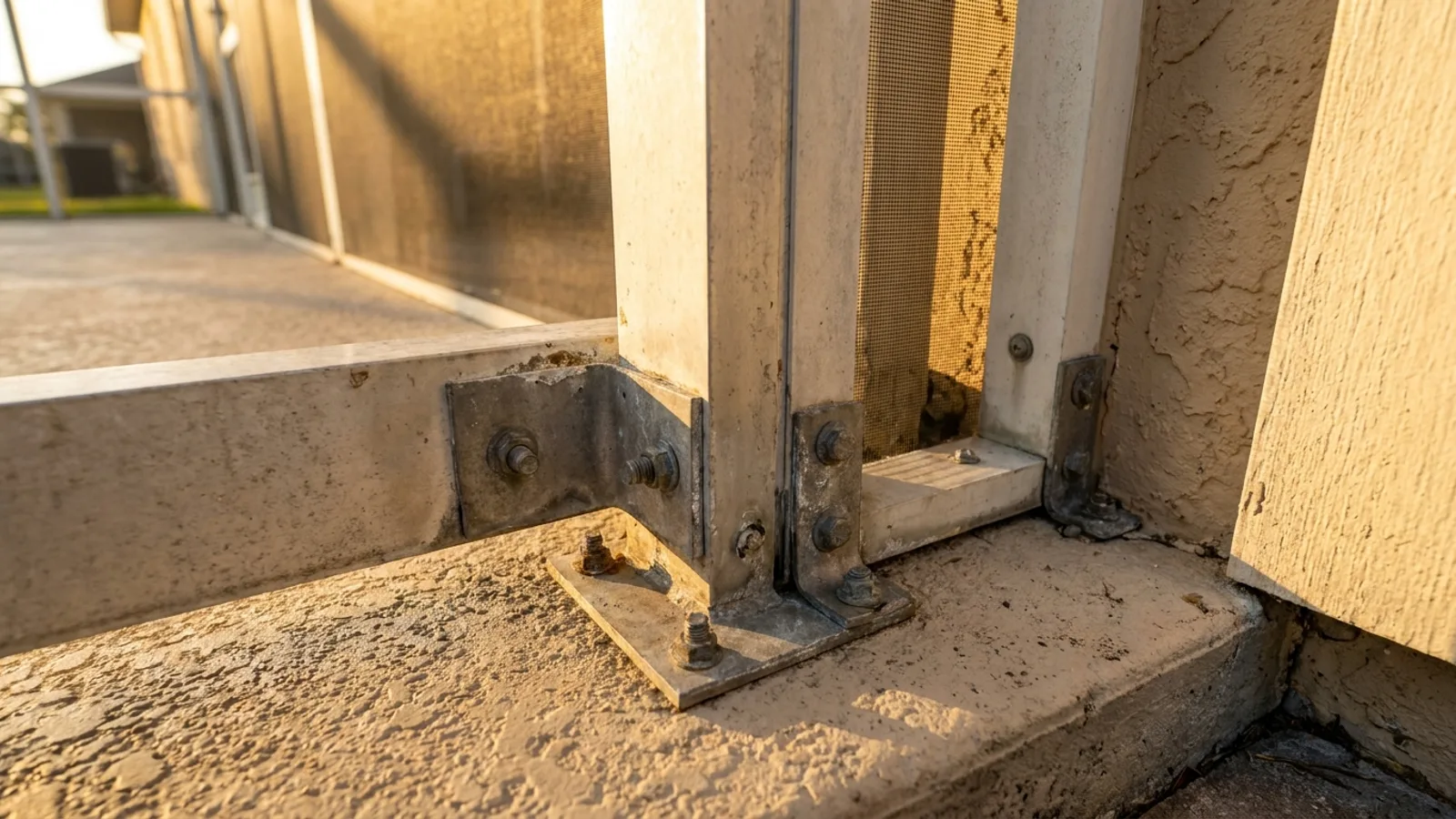
The review typically confirms the enclosure is engineered for the local design wind speed and that the anchoring and connections match the approved plans. Many jurisdictions want engineered drawings, sometimes signed and sealed, that show the frame members and fastening.
Inspections usually verify footings or slab attachment before the frame is finished and then confirm the completed structure matches the plans. You can preview the general sequence in our overview of what building inspectors check.
How do pool cages and screen rooms differ for permits
A pool cage is a screen enclosure over a pool, so it carries the structural review plus a connection to pool safety rules. A screen room over a patio has the structural review without the pool-barrier overlap.
Under the Residential Swimming Pool Safety Act, a pool must have a qualifying safety barrier, and a properly built enclosure can serve as part of that barrier. That is why pool cage projects sometimes tie into the pool permit itself. See our pool permits guide for how the safety-barrier requirement works.
Screen enclosure permit factors at a glance
| Project | Typical permit outlook | Why |
|---|---|---|
| New screen room over patio | Permit required | Wind-loaded structural addition |
| New pool cage | Permit required | Structure plus pool safety barrier |
| Rescreening existing frame | Often no permit | Usually maintenance, confirm locally |
| Replacing damaged frame members | Confirm locally | May be structural repair |
A worked example: a pool cage in Orange County
Consider a homeowner in Orange County who wants to add a screened cage over an existing pool. The contractor would submit engineered plans for the aluminum frame, the county would review the design against the local wind requirements, and inspections would confirm the footings and completed structure.
Because the cage sits around a pool, the homeowner would also confirm that the enclosure and its self-closing, self-latching door meet the pool safety barrier requirements. The screen enclosure project page summarizes the typical documents involved.
What should I ask my contractor
Ask whether the contractor is licensed, whether they will pull the permit in their name, and whether the enclosure is engineered for your jurisdiction's wind speed. A licensed contractor pulling the permit keeps responsibility for the work where it belongs.
Confirm you will receive the permit number and that inspections will be scheduled. You can frame the whole project quickly with the free permit checker before you call.
Our take: A screen enclosure is one of the projects where skipping the permit is genuinely risky, because an unpermitted, under-engineered cage can fail in a storm and void insurance considerations. Permit it and have it inspected.
What if I am only replacing screens
Rescreening an existing, sound frame is usually treated as maintenance and often does not need a permit, but replacing structural frame members can be different. If the aluminum frame is being rebuilt or re-anchored, that can cross back into permitted structural work.
When in doubt, describe the exact scope to your building department. Swapping screen mesh is not the same as rebuilding the cage, and only the department can tell you where the line falls for your project.