
A hot tub or spa in Florida usually needs a permit, most often for the electrical connection and sometimes for safety-barrier requirements, even when the unit is a portable plug-in-style spa. A hot tub permit in Florida is driven by the wiring that powers it and by pool-safety rules that can treat a spa like a small pool. A larger, built-in spa adds more review, but even a portable one is rarely as simple as setting it on the patio and filling it.
Key takeaways
- A hot tub or spa in Florida usually requires an electrical permit for its power connection.
- Safety-barrier rules can apply to spas, similar to pools, depending on the setup.
- Portable spas still involve wiring that is permitted and inspected in most cases.
- Built-in spas add structural and possibly plumbing review beyond the electrical.
Table of contents
- Do you need a permit for a hot tub or spa in Florida?
- Why does a portable spa still need a permit?
- What about safety barriers and fencing?
- What does a built-in spa add?
- A quick example: a portable spa in Orange County
- How do you set up a spa the right way?
Do you need a permit for a hot tub or spa in Florida?
Usually, yes, and the electrical is the main reason. A hot tub or spa needs a dedicated, properly protected electrical circuit, and installing that circuit is permitted electrical work. On top of that, Florida has pool-safety rules that can apply to spas, so barrier or safety requirements may also come into play depending on your setup.
Even a portable spa that seems to just plug in typically needs a suitable circuit installed, which is where the permit comes from. A built-in spa adds structural and plumbing considerations similar to a swimming pool. Use our permit checker to confirm your specific case.
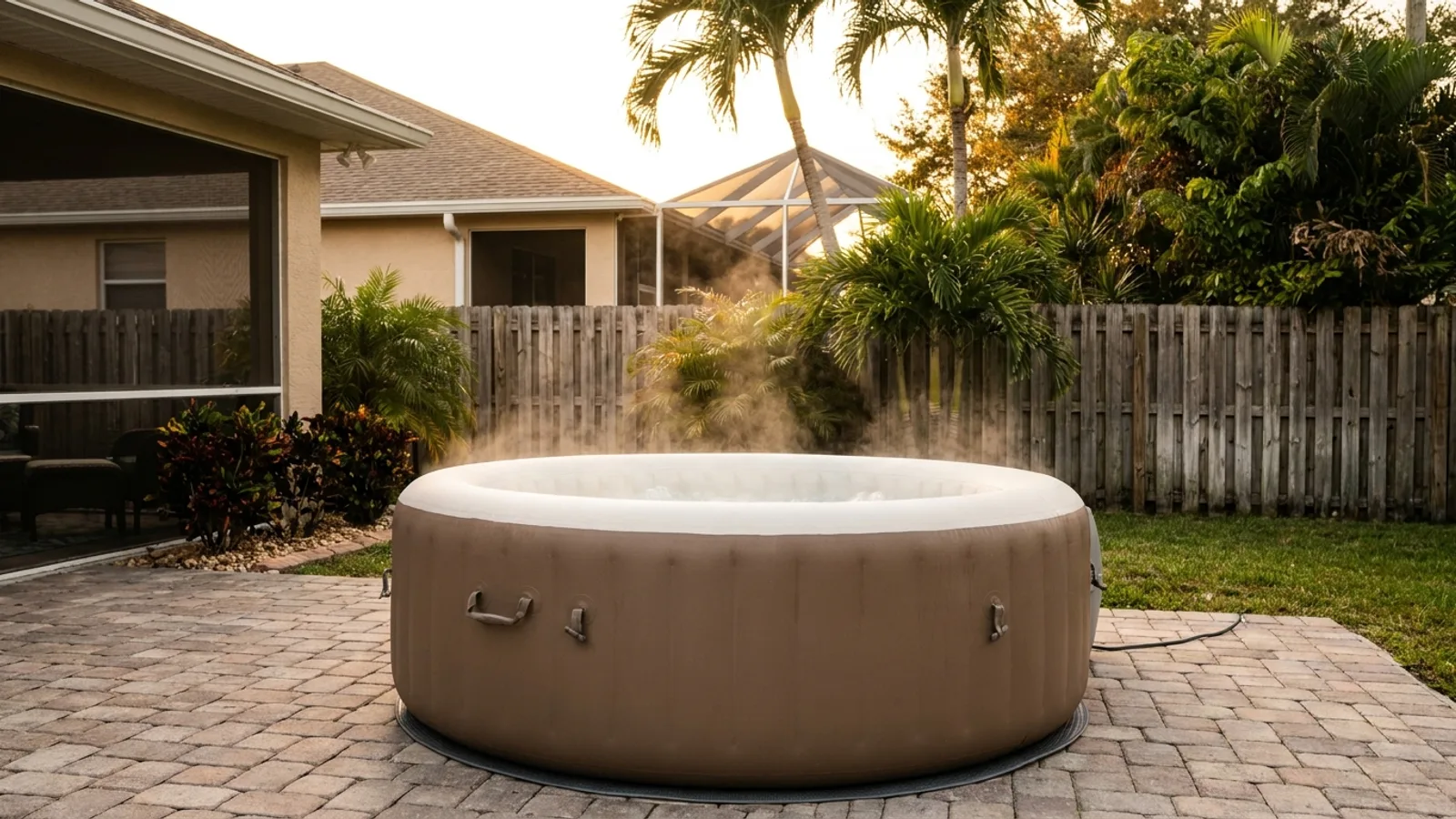
Why does a portable spa still need a permit?
Because water and electricity together are dangerous, and a spa's power connection has to be done correctly with the right circuit, protection, and bonding. That electrical work is permitted and inspected, even if the spa itself is a self-contained portable unit you could theoretically move.
Improper wiring around water is a serious shock hazard, which is exactly what the electrical permit and inspection are meant to prevent. A licensed electrician typically handles the circuit, and if your panel lacks the capacity for it, the work can lead to an electrical panel upgrade.
What about safety barriers and fencing?
Florida takes drowning prevention seriously, and pool-safety rules can extend to spas depending on their size and configuration. That can mean barrier, cover, or alarm requirements intended to keep young children from unsupervised access, similar to what applies to pools.
Whether these apply to your spa depends on the type and installation, so confirm with your building department. The safe assumption is that a spa may carry safety requirements, not that it is automatically exempt because it is smaller than a pool.
| Spa type | Typical review |
|---|---|
| Portable plug-and-play spa | Electrical circuit permit, possible safety rules |
| Larger portable spa on a circuit | Electrical permit, safety review |
| Built-in or in-ground spa | Structural, plumbing, electrical, safety |
| Spa combined with a pool | Reviewed with the pool permit |
What does a built-in spa add?
A built-in or in-ground spa is closer to a small pool. Beyond the electrical, it can involve structural work for the shell, plumbing for circulation and heating, and the full set of pool-safety requirements. That makes it a more involved permit than a portable unit.
If your spa is part of a pool project, it is typically permitted together with the pool. Our swimming pool project page and the broader pool permits guide cover how that combined review works.
A quick example: a portable spa in Orange County
A homeowner in Orange County buys a portable hot tub for a paver patio. Because it needs a dedicated circuit, a licensed electrician pulls an electrical permit, installs the properly protected and bonded circuit, and passes inspection. The homeowner also confirms with the building department whether any spa safety requirements apply to their setup.
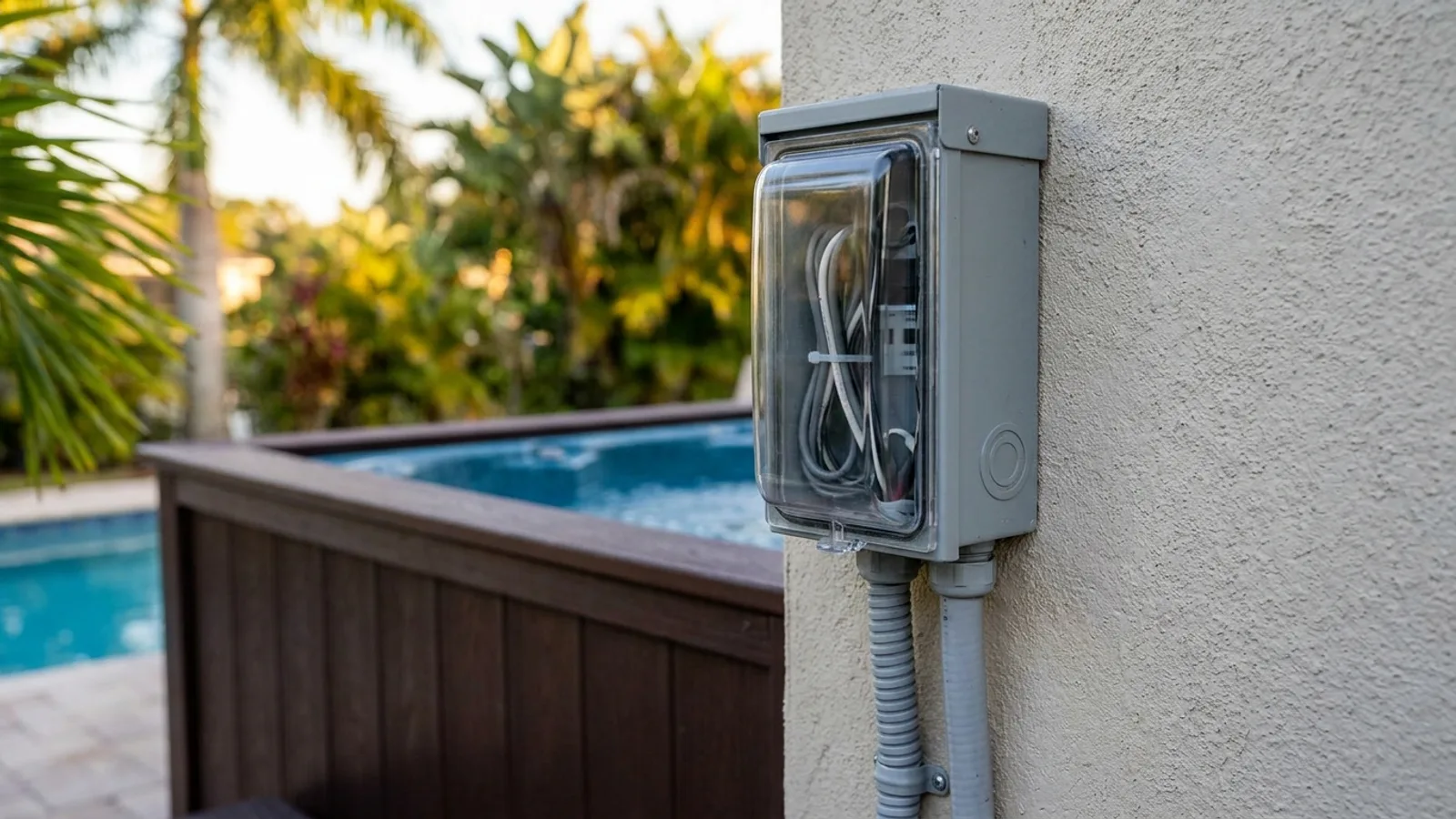
The spa still sits on the patio as planned, but the power feeding it is now documented and safe, which is the part that matters most.
Our take: Do not skip the permit just because a spa is portable. The electrical connection around water is a real shock hazard, and Florida's spa-safety rules can apply too. Permit the circuit and confirm the safety requirements.
How do you set up a spa the right way?
Confirm the electrical requirement first, since almost every spa needs a proper circuit, and have a licensed electrician install and permit it. Then check with your building department whether safety-barrier rules apply to your spa type. For a built-in spa, plan for the added structural and plumbing review.
Keep the electrical permit and any safety documentation with your records. It confirms the highest-risk part of the installation, the wiring around water, was done and inspected correctly, which is exactly what an insurer or a future buyer will want to see.