
If your home is inside the City of Lakeland, the city generally handles your residential building permits, not Polk County. Lakeland is an incorporated city in Polk County, so homes within city limits go through the city's building department for most residential work, while homes just outside the city line fall under the county. Knowing which applies to your address is the first and most important step.
Key takeaways
- Homes inside Lakeland city limits generally permit through the City of Lakeland, while nearby unincorporated homes permit through Polk County.
- Most structural, electrical, plumbing, mechanical, gas, and roofing work requires a permit, with limited exemptions for minor work.
- The permit process follows a common path: application, review, permit issuance, inspections, and a final that closes the permit.
- Confirm requirements, fees, and submittal details directly with the city building department, because they are set locally.
Table of contents
- Who issues building permits in Lakeland
- How do I know if I am inside Lakeland city limits
- What home projects need a permit in Lakeland
- What work is usually exempt
- How does the Lakeland permit process work
- What inspections should I expect
- How much do permits cost and how long do they take
- Lakeland city versus unincorporated Polk County
- A worked example: a roof replacement in Lakeland
- What about contractors and owner-builders
- How does HB 803 affect Lakeland homeowners
- What documents does a Lakeland permit application need
- What should I do before starting a project
Who issues building permits in Lakeland
The City of Lakeland's building department issues permits for homes inside the city limits. Because Lakeland is an incorporated municipality, it administers its own building permitting for residential work rather than deferring to Polk County.

This matters because searching or applying at the wrong office wastes time and can leave you thinking no permit exists when it is simply filed elsewhere. If your home is inside Lakeland, start with the city. If it is outside, see our unincorporated Polk County guide.
How do I know if I am inside Lakeland city limits
Check the Polk County Property Appraiser record for your parcel, which typically shows the taxing jurisdiction, or ask the city directly. A mailing address that says Lakeland does not always mean you are inside the city limits, because the postal city can extend into unincorporated areas.
This is the single most common point of confusion. Confirm jurisdiction before you apply so you deal with the right building department from the start. Our Polk County hub explains the broader city-and-county split.
What home projects need a permit in Lakeland
Most projects that affect structure, safety systems, or the building envelope need a permit, consistent with the Florida Building Code that applies statewide. That generally includes additions, structural changes, roofing, electrical, plumbing, mechanical and gas work, window and door replacement, and many accessory structures.
Common permitted residential projects include:
- Roof replacement and structural repairs
- Electrical work such as panel upgrades and new circuits
- Plumbing and gas work, including water heater replacement
- HVAC replacement and mechanical work
- Window and door replacement
- Additions, decks, and screen enclosures
For a broad view of what triggers a permit statewide, see our pillar guide on whether you need a permit in Florida.
What work is usually exempt
Minor cosmetic and maintenance work is often exempt, such as painting, flooring, and similar finishes that do not touch structure or systems. The Florida Building Code identifies categories of work that jurisdictions may exempt, and cities apply those locally.
Exempt from a permit does not mean exempt from the code, so exempt work still has to be done correctly. And zoning rules can still apply even when a building permit does not. Always confirm a specific project rather than assuming, because the exempt list has limits.
How does the Lakeland permit process work
The process follows the same general path used across Florida: apply, get the application reviewed, receive the permit, complete inspections during the work, and pass a final inspection that closes the permit. Larger projects require plans, while simpler ones may use a more streamlined submittal.

A typical sequence looks like this:
- Submit an application describing the work, with plans if required.
- The department reviews the application for code and zoning compliance.
- The permit is issued and fees are paid.
- Inspections occur at set stages during construction.
- A final inspection closes the permit once the work passes.
Our guide on the permit inspection order explains how inspections sequence during a project.
What inspections should I expect
Inspections depend on the project, but they generally verify the work at stages where problems would otherwise be hidden. For example, framing is inspected before it is covered, and electrical or plumbing rough-ins are checked before walls close.
The final inspection confirms the completed work matches the approved permit. Our guide on what building inspectors check walks through common inspection points so you can be ready.
How much do permits cost and how long do they take
Permit fees and timelines are set locally and vary by project type and value, so the reliable source is the city building department itself. Simple over-the-counter permits move faster than projects that require full plan review.
Because fees change and depend on scope, do not rely on a figure from another city. Contact Lakeland's building department for current fees, and see our overview of Florida permit costs and timelines for how these are generally structured.
Lakeland city versus unincorporated Polk County
| Factor | Inside Lakeland | Unincorporated Polk County |
|---|---|---|
| Permitting authority | City of Lakeland | Polk County Building Division |
| Where to search records | City portal | County portal |
| Code applied | Florida Building Code | Florida Building Code |
| First step | Confirm you are in city limits | Confirm you are unincorporated |
A worked example: a roof replacement in Lakeland
Consider a homeowner inside Lakeland replacing an aging shingle roof. A licensed roofing contractor pulls a permit with the city, the work proceeds, and inspections confirm the underlayment and completed roof meet the requirements that apply to reroofing in Florida.
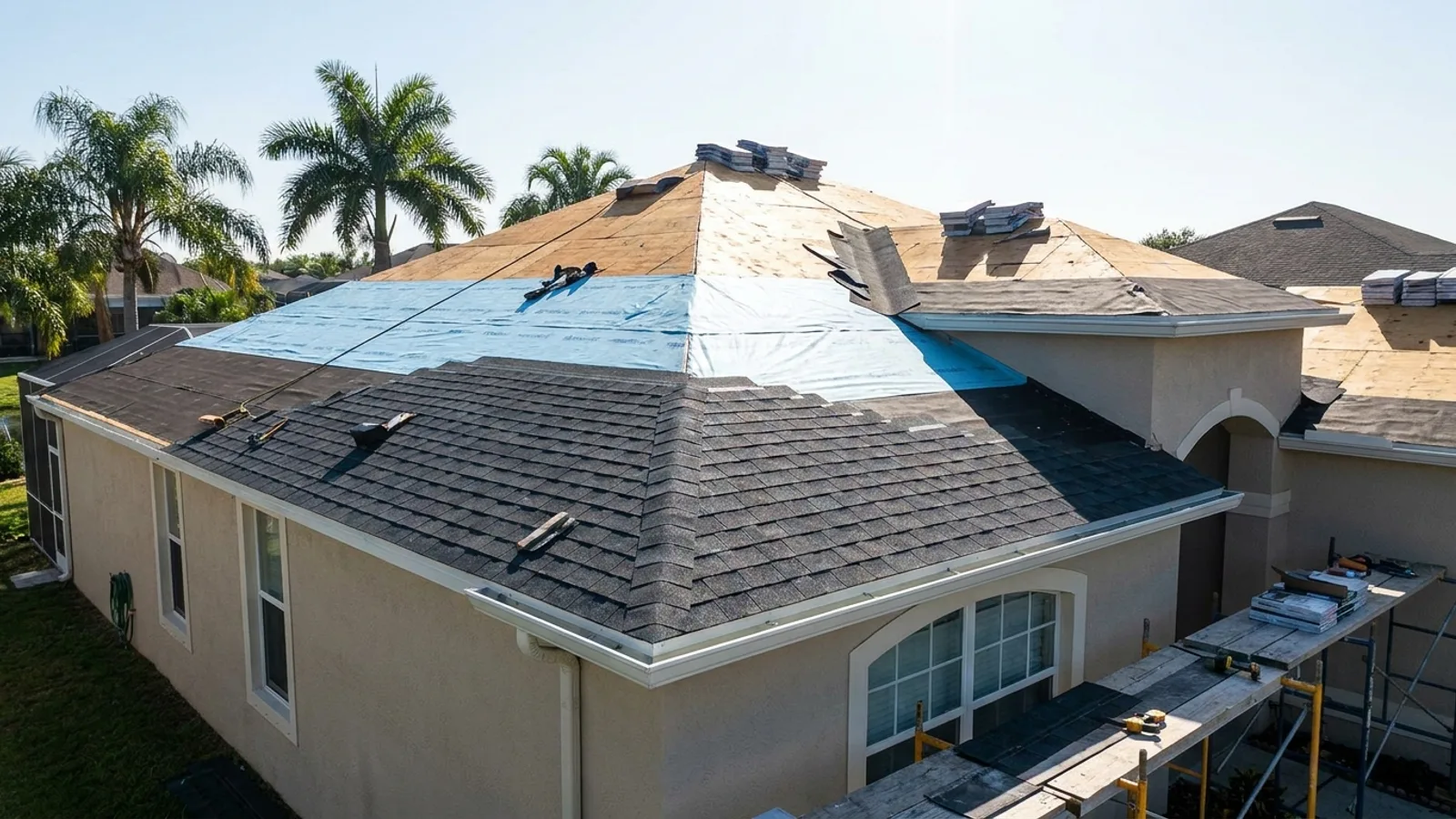
Roofing is a good example of why jurisdiction matters, because the homeowner needs to permit and search records with the city, not the county. Our pillar guide on roof permits in Florida and the roof replacement project page cover the details.
What about contractors and owner-builders
Most homeowners hire licensed contractors who pull the permit in their own name, which keeps responsibility for code compliance with the professional. Florida also allows an owner-builder path for work on your own home, with responsibilities you should understand first.
If you are considering acting as your own contractor, our guide on owner-builder permits explains the trade-offs. For most homeowners, a licensed contractor is the simpler and safer route.
How does HB 803 affect Lakeland homeowners
HB 803 requires jurisdictions to exempt qualifying single-family residential work valued at $7,500 or less from the building permit, excluding electrical, plumbing, mechanical, gas, and structural work, and not applying in flood hazard areas. Lakeland homeowners benefit from this like others in Florida, within those limits.
The exemption is narrow, so most meaningful projects still need a permit. Our pillar guide on the HB 803 $7,500 exemption explains the conditions, and the exemption checker walks your project through them.
What documents does a Lakeland permit application need
The exact documents depend on the project, but a residential permit application generally includes a completed application form, a clear description or drawings of the work, contractor and licensing information when a contractor is involved, and property details such as the parcel number. Larger or structural projects require plans that show how the work meets the applicable code.
For trade work, additional items are common. Window, door, and roofing projects often need product approval numbers that show the materials meet Florida wind requirements. Structural work such as an addition or a deck usually needs detailed or engineered drawings. Simpler over-the-counter permits ask for far less, while additions and system changes ask for more, so the document list scales with the complexity of the job.
Gathering the right documents before you apply speeds up review and cuts down on back-and-forth with the department. Our permit application documents checklist walks through what building departments commonly request, and the Permit Prep Pack assembles an organized document set for you. Because Lakeland sets its own submittal details, confirm the specific list with the city building department for your exact project type, since bringing a complete package the first time is the simplest way to keep a project moving.
What should I do before starting a project
Confirm whether you are inside Lakeland or in unincorporated Polk County, then contact the correct building department to learn what your specific project requires. Use the free permit checker to frame the project first, and gather the Permit Prep Pack if you want an organized document set.
Our take: In a place like Lakeland, jurisdiction is the whole ballgame. Confirm city versus county before anything else, because getting that right the first time prevents wasted trips, misfiled applications, and permit records that seem to vanish only because you looked in the wrong office.