
In Florida, replacing your central air conditioner almost always requires a mechanical permit, and replacing a water heater almost always requires a plumbing permit. HVAC and water heater permits are two of the most common residential permits homeowners run into, and the AC side is simple: an air conditioner change-out is permanently installed mechanical equipment, so a mechanical permit is expected. Water heaters are where it gets more nuanced, because a like-for-like electric swap is treated differently from a gas unit, a relocation, or a tankless conversion. This guide explains the difference, what inspectors look for, and how to confirm the rule for your city or county.
Key takeaways
- An AC change-out (replacing the condenser, air handler, or both) virtually always requires a mechanical permit in Florida, whether a contractor or a homeowner does the work.
- A water heater replacement almost always requires a plumbing permit, and possibly an electrical permit, though some jurisdictions treat small like-for-like electric swaps more leniently.
- Gas water heaters, tankless conversions, fuel changes, and relocations add gas-piping, venting, and inspection requirements beyond a basic swap.
- Permits protect you: they trigger an inspection that confirms the drain pan, relief valve, disconnect, and equipment sizing are code-compliant, and they keep the work off your record as unpermitted.
- Requirements vary by jurisdiction, so confirm with your local building department before you assume a small job is exempt.
On this page
- Do I need a permit to replace my AC in Florida?
- Why does an AC change-out almost always need a mechanical permit?
- Do I need a separate electrical permit for an AC change-out?
- Do I need a permit to replace a water heater in Florida?
- Why are water heater permits more nuanced than AC?
- What about gas, tankless, and relocated water heaters?
- HVAC and water heater permits at a glance
- What do inspectors check on these permits?
- A worked example: an Orlando AC and water heater swap
- Can a homeowner pull the permit instead of the contractor?
- What happens if the work is done without a permit?
- How much do these permits cost and how long do they take?
- How to confirm what your jurisdiction requires
Do I need a permit to replace my AC in Florida?
Yes. Replacing a central air conditioner in Florida almost always requires a mechanical permit, because the equipment is permanently installed heating and cooling equipment. Orange County states plainly that a mechanical permit is required for all permanently installed mechanical (air-conditioning and heating) equipment, and only plug-in or portable units are exempt. Most Florida jurisdictions follow the same logic.
This applies whether you are replacing the outdoor condenser, the indoor air handler, or a packaged system as a full change-out. The permit is not about whether the unit is new construction; it is about the fact that a fixed piece of equipment is being installed, connected, and started up in a way that has to meet the Florida Building Code.
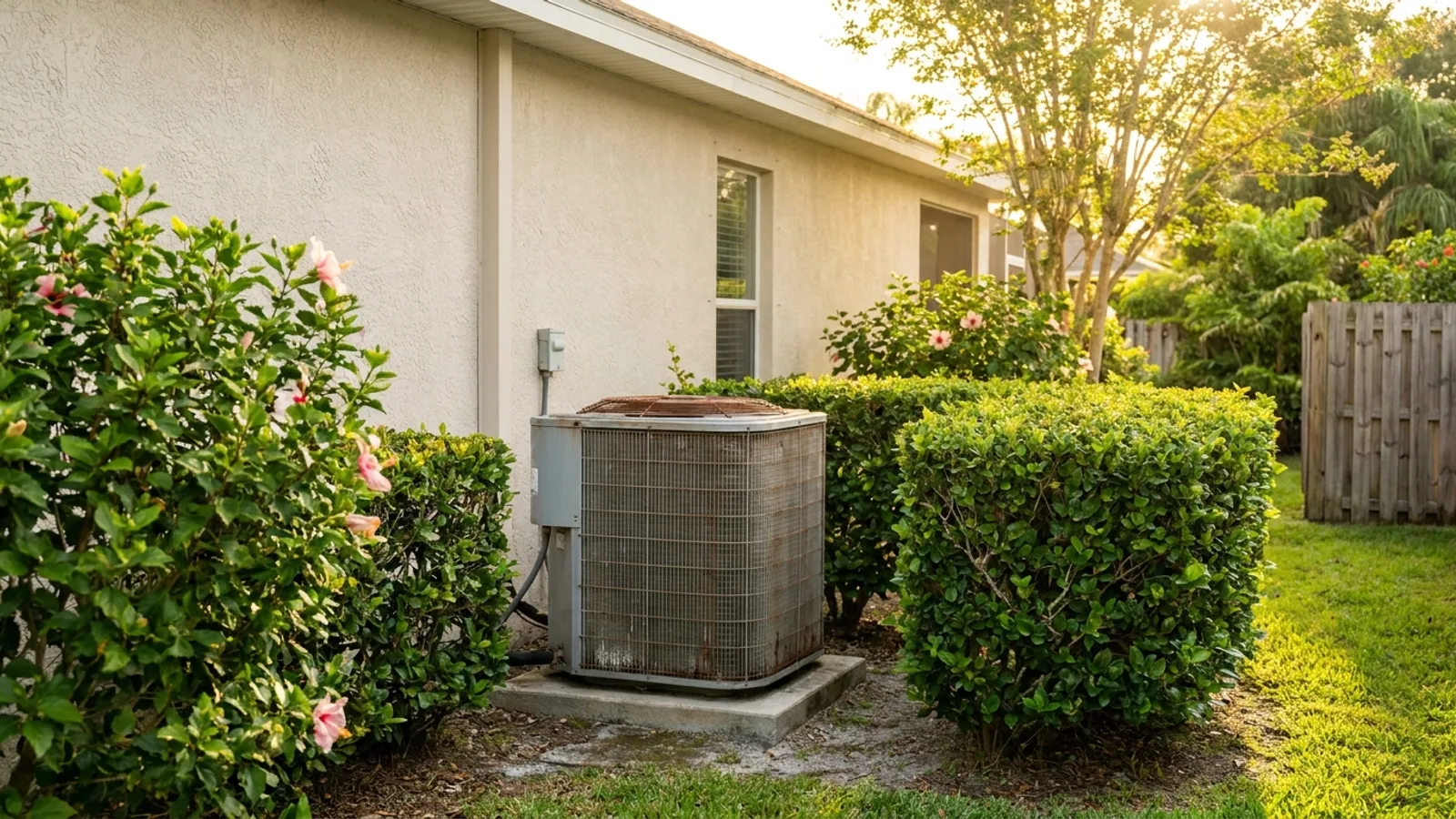
If you are planning a replacement, our HVAC replacement project page walks through the typical scope, and the free permit checker will tell you what to expect for your specific address.
Why does an AC change-out almost always need a mechanical permit?
An AC change-out needs a mechanical permit because the code treats the installation, not just the box, as the regulated event. Refrigerant lines, condensate drainage, equipment sizing, electrical disconnects, and clearances all have to meet standards, and the permit is the mechanism that gets an inspector out to confirm them.
There is also a practical reason the industry pulls these permits routinely: a licensed mechanical or HVAC contractor is expected to permit the work as a normal part of the job. A quote that skips the permit to save time or money is a red flag, because it shifts the risk of unpermitted work onto you as the homeowner. If a change-out is truly minor in your jurisdiction, the building department can tell you, but the safe assumption in Florida is that a mechanical permit is required.
Do I need a separate electrical permit for an AC change-out?
Usually not, if the electrical is unchanged. When an air conditioner is replaced with equipment of the same electrical characteristics and the existing circuit, breaker, and disconnect are reused, many jurisdictions cover the work under the mechanical permit alone and do not require a separate electrical permit.
That changes if the swap alters the electrical load or requires new wiring, a resized breaker, or a new disconnect. In that case an electrical permit may be added. This is one of the specifics worth confirming with your building department, because how the electrical portion is handled varies from one jurisdiction to the next. If your project also involves panel work, our guide on electrical panel upgrade permits covers that separately.
Do I need a permit to replace a water heater in Florida?
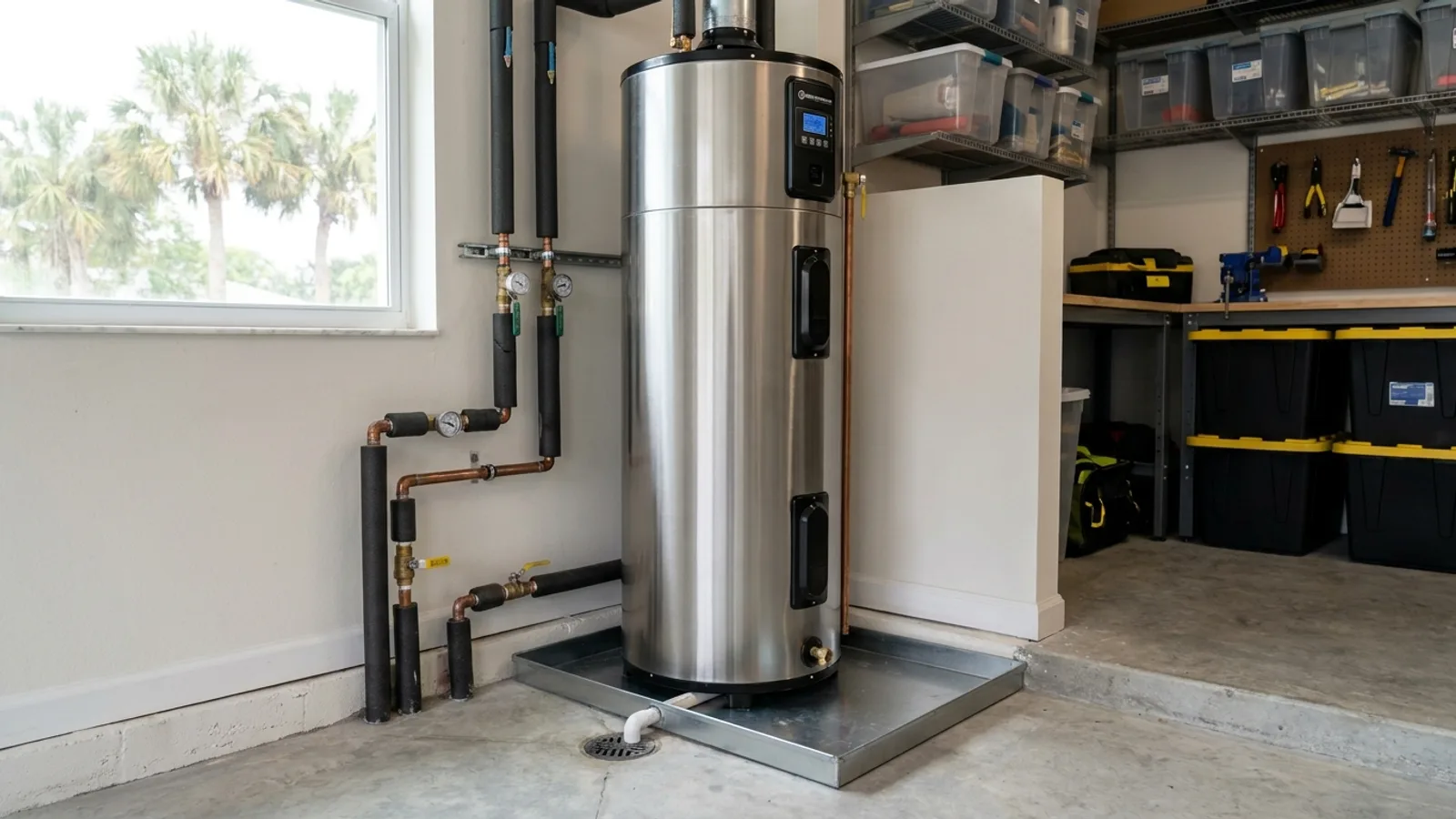
In most Florida jurisdictions, yes. Replacing a water heater almost always requires a plumbing permit, and depending on the unit it can also require an electrical or gas permit. The water heater is connected to the home's plumbing and, for tank units, to a pressure-relief and drainage system that the code regulates, so the replacement is a permitted event in most cities and counties.
Some jurisdictions treat a small, like-for-like electric water heater swap more leniently, and a handful publish narrow exemptions for low-wattage, same-capacity replacements. But those exemptions are the exception, they vary widely, and they usually disappear the moment anything changes about the unit. The cautious and correct default is to assume a plumbing permit is required and confirm otherwise with your building department. Our water heater project page outlines the typical requirements.
Why are water heater permits more nuanced than AC?
Water heaters are more nuanced because the permit depends on what kind of unit you have and what is changing, while an AC change-out is almost uniformly a mechanical permit. A tank electric water heater replaced in the same spot with the same fuel and capacity is the simplest case, and it is where the occasional local exemption shows up.
The nuance comes from everything that can differ: the fuel source (electric versus gas), the capacity or wattage, the location, and the technology (tank versus tankless). Each of those changes can pull the job into additional code chapters and additional inspections. A useful example comes from Miami-Dade County, which exempts repair or replacement of certain small electric water heaters, but specifies that if the new unit's wattage is greater than the old one, a permit is required. That is the pattern statewide: the smallest like-for-like electric swaps are treated most leniently, and anything beyond that needs a permit.
What about gas, tankless, and relocated water heaters?
Gas units, tankless conversions, and relocations reliably require a permit and usually more than one inspection. A gas water heater brings fuel-gas piping, sizing, and venting into scope, and jurisdictions commonly ask for a gas-piping diagram showing developed length and BTU load. A tankless conversion changes the venting, the gas load, and sometimes the electrical, so it is reviewed as new work rather than a simple swap.
Relocating a water heater to a new part of the house is also treated as more than a replacement, because the drain, supply, relief-valve discharge, and (for gas) the venting all have to be re-run to code. If you are moving to tankless or switching fuels, read our dedicated guides on tankless water heater permits and gas water heater permits before you commit to a scope.
HVAC and water heater permits at a glance
The table below summarizes the common scenarios. Treat it as a starting point, not a substitute for your local building department, because thresholds and exemptions vary by jurisdiction.
| Project | Permit typically required | Notes |
|---|---|---|
| AC condenser or air handler change-out | Mechanical permit | Required in most Florida jurisdictions for permanently installed equipment |
| Full system change-out (condenser plus air handler) | Mechanical permit | Separate electrical permit only if wiring or load changes |
| New mini-split or ductless system | Mechanical permit (often electrical too) | New circuit usually means an added electrical permit |
| Electric water heater, like-for-like swap | Plumbing permit (some local exemptions) | Small same-wattage swaps occasionally exempt; confirm locally |
| Gas water heater replacement | Plumbing and gas permits | Gas piping and venting reviewed |
| Tankless conversion | Plumbing, gas, or electrical as applicable | Reviewed as new work, not a simple swap |
| Relocating any water heater | Plumbing permit (plus gas if applicable) | New drain, supply, and venting to code |
What do inspectors check on these permits?
Inspectors confirm that the equipment is installed to code and that the safety devices are present and correct. For an AC change-out, that typically means verifying the condensate drainage and overflow protection, the disconnect and clearances, the equipment sizing, and that refrigerant lines are properly connected.
For a water heater, inspectors commonly look at the temperature and pressure relief valve and its discharge line, the drain pan and its outlet where required, the seismic or wind strapping the Florida Building Code expects, and, for gas units, the venting and gas connection. The inspection is the entire point of the permit: it is a second set of trained eyes confirming the parts of the job you cannot see once the unit is running.
A worked example: an Orlando AC and water heater swap
Consider a homeowner in unincorporated Orange County replacing a failing 3-ton central AC and a 15-year-old electric tank water heater. The AC change-out is straightforward: it is permanently installed mechanical equipment, so a mechanical permit is required, filed through Orange County's OC Fast Track portal. Because the new condenser reuses the existing circuit and disconnect at the same amperage, no separate electrical permit is needed.
The water heater is the nuanced half. It is a like-for-like electric tank in the same location, but Orange County's guidance is that a water heater replacement needs a plumbing permit and possibly an electrical permit. So the homeowner files a plumbing permit, the inspector checks the relief valve, pan, and strapping, and the job closes clean. Had the homeowner decided to convert to a gas tankless unit instead, the scope would have expanded to gas piping and venting review, and the permitting would have grown accordingly. Same house, very different paths, driven entirely by what changed about the water heater.
Can a homeowner pull the permit instead of the contractor?
Yes, Florida law lets a qualifying homeowner act as an owner-builder and pull the permit for work on their own property, but it comes with real responsibility. As an owner-builder you take on the obligations a licensed contractor would normally carry, including code compliance and liability, and you sign a disclosure statement acknowledging that.
For most homeowners, the simpler and safer route on HVAC and water heater work is to hire a licensed contractor who pulls the permit as part of the job. If you do want to pull it yourself, read our owner-builder permits guide first so you understand what you are agreeing to. You can verify any contractor's license through the Florida Department of Business and Professional Regulation before you sign anything.
What happens if the work is done without a permit?
Unpermitted HVAC or water heater work can lead to fines, a required after-the-fact permit, and problems when you sell. Building departments can require you to open the work for inspection retroactively, and if it does not pass, you may have to redo parts of it. The cost of fixing an unpermitted installation later is almost always higher than permitting it up front.
There is also a resale angle. Open or missing permits surface during title work and home inspections, and they can stall a closing or force a price concession. Defaulting to the permitted path keeps the work documented, inspected, and off your record as a liability. If you have discovered work that was never permitted, our guide on the after-the-fact permit process explains the cleanup path.
How much do these permits cost and how long do they take?
HVAC and water heater permits are generally among the lower-cost, faster-turnaround residential permits, but the exact fee and timeline depend on your jurisdiction. Many building departments issue these as over-the-counter or online permits because the scope is well understood, and some offer same-day or next-day issuance for a straightforward change-out.
We do not publish specific fee figures here because they vary by city and county and change over time. For a realistic sense of what to budget and how long to wait, see our overview of Florida permit costs and timelines, and always confirm the current fee schedule with the department that will issue your permit.

How to confirm what your jurisdiction requires
The reliable way to confirm is to check with the building department that has authority over your address, which is your city if you are inside city limits or your county if you are in an unincorporated area. Whether a small like-for-like water heater swap is exempt, and how the electrical portion of an AC change-out is handled, are exactly the details that vary from one jurisdiction to the next.
Our take: On HVAC and water heaters, the safe default is to permit. An AC change-out is almost always a mechanical permit, and a water heater is almost always a plumbing permit. The rare local exemption for a tiny electric swap is not worth the risk of guessing wrong, because a false assumption that no permit was needed is the expensive direction. When in doubt, file the permit and let the inspection protect you.
Start with our free permit checker to see what is likely required for your project and address, then confirm the specifics with your local building department before the work begins.