
A Notice of Commencement in Florida is a document the property owner records with the county before certain permitted improvements begin, so that subcontractors and suppliers know who to notify if they are not paid. It is required under Florida's construction lien law for many permitted projects, and building departments often will not schedule the first inspection until a recorded copy is on file. Recording it correctly protects you from paying twice for the same work.
Key takeaways
- A Notice of Commencement is recorded by the owner in the county's official records before a permitted improvement begins.
- It exists under Florida's construction lien law so subcontractors and suppliers know who to serve with a notice to owner.
- Many jurisdictions will not perform the first inspection until a recorded or certified copy is posted or submitted.
- Under Florida Statutes 713.13, a notice is void if work does not start within 90 days of recording, and payments made after it expires can be treated as improper.
Table of contents
- What is a Notice of Commencement in Florida
- When do you need one
- Why does a Notice of Commencement protect the owner
- What information goes on the form
- How do you record and post it
- How long is a Notice of Commencement valid
- A worked example for a bathroom remodel
- Notice of Commencement versus the building permit
What is a Notice of Commencement in Florida
A Notice of Commencement is a public document, recorded in the county clerk's official records, that announces a permitted improvement is about to begin and identifies who is involved. It names the owner, the property, the contractor, and where legal notices should be sent.
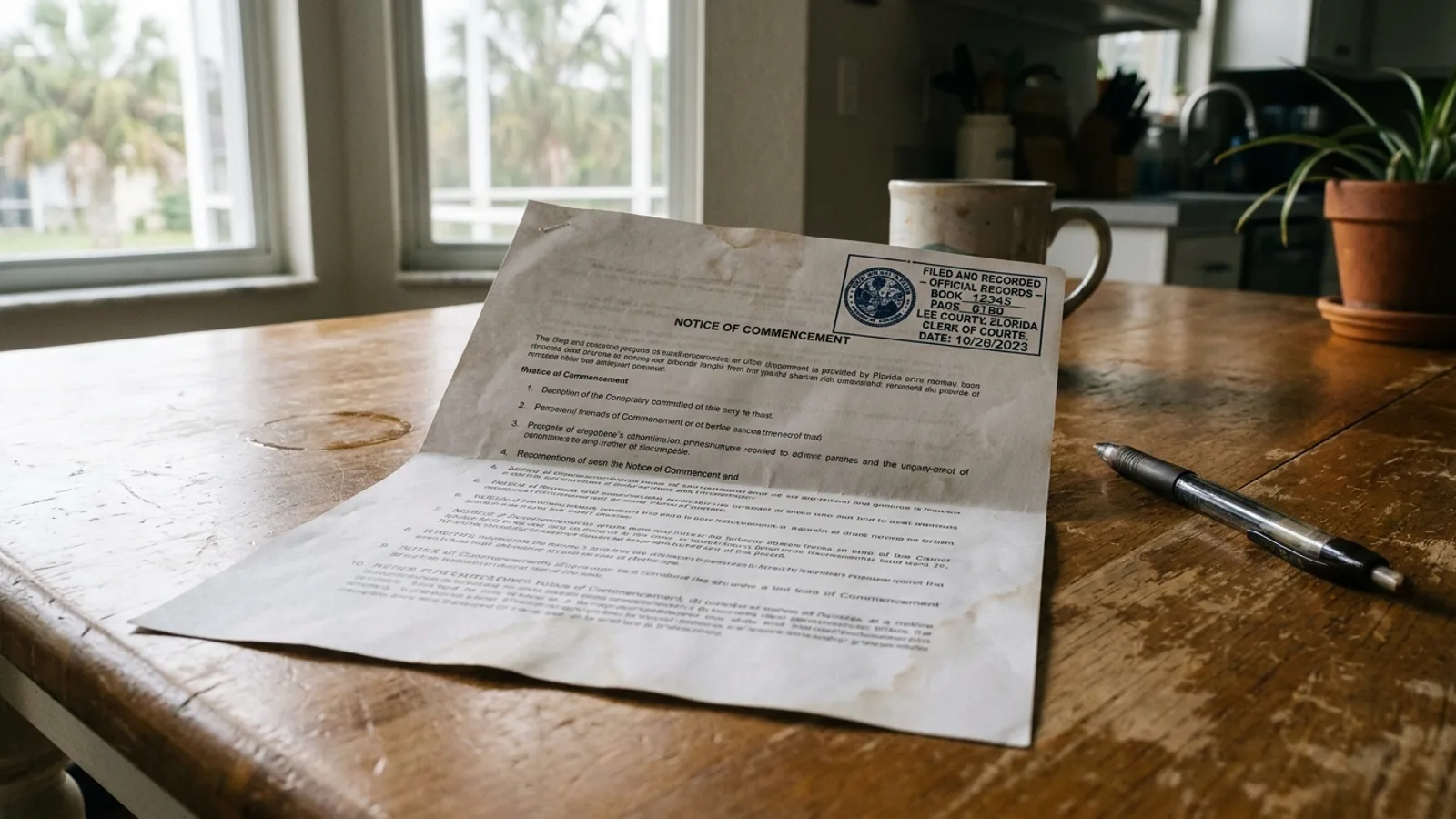
The document exists because Florida's construction lien law lets unpaid subcontractors and suppliers place a lien on your property. The Notice of Commencement tells those parties who the owner is so they can serve the required notices, which keeps the payment chain transparent.
When do you need one
You generally need a Notice of Commencement for permitted improvements above a set value, and the exact threshold and rules are set by state lien law and your local jurisdiction. Many building departments require the recorded notice before they will conduct the first inspection.
Some smaller repairs and certain limited work can be exempt, and the thresholds are not identical everywhere, so confirm with your building department or the county recording office rather than assuming. If you are pulling a permit for a room addition or a substantial remodel, plan on recording one. The free permit checker helps you frame the project before you file.
Why does a Notice of Commencement protect the owner
It protects you by tying the lien process to a recorded document and a clear timeline, which reduces the risk of paying twice. Without it, gaps in the paper trail can leave you exposed if a general contractor collects your money but never pays a supplier.
When the notice is recorded, subcontractors and suppliers serve their notices to owner against it, and you know exactly who could claim a lien. Combined with collecting lien releases as you pay, the notice is a core part of protecting yourself, which matters even more if you are acting as your own owner-builder.
What information goes on the form
The form asks for the property description, the owner's name and address, the contractor, any surety or lender, and the person designated to receive notices. Accuracy matters because the recorded document is the legal reference point for lien claims.
Most county clerk offices publish a standard fill-in form. You complete it, sign it before a notary, and record it. If you are unsure which fields apply to a self-managed job, our guide on the permit application documents checklist shows how the notice fits alongside your other paperwork.
How do you record and post it
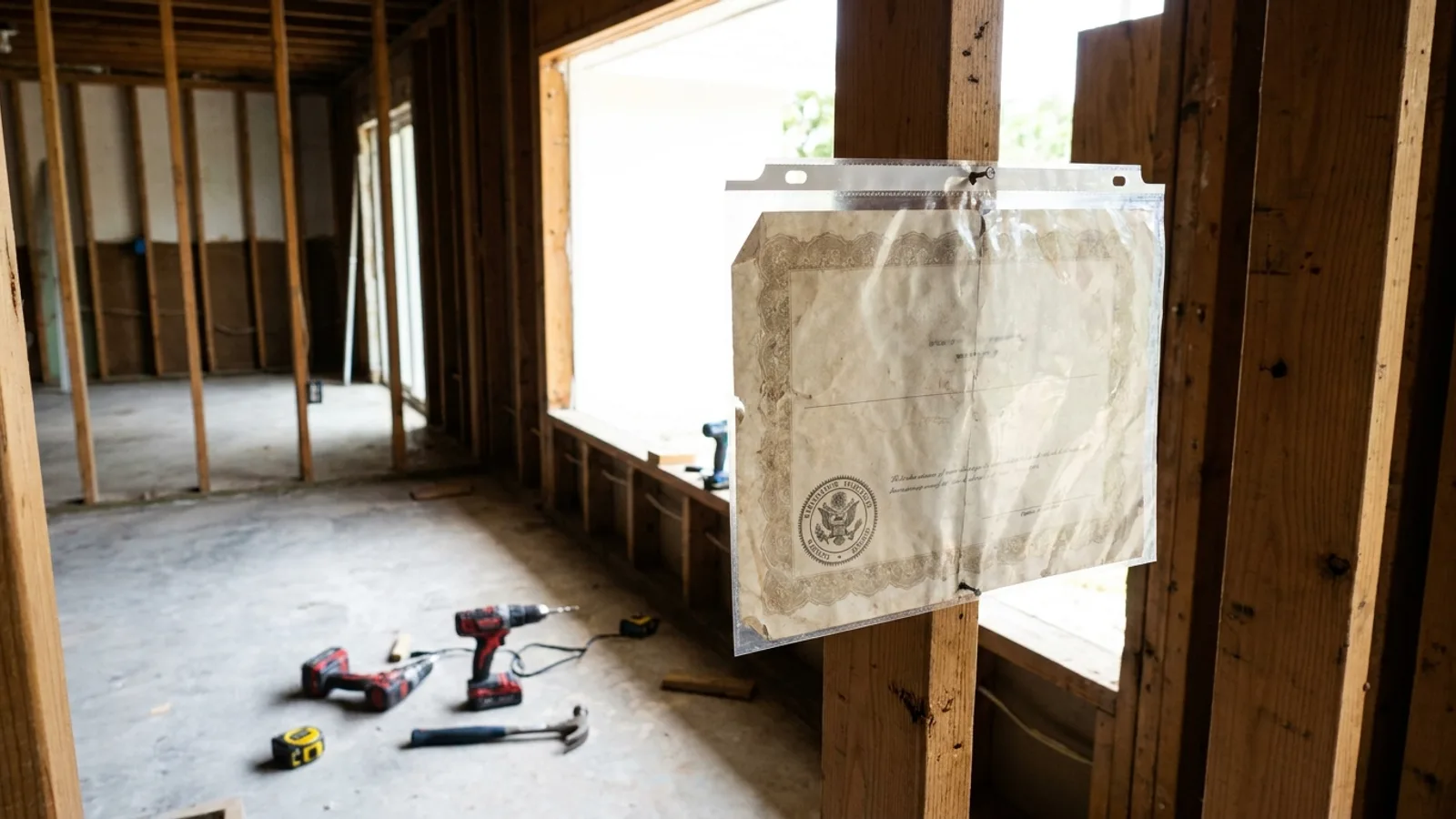
You record the signed, notarized notice with the county clerk or recorder, then keep a certified copy at the job site as many jurisdictions require. Recording makes it part of the public record; posting makes it visible to anyone working on the property.
| Step | What you do | Where |
|---|---|---|
| Complete | Fill in owner, property, and contractor details | County clerk form |
| Notarize | Sign before a notary | Notary or clerk office |
| Record | File with the county clerk and pay the recording fee | County official records |
| Post | Keep a certified copy at the job site | The property |
| Submit | Provide the recorded copy to the building department | Permit office |
How long is a Notice of Commencement valid
Under Florida Statutes 713.13, a Notice of Commencement is generally effective for one year unless a different period is stated, and it becomes void if the improvement is not actually started within 90 days of recording. Payments the owner makes after the notice expires can be treated as improper payments under the statute.
That timeline is why you record the notice close to when work actually begins, not months ahead. If a project stalls and the notice lapses, you may need to record a new one before continuing.
A worked example for a bathroom remodel
Imagine a homeowner in Orange County pulls a permit for a bathroom remodel that includes plumbing and tile. The building department tells them the first inspection cannot be scheduled until a recorded Notice of Commencement is on file.
The owner completes the county form, has it notarized, records it at the clerk's office, posts a certified copy at the home, and submits a copy with the permit. Work starts within 90 days, so the notice stays valid, and the plumbing rough inspection proceeds on schedule. Skipping the recording would simply have stalled the first inspection.
Our take: Treat the Notice of Commencement as a protection, not just a hoop. It is one of the few tools that shields you from paying twice when a contractor mishandles payments to subs. Record it, post it, and collect lien releases as you pay.
Notice of Commencement versus the building permit
The permit authorizes the work; the Notice of Commencement protects the payment chain. They are separate documents filed with different offices, and you often need both. The permit comes from the building department, while the notice is recorded with the county clerk.
Because they travel together on larger jobs, confirm both requirements early. Check the county resources for Polk or Orange, and if you are weighing whether to run the job yourself, our guide on contractor versus owner-builder covers who records the notice in each case.