An after-the-fact permit is a building permit obtained for work that is already built. Georgia jurisdictions issue them routinely, and the usual price is a penalty on top of the normal fee: Hall County, for example, assesses a penalty equal to twice the permit fee in addition to the permit fee itself. What costs more than the penalty is exposure, because an inspector has to see work that is already covered.
Key takeaways
-
Georgia sets no statewide after-the-fact penalty. The state deletes the code chapter holding permits and enforcement, so each city and county writes its own.
-
A doubling of fees is the common structure. Hall County charges a penalty equal to twice the permit fee, in addition to the permit fee.
-
The fee is rarely the expensive part. Opening concealed work so it can be inspected usually is.
-
A code problem can be corrected. A zoning problem, such as a structure inside a setback, may not be fixable at all.
-
Applying voluntarily is generally better than being found, and it is the only route that closes the record.
What is an after-the-fact permit in Georgia?
The same permit you should have pulled, applied for after the work exists. There is no separate statewide program and no statewide rulebook, because the Georgia state amendments to the International Residential Code delete Chapter 1 "without substitution," and Chapter 1 is where the model code puts permits, stop work orders and penalties.
What Georgia does give local governments is broad authority to build their own process. Under O.C.G.A. 8-2-26, a municipality or county adopting a state minimum standard code may adopt reasonable enforcement provisions including procedural requirements, hearings and appeals, may employ inspectors and define their duties, and may require permits and fix the charges for them. Your county's after-the-fact process is built on that authority, which is why it varies.
What does an after-the-fact permit cost?
Expect the ordinary fee plus a penalty, and read the wording closely because the arithmetic differs. Hall County's published building inspections fee schedule states that under a fee resolution adopted by its Board of Commissioners, any work begun without the appropriate permit "will be assessed a penalty equal to twice the permit fee," and that "this fee will be in addition to the assessed permit fee."
So in that county the penalty is two times the permit fee and it stacks on top of the permit fee, rather than simply doubling what you would have paid. Other Georgia jurisdictions word it as a doubled fee, and some add a further amount where the department had already sent written notice before the application came in. Ask your own department for the provision in writing rather than assuming your neighbor's number applies.
Why is exposure the real cost?
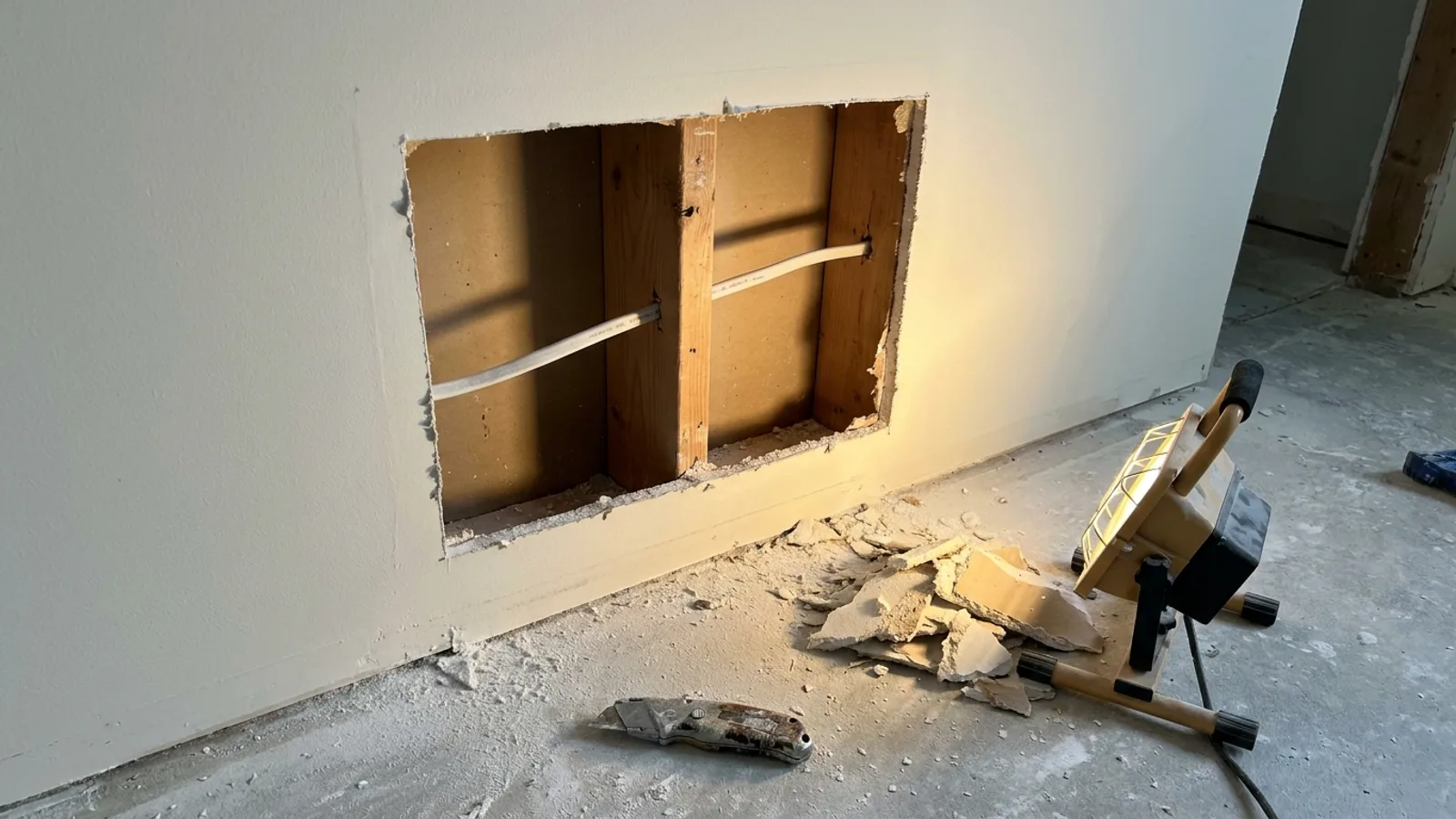
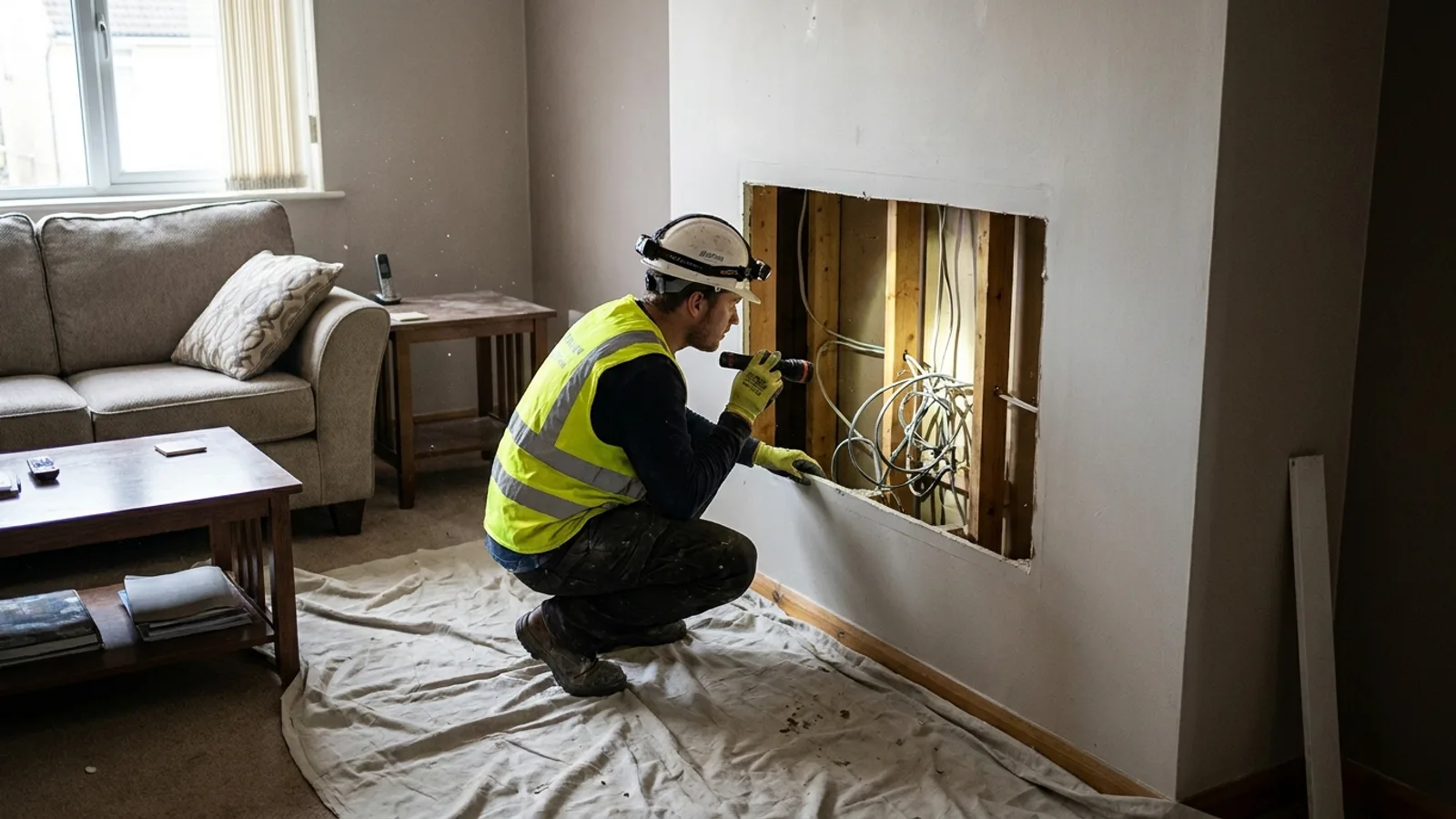
Because an inspector cannot approve what they cannot see, and the whole permit system is built around inspecting work before it is concealed. Wiring behind drywall, plumbing under a slab, framing connections behind cladding and footings under concrete were all meant to be looked at at a stage that has now passed.
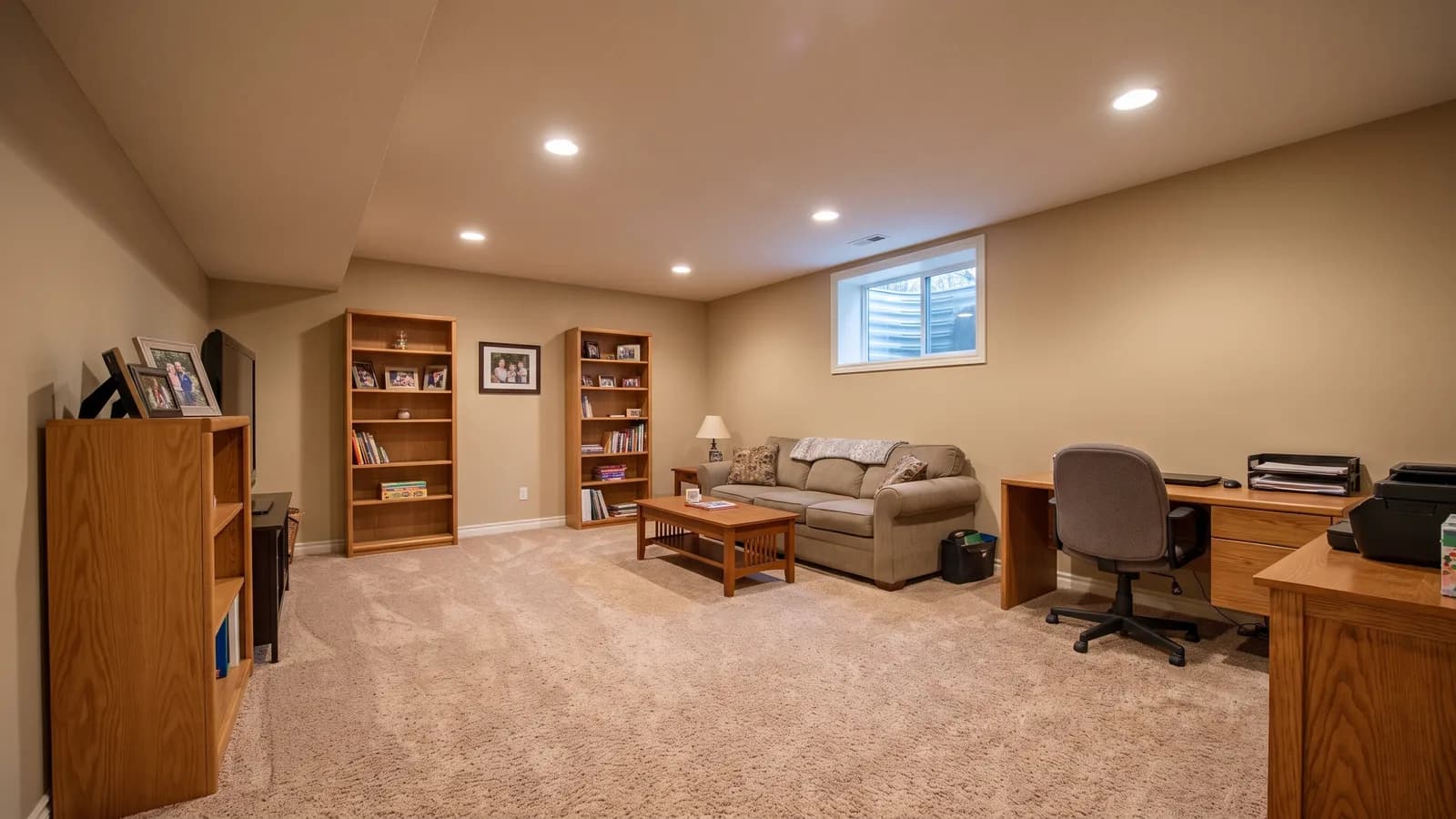
That means the after-the-fact conversation is usually about what has to be opened. A finished basement may need drywall cut at specific points. A deck may need cladding pulled to reveal the ledger connection. The department decides how much verification it needs, and the demolition and rebuild around that is normally the largest line in the budget. The Georgia inspection order guide explains why the sequence matters so much, and what a Georgia inspector checks covers what each stage is looking for.
| Issue found | Typical outcome | Who resolves it |
|---|---|---|
| Code defect in concealed work | Expose, correct, reinspect | Building department |
| Missing trade permit | Pull it now, inspect that trade | Building department |
| Structure inside a setback | Variance, relocation or removal | Board of zoning appeals |
| Work by an unlicensed trade | May need licensed rework | Licensing board and department |
Can a permit fix everything?
No, and the distinction decides how bad your situation is. Code problems are almost always correctable in place. Zoning problems frequently are not.
If a structure sits closer to a property line than the ordinance allows, no inspection cures that. The remedies are a discretionary variance from a board of zoning appeals, or moving or removing the structure. That is why the Georgia setbacks and zoning guide is worth reading before you apply: you want to know which kind of problem you have before you raise your hand.
When does unpermitted work get discovered?
Usually at the moment you have the least leverage. A sale and the buyer's inspection. An appraisal or refinance, where unpermitted space may not count toward value. An insurance claim after a loss, when the carrier asks what was permitted. A later permit application on the same property that prompts questions about earlier work. A neighbor complaint during noisy construction.
None of those are moments to be negotiating with a building department for the first time. It is also why an open or missing record matters even when the work is sound, and why looking up the permit history on your own address is worth doing before anyone else does it.
Our take: go in voluntarily and go in early. Departments deal with this constantly and they are markedly easier to work with before a stop work order or a complaint exists. The penalty is a known, survivable number. Being discovered mid-sale, with a closing date and a buyer's attorney involved, is where this gets genuinely expensive.
How do I approach my building department?
Ask about the process before you name your address. Call and ask how after-the-fact permits work, what the penalty structure is, what typically has to be exposed for the kind of work you describe, and whether a licensed trade has to sign off on anything. You are learning the procedure and the cost, and every department will answer those questions in general terms.
Then check the zoning question separately, since that is the one that may not be fixable. Confirm the office that actually covers your parcel using how to find your Georgia building department, run the free permit checker so you know which trades your work pulls in, and get the contact details from the page for your Georgia county. If the work was done by someone you hired, the contractor licensing guide covers what they were required to hold.