
In Georgia the line between a handyman and a licensed contractor is a dollar figure written into the statute: licensure is required where the total value of the work, or the compensation, whichever is higher, exceeds 2,500 dollars. Below that a person can do residential work without a contractor license. The trap is that this line only governs general contracting. Electrical, plumbing and heating and air work sit in a different statute with no dollar threshold at all.
Key takeaways
-
Georgia defines a residential contractor by value: the license requirement attaches where the work or the compensation, whichever is higher, exceeds 2,500 dollars.
-
There is also a repair exemption, but it is conditional. The person must disclose that they are unlicensed, and the work must not affect the structural integrity of the property.
-
The 2,500 dollar line does not reach electrical, plumbing or conditioned air work. Those trades require a license regardless of price.
-
A license question and a permit question are separate. Small work can be unlicensed and still need a permit.

What is the dollar limit for handyman work in Georgia?
2,500 dollars, and it comes from the definition rather than an exemption. O.C.G.A. 43-41-2 defines a residential contractor as someone performing work requiring licensure "where the total value of the work or activity or of the compensation to be received by the contractor for such activity or work, whichever is the higher, exceeds $2,500.00."
Read the two halves. It is the higher of the value of the work or the compensation, so a homeowner supplying expensive materials can push a job over the line even when the labor charge is modest. And because the threshold sits in the definition of who counts as a residential contractor, work below it is simply outside the licensing chapter rather than carved out of it.
A residential-basic contractor is defined as someone working on detached one-family and two-family residences and one-family townhouses not over three stories, plus their accessory buildings and structures. That is the classification most home projects fall under.
Is there an exemption for repair work?
Yes, and it has two conditions that are easy to miss. O.C.G.A. 43-41-17(g) provides that nothing in the chapter precludes a person from contracting to perform repair work for an owner, "provided that the person performing the repair work discloses to the owner that such person does not hold a license under this chapter and provided, further, that such work does not affect the structural integrity of the real property."
Both conditions bind. The disclosure is not optional politeness, it is part of what makes the exemption available, and a homeowner who was never told is worth asking about. The structural limit is the harder one, because it turns on what the work touches rather than what it costs. Removing part of a load-bearing wall is structural whatever the invoice says.
Does the 2,500 dollar rule cover electrical and plumbing?
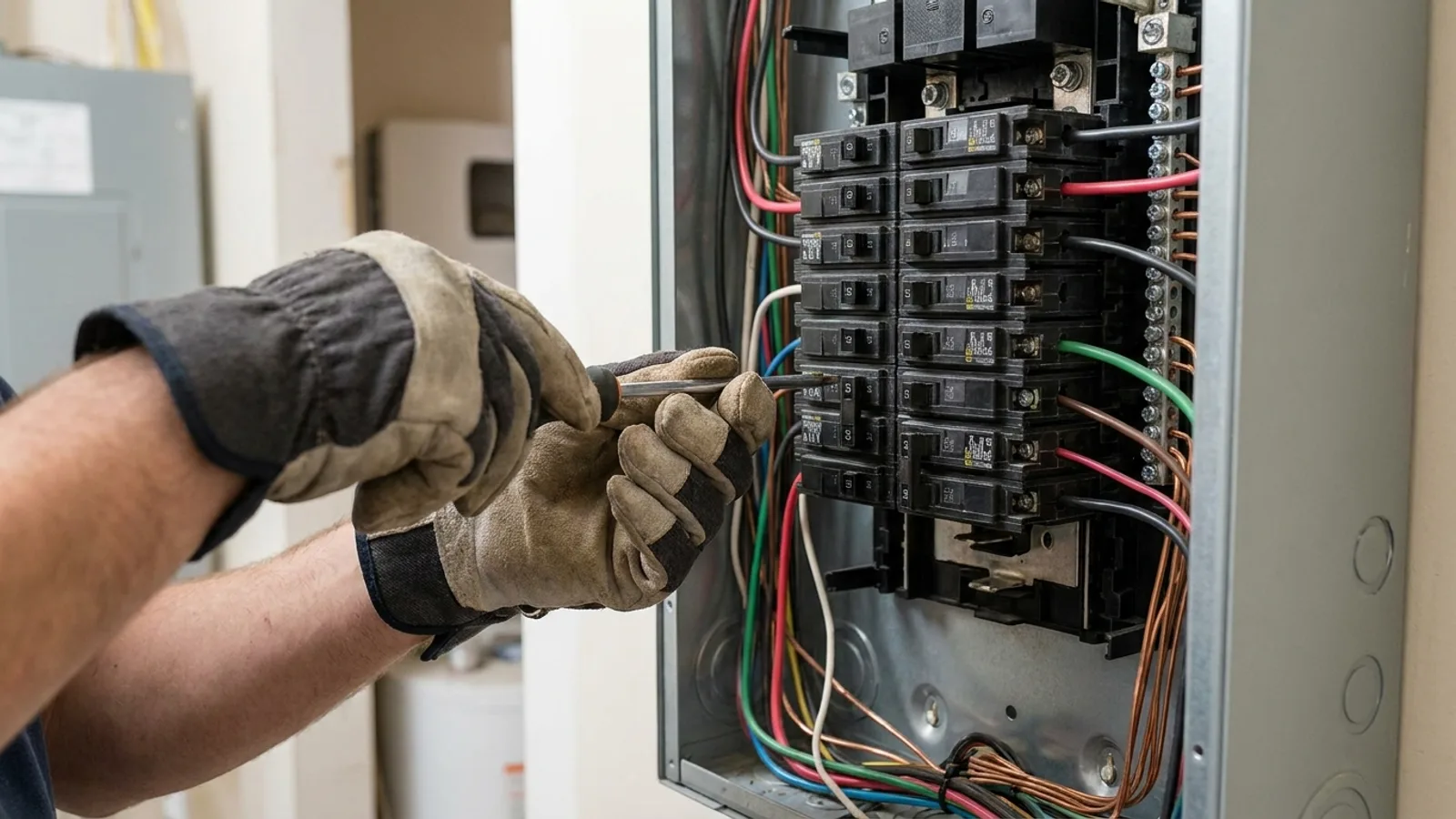
No, and this is the most consequential misunderstanding in Georgia home improvement. The trades are governed by O.C.G.A. 43-14-8, which states that no person shall engage in the electrical contracting business as an electrical contractor without a valid license from the Division of Electrical Contractors, with parallel prohibitions for master and journeyman plumbers and for conditioned air contracting.
That statute contains no 2,500 dollar threshold and no express homeowner exemption of the kind the general contracting chapter provides. So a small job stays small only in the general contracting sense. A 900 dollar panel change or a 1,200 dollar repipe is not handyman work in Georgia because the price was low.
| Work | Which statute governs | Dollar threshold |
|---|---|---|
| General residential construction and remodeling | O.C.G.A. Ch. 43-41 | Licensure where value or compensation exceeds 2,500 dollars |
| Repair work not affecting structural integrity | O.C.G.A. 43-41-17(g) | None, but disclosure is required |
| Electrical, plumbing, conditioned air | O.C.G.A. 43-14-8 | None, licensing applies regardless |
| Building on your own property | O.C.G.A. 43-41-17(h) | None, with owner-supervision conditions |
Can a specialty contractor do work outside their trade?
Within limits. O.C.G.A. 43-41-17 allows a licensed specialty contractor to perform work of a type they are not separately licensed for where the total scope is predominantly of the type they are licensed for, and the other work does not exceed the greater of 10,000 dollars or 25 percent of the total value at the time of contracting.
That is what makes an ordinary job legal. A licensed HVAC contractor patching drywall after a duct change is inside this allowance. The same contractor taking on the whole basement finish is not.
Does unlicensed mean I do not need a permit?
No. Licensing and permitting are separate systems with separate authorities, and this is where homeowners get caught. Georgia sets no statewide list of work exempt from permits, because the state amendments delete Chapter 1 of the residential code, so the permit question belongs to your city or county no matter who does the work.
The practical result is that a 2,000 dollar job can be lawfully performed by an unlicensed person and still require a permit and inspections. It can also require a licensed trade for one part and not another. Run the free permit checker for your project and county before you assume either way, and see how to find your Georgia building department for the office that answers it.
How do I check a contractor before hiring?
Ask for the license number and the classification, then verify it with the issuing board rather than trusting a card or a website. Georgia licenses residential and general contractors under one chapter and the electrical, plumbing and conditioned air trades under another, so the right question is whether they hold the license for the work you are buying, not whether they hold a license at all.
Then ask who is pulling the permit. A contractor who suggests the homeowner pull it is asking you to take on the owner-builder role and its supervision duties. Get the answer in writing along with the scope and the price, because the price is what decides whether the 2,500 dollar line applies.
Our take: the 2,500 dollar figure gets quoted as though it settles everything, and it settles one thing only. Before you hire anyone for wiring, pipes or heating and air, treat the price as irrelevant and ask for the trade license. That single habit avoids the most expensive version of this mistake.
What happens if unlicensed work goes wrong?
You lose the leverage the licensing system was built to give you. A licensed contractor answers to a board that can act on a complaint. An unlicensed one answers only to a court, and collecting is a separate problem from winning.
The building department is a separate exposure again. Unpermitted or non-compliant work becomes your problem as the property owner, not the person who did it, which is the pattern set out in the Georgia after-the-fact permit guide and the building without a permit guide. Check the office details for your Georgia county before work starts rather than after.