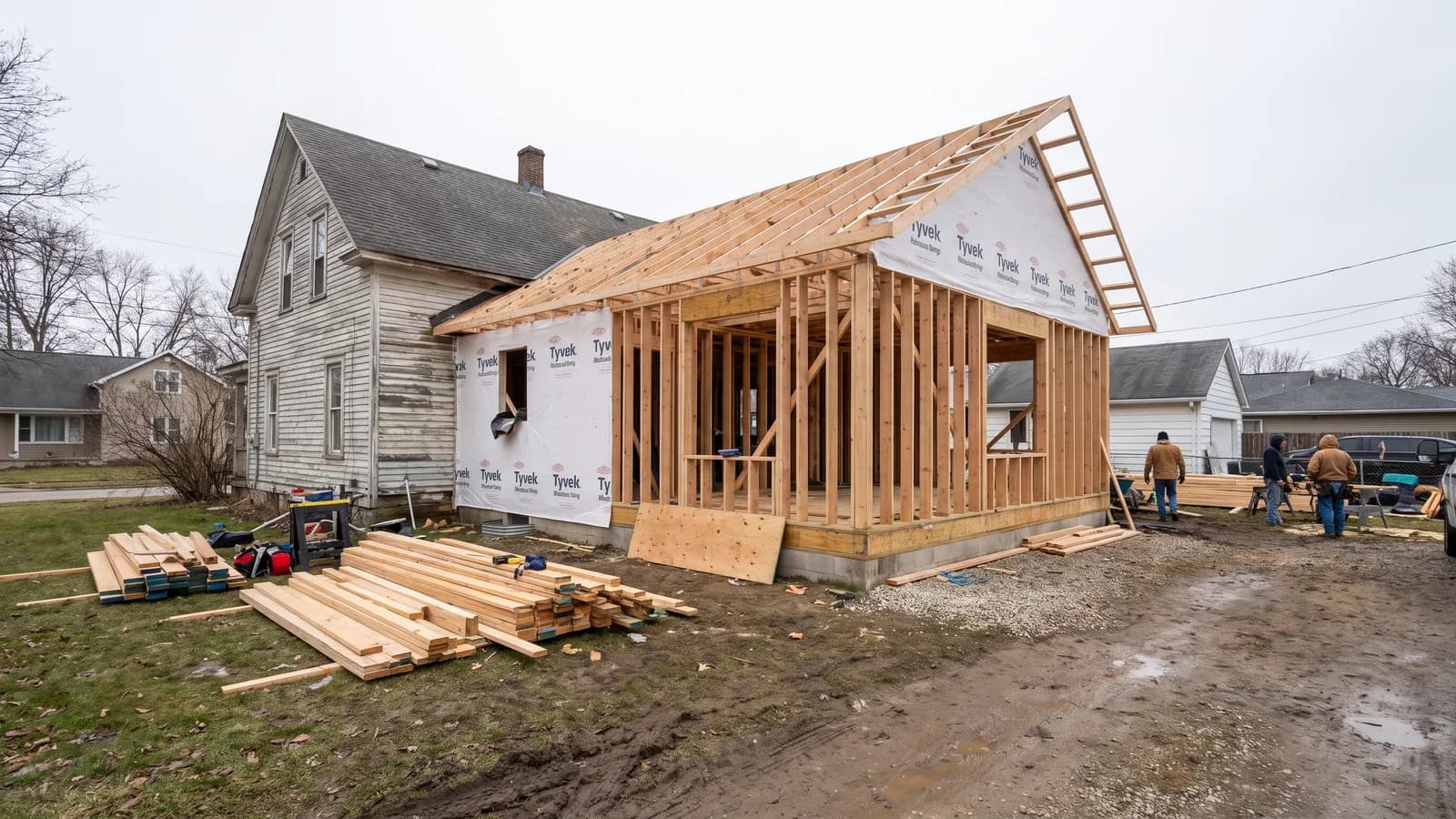
What happens if you build without a permit in Georgia depends almost entirely on which local government covers your parcel, because Georgia hands enforcement to local discretion. The state code applies to your work everywhere, but O.C.G.A. 8-2-25 says a city or county is authorized to enforce it, not that it must. That single word explains why the consequences range from a routine after-the-fact permit in one jurisdiction to nothing at all in another, and why "nobody stopped me" is not the reassurance it sounds like.
Key takeaways
-
The state minimum standard codes apply to your work statewide without local adoption, whether or not anyone inspects it.
-
Under O.C.G.A. 8-2-25 a municipality or county is authorized to enforce those codes, which is permission rather than a duty, so enforcement varies widely across Georgia.
-
Penalties, stop work orders and the after-the-fact permit process are all local, because Georgia deletes IRC Chapter 1 where the model code puts them.
-
The most reliable consequence is not a fine. It is the moment you sell, refinance, insure a loss, or apply for a later permit on the same property.
-
Unpermitted work is usually correctable. The cost is an after-the-fact permit, and often exposing concealed work so it can be inspected.
Is the work illegal if my county does not inspect
The standard still applies. Under O.C.G.A. 8-2-25 the mandatory state minimum standard codes have statewide application and do not require adoption by a municipality or county. Your addition, deck or wiring is measured against them regardless of whether anyone came to look.
What varies is enforcement. The same statute provides that the governing authority of any municipality or county is authorized to enforce those codes. Authorized, not required. Populated Georgia enforces. Some small rural counties genuinely have no building department, and in those places no one issues permits or inspects.
That is a meaningful distinction for a homeowner. "No permit was required here" and "no one here issues permits" produce the same experience during construction and very different experiences later, when a buyer's lender, an insurer or an appraiser asks what happened.
What actually happens when unpermitted work is discovered
Because Georgia deletes IRC Chapter 1, the model code's provisions on permits, stop work orders and penalties are not part of the state layer. Each jurisdiction writes its own. What follows is the common pattern rather than a statewide rule.
- A stop work order, if the work is still in progress.
- An after-the-fact permit application, often at a higher fee than the ordinary one, sometimes a multiple of it.
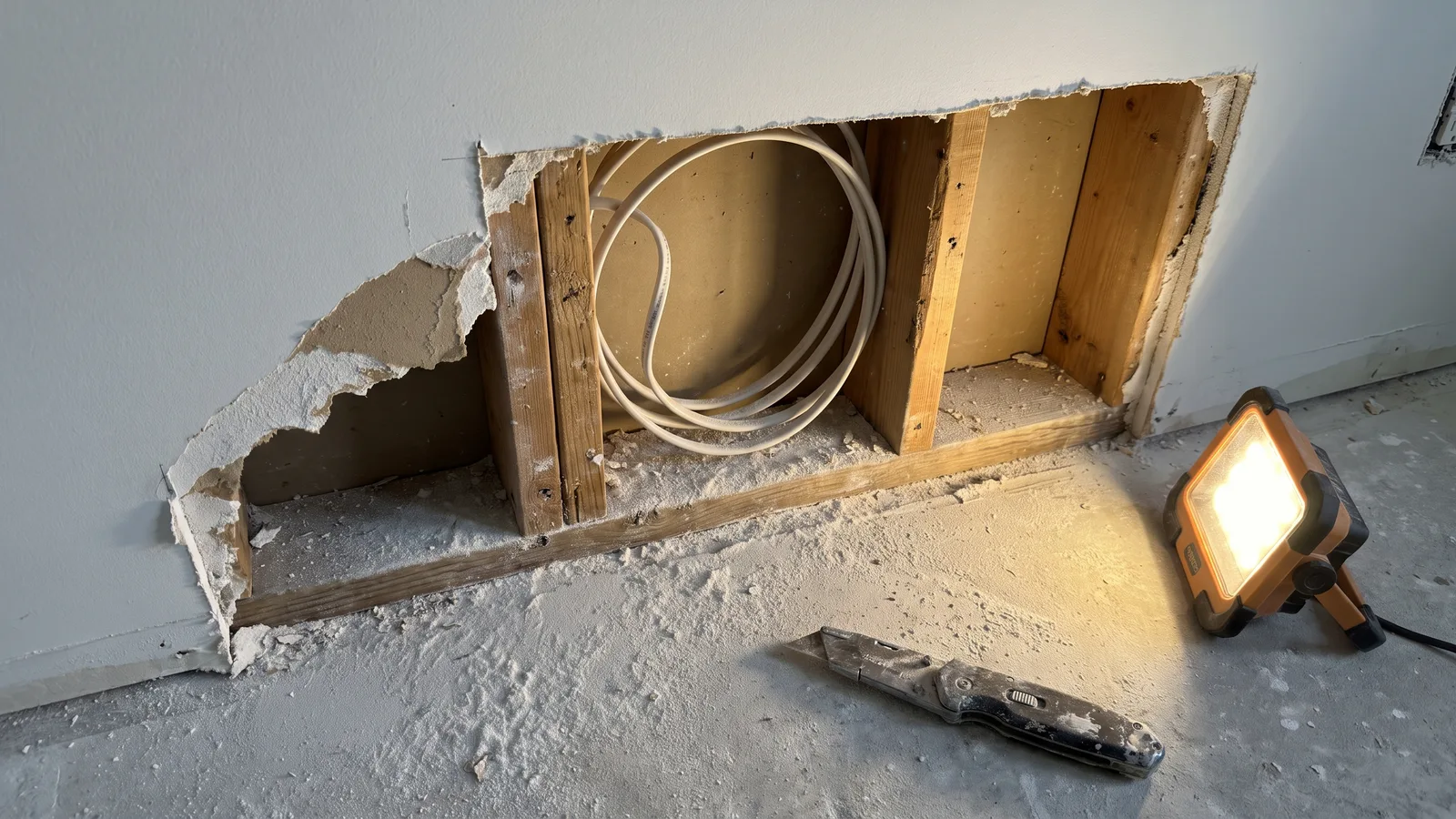
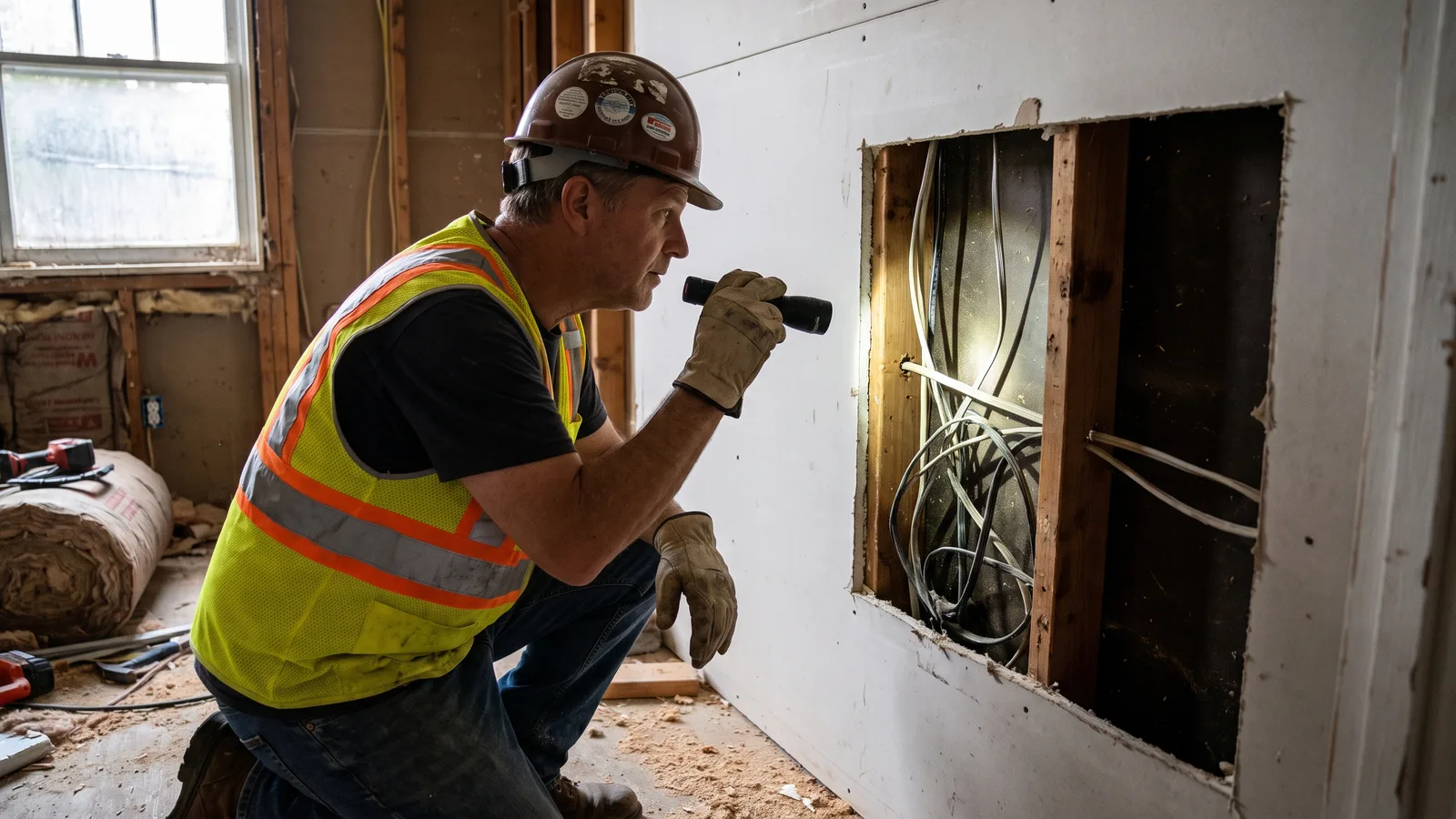
- Exposure of concealed work so an inspector can see framing, wiring, plumbing or foundations that have been closed up.
- Engineering or documentation, where the work is structural and there are no plans.
- Correction of anything that does not comply, which is where the real cost usually lands.
- Removal, in the cases that cannot be brought into compliance, most often when a structure violates zoning setbacks rather than the building code.
| How it usually surfaces | What it costs you |
|---|---|
| Neighbor complaint or a passing inspector | Stop work order, after-the-fact permit |
| Home sale, buyer's inspection | Delayed closing, price renegotiation |
| Appraisal or refinance | Unpermitted space may not count toward value |
| Insurance claim after a loss | A harder claim conversation, coverage questions |
| Applying for a later permit on the property | The department asks about the earlier work |
Which projects most often turn up unpermitted
The pattern is consistent, and it is not the projects people expect. Big visible additions usually get permitted, because contractors on large jobs want the inspections behind them. What slips through is mid-sized work that feels like maintenance.
- Finished basements and attic conversions, which create habitable space with egress, ceiling height and smoke alarm requirements attached.
- Sunrooms, screened porches and carports, often added by a specialty installer who quotes the structure and leaves the permit to the owner.
- Decks, particularly the ledger connection to the house, which is the detail that fails.
- Electrical panel changes and added circuits, usually done by whoever was cheapest.
- Water heater and HVAC changeouts, treated as appliance swaps rather than system work.
- Detached sheds and workshops, where the owner reads a national blog and assumes a square footage exemption that Georgia does not have.
If you are cataloguing your own house before a sale, that list is where to start looking.
The zoning problem is worse than the code problem
Code defects are usually fixable in place. A setback violation often is not.
If a structure sits closer to a property line than the local ordinance allows, no amount of inspection cures it. The remedies are a variance, which is discretionary and not guaranteed, or moving or removing the structure. That is why a shed or an addition built by eye is a bigger risk than wiring done without a permit, even though the wiring sounds more serious.
Our Georgia fence guide covers the same trap on a smaller scale, and the same principle holds: the building permit and the zoning approval are separate questions, and permit-exempt never means setback-exempt.
Buying a house that has unpermitted work
Treat a permit search as a starting point, not a verdict. Absence of a permit record does not prove nothing was built, and its presence does not prove the work was finaled.
Look for the mismatch: finished basement space, a sunroom or an addition that does not appear in any permit record, an electrical panel newer than the house, or a deck that does not match the plat. Then ask the seller directly and in writing.
Our guide on how to look up a building permit in Georgia covers both the portal search and the Open Records Act request, including the three business day response deadline.
Our take: the fine is rarely the reason to care. The reason to care is that unpermitted work quietly transfers to whoever owns the house next, and the discovery moment is almost always a moment when you have no leverage, in the middle of a sale or an insurance claim. Correcting it on your own schedule costs a fraction of correcting it on someone else's.
If you already built without a permit
- Confirm which authority covers your parcel, using our guide to finding the right building department.
- Ask about their after-the-fact process before describing your specific address, so you learn the procedure and cost first.
- Find out what has to be exposed for inspection, since that drives the cost more than the fee does.
- Check the zoning question separately, especially setbacks, because that is the one that may not be fixable.
- Gather whatever evidence of the work exists: photos during construction, receipts, contractor details.
- Run the project through the free permit checker to see what it should have required.
The Permit Prep Pack assembles the requirements, documents, inspections and the department contact for your specific address, which is a reasonable place to start before you make the call.