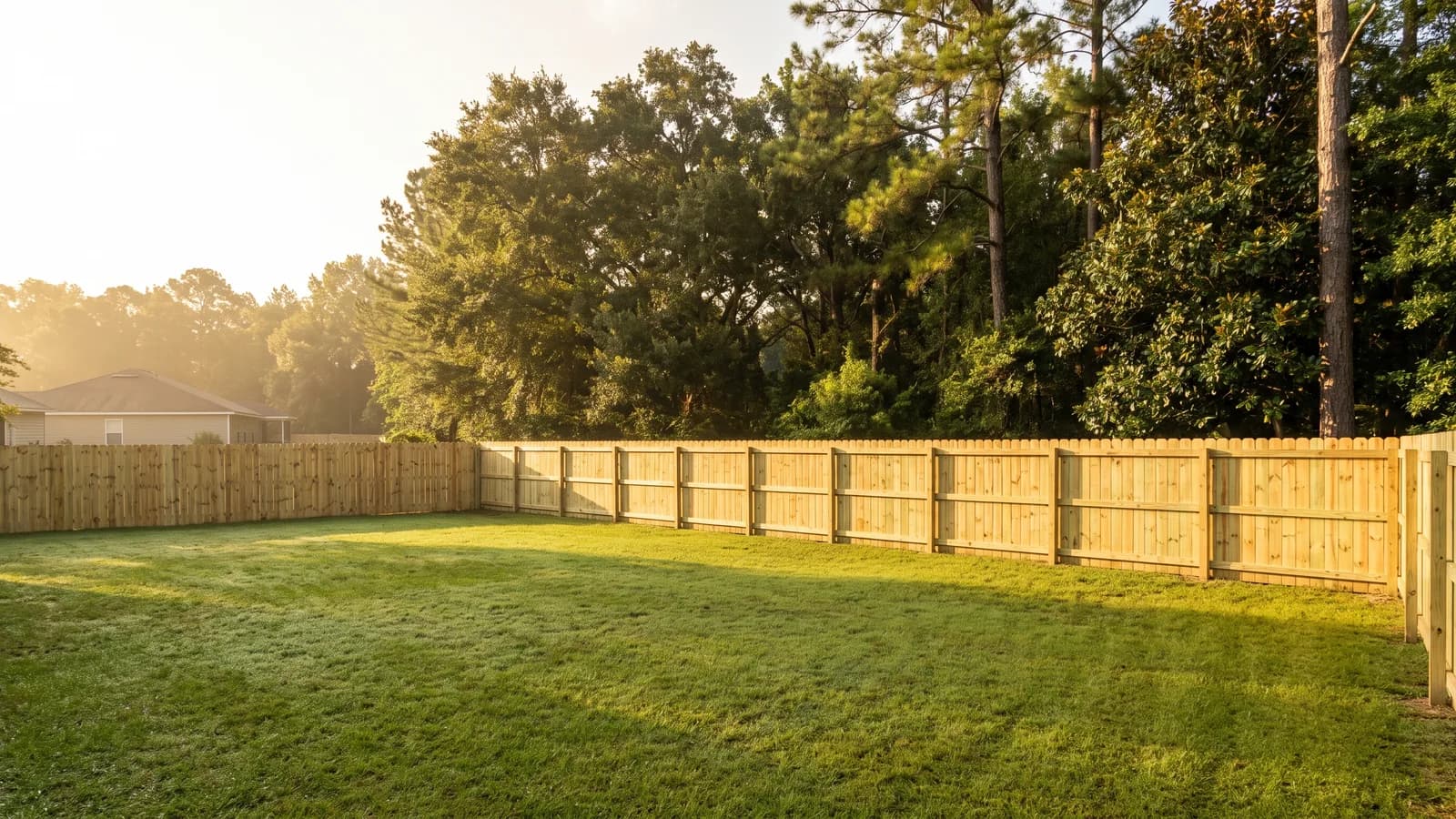
Georgia sets no statewide fence permit rule, because the state deleted the code chapter where permit exemptions live. Whether your fence needs a permit, how tall it can be, and how close it can sit to the property line are all decided by your city or county zoning ordinance. The one place Georgia does impose a statewide standard is the fence around a pool.
Key takeaways
-
Georgia has no statewide fence permit threshold. The state amendments delete IRC Chapter 1, which is where the list of work exempt from permits normally sits.
-
Fence height, setbacks, corner sight triangles and materials are zoning questions, governed by your local ordinance rather than by the building code.
-
A fence serving as a pool barrier is different: it must meet Section 305 of the International Swimming Pool and Spa Code, 2024 Edition, with Georgia amendments, which is a mandatory statewide code.
-
The Georgia amendment requires a complete and permanent barrier before a pool without a safety cover is filled with water, and puts the residential gate latch release at not less than 54 inches.
-
Property line location is your responsibility. A fence built on a neighbor's land is a civil problem the building department will not resolve for you.
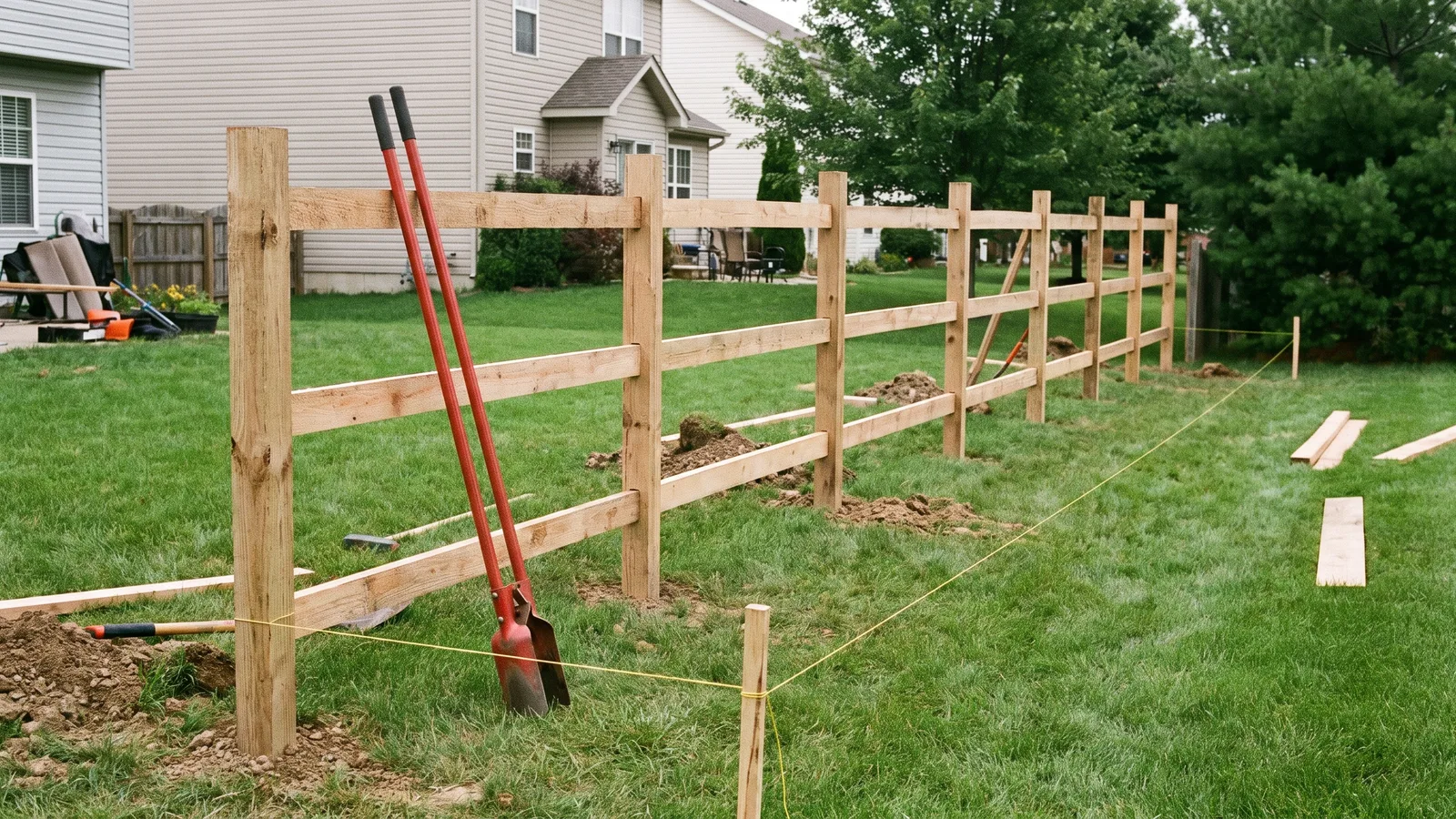
Do I need a permit for a fence in Georgia
There is no single statewide answer, and any source giving you one is repeating model code that Georgia did not adopt. The base International Residential Code contains a list of work exempt from permits, including fences below a stated height, but that list lives in IRC Chapter 1, and the Georgia amendments delete Chapter 1 without substitution.
So the answer comes from your jurisdiction. Many Georgia cities and counties do require a fence permit or at least a zoning permit, often with a site plan showing where the fence will sit. Others require nothing for a modest residential fence. Both are lawful positions for a local government to take.
Why a fence is mostly a zoning question
Even where no building permit is required, a fence is still regulated, just under a different body of rules. Local zoning ordinances typically control:
- Maximum height, usually different in front yards than in side and rear yards.
- Setbacks from property lines, rights of way and easements.
- Corner visibility, often called a sight triangle, at driveways and street intersections.
- Materials and finish, including which side faces out and whether certain materials are prohibited.
- Placement relative to easements, where a utility may be entitled to remove your fence without replacing it.
A fence can therefore be entirely permit-exempt and still violate the ordinance. That is the most common Georgia fence problem, and it is discovered when a neighbor complains or when the property sells.
| Question | Who answers it |
|---|---|
| Do I need a permit for this fence | Your city or county, since Georgia sets no statewide threshold |
| How tall can it be | Local zoning ordinance |
| How close to the line can it sit | Local zoning ordinance |
| Can it cross a utility easement | The easement holder, and the plat |
| Does it meet pool barrier rules | The Georgia-amended pool and spa code, statewide |
| Does my HOA allow it | Your covenants, independently of all the above |
The pool fence is the exception
If your fence is doing double duty as a pool barrier, it stops being purely local. Georgia adopts the International Swimming Pool and Spa Code, 2024 Edition, with Georgia amendments as a mandatory state minimum standard code, and Section 305 sets the barrier requirements.
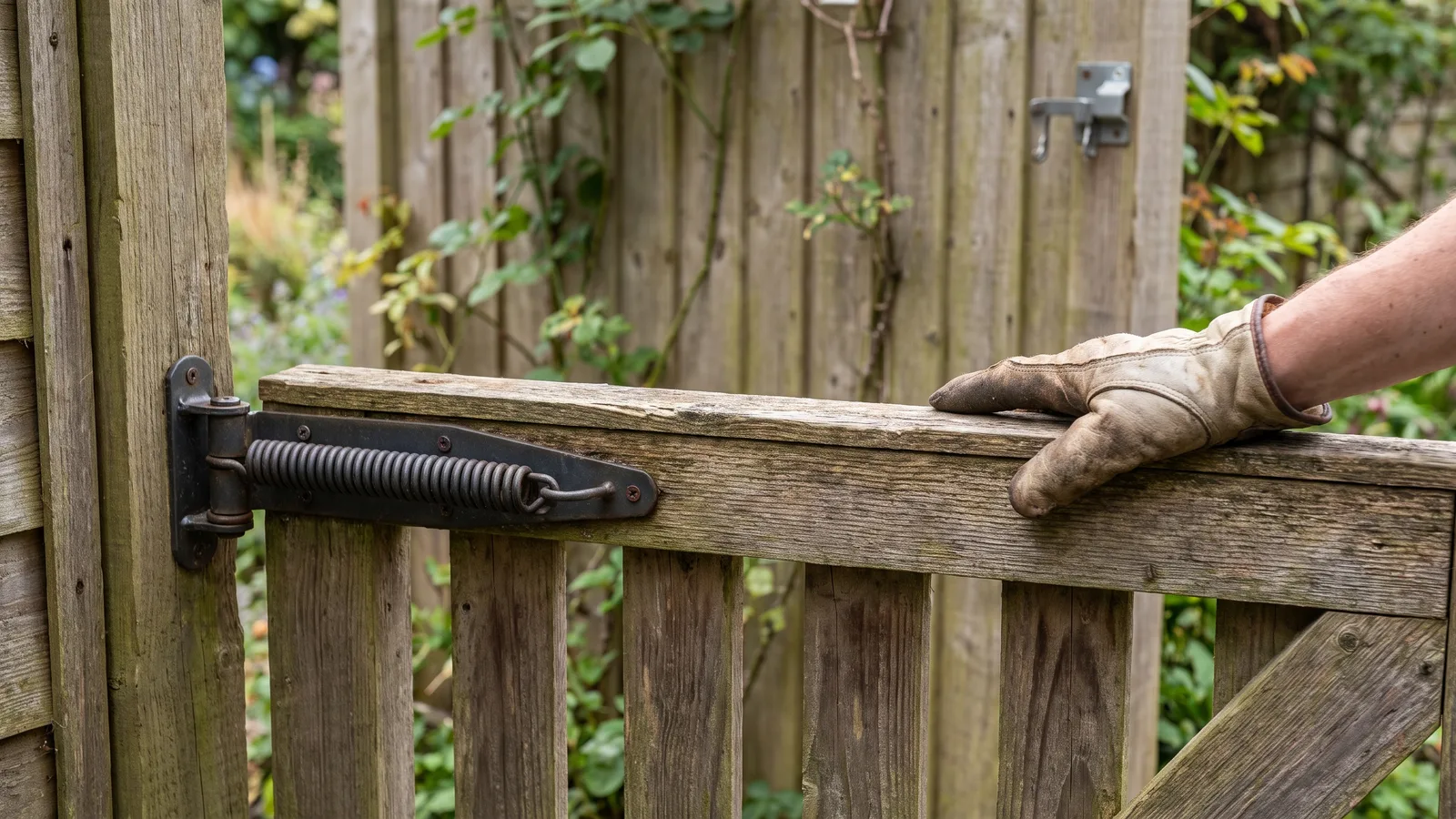
Two Georgia amendments matter here. Pools and spas not provided with a safety cover must have a complete and permanent barrier complying with Section 305.2 before being filled with water and placed into operation. And for doors and gates in barriers, where the latch release is accessed from outside the barrier and is not self-locking, it must be not less than 54 inches above the finished floor or ground surface at residential pools, the same height the code sets for public ones.
A privacy fence that satisfies your zoning ordinance will not automatically satisfy Section 305. Gaps at the bottom, gate hardware, self-closing and self-latching function and climbable horizontal members are all barrier criteria that ordinary fences fail. Our Georgia pool guide covers the sequence in detail.
Find the property line before you build
Building departments do not adjudicate boundaries. If you build over the line, that is a civil matter between you and your neighbor, and the usual remedies are moving the fence or a written agreement.
Your plat, recorded with the county, is the starting point. Existing fences, hedges and driveways are not reliable evidence of a boundary, since they were often placed by eye decades ago. Where the line is genuinely unclear or the fence is expensive, a survey is cheaper than a dispute.
Also check the plat for easements. Utility, drainage and access easements commonly run along rear and side lot lines, which is exactly where fences go, and an easement holder generally may remove what obstructs it.
What to ask your jurisdiction
Make one call cover it.
- Does a residential fence of this height in this yard need a permit here?
- What is the maximum height in the front, side and rear yards?
- Is there a required setback from the property line or right of way?
- Are there corner or driveway sight triangle rules for this lot?
- Do you require a site plan or plat at application?
- Are there restrictions on materials or which side faces the street?
- If this fence encloses a pool, what barrier requirements apply and who inspects them?
Our take: the permit is usually the easy part and the setback is the expensive part. Fences get built to the line by assumption, then have to move. Pull the plat, confirm the height and setback rules with your jurisdiction in writing, and if a pool is anywhere in your plans, build the fence to Section 305 from the start rather than retrofitting it later.
What to do next
Confirm which authority actually permits your address, using our guide on finding the right building department, since a Georgia property can carry a city mailing address while sitting in unincorporated county.
Then run your project through the free permit checker and see the fence project page for typical documents and inspections. The Georgia permit overview covers what needs a permit generally, and the Permit Prep Pack assembles the requirements and department contact for your address.