Wondering whether you need a building permit in Georgia? For most structural, electrical, plumbing, mechanical, and many exterior projects on a home, the answer is usually yes, but Georgia does not run one central permit office. The state sets the construction rules through the Georgia State Minimum Standard Codes, which apply statewide, while the actual permit is issued by your city or county. That means the code you build to is largely consistent across Georgia, but the fees, forms, and review times you deal with are set locally. Before you start, the safest move is to confirm with your local permitting department, since two neighboring jurisdictions can handle the same project differently.
Key takeaways
- Georgia sets construction rules statewide through the Georgia State Minimum Standard Codes, but permits are issued locally by your city or county.
- There is no statewide dollar amount that automatically waives a permit, so whether small or cosmetic work needs one is decided locally.
- Georgia's owner-builder exemption lets you build on property you own for your own use, but it comes with conditions.
- Selling a structure you built without a licensed contractor within the prior 24 months can cost you that exemption.
- Always confirm the specific requirement with your local permitting department before you begin.
On this page
- How permitting works in Georgia
- Statewide code versus local permitting
- When does a project need a permit?
- Is there a dollar threshold that skips a permit?
- The owner-builder exemption
- The owner-builder 24-month resale rule
- Which Georgia counties does PermitRoadmap cover?
- How to confirm your local requirement
How does permitting work in Georgia?
Georgia separates the rules from the paperwork. The Georgia State Minimum Standard Codes set the technical standards that apply statewide, so a deck, a re-roof, or a service upgrade is held to the same core code whether you are in Atlanta or a small town. What changes from place to place is the permitting process itself. Your local building department decides the fee schedule, the application forms, the inspection sequence, and how long a review takes. If you are unsure where to begin, you can check your project and location and then read the guidance for your county.

Statewide code versus local permitting: what is the difference?
The short answer is that the state writes the code and the local jurisdiction enforces it. The Georgia Department of Community Affairs administers the state's construction codes, which are adopted from national model codes. Because the standards are statewide, contractors and homeowners can expect broadly similar rules across Georgia. But adoption of the code does not mean the state issues your permit. Your city or county building department is the office that reviews plans, collects fees, issues the permit, and schedules inspections. So while the what of construction is set at the state level, the how, when, and how much of permitting is local.
When does a home project need a permit in Georgia?
As a general rule, work that affects a home's structure or its electrical, plumbing, or mechanical systems typically needs a permit, and many exterior projects do as well. Common examples include additions, decks, re-roofing, electrical service changes, water heater replacements, and HVAC work. Purely cosmetic work such as painting or replacing cabinet doors often does not require a permit, but that line is drawn locally, not by the state. Because the details vary, treat any list as a starting point and confirm with your local permitting department before you commit.
| Project type | Usually needs a permit? |
|---|---|
| Structural additions | Yes, in most jurisdictions |
| Decks over a certain height or size | Commonly yes, confirm locally |
| Roof replacement | Commonly yes, confirm locally |
| Electrical, plumbing, or HVAC changes | Yes, in most jurisdictions |
| Cosmetic work (paint, trim, flooring) | Often no, confirm locally |
If your project is a re-roof, our roof replacement project page walks through what to expect.
Is there a dollar amount that skips a permit in Georgia?
No. Georgia has no statewide dollar amount that waives a permit. You may have heard that jobs under a certain price do not need one, but there is no such statewide figure in Georgia. Whether a small or cosmetic project needs a permit is decided by your local jurisdiction, and thresholds can differ from one city or county to the next. Do not assume a low-cost project is exempt. Confirm the rule where you live.
Our take: The single most common mistake we see is assuming a project is too small to matter. In Georgia there is no statewide dollar cutoff, so a quick call to your local department is worth far more than the risk of an unpermitted job surfacing during a future sale.
What is Georgia's owner-builder exemption?
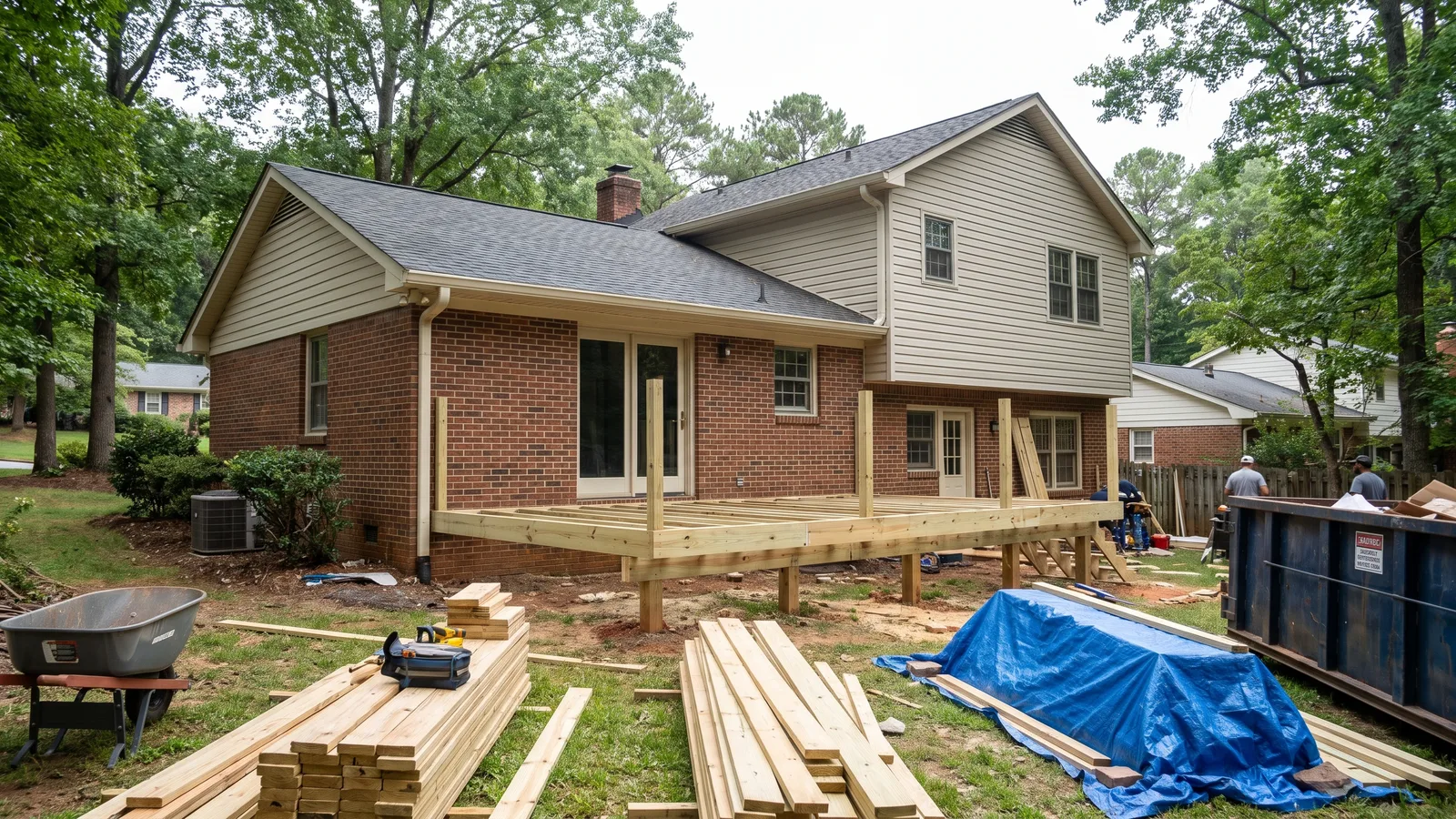
Georgia's owner-builder exemption, found at O.C.G.A. 43-41-17(h), lets an owner build on property they own when the structure is for their own use and is not offered for sale or lease. In practical terms, if you own the property and the work is genuinely for yourself, you may be able to act as your own builder rather than hiring a licensed contractor. There are important conditions. The exemption comes with responsibilities: the owner takes on the duties a licensed contractor would carry, you must still pull the permit and meet code, and your local jurisdiction may require you to sign an owner-builder affidavit. The exemption is about who can pull the permit, not about whether a permit is needed.
How does the owner-builder 24-month resale rule work?
The exemption can be lost if you have recently sold a structure you built yourself. Under the statute, the owner-builder exemption does not apply if the owner sold a structure they built without a licensed contractor within the prior 24 months. The rule exists to keep the exemption tied to genuine personal use rather than repeated for-sale building. So if you built a home or structure without a licensed contractor and sold it inside that 24-month window, you generally cannot rely on the owner-builder exemption for a new project. When in doubt about how this applies to your situation, confirm with your local permitting department before you file.
Which Georgia counties does PermitRoadmap cover?
We have detailed pages for several Metro Atlanta counties, each covering the cities within it. Fulton County covers Atlanta, Sandy Springs, Roswell, Alpharetta, and Johns Creek. Gwinnett County covers Lawrenceville, Duluth, Norcross, Suwanee, and Peachtree Corners. Cobb County covers Marietta, Smyrna, Kennesaw, and Acworth. DeKalb County covers Decatur, Brookhaven, Dunwoody, and Tucker. You can start at our Georgia hub or go straight to a county page such as Fulton County, Gwinnett County, Cobb County, or DeKalb County.
How do I confirm my local requirement?
Start with your city or county building or permitting department, since they are the office that issues the permit and knows the local thresholds. Have your address, a description of the work, and a rough scope ready, because the answer often depends on the specifics. If you are comparing states, our sibling guides for North Carolina and Tennessee walk through the same questions in those markets. PermitRoadmap is not a government agency, so always treat our guidance as a starting point and verify the final requirement with the local department.