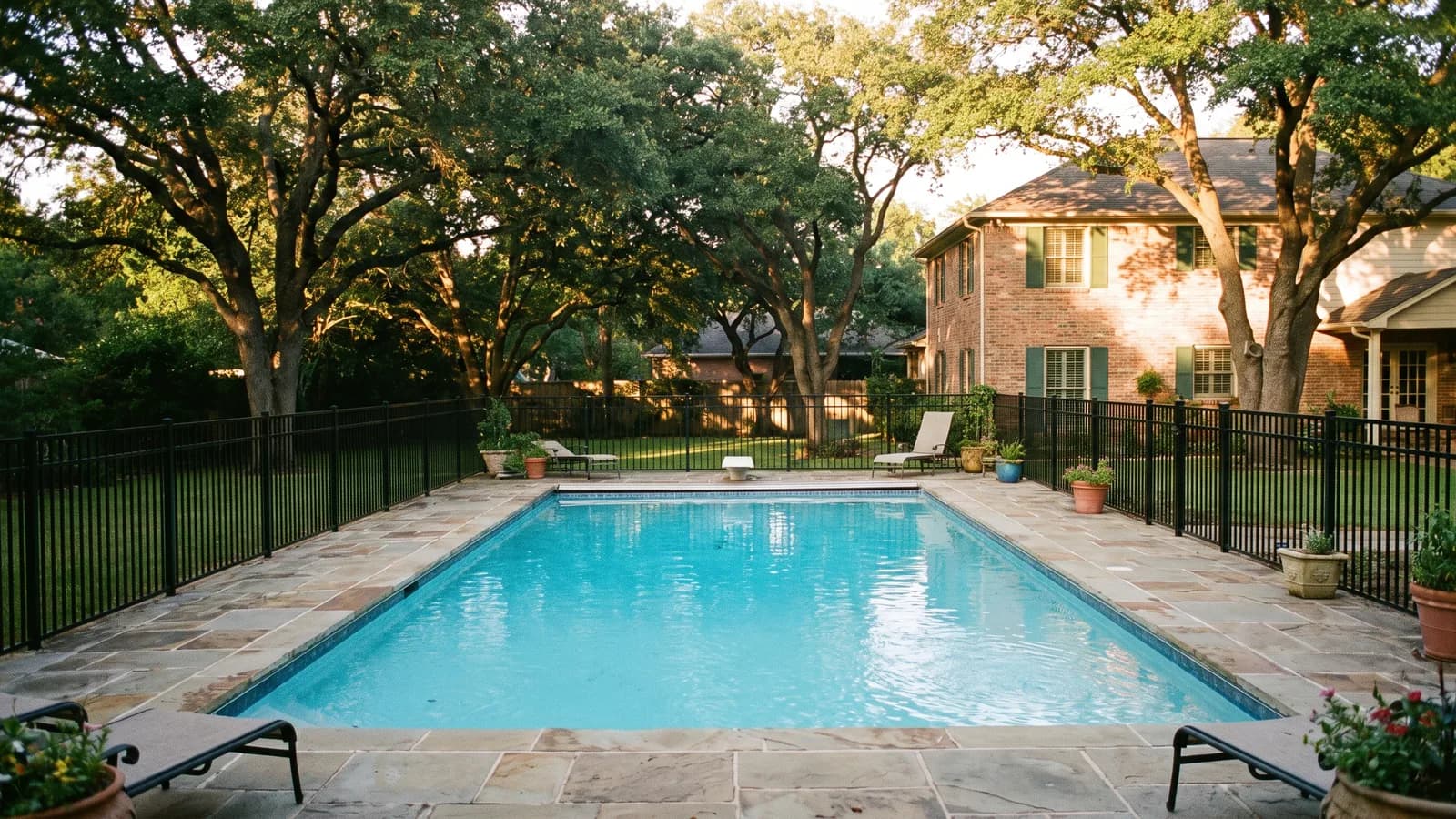
Building a pool in Georgia needs a permit from your city or county, and the barrier rules are the part that decides whether you can fill it. Georgia adopts the International Swimming Pool and Spa Code, 2024 Edition, with Georgia amendments, and the Georgia amendments are stricter than the base code in a way that matters: a pool without a safety cover must have a complete and permanent barrier before it is filled with water and placed into operation.
Key takeaways
-
Georgia's mandatory pool code is the International Swimming Pool and Spa Code, 2024 Edition, with Georgia amendments, adopted by the Department of Community Affairs.
-
The Georgia amendment to Section 305.1.1 says pools and spas not provided with a safety cover shall have a complete and permanent barrier complying with Section 305.2 before being filled with water and placed into operation.
-
Georgia amends the latch release rule so that at residential pools and spas the latch release mechanism must be not less than 54 inches above the finished floor or ground surface, the same height the code sets for public pools.
-
Georgia deletes Chapter 1 of the pool code as well as of the residential code, so the permit process and any exemptions are set by your local government, not by the state.
-
A pool is rarely one permit. Expect the pool structure, the electrical bonding and equipment, the plumbing, the barrier and often a land disturbance review.
Do I need a permit to build a pool in Georgia
Yes, in any Georgia jurisdiction that enforces the state minimum codes. A pool is a permanent structure with electrical and plumbing systems attached to it, and it changes the drainage and impervious surface of the lot.
What Georgia does not give you is a statewide answer about which pieces are permitted separately, because the Georgia amendments delete Chapter 1, Scope and Administration, from the pool code entirely, leaving that chapter in place only as a reference and guide for local governments developing their own administrative procedures. So the number of permits, the fees and the process are local.
The barrier rule that decides when you can fill
This is the provision to plan around, because it controls your schedule. Under the Georgia amendment to Section 305.1.1 in the Georgia State Amendments to the International Swimming Pool and Spa Code, pools and spas not provided with a safety cover shall have a complete and permanent barrier that complies with Section 305.2 before being filled with water and placed into operation.
Read that as written. Not before the final inspection, and not before you swim. Before it is filled. A builder who plans to fill the shell and fence it afterward has the sequence wrong under the Georgia amendment.
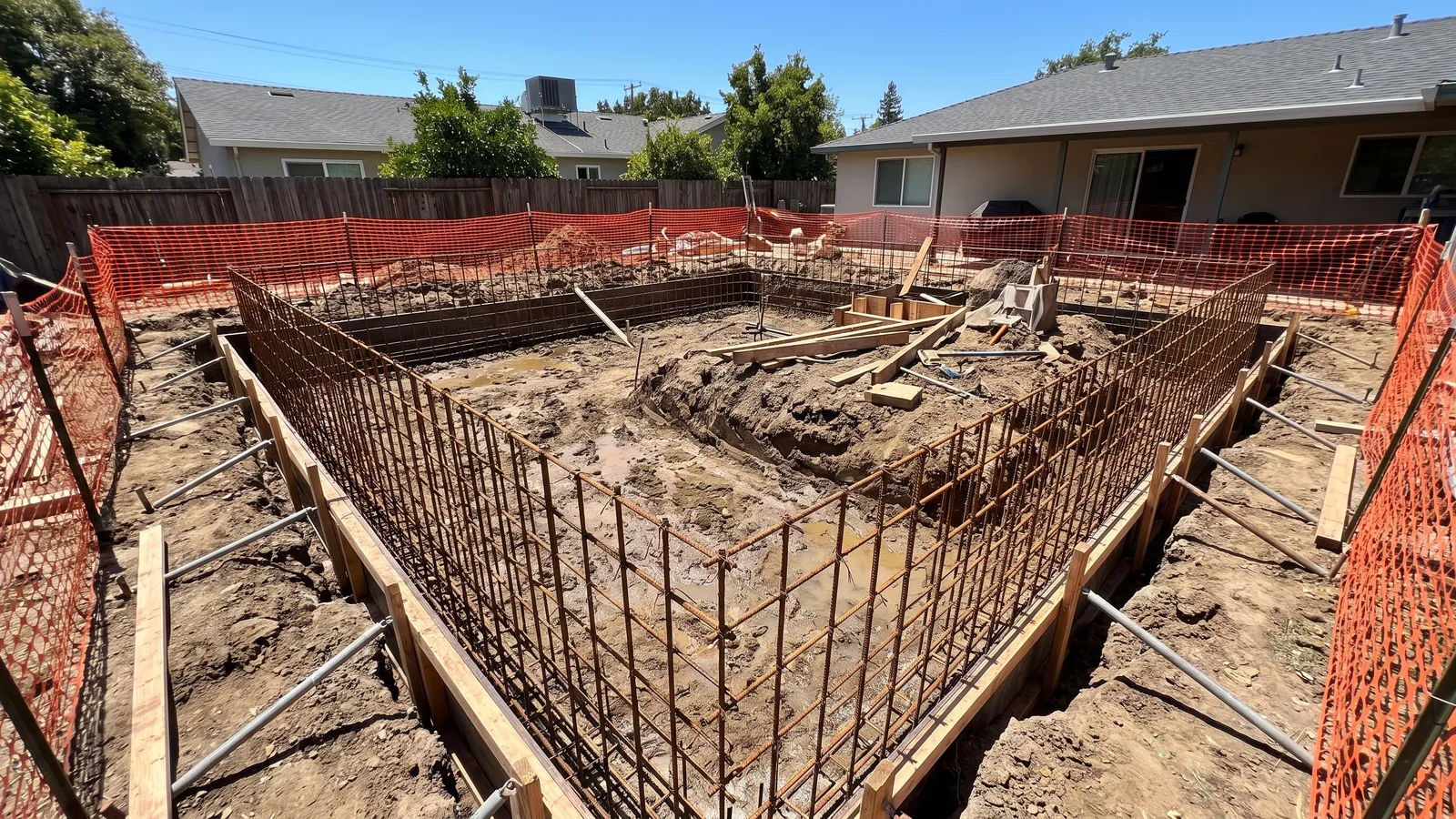
The same amended section addresses construction fencing around in-ground pool sites during the excavation period, so the site is expected to be secured from the time excavation begins through to the permanent barrier being completed.
The 54 inch latch release, and why Georgia is stricter
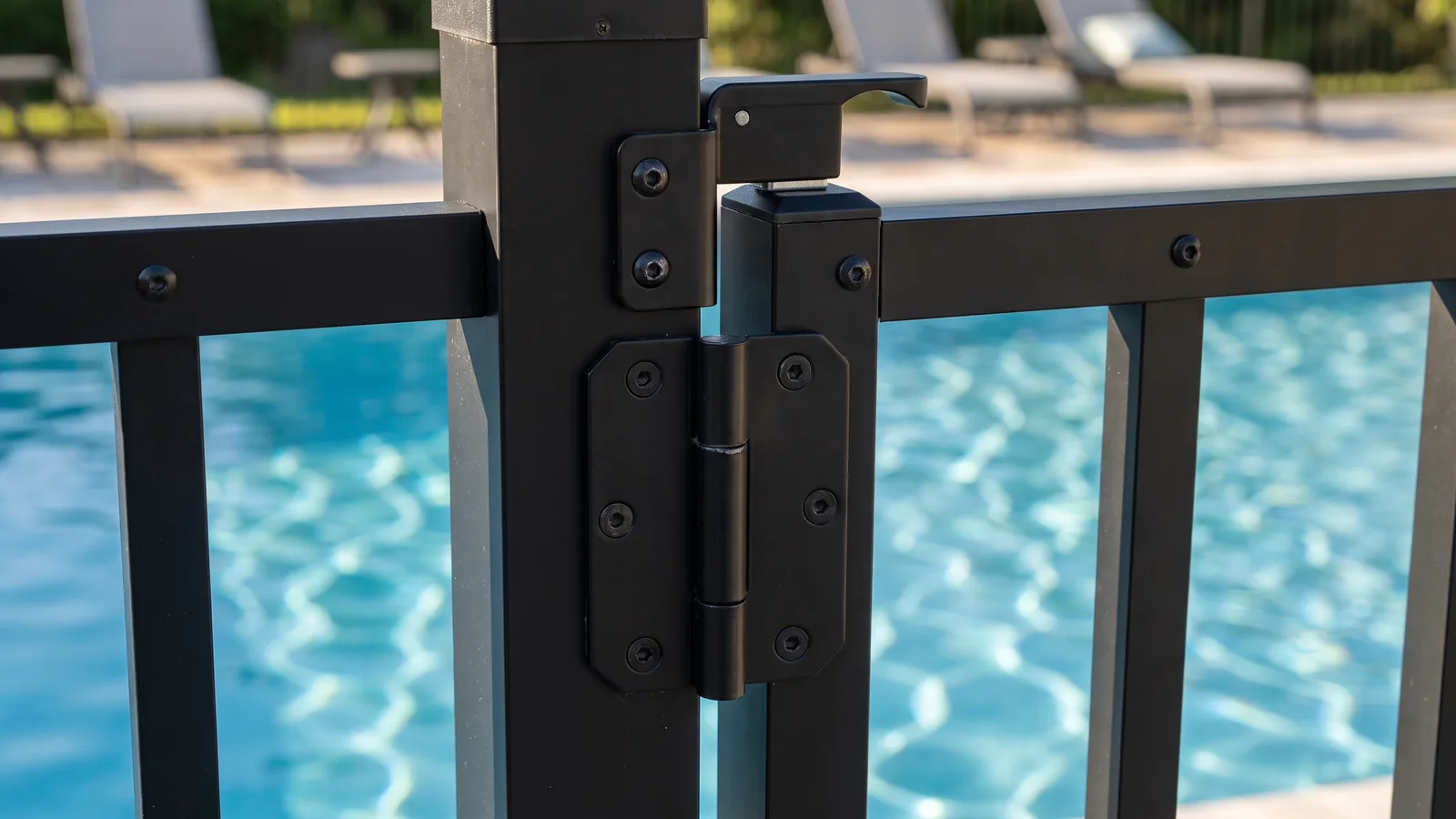
The Georgia amendment to Section 305.3.3 sets the latch release rule for doors and gates in barriers. Where the latch release mechanism is accessed from outside the barrier and is not the self-locking type, it must sit above the finished floor or ground surface at not less than 54 inches at public pools and spas, and not less than 54 inches at residential pools and spas.
That equalization is the Georgia-specific detail. A gate latch specified from a national catalogue, or a builder working from base code assumptions about residential heights, can end up mounted too low and fail inspection. Confirm the mounting height before the gate hardware is installed.
| Requirement | What Georgia's amendment says |
|---|---|
| Barrier timing | Complete and permanent barrier before filling with water |
| Alternative to a barrier | A safety cover per Section 305.1 |
| Latch release, residential | Not less than 54 inches above finished floor or ground |
| Latch release, public | Not less than 54 inches above finished floor or ground |
| Permit process and exemptions | Local, because Chapter 1 is deleted |
Which permits a pool project usually involves
Most Georgia jurisdictions break a residential pool into several scopes, often reviewed by different people.
- The pool structure itself, including the shell, decking and any retaining structures.
- Electrical, which for a pool is unusually demanding. Equipotential bonding of the shell, deck, ladders, rails and equipment is a major inspection item, and it is governed by the Georgia State Minimum Standard Electrical Code, the National Electrical Code, 2023 Edition, with Georgia amendments.
- Plumbing, for circulation, filtration and any water feature.
- The barrier, which some jurisdictions permit with the pool and some handle separately.
- Land disturbance or stormwater, because a pool changes grading and impervious area. In the fifteen counties of the Metropolitan North Georgia Water Planning District, local post-construction stormwater ordinances are part of the picture.
- Zoning, for setbacks from property lines and from the septic system or drain field if you have one.
What inspectors look at hardest
Electrical bonding, every time. A pool's equipotential bonding grid is buried and encased, so it must be inspected before the concrete goes in, and a missed bonding inspection is genuinely expensive to correct later.
After that: barrier height, gaps at the bottom and between vertical members, the gate's self-closing and self-latching function and latch release height, equipment clearances, and drainage around the deck.
Our take: sequence the barrier first and the fill second. Georgia's amendment is explicit that a pool without a safety cover gets its complete and permanent barrier before water goes in, and a half-finished fence around a full pool is both a code violation and the exact hazard the rule exists to prevent. Whatever your builder's usual sequence is elsewhere, this is Georgia's.
Questions to ask before you sign a pool contract
- Which permits does this jurisdiction require, and are the pool, electrical, plumbing and barrier separate applications?
- Who pulls each one, and is it included in the contract price?
- When is the bonding inspection scheduled, and what has to be exposed for it?
- Will the permanent barrier be complete before the pool is filled?
- What is the gate latch release mounting height on the specified hardware?
- What are the setbacks from property lines, and from the septic drain field?
- Does the jurisdiction require a stormwater or land disturbance review?
What to do next
Confirm the department that permits your address, since a Georgia property can carry a city mailing address while sitting in unincorporated county. Our guide on finding the right building department walks through that using your parcel record.
Then run the project through the free permit checker to see which permits it triggers, and look at the swimming pool project page for the documents and inspections typically involved. The Permit Prep Pack assembles all of it for your specific address, and the Georgia coverage page lists the counties and cities we cover.