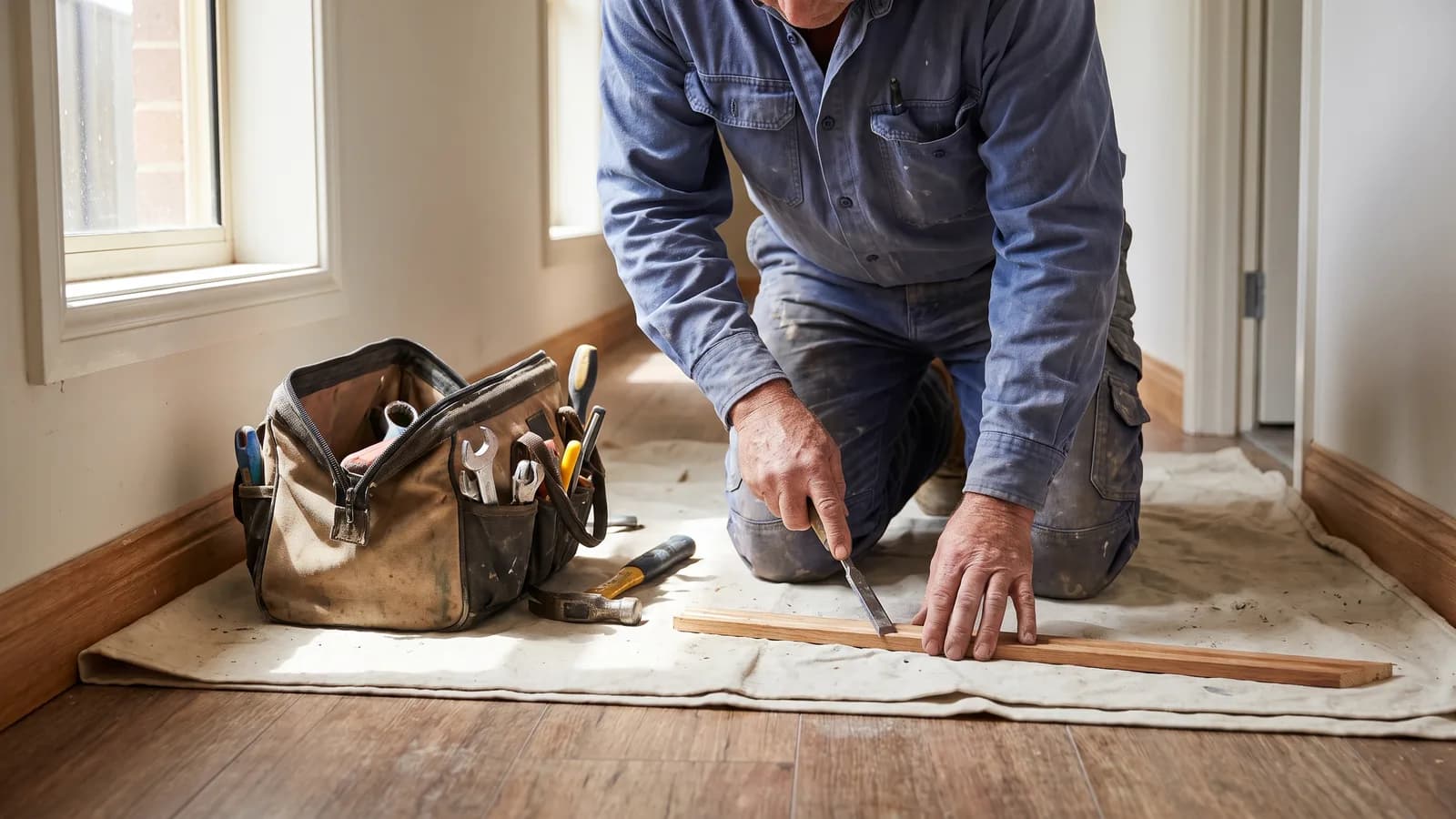
North Carolina draws its general contractor line at forty thousand dollars. Below that figure a person may take on residential construction without a general contractor license. The trades are governed separately and by different rules: electrical has an explicit homeowner exemption, while plumbing and heating exempt only minor repairs and replacements, defined narrowly in the statute.
Key takeaways
-
NCGS 87-1 defines a general contractor by reference to undertakings costing forty thousand dollars or more, so that is where the license requirement attaches.
-
At that threshold NCGS 87-14 requires proof of licensure or exemption, a verified affidavit if the owner exemption is claimed, and proof of workers' compensation insurance before a permit issues.
-
Electrical work has a genuine homeowner exemption under NCGS 87-43.1(5a) for your own property.
-
Plumbing and heating exempt only minor repairs and replacements, and the statute defines what counts.
-
None of these licensing rules remove the permit requirement, which sits in a different chapter entirely.
What is the dollar threshold in North Carolina?
Forty thousand dollars. NCGS 87-1(a) defines a general contractor as anyone who, for a fixed price, commission, fee or wage, undertakes to bid upon, construct, superintend or manage the construction of any building or improvement where the cost of the undertaking is forty thousand dollars or more.
Read what that measures. It is the cost of the undertaking, not the labour charge, so materials count. And it is the project rather than the trade, so several smaller pieces of one job can add up past the line.
That threshold is far higher than in many states, which is why North Carolina has a large and legitimate market of unlicensed builders working on smaller residential jobs. It is also why the paperwork changes character the moment a project crosses it.
What happens once a project reaches $40,000?
The permit process itself changes. NCGS 87-14(a) provides that for work costing forty thousand dollars or more, before a permit issues the applicant must prove that whoever will superintend the work is licensed, or is exempt under 87-1(b), and must furnish proof of workers' compensation insurance.
If the owner exemption is being claimed, the applicant must execute a verified affidavit attesting to three things: that they own the property, that they will personally superintend and manage all aspects of the construction and will not delegate that duty to anyone unlicensed, and that they will be personally present for all inspections required by the State Building Code unless the plans were drawn and sealed by a licensed architect.
The affidavit is not filed and forgotten. The building inspector transmits a copy to the Licensing Board, which verifies the applicant was entitled to the exemption, and if the Board determines they were not, the building permit shall be revoked. The owner-builder guide and the $40,000 exemption guide cover that route in detail.
Does the threshold cover electrical, plumbing and heating?
No. Each trade has its own statute, and they do not share the forty thousand dollar line.
| Work | Governing statute | Threshold | Homeowner position |
|---|---|---|---|
| General residential construction | NCGS 87-1, 87-14 | $40,000 or more | Owner exemption with affidavit and workers' comp |
| Electrical | NCGS 87-43, 87-43.1 | None | Express exemption for your own property under 87-43.1(5a) |
| Plumbing, heating, fire sprinkler | NCGS 87-21 | None | Only minor repairs and replacements, as defined |
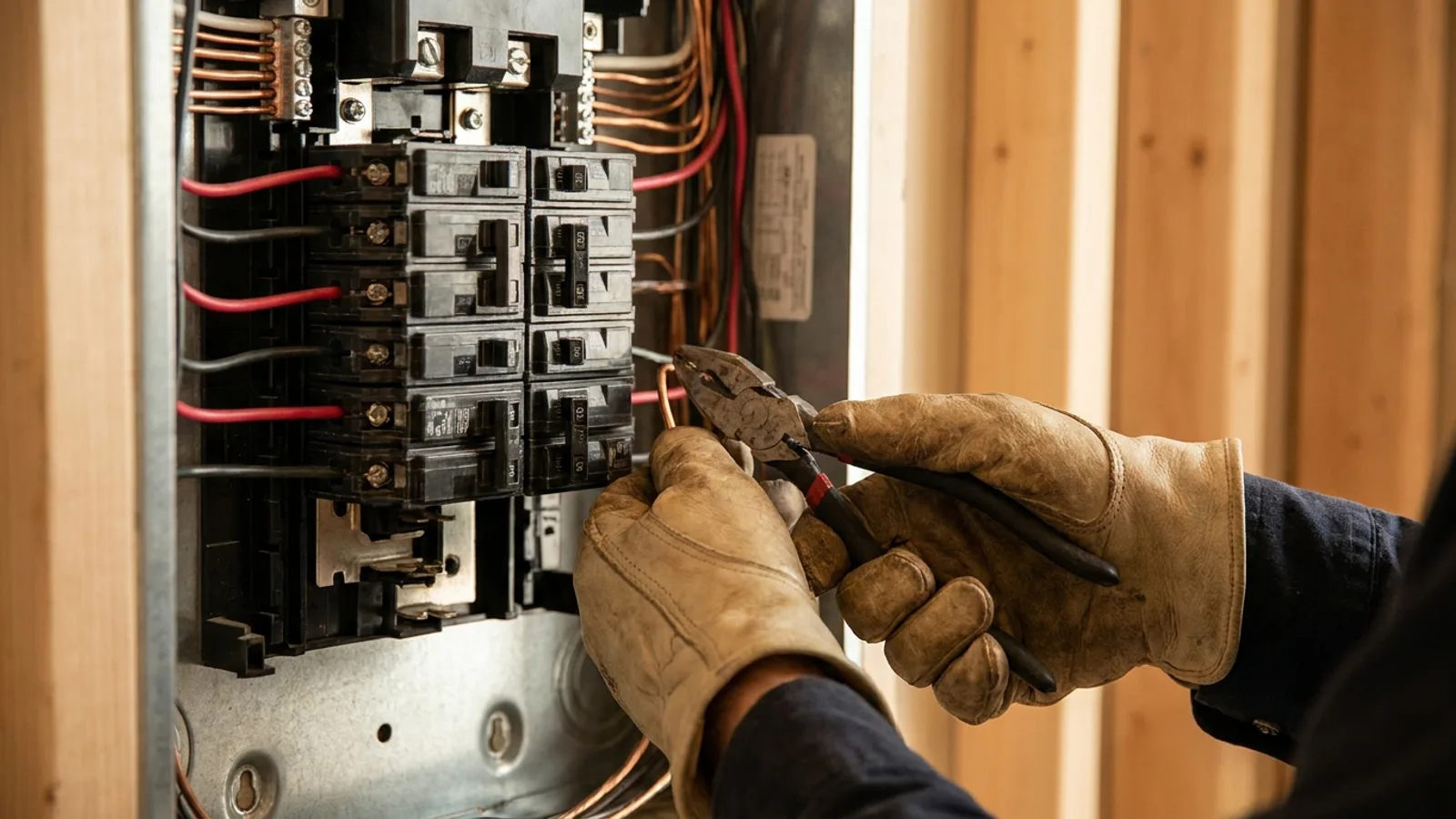
Electrical is the permissive one. NCGS 87-43.1(5a) exempts any person installing, maintaining, altering or repairing electric work upon that person's own property and for that person's own benefit, when the property is not intended at the time for rent, lease or sale. The panel upgrade guide covers where that lands in practice.
What counts as a minor repair to plumbing or heating?
The statute defines it, which is unusually helpful. NCGS 87-21(c) provides that the article does not apply to those who clean plumbing drains, or to those who make minor repairs or minor replacements to an already installed system of plumbing, heating or air conditioning, but that it does apply to repairs, replacements or modifications to an already installed fire sprinkler system.
Then it defines the term. Minor repairs or minor replacements mean the replacement of parts in an installed system which do not require any change in energy source, fuel type, or routing or sizing of venting or piping, and parts include a compressor, coil, contactor, motor or capacitor.
The same subsection is explicit about what is covered rather than exempt. The article applies to the business of plumbing, heating or fire sprinkler contracting, which includes the installation or replacement of condensing units, air handlers, gas furnaces, package units, boilers, water heaters, heat exchangers and whole-house water treatment systems, as well as connection, repair or alteration to the drainage, waste or venting system or the potable water system. Replacing a water heater is on the covered list, not the minor repair list.
Does unlicensed mean no permit?
No, and this is where people get hurt. Licensing sits in Chapter 87 and permitting sits in Chapter 160D. They are separate statutes with separate purposes, and satisfying one says nothing about the other.
NCGS 160D-1110 requires a permit for building, plumbing, heating and cooling, and electrical work, with narrow exceptions that themselves require a licensed person. So a job under forty thousand dollars can be lawfully performed by an unlicensed builder and still need a permit and inspections. Run the free permit checker for your project and county rather than assuming either way.
Our take: the forty thousand dollar number is worth knowing and it is not the number that protects you. Ask which trades your job actually touches, then ask who holds the licence for each of those. A general contractor threshold says nothing about the person wiring your house or connecting your gas.
How do I check a contractor before hiring?
Ask for the license number and the classification, then verify it with the board that issued it rather than trusting a card. North Carolina licenses general contractors under one chapter, electrical contractors under another, and plumbing, heating and fire sprinkler contractors under a third, so the right question is whether they hold the licence covering the work you are buying.
Ask who is pulling the permit and get the answer in writing. If a contractor suggests you pull it, understand that you are taking the owner-builder role, including the affidavit and the requirement to be present for inspections at forty thousand dollars and above.
Then confirm the office that covers your parcel using how to find your North Carolina building department, and check the contact details for your North Carolina county.