
Learning how to read a Florida building permit takes about five minutes once you know what the fields mean. A permit is your city or county building department's written authorization to do a specific scope of work, and the posted permit card is a summary of that authorization. The fields that matter most are the permit number, the permit type and scope, the status, the expiration date, and the inspection record. Everything else on the card is reference detail.
Key takeaways
- A Florida building permit authorizes a specific scope of work at a specific address, not open-ended construction.
- The permit number, type, status, expiration date, and inspection history are the fields that actually matter.
- An open or expired permit means required inspections were never finalized, which can surface at sale or insurance renewal.
- If the scope or address on the permit does not match the work being done, stop and confirm with the building department before proceeding.
Table of contents
- How do you read a Florida building permit
- What do the permit number and permit type tell you
- Which dates and status fields matter most
- What is the scope of work and valuation line
- How do you read the inspection record
- Permit card fields at a glance
- A worked example reading a reroof permit
- What if something on the permit looks wrong
How do you read a Florida building permit
Start at the top and work down: identify the issuing jurisdiction, the permit number, the property address, the scope of work, and the status. A Florida permit is jurisdiction-specific, so a permit issued by the City of Orlando is administered by Orlando, while a permit for an unincorporated address is administered by the county.
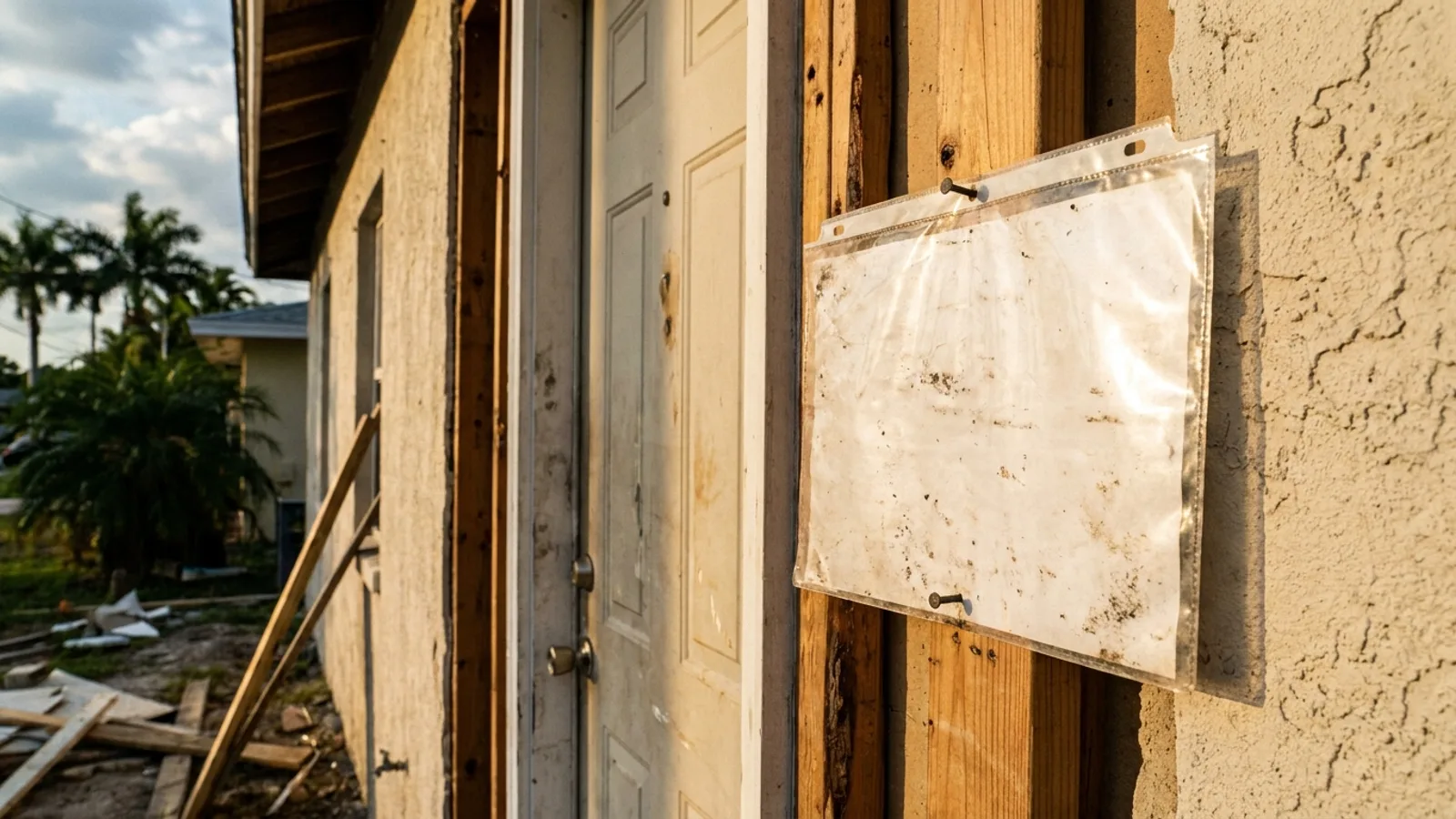
Most permit cards are laid out in the same general order regardless of jurisdiction, because they all trace back to the same Florida Building Code administrative chapter. Once you recognize the pattern, any county's card reads the same way.
What do the permit number and permit type tell you
The permit number is the unique reference the building department uses to track your project, and the permit type tells you what category of work was authorized. You will need the permit number for every inspection request, portal lookup, and phone call about the job.
Permit type is usually a short code or label such as building, roofing, electrical, plumbing, or mechanical. A single project can carry several linked permits, one per trade. If your reroof also involved a skylight, you might see a building permit and a separate roofing permit tied to the same address. Our guide on how to look up a permit shows how to pull these records from a county portal.
Which dates and status fields matter most
The issue date, expiration date, and status are the fields that tell you whether a permit is alive, stalled, or closed. Status usually reads as issued, active, expired, or finaled (also written as closed or completed).
Florida permits expire if work does not progress or if no inspection is requested within a set window, commonly around 180 days of inactivity, though the exact period is set locally. A finaled permit means the last required inspection passed and the record is closed. An open or active permit that has sat untouched is the one to watch, because it can become an expired permit and later an open-permit problem at sale.
What is the scope of work and valuation line
The scope of work describes exactly what the permit authorizes, and the valuation is the declared cost of construction used to calculate fees. The scope line is the single most important field for a homeowner to verify, because work outside the stated scope is unpermitted work.
Valuation is not the same as what you paid your contractor. It is the construction value the department uses for its fee schedule, and it can also affect impact fees on certain projects. If the scope says reroof only but your crew is also replacing rotten decking and fascia, confirm whether that additional work is covered.
How do you read the inspection record
The inspection record lists each required inspection, the date it was requested, and whether it passed, failed, or is still pending. This is your proof that the concealed and structural work was checked.
Each line shows an inspection type such as rough, in-progress, or final, with a result. A passed final is what closes the permit. If you see a failed inspection with no passing re-inspection after it, the work was never signed off. Our guide on what to do after a failed inspection walks through the correction and re-inspection process.
Permit card fields at a glance
| Field | What it means | Why it matters |
|---|---|---|
| Permit number | Unique tracking ID | Needed for every lookup and inspection |
| Permit type | Category of work (building, roofing, electrical) | Tells you which trades were authorized |
| Scope of work | Exact authorized work | Anything beyond it is unpermitted |
| Status | Issued, active, expired, or finaled | Shows if the permit is open or closed |
| Expiration date | When the permit lapses without progress | An expired permit stalls the project |
| Inspection record | List of required inspections and results | Proof the work was checked and passed |
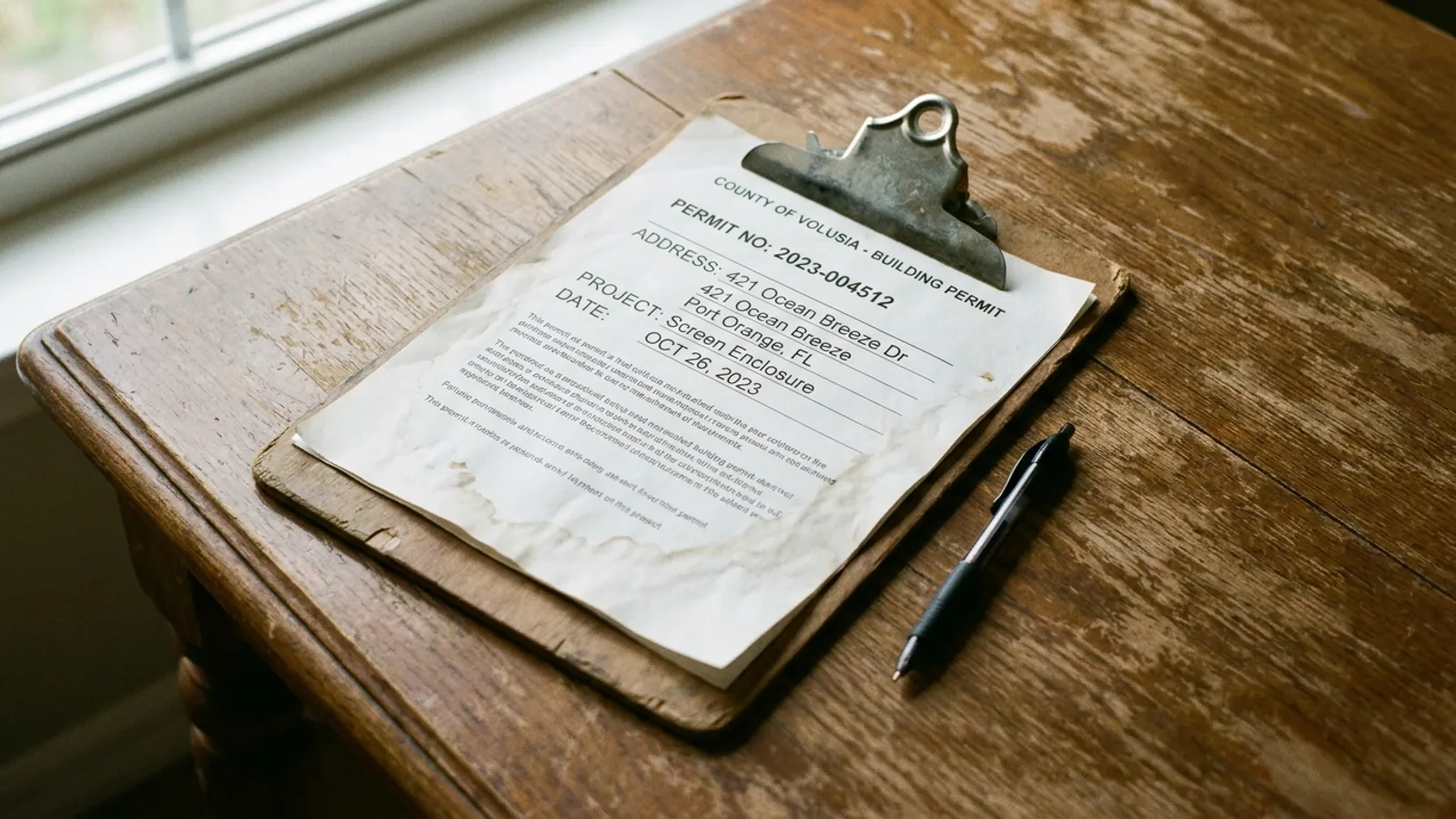
A worked example reading a reroof permit
Say a homeowner in unincorporated Polk County pulls up a roofing permit on the county portal. The type reads roofing, the scope reads tear-off and reroof, asphalt shingle, and the status reads active. The inspection record shows a passed in-progress (dry-in) inspection but no final.
Reading those fields together tells a clear story: the roof was permitted correctly and the mid-roof inspection passed, but the final inspection was never called. The permit is still open. The fix is to schedule the final inspection and get the passing result that finals the permit, which our guide on closing an open permit explains step by step.
Our take: The two fields homeowners overlook most are scope of work and the final inspection result. If the scope does not match reality or the final is missing, treat the permit as unfinished even if the work looks done. A finished-looking job with an open permit is a common and avoidable headache.
What if something on the permit looks wrong
If the address, scope, or contractor on the permit does not match your project, contact the issuing building department before more work happens. A mismatch can mean the wrong permit was pulled, the scope was under-declared, or the record was attached to the wrong parcel.
Bring the permit number and be specific about what does not line up. If you are unsure what your project even requires, run it through the free permit checker first, then review the county resources for Polk or Orange to reach the right office.