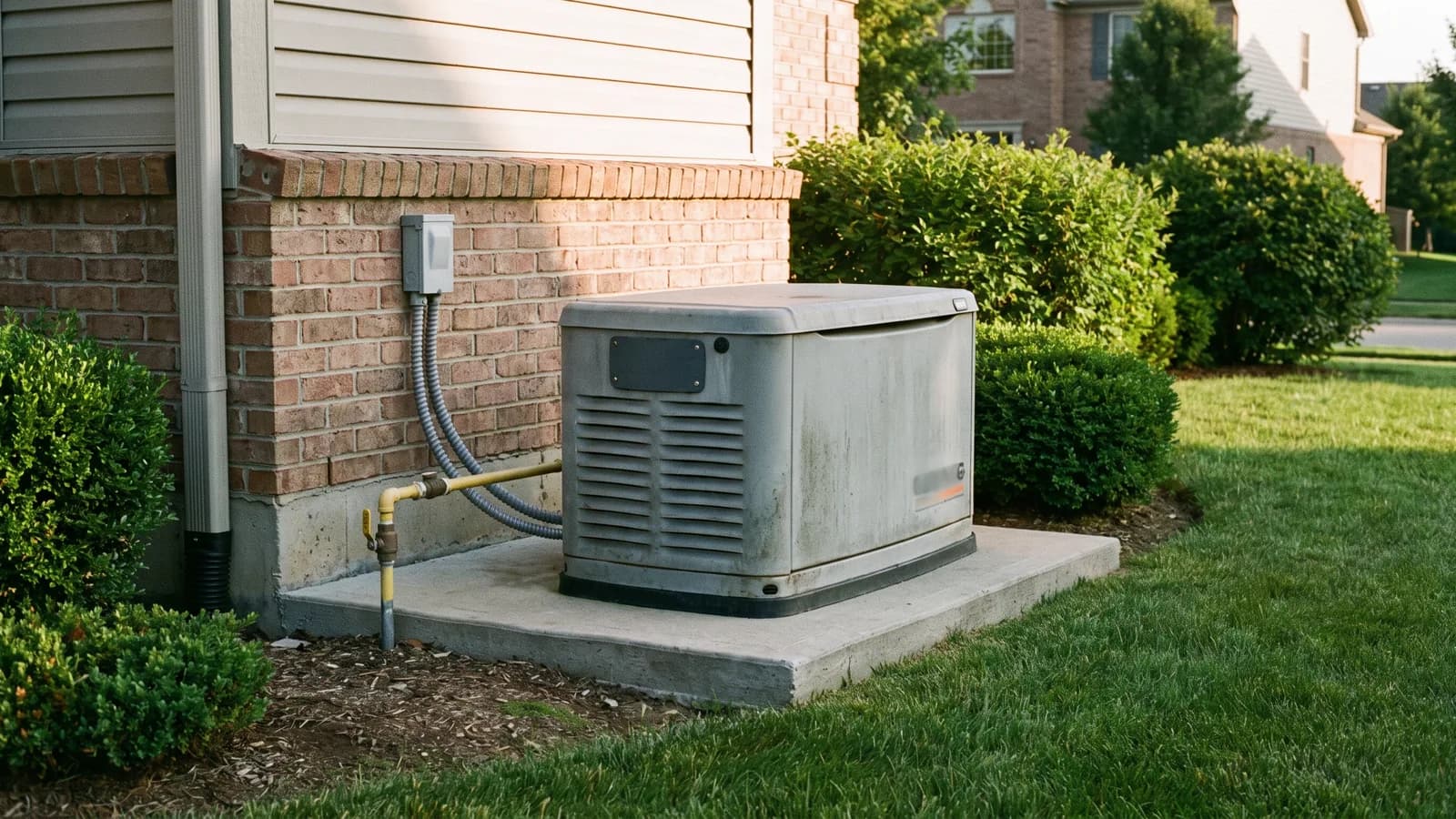
A permanently installed standby generator in North Carolina needs a permit, and usually more than one. The electrical work triggers a permit under state law, a gas-fired unit adds fuel piping, and the transfer switch is the part inspectors care about most because it is what keeps generator power from backfeeding onto utility lines. Portable generators are a different question entirely.
Key takeaways
-
A permanently installed generator is electrical work, and NCGS 160D-1110 requires a permit for electrical installation, extension, alteration or general repair.
-
A natural gas or propane unit adds fuel gas work, and gas piping is inspected and tested before it is concealed.
-
The transfer switch is the safety heart of the job, because backfeeding endangers utility line workers.
-
North Carolina lets a homeowner do electrical work on their own property under NCGS 87-43.1(5a), but the permit and inspections still apply.
-
A portable generator run through an interlock or inlet is still a permanent electrical modification.
-
Do I need a permit for a standby generator in North Carolina?
Do I need a permit for a standby generator in North Carolina?
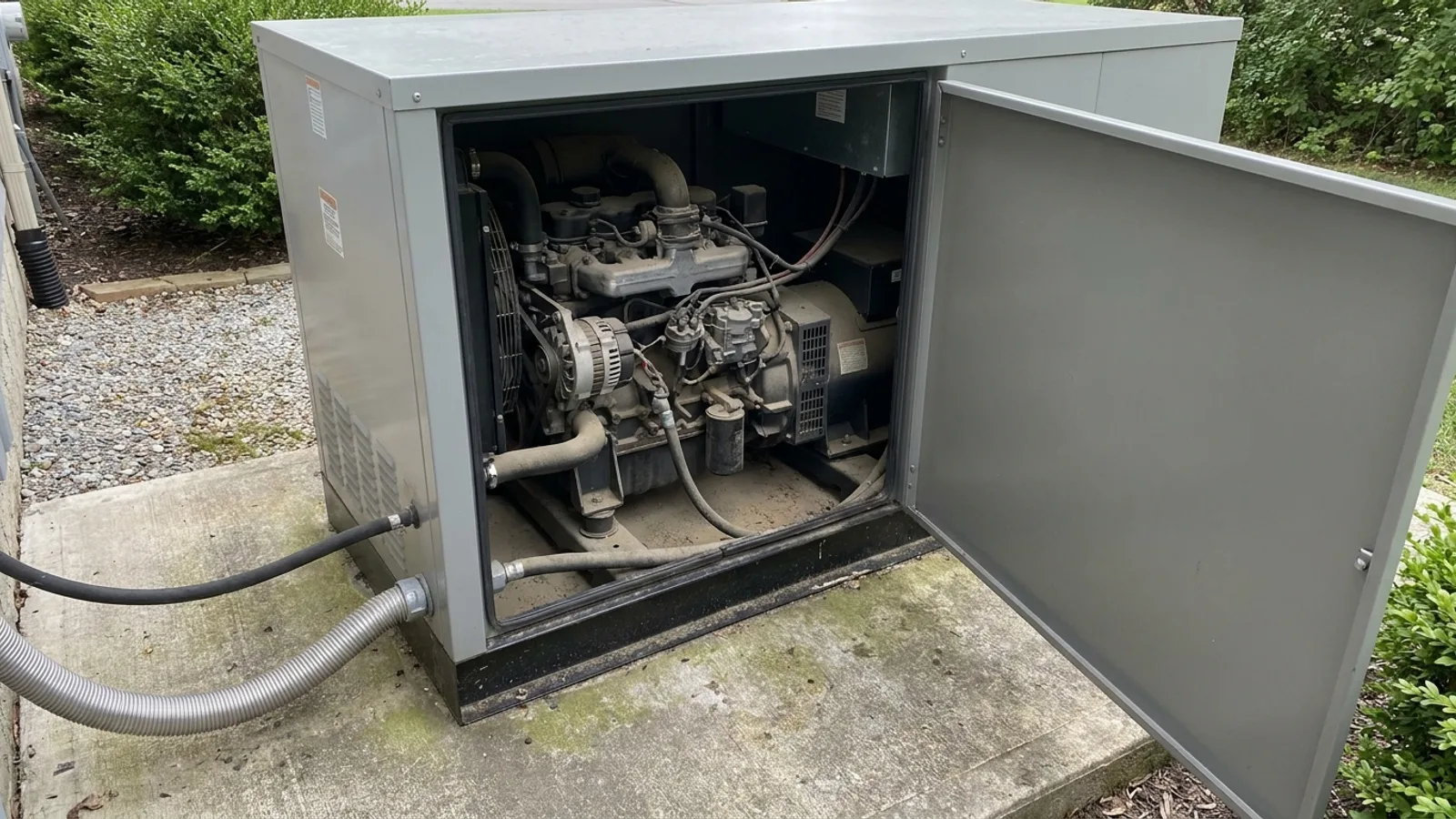
Yes. NCGS 160D-1110(a) requires a permit before commencing the installation, extension, alteration or general repair of any electrical wiring, devices, appliances or equipment, and a permanently installed generator with a transfer switch is exactly that. The narrow exceptions in that subsection cover lighting fixture and device replacement and a like-for-like electric water heater connection, and none of them reach a generator.
The same statute separately requires a permit for the installation, extension or general repair of any plumbing system, and for the installation, extension, alteration or general repair of heating or cooling equipment systems. A gas-fired standby unit typically brings fuel piping into scope alongside the electrical work, so expect more than one permit or more than one inspection discipline.
What does the transfer switch have to do?
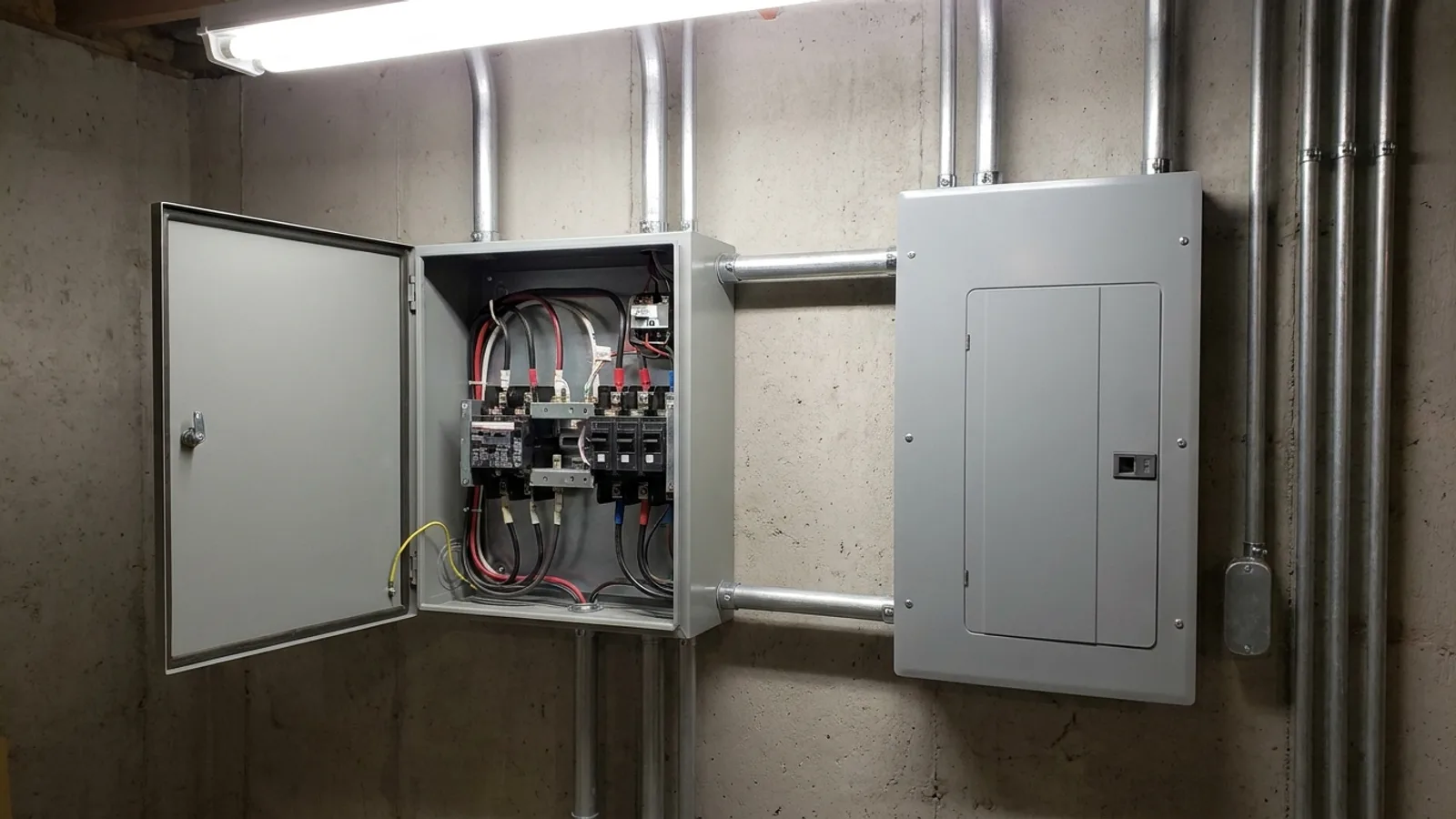
Separate your house from the grid whenever the generator is running. That is the whole point of it, and it is why inspectors treat it as the critical item rather than the generator itself.
If a generator can feed power back onto the utility's lines, it can energize a circuit that a line worker believes is dead. That is the hazard the transfer switch exists to prevent, and it is why improvised connections are treated so seriously. It is also why the utility has an interest in the installation even though it does not issue your permit.
Beyond that, an inspector will be looking at the circuit the generator feeds, conductor and overcurrent protection sizing, the grounding and bonding arrangement, working clearance around the equipment, and the labelling that tells someone in future what this equipment is and where it is fed from.
Can I install a generator myself?
On the licensing question North Carolina is more permissive than most states. NCGS 87-43.1(5a) exempts any person installing, maintaining, altering or repairing electric work, wiring, devices, appliances or equipment upon that person's own property and for that person's own benefit, when the property is not intended at the time for rent, lease or sale.
That exemption covers licensing only. The permit requirement is a different statute and still applies, so a homeowner working under it applies for the permit and gets inspected. A homeowner also cannot use the no-permit exceptions in 160D-1110, because every one of them requires a licensed person.
Gas work is worth treating separately from the electrical side. Fuel piping, sizing, testing and venting are their own discipline, and the fact that the electrical licensing exemption exists says nothing about who may run a gas line.
| Element | What it involves | Usual review |
|---|---|---|
| Generator set and pad | Placement, clearances, support | Building or electrical |
| Transfer switch | Separation from the utility, sizing, labelling | Electrical rough and final |
| Branch or feeder wiring | Conductor and overcurrent sizing, grounding, bonding | Electrical rough and final |
| Fuel piping, gas units | Pipe sizing, testing, connections, venting | Fuel gas or mechanical |
| Portable via inlet or interlock | Permanent wiring change at the panel | Electrical |
What about a portable generator?
Running extension cords from a portable unit to individual appliances is not a permitted installation, because nothing is being installed. That is the same logic that puts cord-connected equipment outside the licensing rules under NCGS 87-43.1(7), which exempts the installation and servicing of cord-connected appliances and equipment connected by attachment plug-in devices to receptacles that have been permanently installed.
The moment you want the portable unit to power circuits in the house, that changes. A generator inlet, an interlock kit or a small transfer switch is a permanent modification to your panel and wiring, so it is permitted electrical work like any other. Note that the same subdivision that exempts cord-connected servicing expressly does not apply to permanently installed receptacles or to installing the junction box.
Which codes and inspections apply?
The North Carolina Electrical Code governs the wiring. The Office of State Fire Marshal's current codes page describes it as an adopted version of the National Electrical Code supplemented by North Carolina amendments, states that the 2020 Electrical Code was effective from November 1, 2021 and is currently effective, and shows the 2018 codes still in force for the other disciplines while the 2024 suite is delayed.
On inspections, the state's Administrative Code requires a rough-in inspection when the parts of the electrical, plumbing or heating and cooling systems that will be hidden from view have been placed, but before any wall or ceiling finish or insulation is installed, and a final inspection for each trade once the work is complete. Underground work counts as rough-in and may be inspected at any point before covering, which matters for a buried gas line or feeder to a pad-mounted unit. See what a North Carolina inspector checks for the readiness definitions.
Our take: decide the transfer switch and the load list before anything is ordered. Most generator disappointment in North Carolina is not a code problem, it is a homeowner discovering after installation that the unit they bought was sized for a different set of circuits than the ones they actually wanted running.
What should I plan for before buying?
Start with the load, not the generator. Decide which circuits you genuinely want to keep running, because that list drives the transfer switch, the generator size and the fuel supply together. Confirm the fuel: natural gas needs an adequate supply and piping, and propane needs a tank with placement rules of its own.
Then sort the paperwork. Confirm with your building department which permits your installation needs and whether they will issue an electrical permit to a homeowner. Check any subdivision covenants and local noise or setback rules for equipment placement, which is a zoning question rather than a code one.
Run the free permit checker for your project and county to see which trades are in scope, read the inspection order guide so nothing gets covered early, and check the office details on the page for your North Carolina county. If the generator is part of a larger electrical project, the panel upgrade guide covers where the service capacity question fits.