
A permanently installed standby generator in Florida typically requires a permit. A whole-home generator connects to your electrical system through a transfer switch and often to a fuel-gas supply, and it sits on a pad outdoors, so most Florida jurisdictions require electrical and often mechanical or gas permitting. Treat it as permitted work and confirm the specifics locally.
Key takeaways
- A permanently installed standby generator typically requires a permit in Florida.
- The project usually involves electrical work through a transfer switch and often a gas connection, both of which are permitted.
- Portable generators that are not wired into the home are treated differently from permanent standby units.
- Generator work is generally excluded from the HB 803 exemption because it involves electrical and gas work.
Table of contents
- Do I need a permit for a standby generator in Florida
- What makes a standby generator permitted work
- How is a standby generator different from a portable one
- Does HB 803 cover generator installation
- Standby versus portable generator permits
- A worked example: a standby generator in Orange County
- What does the inspection usually check
- What should I ask my installer
Do I need a permit for a standby generator in Florida
In most Florida jurisdictions, yes. A permanent standby generator ties into your home's electrical system and frequently a gas supply, and both are the kind of work building departments require to be permitted and inspected.
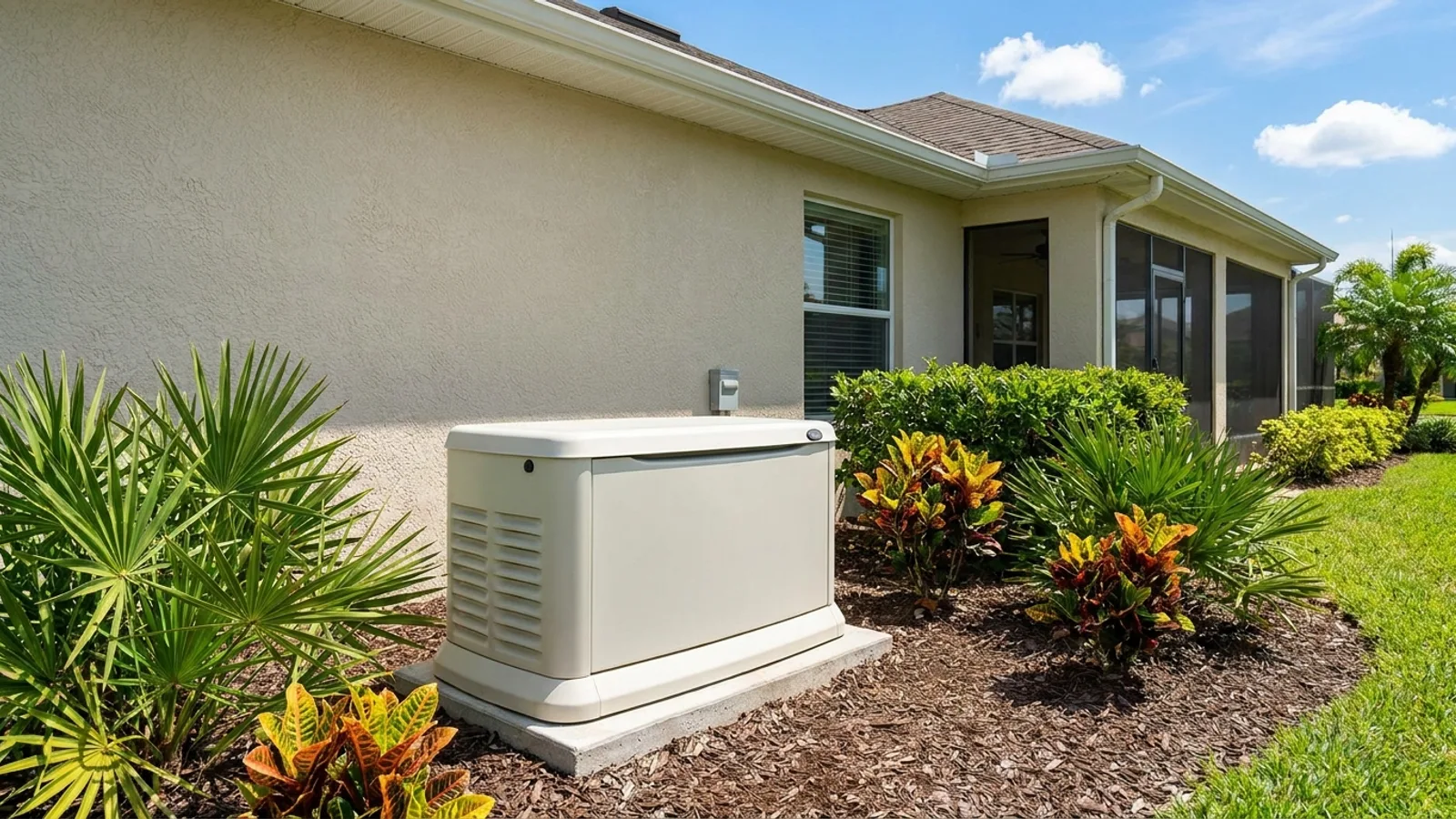
Because the unit provides backup power automatically, it must be wired so it can never feed power back to the grid dangerously, which is what the transfer switch and inspection confirm. Use the permit checker to frame the project before you call an installer.
What makes a standby generator permitted work
A standby generator combines several permitted elements: an electrical connection through a transfer switch, often a gas line, a concrete or composite pad, and outdoor placement with clearance requirements. Each of those is reviewed to make sure the installation is safe.
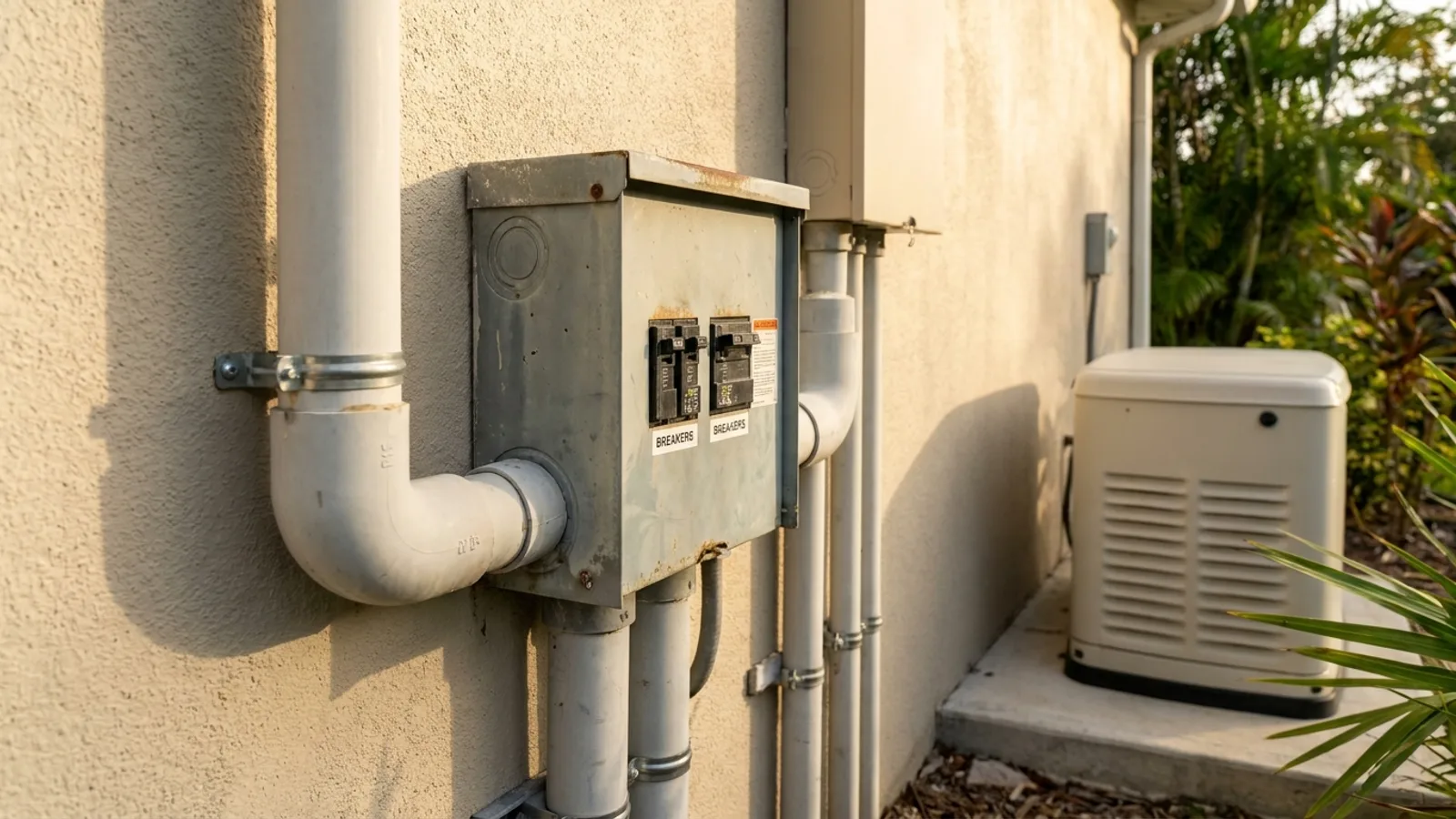
The transfer switch is central. It isolates your home from the grid when the generator runs, protecting utility workers and your equipment. Our guide on electrical panel upgrades covers related electrical work that sometimes accompanies a generator.
How is a standby generator different from a portable one
A standby generator is permanently installed and wired into the home, while a portable generator is a movable unit you plug appliances into. The permanent connection is what drives the permit requirement.
A portable generator used with extension cords is generally not a permitted installation, though how you connect it matters. Wiring any generator into the home's panel, even a portable one through an inlet, becomes electrical work that a building department will expect to be permitted. When in doubt, confirm your setup.
Does HB 803 cover generator installation
No. The HB 803 $7,500 exemption excludes electrical work and gas work, and a standby generator involves both, so the installation does not qualify for that exemption. The cost is usually well above the threshold as well.
Our guide on whether HB 803 covers electrical work explains the electrical exclusion. The standby generator project page summarizes the typical permitting path.
Standby versus portable generator permits
| Factor | Standby generator | Portable generator |
|---|---|---|
| Installation | Permanent, wired in | Movable, plug-in |
| Transfer switch | Required | Only if wired to panel |
| Permit outlook | Typically required | Usually none unless wired in |
| Fuel | Often natural gas or propane | Gasoline or propane |
| HB 803 exemption | Excluded | Not applicable |
A worked example: a standby generator in Orange County
Consider a homeowner in Orange County installing a whole-home standby generator fueled by natural gas. The installer pulls electrical and gas permits, sets the unit on a pad with proper clearances, installs a transfer switch, and connects the gas line.
Inspections confirm the electrical connection, the transfer switch, the gas connection, and the placement clearances. Permitting the work means the automatic backup system is verified to operate safely. If the panel needs upgrading first, see our electrical panel upgrade guide.
What does the inspection usually check
The inspection generally checks the transfer switch and electrical connections, the gas connection if present, the pad and mounting, and the required clearances from the home and openings. The point is a unit that runs safely without endangering the home or utility workers.
Common inspection items include:
- The transfer switch installation and labeling
- Electrical bonding and grounding
- The gas connection and shutoff, if applicable
- Placement clearances from windows, doors, and vents
What should I ask my installer
Ask whether the installer is licensed for electrical and, if applicable, gas work, whether they will pull the permits, and whether the placement meets clearance requirements. A licensed installer pulling the permits keeps responsibility for the safe connection with them.
Confirm you will receive the permit numbers and that inspections will be scheduled. Our pillar guide on HVAC and water heater permits covers related mechanical work.
Our take: A standby generator is a safety device, and a poorly connected one can backfeed the grid or leak gas. Permit it and have it inspected, because the whole value of backup power depends on it working safely when the power goes out.