
A small shed under 120 square feet sits in a genuine gray area in Florida. Some jurisdictions exempt very small detached storage sheds from a building permit, while many still require one, and separate zoning approval applies almost everywhere. Because the rule is set locally, the safe assumption is that a shed permit may be required until your building department confirms otherwise.
Key takeaways
- Whether a shed under 120 square feet needs a building permit in Florida depends on your city or county, not a single statewide rule.
- Even where a building permit is waived, zoning rules on setbacks, lot coverage, and placement still apply.
- Any electrical wiring, plumbing, or permanent anchoring usually triggers a separate permit even for a small shed.
- A false assumption that no permit is needed is the risky direction, so confirm with your local building department before you build.
Table of contents
- Do I need a permit for a shed under 120 square feet in Florida
- Where does the 120 square foot number come from
- What zoning rules apply even when no building permit is needed
- Does electrical, plumbing, or anchoring change the answer
- Permit versus no permit for small sheds
- A worked example: a 100 square foot shed in unincorporated Polk County
- How do I confirm the rule for my property
- What happens if I skip a required permit
Do I need a permit for a shed under 120 square feet in Florida
There is no single yes or no answer statewide. Building permit requirements for small accessory structures are set by each Florida city and county, so a shed that is exempt in one jurisdiction may need a permit a few miles away.
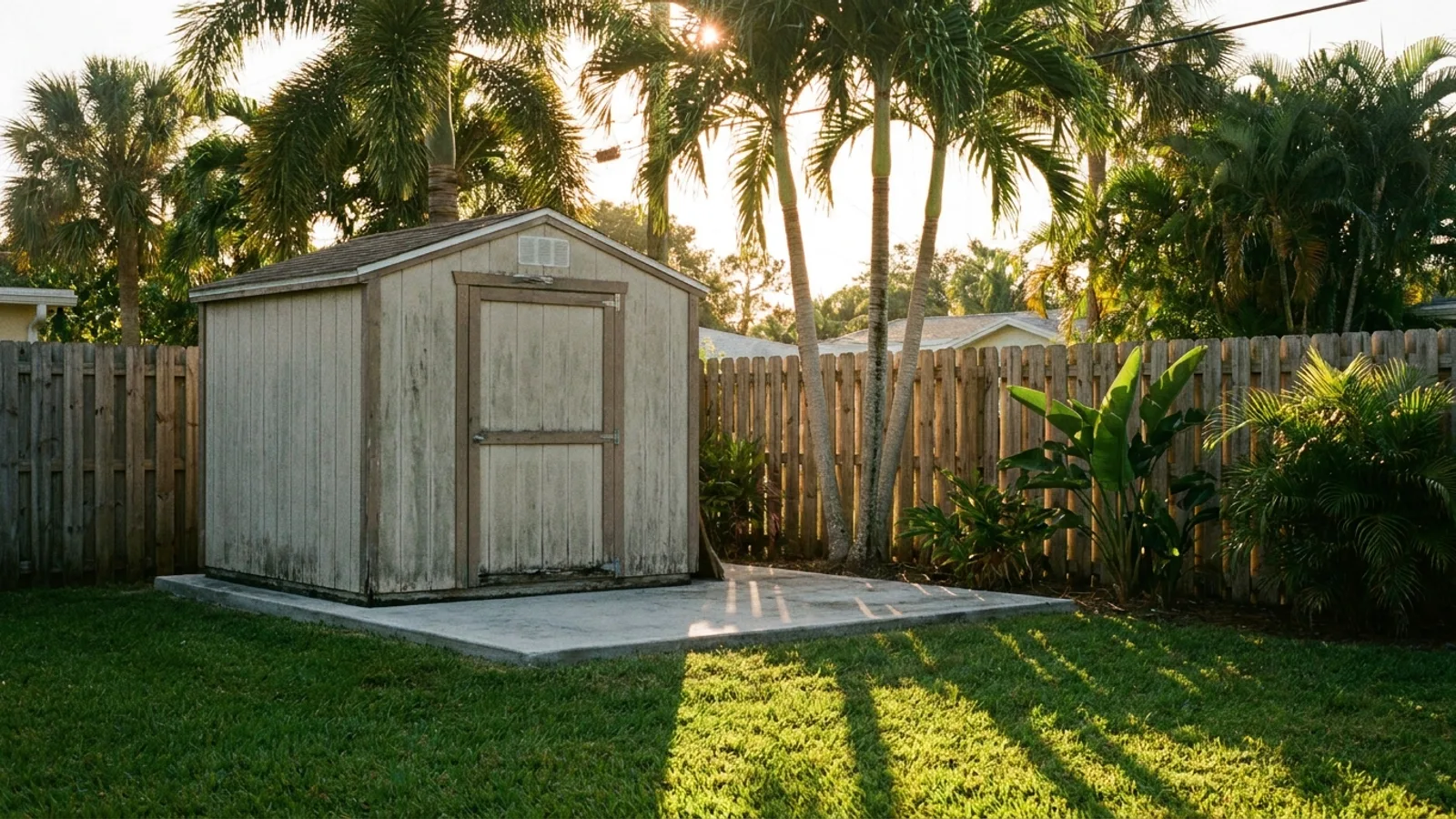
The Florida Building Code lists categories of minor work that local governments may exempt from permitting, and some jurisdictions extend that to small sheds. Others require a permit for any accessory structure regardless of size. Start by treating your project as permit-eligible and let the building department tell you it is exempt.
Where does the 120 square foot number come from
The 120 square foot figure comes from model building code language that many jurisdictions reference, not from a universal Florida statute. It is a common threshold, but it is not guaranteed to apply where you live.
Some Florida jurisdictions use 100 square feet, some use 120, and some tie the exemption to other factors like whether the shed is on a permanent foundation. Because the number varies, do not rely on a figure you read online for a different city. Use the free permit checker to frame your project, then verify the exact threshold locally.
What zoning rules apply even when no building permit is needed
Zoning approval and building permits are two different reviews, and a shed can be exempt from one but not the other. Setbacks (how far the shed must sit from property lines), maximum lot coverage, and easement restrictions apply to accessory structures in most Florida jurisdictions.
A shed placed over a utility easement or too close to a property line can be required to move even if it never needed a building permit. If your home is in a homeowners association, HOA architectural rules are separate again and may restrict shed size, color, or placement. See our overview of how HOA approval differs from a building permit before you order a shed.
Does electrical, plumbing, or anchoring change the answer
Yes. The moment a shed includes electrical wiring, plumbing, or mechanical work, that trade work usually requires its own permit even when the structure itself might be exempt. Running power to a shed is electrical work that a building department will expect to be permitted and inspected.
Anchoring can matter too. In Florida wind conditions, many jurisdictions require detached structures to be anchored to resist uplift, and how the shed is anchored can be part of the permit review. A prefabricated shed set on blocks is treated differently from one bolted to a slab.
Permit versus no permit for small sheds
The table below shows how a small shed is commonly evaluated. Treat it as a framework for the questions to ask, not a substitute for your building department.
| Factor | Leans toward no building permit | Leans toward a permit required |
|---|---|---|
| Size | Small, under the local exemption threshold | Larger than the local threshold |
| Foundation | Portable, set on grade or blocks | Permanent slab or footing |
| Utilities | No power, water, or gas | Any electrical, plumbing, or gas |
| Use | Simple storage | Habitable or workshop use |
| Location | Meets setbacks, no easement | Near property line or on easement |
A worked example: a 100 square foot shed in unincorporated Polk County
Consider a homeowner in unincorporated Polk County who wants a 100 square foot prefabricated shed for garden tools, set on a gravel pad with no electricity. In this scenario the homeowner would contact the Polk County Building Division to confirm whether that size and setup is exempt, and would still verify zoning setbacks for accessory structures.
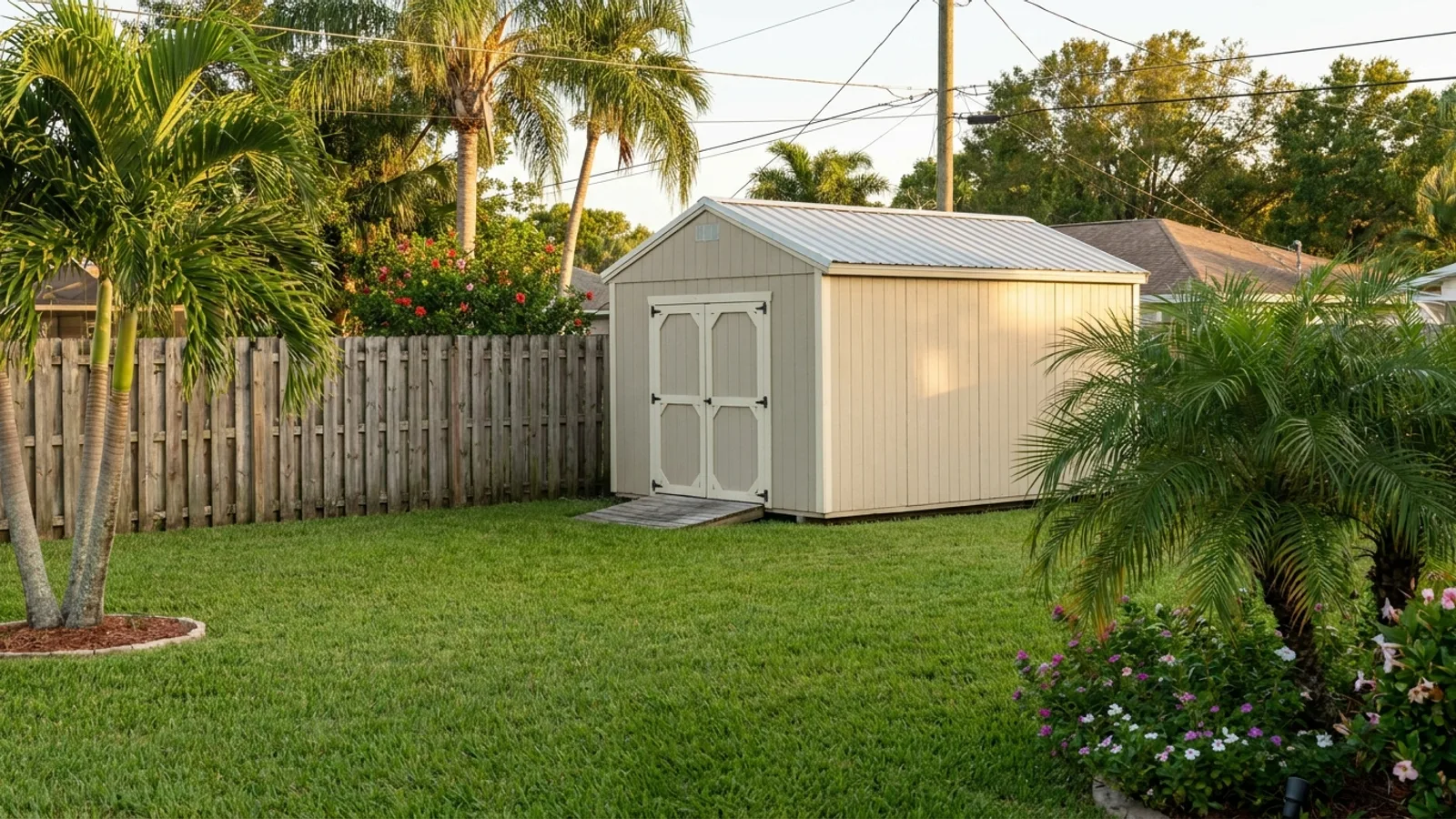
If the same homeowner later decides to run an electrical circuit to the shed for lighting, that addition would very likely require an electrical permit, changing the project from a simple exempt structure to permitted work. Small changes can move the line.
How do I confirm the rule for my property
Call or check the website of the building department for the jurisdiction where the shed will sit, which is your city if you are inside city limits and the county if you are not. Ask two questions: does a shed of this size and type need a building permit, and what zoning setbacks apply to accessory structures on my lot.
For a related structure decision, our guides on gazebos and carports walk through similar accessory-structure questions. The shed and accessory structure project page summarizes the typical path.
What happens if I skip a required permit
If a permit was required and you built without one, the jurisdiction can require an after-the-fact permit, inspections of concealed work, or in some cases removal of the structure. Unpermitted structures can also complicate a future sale.
Our take: For a shed, the cost of a quick phone call to the building department is far lower than the cost of moving or tearing down a structure later. When the answer is unclear, assume a permit may be required and confirm before you build.