
Whether you need a permit for a gazebo in Florida depends mostly on its size, how it is anchored to the ground, and whether you add electricity, gas, or water. A small, freestanding, unanchored gazebo may fall under a permit exemption, but a larger anchored structure, or any gazebo you wire for lights or a fan, generally needs a building permit. Because thresholds vary by jurisdiction, confirm with your local building department before you build.
Key takeaways
- A gazebo permit in Florida usually turns on size, permanent anchoring, and whether utilities are added.
- Small freestanding structures may be exempt, but adding electricity or plumbing almost always triggers a permit.
- Anchored, permanent, or larger gazebos are typically reviewed for wind loads because of Florida hurricanes.
- Setback rules, flood zones, and HOA approval can apply even when a building permit does not.
Table of contents
- Do you need a permit for a gazebo in Florida?
- What makes a gazebo need a permit versus stay exempt?
- Does adding electricity or a fan change things?
- How do wind loads affect a Florida gazebo?
- A quick example: a 12-foot gazebo in Orange County
- What else applies besides the building permit?
Do you need a permit for a gazebo in Florida?
Sometimes. A gazebo needs a permit in Florida when it is a permanent, anchored structure, when it exceeds the size a jurisdiction treats as exempt, or when you add any electrical, gas, or plumbing work. A small, portable, freestanding gazebo with no utilities is the case most likely to be exempt.
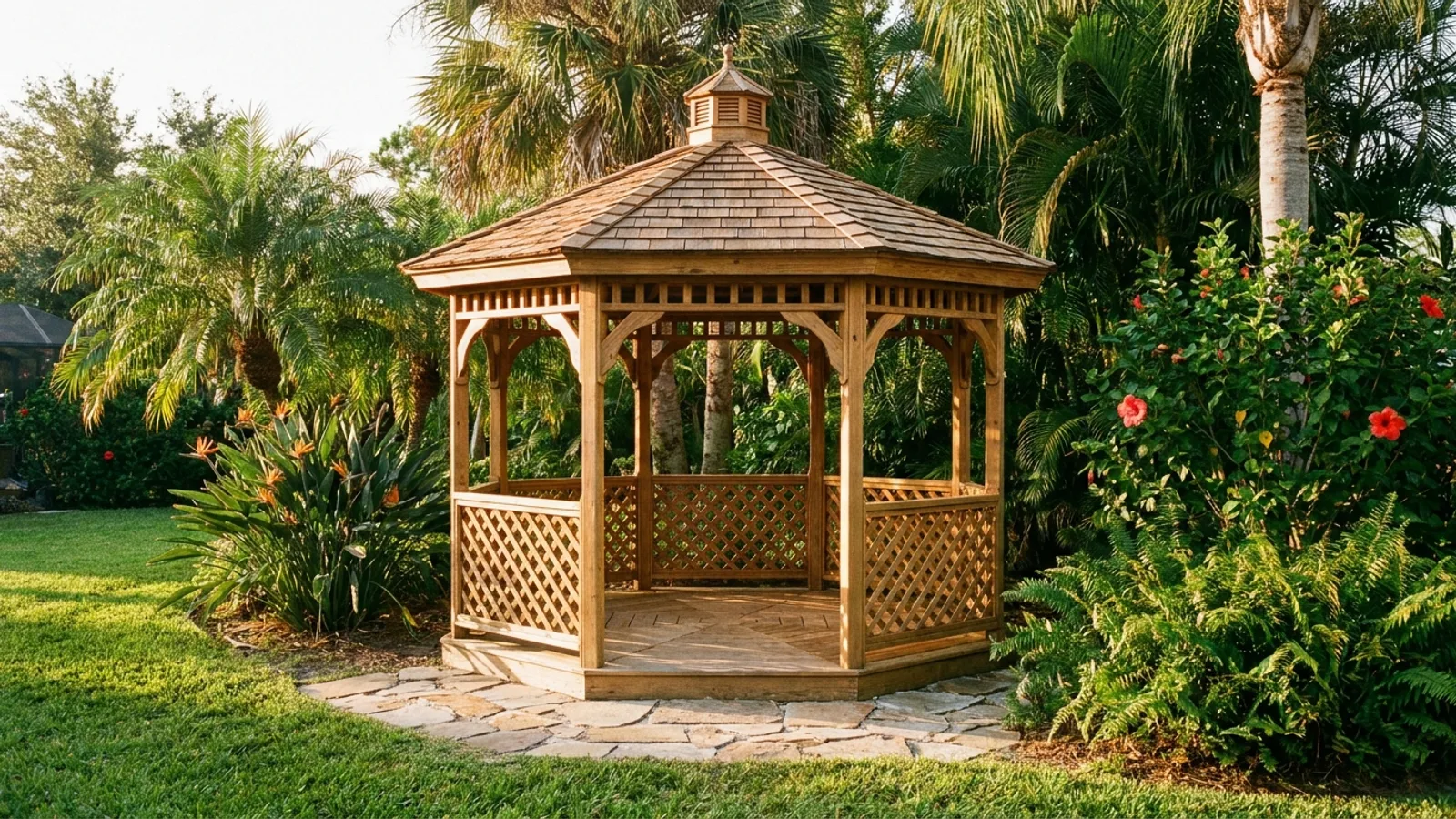
The Florida Building Code exempts certain small accessory structures from permitting, but jurisdictions apply their own size limits and interpret "permanent" differently. A gazebo you bolt to a slab or set on footings reads as permanent. Use our permit checker or call your building department to confirm which category yours falls into.
What makes a gazebo need a permit versus stay exempt?
Three factors drive the decision: size, attachment, and utilities. A larger footprint, permanent anchoring, and any added power or water all push toward a permit. The comparison below shows the usual pattern.
| Gazebo type | Permit likely? |
|---|---|
| Small portable kit, no anchoring, no power | Often exempt |
| Larger freestanding gazebo on footings | Usually a permit |
| Any gazebo with electrical (lights, fan, outlets) | Permit for the electrical work |
| Gazebo with plumbing or gas line | Permit for that trade |
| Gazebo attached to the house | Permit, treated more like an addition |
Even an exempt structure still has to meet zoning setbacks and any HOA rules, so exemption from a building permit is not permission to place it anywhere.
Does adding electricity or a fan change things?
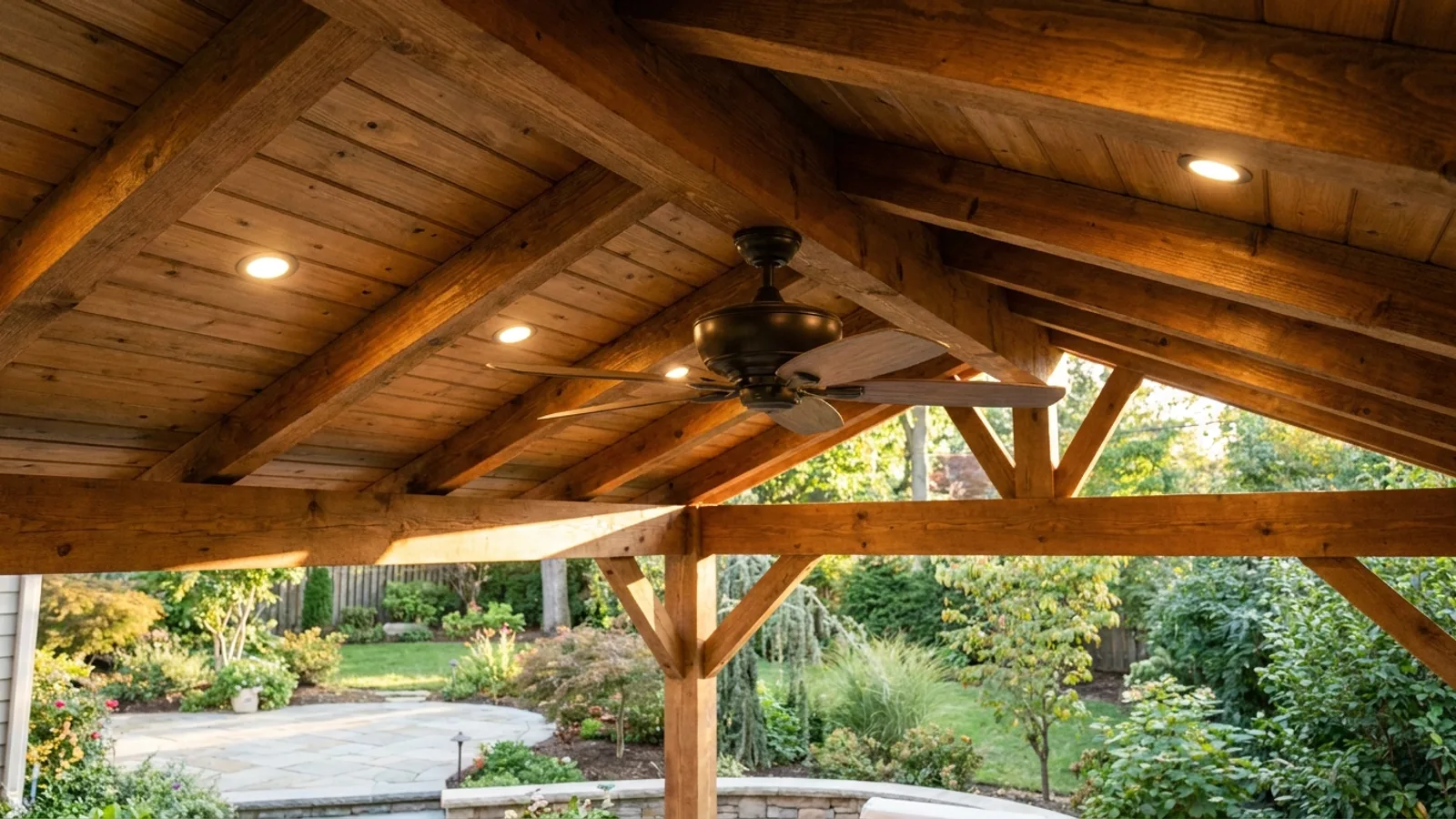
Yes. The moment you run wiring to a gazebo for lights, a ceiling fan, or outlets, you introduce electrical work that generally requires a permit and inspection, regardless of the gazebo's size. The same is true if you add a gas line for a fire feature or plumbing for a sink.
If your plan includes power, it is cleaner to permit the structure and the electrical together. A licensed electrician can pull the electrical permit, or you can review our standby generator project page to see how a trade permit works alongside a structure.
How do wind loads affect a Florida gazebo?
Florida sits in a high-wind state, and much of Polk and Orange County is in the wind-borne debris region. A permanent gazebo is reviewed to confirm it is anchored to resist uplift, so it does not become airborne in a storm. That is a core reason larger and anchored gazebos are permitted rather than exempt.
This is the same wind logic behind screen enclosure permits and other outdoor structures. Proper footings and connectors are what keep the roof on and the posts in the ground when winds pick up.
A quick example: a 12-foot gazebo in Orange County
Imagine a homeowner in Orange County installing a 12-foot hardtop gazebo on concrete footings with a wired ceiling fan. Because it is anchored and has electrical work, they would pull a building permit for the structure and an electrical permit for the fan, confirm the backyard setbacks, and pass inspections.
A neighbor who sets a small pop-up gazebo on the lawn with no anchoring and no power would likely need no building permit, though they should still keep it clear of easements and check their HOA.
Our take: If the gazebo is anchored, sizable, or wired, permit it. The wind and electrical risks are exactly what Florida review is designed to catch, and an unpermitted anchored structure can cause problems at resale.
What else applies besides the building permit?
Zoning setbacks decide how close the gazebo can sit to property lines. Flood zones can add elevation or anchoring requirements. And an HOA approval is a separate track from the building permit; you can need both, one, or neither depending on where you live.
Sort these out before you buy materials. It is far easier to shift a gazebo two feet on paper than to move a finished structure after an inspector flags a setback. If your backyard plan also includes a small storage building, our shed permit under 120 square feet guide covers a related exemption question, since the same size-and-anchoring logic applies to accessory structures.