
Whether you need a permit for a pergola in Florida depends on its size, whether it is attached to your house, and how it is anchored to the ground. A small freestanding pergola may be exempt in some jurisdictions, but an attached pergola or a large anchored one generally needs a permit, because it becomes a permanent structure that has to resist wind. A pergola permit in Florida turns on those three factors, so settle them before you build.
Key takeaways
- A pergola permit in Florida depends on size, attachment to the house, and permanent anchoring.
- A small freestanding, unanchored pergola may be exempt, but an attached one usually is not.
- Attached and anchored pergolas are reviewed for wind loads because of Florida hurricanes.
- Setbacks, flood zones, and HOA rules can apply even when a building permit does not.
Table of contents
- Do you need a permit for a pergola in Florida?
- What determines whether a pergola is permitted?
- Does attaching a pergola to the house change things?
- What about adding lights or a fan?
- A quick example: an attached pergola in Orange County
- What else should you check before building?
Do you need a permit for a pergola in Florida?
It depends. A pergola needs a permit in Florida when it is attached to the house, when it is a permanent anchored structure, or when it exceeds the size a jurisdiction treats as exempt. A small, freestanding pergola set on the ground without anchoring is the case most likely to be exempt.
Attachment is the biggest single factor. Once a pergola connects to the home, it is reviewed for how it fastens to the structure and how it handles wind, similar to a patio cover. Use our permit checker to confirm your situation before you buy materials.
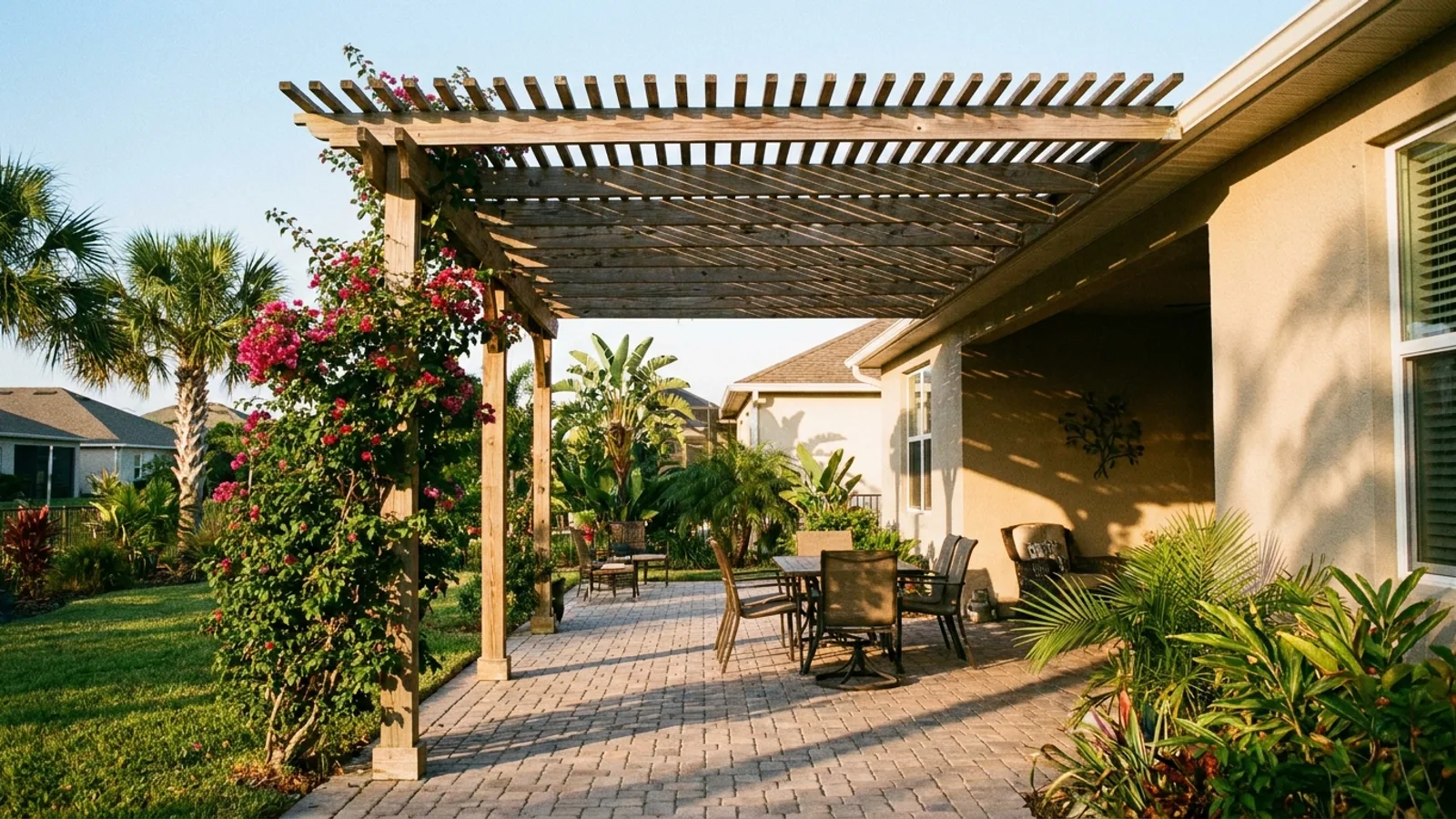
What determines whether a pergola is permitted?
Size, attachment, and anchoring are the three levers. A pergola is often open-roofed, but Florida still cares about its footprint, its connection to the house, and how it is held down.
| Pergola type | Permit likely? |
|---|---|
| Small freestanding, not anchored | Often exempt |
| Larger freestanding on footings | Usually a permit |
| Attached to the house | Usually a permit |
| With added electrical (lights, fan) | Permit for the electrical |
| Covered with a solid roof | Reviewed like a patio cover |
Even an exempt pergola must meet zoning setbacks and any HOA rules, so exemption from a permit is not permission to place it anywhere.
Does attaching a pergola to the house change things?
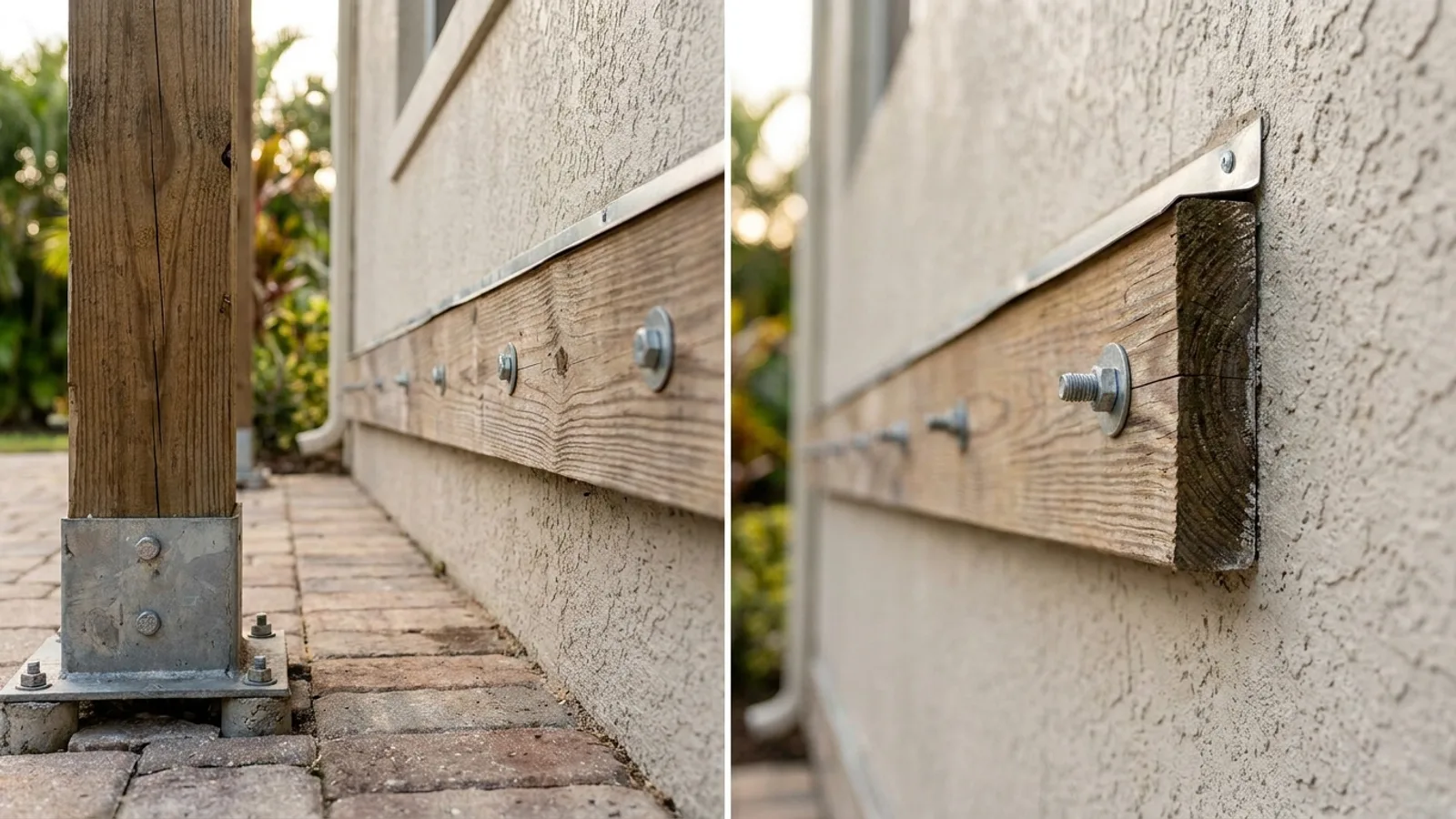
Yes, significantly. An attached pergola transfers wind loads into the home and depends on a solid connection, so building departments review it more like an addition than a piece of furniture. That review covers the ledger attachment, the posts, and the anchoring.
A freestanding pergola avoids the house connection but still has to stand on its own against wind if it is anchored and permanent. The more permanent and the larger it is, the more likely it needs a permit.
What about adding lights or a fan?
Adding electrical to a pergola for lights, a ceiling fan, or outlets introduces work that generally requires an electrical permit and inspection, independent of the structure question. If you are wiring it, permit the electrical, and a licensed electrician can pull that permit.
If you later cover the pergola with a solid roof, you have changed it into a roofed structure, which is reviewed differently and more like our screen enclosure project or a patio cover. An open pergola and a covered one are not the same permitting question.
A quick example: an attached pergola in Orange County
A homeowner in Orange County attaches a wood pergola to the back of the house over a paver patio and adds string-light outlets. Because it is attached and has electrical, they pull a building permit for the structure and an electrical permit for the outlets, confirm the setbacks, and pass inspections.
A neighbor who sets a small freestanding pergola on the lawn with no anchoring and no power would likely need no building permit, though they should still respect easements and check the HOA.
Our take: Attached or anchored means permit it. An open roof does not exempt a pergola from Florida's wind rules, and an unpermitted structure attached to the house can cause trouble at resale.
What else should you check before building?
Confirm zoning setbacks, since they control how close the pergola sits to property lines, and check flood-zone requirements if they apply. An HOA approval runs on a separate track from the building permit, so you can need both.
Sort these out first. Moving a pergola on a drawing is easy; relocating a finished, anchored structure after an inspector flags a setback is not.
It also helps to decide early whether the pergola will stay open or eventually gain a cover, shades, or a fan, because those additions change the permitting later. A pergola built and permitted as an open structure that you then roof or wire is effectively a new project in the building department's eyes. Planning the finished vision up front lets you permit it once, correctly, instead of returning for a second review after the fact.