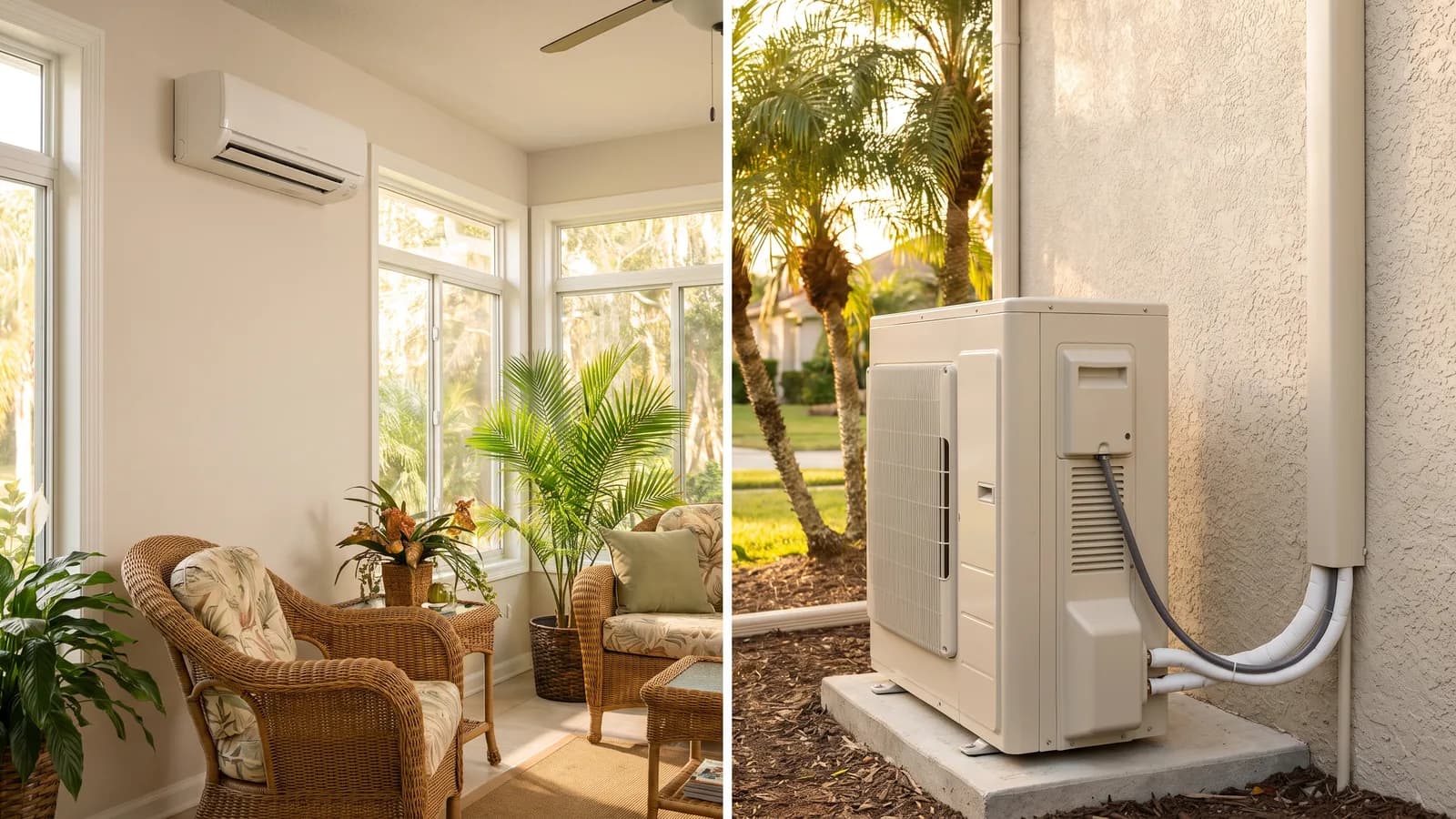
A ductless mini-split almost always needs a permit in Florida, usually a mechanical permit for the refrigerant work and an electrical permit for the new dedicated circuit. Installing a mini-split in Florida means adding an outdoor condenser, an indoor air handler, refrigerant lines, and power, all of which the building code treats as permitted work. It is not a plug-and-play appliance, and both the equipment and the electrical are inspected.
Key takeaways
- Mini-split installs in Florida typically require a mechanical permit and an electrical permit.
- The work involves refrigerant handling and a new dedicated circuit, both of which are inspected.
- Florida requires the installer to be a licensed contractor for this work in most jurisdictions.
- Permitting also documents the equipment for insurance, warranty, and resale.
Table of contents
- Do you need a permit for a mini-split in Florida?
- Which permits does a mini-split need?
- Can I install a mini-split myself in Florida?
- What does the inspection check?
- A quick example: a single-zone mini-split in Orange County
- How much does it cost and how long does it take?
Do you need a permit for a mini-split in Florida?
Yes. A mini-split (a ductless heat pump with an outdoor condenser and one or more indoor heads) is HVAC and electrical work, and Florida permits both. The mechanical permit covers the equipment and refrigerant lines, and the electrical permit covers the new circuit and disconnect. Even a single-zone unit is treated this way.
The reason is that a mini-split is a fixed system connected to the home's power and mounted to the structure, not a portable appliance. If you are comparing it with a full system swap, the same permitting logic in our HVAC and water heater permits guide applies.
Which permits does a mini-split need?
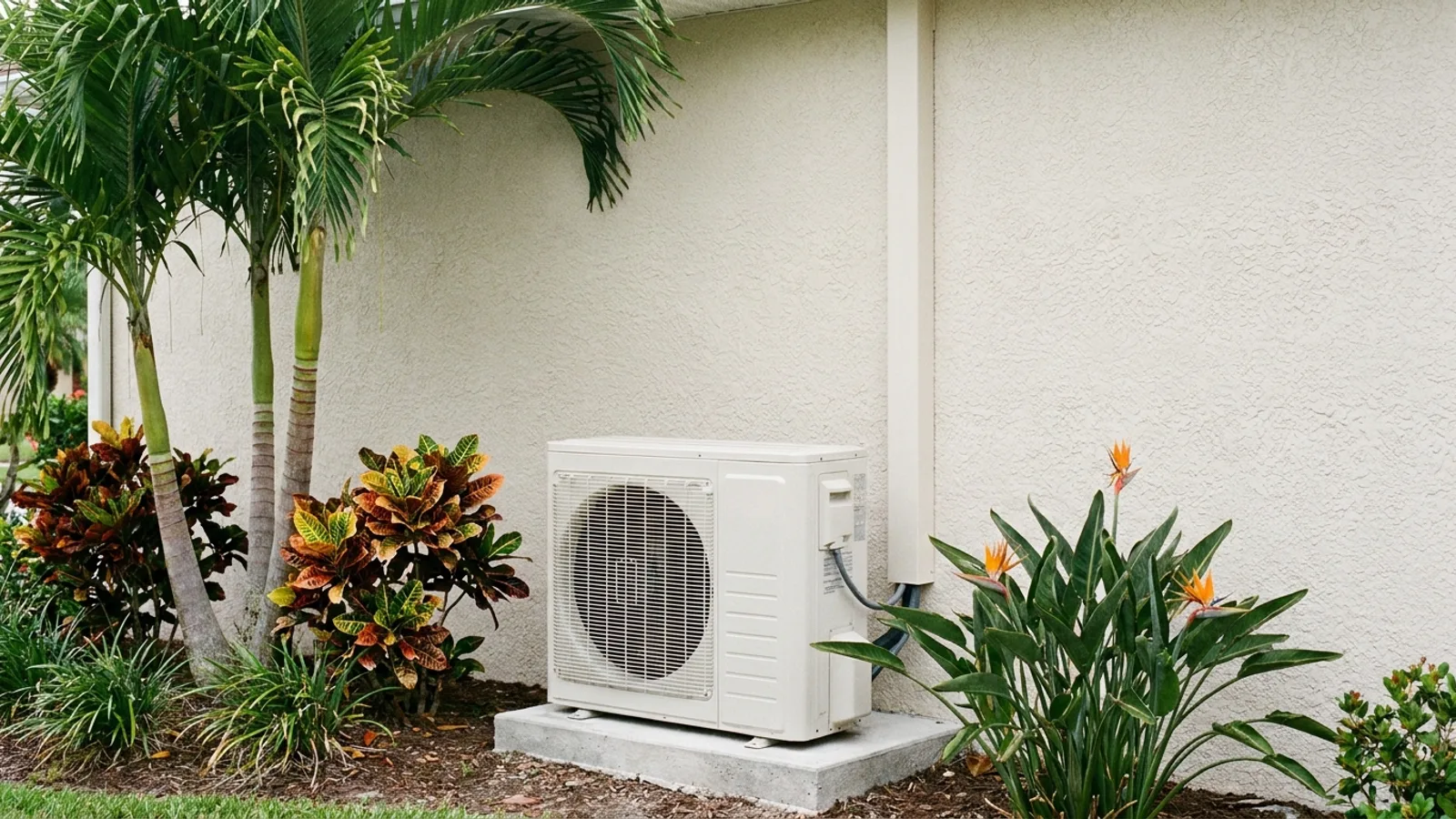
Most installations need two permits, sometimes combined into one application depending on the jurisdiction. The mechanical permit addresses the refrigerant and equipment; the electrical permit addresses the dedicated circuit, breaker, and disconnect.
| Work involved | Permit type |
|---|---|
| Condenser, air handler, refrigerant lines | Mechanical |
| New dedicated circuit and disconnect | Electrical |
| Mounting to an exterior wall in a wind zone | Reviewed with the mechanical permit |
If your home needs a panel change to add the circuit, that can bring in an electrical panel upgrade as well.
Can I install a mini-split myself in Florida?
As an owner-occupant, you can often pull permits under the owner-builder exemption, but the refrigerant work is the catch. Handling refrigerant generally requires EPA certification, and many jurisdictions expect a licensed mechanical contractor for that portion. In practice, most mini-splits are installed by licensed HVAC contractors who pull the permits and carry the certification.
If you want to understand the licensing line, our licensed contractor vs handyman guide explains who can legally do what. For the electrical side, a licensed electrician can pull that permit.
What does the inspection check?
Inspectors confirm the equipment is installed and supported correctly, the refrigerant lines are run properly, the electrical circuit and disconnect meet code, and the outdoor unit is anchored to resist wind. In Florida's wind-borne debris region, the mounting and condenser tie-down matter, because loose equipment becomes a projectile in a storm.
A clean inspection also protects your equipment warranty. Manufacturers frequently require a licensed, permitted installation for the warranty to hold, so skipping the permit can quietly void coverage.
A quick example: a single-zone mini-split in Orange County
A homeowner in Orange County adds a single-zone mini-split to cool a converted garage. A licensed HVAC contractor pulls a mechanical permit and an electrical permit, mounts and anchors the condenser, runs and charges the refrigerant lines, wires a dedicated circuit with a disconnect, and passes both inspections.

Total added time for permitting is small compared with the install itself, and the homeowner ends with documented, warrantied, inspected equipment.
Our take: Permit the mini-split. The refrigerant and electrical work are exactly the kind of hidden risk permitting is meant to verify, and an unpermitted HVAC install can void the warranty and complicate a future sale.
How much does it cost and how long does it take?
Permit fees for a mini-split vary by jurisdiction and are generally modest relative to the equipment. The bigger variable is scheduling inspections, which usually adds days, not weeks, to a straightforward install. To see current fees for your address, check with your building department or start with our free permit checker.
Keep the closed permit and the equipment paperwork with your home records. It is the documentation buyers, appraisers, and insurers ask for later.
If you are adding multiple indoor heads on one condenser, the permit scope grows with the number of zones and circuits, but the principle is unchanged: the mechanical and electrical work is inspected. Plan the condensate drainage as well, since a mini-split produces water that has to be routed away from the structure, and a poorly drained line is a common callback. None of this changes the core answer, which is that a mini-split is permitted HVAC and electrical work, and doing it by the book protects your equipment, your warranty, and your home records.