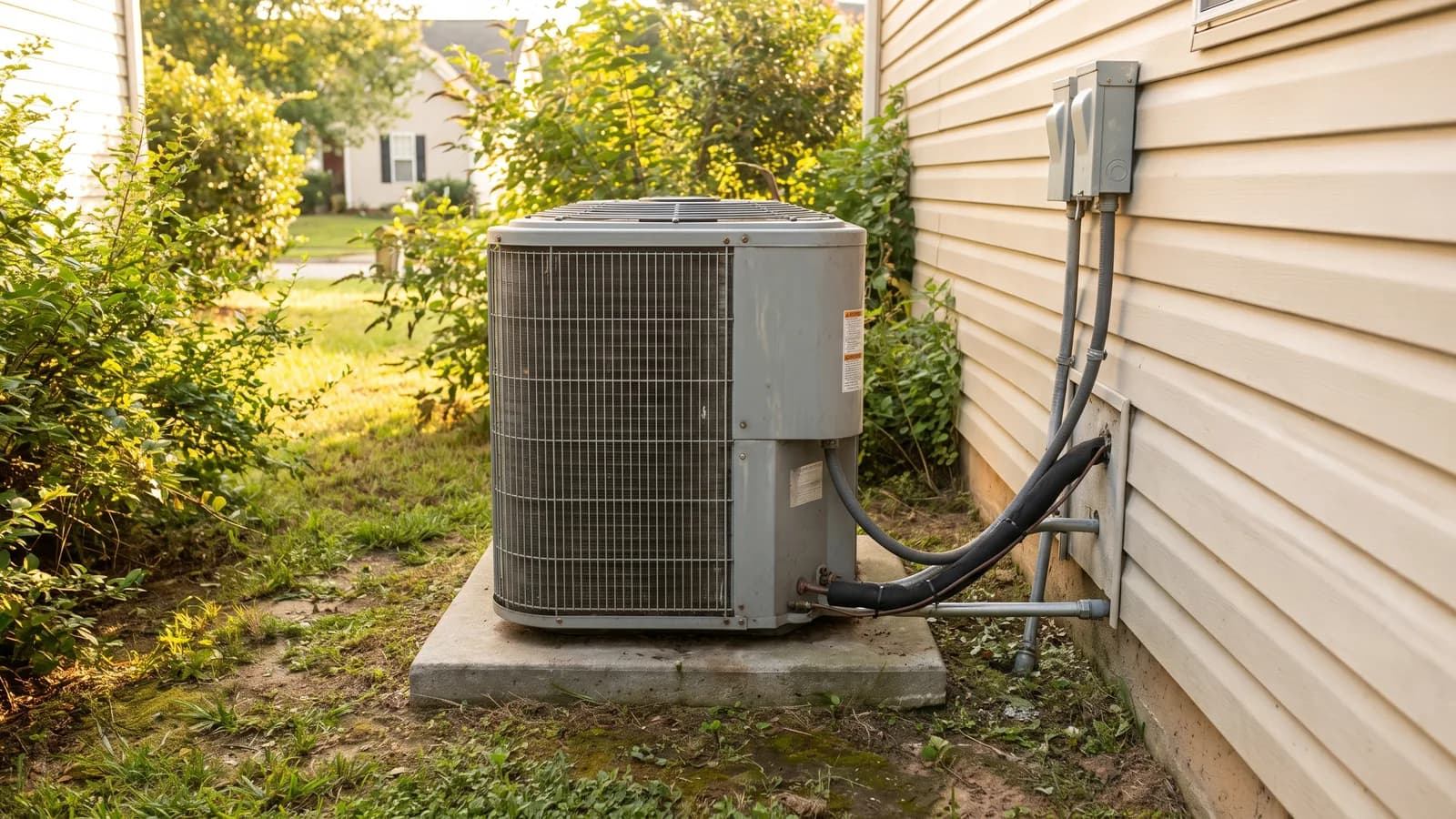
Replacing a heating or cooling system in North Carolina needs a permit. State law requires one for the installation, extension, alteration or general repair of any heating or cooling equipment system, and unlike the plumbing and electrical provisions beside it, that subsection carries no exception at all. The licensing statute draws a separate line, and it defines exactly what counts as a minor repair.
Key takeaways
-
NCGS 160D-1110(a) requires a permit for heating and cooling equipment work, with no exception written into that subsection.
-
Installation or replacement of condensing units, air handlers, gas furnaces, package units and boilers is licensed contracting work by statute.
-
Minor repairs and minor replacements are exempt from licensing, and the statute defines them as parts that need no change in energy source, fuel type, or routing or sizing of venting or piping.
-
The named parts are a compressor, coil, contactor, motor or capacitor. A whole system swap is not on that list.
-
A gas system brings the fuel gas code into scope alongside the mechanical work.
-
Do I need a permit to replace an HVAC system in North Carolina?
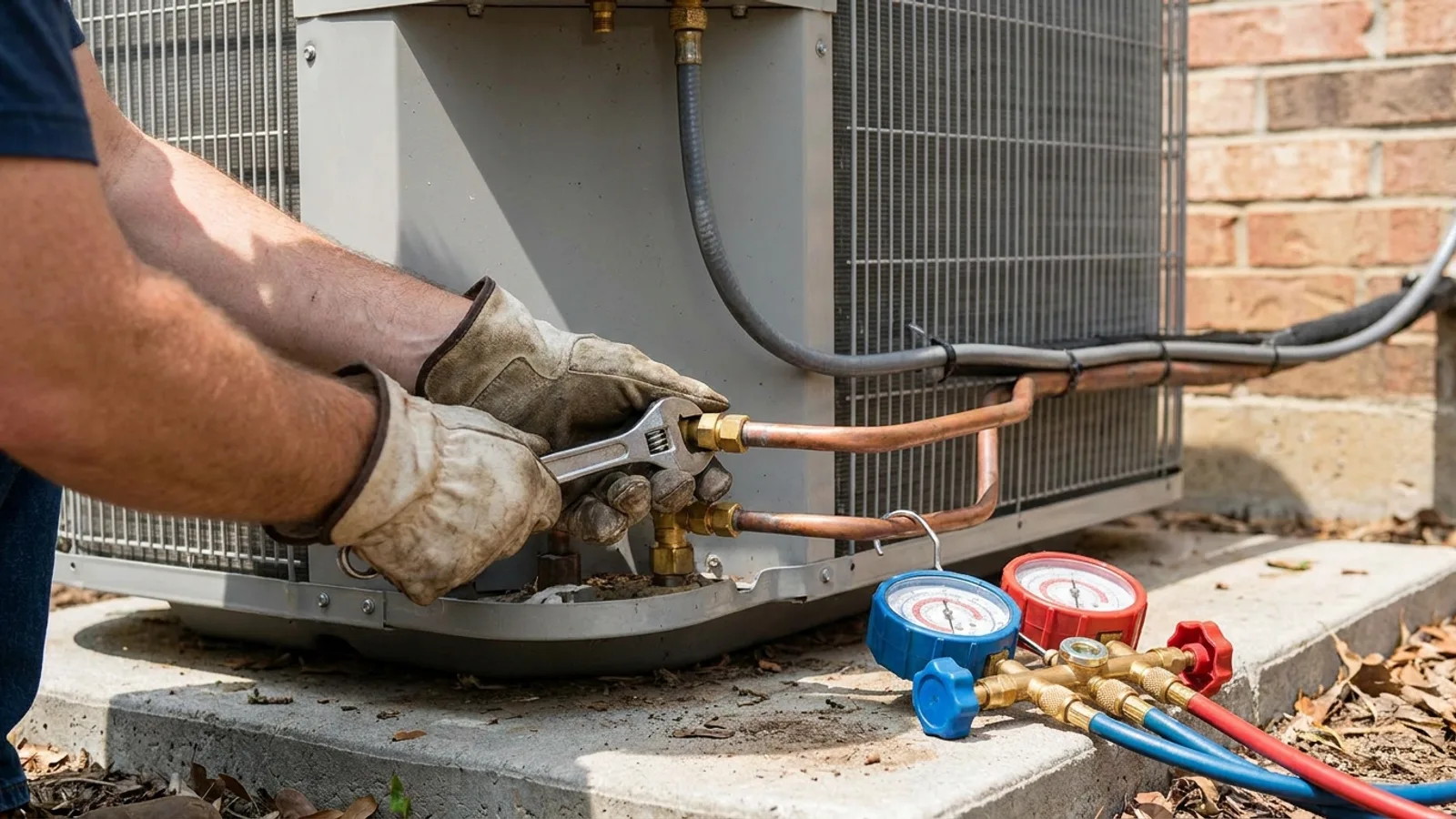
Do I need a permit to replace an HVAC system in North Carolina?
Yes. NCGS 160D-1110(a) provides that no person shall commence the installation, extension, alteration or general repair of any heating or cooling equipment system without first securing all permits required by the North Carolina State Building Code and any other State or local law.
The absence of an exception matters. That same statute writes narrow exceptions for plumbing, covering a replacement water heater in a one or two-family dwelling, and for electrical, covering lighting fixtures, receptacles, switches and an electric water heater connection. The heating and cooling subsection has no equivalent carve-out. Whatever else varies locally, a system replacement is permitted work.
Who is allowed to do the work?
A licensed contractor, in most real cases. NCGS 87-21(c) provides that the article applies to those who engage in the business of plumbing, heating or fire sprinkler contracting, and it names what that includes: the installation or replacement of condensing units, air handlers, gas furnaces, package units, boilers, water heaters, heat exchangers and whole-house water treatment systems.
Replacing your outdoor unit or your furnace is on that list explicitly. There is no homeowner exemption in this article of the kind the electrical article provides at NCGS 87-43.1(5a), which is a genuine asymmetry between the trades worth knowing before you plan a weekend project.
What counts as a minor repair?
The statute defines it, which is unusually helpful. The article does not apply to those who clean plumbing drains, or to those who make minor repairs or minor replacements to an already installed system of plumbing, heating or air conditioning.
Minor repairs or minor replacements mean the replacement of parts in an installed system which do not require any change in energy source, fuel type, or routing or sizing of venting or piping. The statute then names the parts: a compressor, coil, contactor, motor or capacitor.
| Work | Licensing position | Permit position |
|---|---|---|
| Replace a capacitor, contactor or motor | Minor replacement, outside the article | Confirm locally, often not required |
| Replace a compressor or coil in place | Named as a minor replacement part | Confirm locally |
| Replace the condensing unit or air handler | Named as covered contracting work | Permit required |
| Replace a gas furnace | Named as covered contracting work | Permit required, plus fuel gas |
| Change fuel type or reroute venting | Outside the minor repair definition entirely | Permit required |
Read the boundary carefully. The exemption is about swapping a part in a system that stays the same. Change the fuel, change the energy source, or resize or reroute the venting or piping, and you have left the definition regardless of what the part cost.
What does a gas system add?
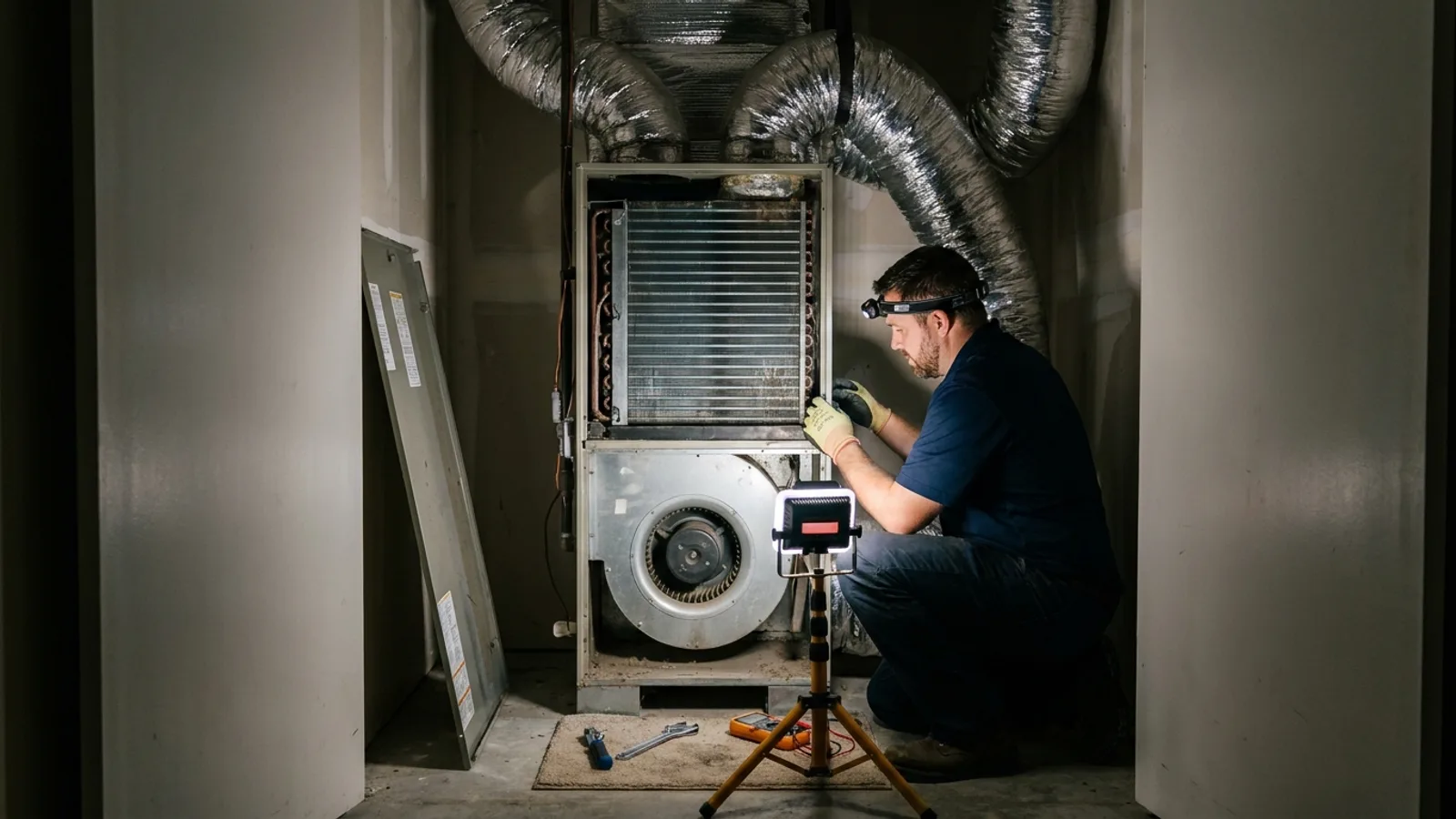
Another code and another inspection. Gas piping, connections, sizing, testing and venting fall under the fuel gas code rather than the mechanical code, so a gas furnace replacement commonly brings a second discipline into the review even when the equipment sits in the same place.
Venting is the item that turns a simple swap into a bigger job. Higher efficiency equipment often vents differently from what it replaces, and the moment the venting has to be resized or rerouted you are outside the minor repair definition and into full permitted, licensed work.
Which code edition applies?
The 2018 North Carolina codes, as things stand. The Office of State Fire Marshal's current codes page states that the 2018 codes, which include the mechanical, fuel gas and energy conservation codes, were effective from January 1, 2019 and are currently effective, and that they are based on the 2015 International Codes with North Carolina amendments. The 2024 code suite has been delayed.
Edition matters on HVAC because equipment efficiency and duct sealing requirements move between cycles. Ask your inspector which edition governs your permit rather than working from the newest published book.
What inspections will there be?
A mechanical rough-in where anything will be concealed, and a mechanical final once the system is complete and operating. North Carolina's Administrative Code defines rough-in as being made when the parts of the heating, ventilation or cooling system that will be hidden from view have been placed, but before any wall or ceiling finish or insulation is installed, and requires a final inspection for each trade after the permitted work is complete.
A like-for-like equipment change in an existing location may have nothing concealed and go straight to a final. A system change with new ductwork will not. What a North Carolina inspector checks covers the readiness definitions, and the inspection order guide explains why the trades gate each other.
Our take: get the scope written down before you accept a quote. The difference between a permitted, licensed system replacement and an exempt minor repair is defined in the statute, and a contractor who is vague about which one your job is may be planning to skip a permit you will later need to have existed.
What should I ask before scheduling?
Ask three things of the contractor: which licence they hold, whether they are pulling the permit, and whether the work changes the fuel, energy source, or the routing or sizing of any venting or piping. That last question decides whether you are inside the minor repair definition.
Then ask your department whether a mechanical permit is required for your specific scope and what inspections apply. Run the free permit checker for your project and county, and check the office details on the page for your North Carolina county. If the work touches the electrical service, the panel upgrade guide covers that side.