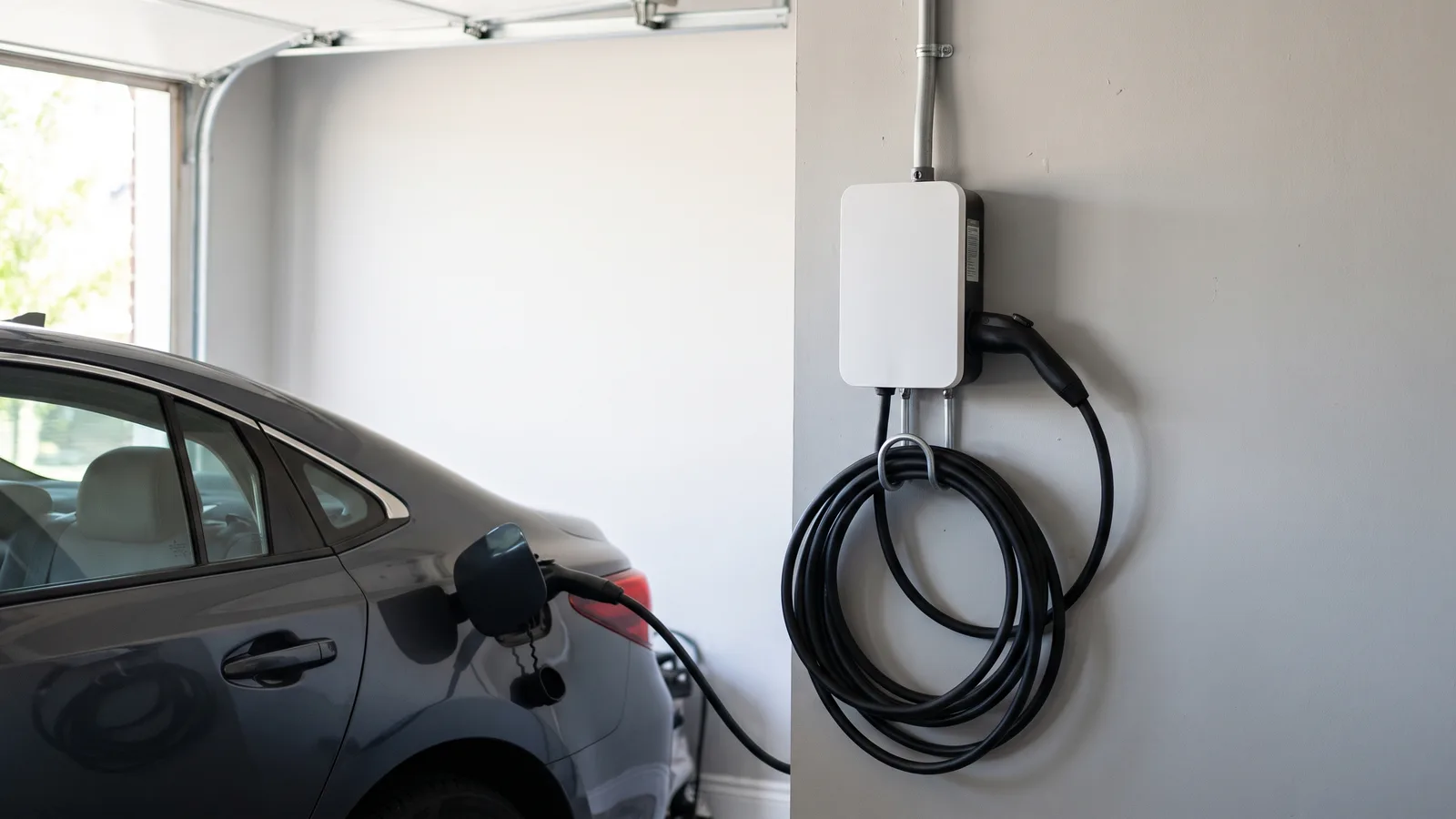
Installing a Level 2 EV charger at a Georgia home is permitted electrical work in most jurisdictions, because it adds a dedicated 240 volt circuit and often a panel change. Georgia sets no statewide list of work exempt from permits, so the requirement is written by your city or county rather than the state. Georgia Power tells its own customers plainly that installation may require an inspection and permit from the applicable city or county authority, and that obtaining permits is the customer's responsibility.
Key takeaways
-
A Level 2 charger runs at 208 or 240 volts on a dedicated circuit, which is new branch circuit work, and that is what triggers an electrical permit in most Georgia jurisdictions.
-
Plugging a Level 1 cord into an existing outlet is a different question from installing equipment, and the two get confused constantly.
-
Georgia has no statutory homeowner exemption for electrical contracting the way it does for general contracting, so ask who may pull the permit first.
-
Georgia Power offers a 150 dollar residential rebate per charger, and explicitly makes code and permit compliance the customer's responsibility.
-
What is the difference between Level 1 and Level 2 for permitting?
Do I need a permit to install an EV charger in Georgia?
For a hardwired or dedicated-circuit Level 2 charger, assume yes and confirm locally. Georgia's state amendments to the International Residential Code delete Chapter 1 "without substitution," and Chapter 1 is where the model code lists permits and exempt work. So Georgia publishes no statewide exemption you can point to, and no statewide requirement either. The answer lives in your jurisdiction's administrative procedures.
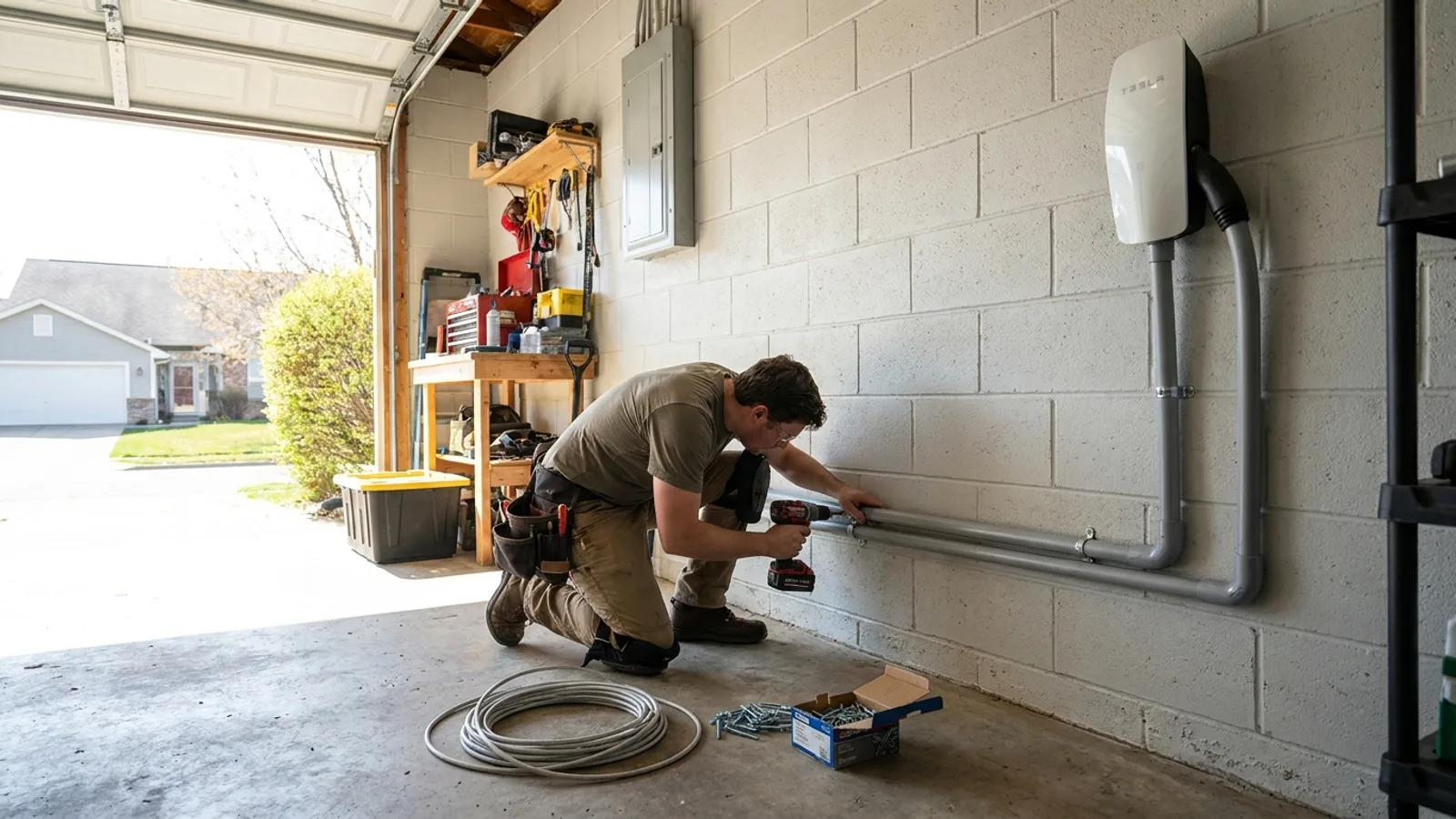
What is not in doubt is the nature of the work. A Level 2 installation adds a new circuit, usually a new breaker, sometimes a subpanel, and often exposes that the existing service cannot carry the load. Each is the kind of electrical work Georgia building departments permit and inspect.
What is the difference between Level 1 and Level 2 for permitting?
Whether you are using an outlet or installing equipment.
| Level 1 | Level 2 | |
|---|---|---|
| Supply | Standard 120 volt household outlet | Dedicated 208 or 240 volt circuit |
| Typical install | Plug the cord set in | New circuit, breaker, and hardwired or dedicated receptacle |
| Electrical work involved | None, if a suitable outlet already exists | New branch circuit, often panel or service work |
| Permit likelihood in Georgia | Low, because no work is being done | High, and treated as electrical work |
The test is simple. If an electrician has to add anything to your panel, you are in permit territory.
Who is allowed to do the work in Georgia?
A licensed electrical contractor, in most circumstances. Georgia's owner-builder exemption at O.C.G.A. 43-41-17(h) covers general contracting on property you own. It does not extend to the licensed trades, which are governed separately. O.C.G.A. 43-14-8 states that no person shall engage in the electrical contracting business as an electrical contractor without a valid license from the Division of Electrical Contractors, and unlike the general contracting statute it provides no express homeowner carve-out.
Read that carefully rather than broadly. The prohibition addresses engaging in the contracting business, so a homeowner wiring their own house is not directly covered, which leaves a local question: will your department issue a homeowner electrical permit for this work. The Georgia owner-builder guide sets out where the licensing line sits.
Which electrical code applies, and what did Georgia change?
The Georgia State Minimum Standard Electrical Code, which the Department of Community Affairs lists on its current state minimum codes page as the National Electrical Code, 2023 Edition, with Georgia amendments. Georgia's residential code deletes its own electrical part and substitutes this code, so the rules for your charger circuit are not in the residential book.
Georgia's packet revises definitions, branch circuits, feeders, outside branch circuits and feeders, services, and health care facilities, then ends. It does not amend the articles governing electric vehicle power transfer equipment, so the national requirements apply unchanged. One Georgia amendment still matters if your installation touches the service: the state exempts one and two-family dwellings from the surge protective device requirement at services and feeders.
Will my existing panel and service handle a charger?
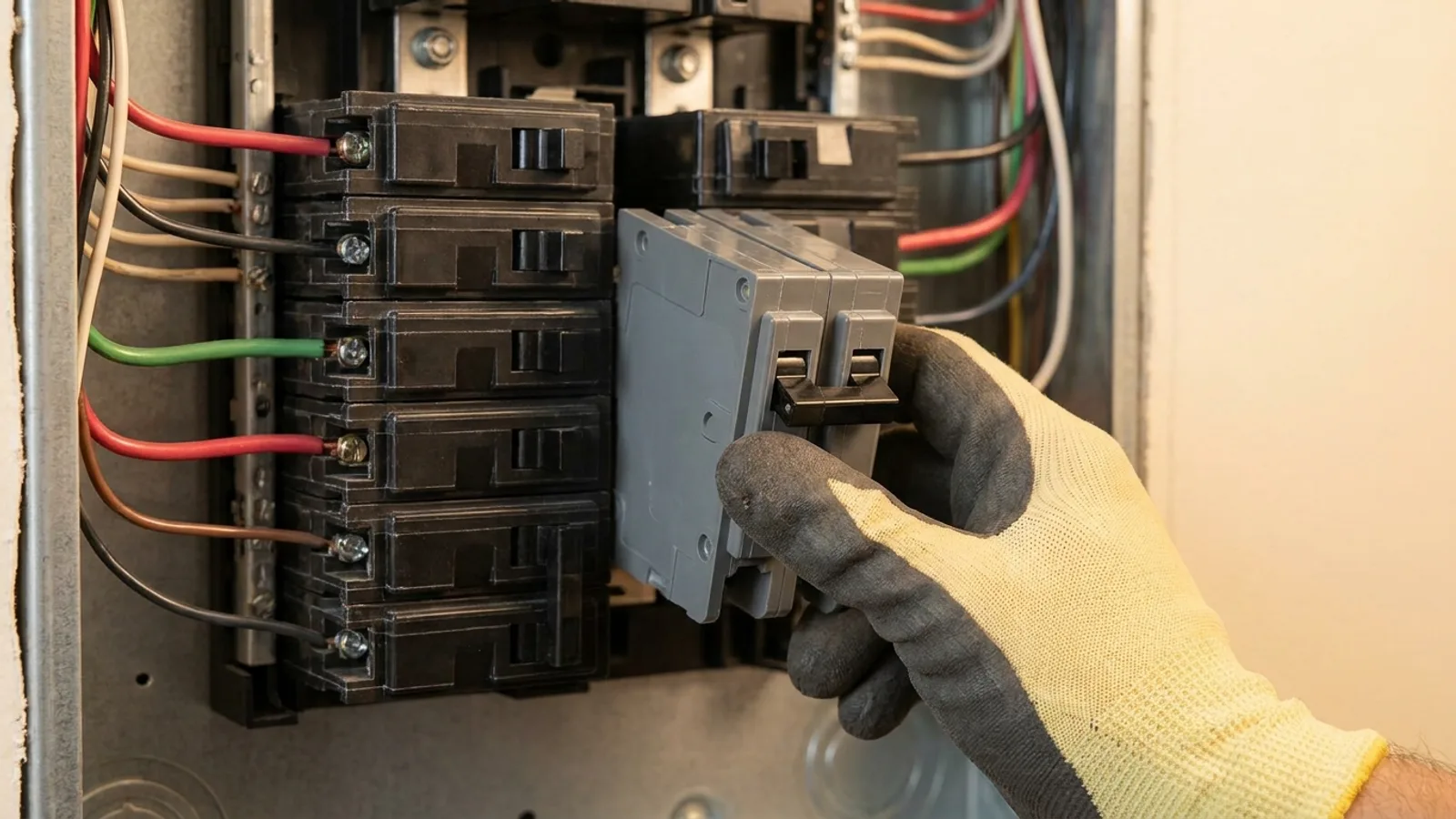
This is the question that decides your budget, and it should be answered before you buy equipment. A Level 2 charger is a large, sustained load added to a panel sized years ago for a different house. An electrician performs a load calculation for your specific service and panel, and the outcome determines whether you need a simple new circuit, a subpanel, a panel replacement, or a full service upgrade from the utility.
Get the load calculation first, then choose the charger, then pull the permit. Buying a large charger for a panel with no room to give it is the most common and most expensive way this project goes wrong. If a service or panel change is on the table, read the Georgia electrical panel upgrade guide and the electrical panel project page before committing.
Our take: the permit is the cheapest part of this project and the load calculation decides everything else. Homeowners who buy the charger first and call an electrician second end up with equipment their service cannot support, and no rebate or permit fixes that.
Does Georgia Power require anything, and is there a rebate?
Georgia Power does not permit or inspect the work, and says so. Its residential EV charger rebate terms require the customer to comply with all applicable city, county or state rules and to obtain and maintain all necessary permits before and during installation, and encourage customers to consult a qualified electrician about permitting and inspection.
The rebate is 150 dollars per unit, up to two chargers per account, for installations completed during the stated program year while funds remain. The charger must be a new wall or pedestal-mounted Level 2 unit on a dedicated 208 or 240 volt circuit not shared with other equipment, and mobile connectors are excluded. Self-installed chargers may still qualify with a photo and a signed attestation, a useful reminder that a utility rebate is not a code approval and does not replace a permit or an inspection.
What does the permit cost, and what should I do first?
Fees vary by jurisdiction, and some actively discount this work. Gwinnett County's published fee schedule includes a five percent building permit fee reduction for EV charger unit installations for residential developments, alongside the same reduction for solar. A small saving, but it signals a county that has already thought about this project, which usually means a defined process.
Ask your department three things: is an electrical permit required for a Level 2 charger, what is the fee, and what inspections are involved. Most will describe a rough inspection if anything is concealed and a final once the equipment is energized, and what a Georgia inspector checks covers the electrical items. Then run the free permit checker for your county, and check the details for your Georgia county before scheduling the work.