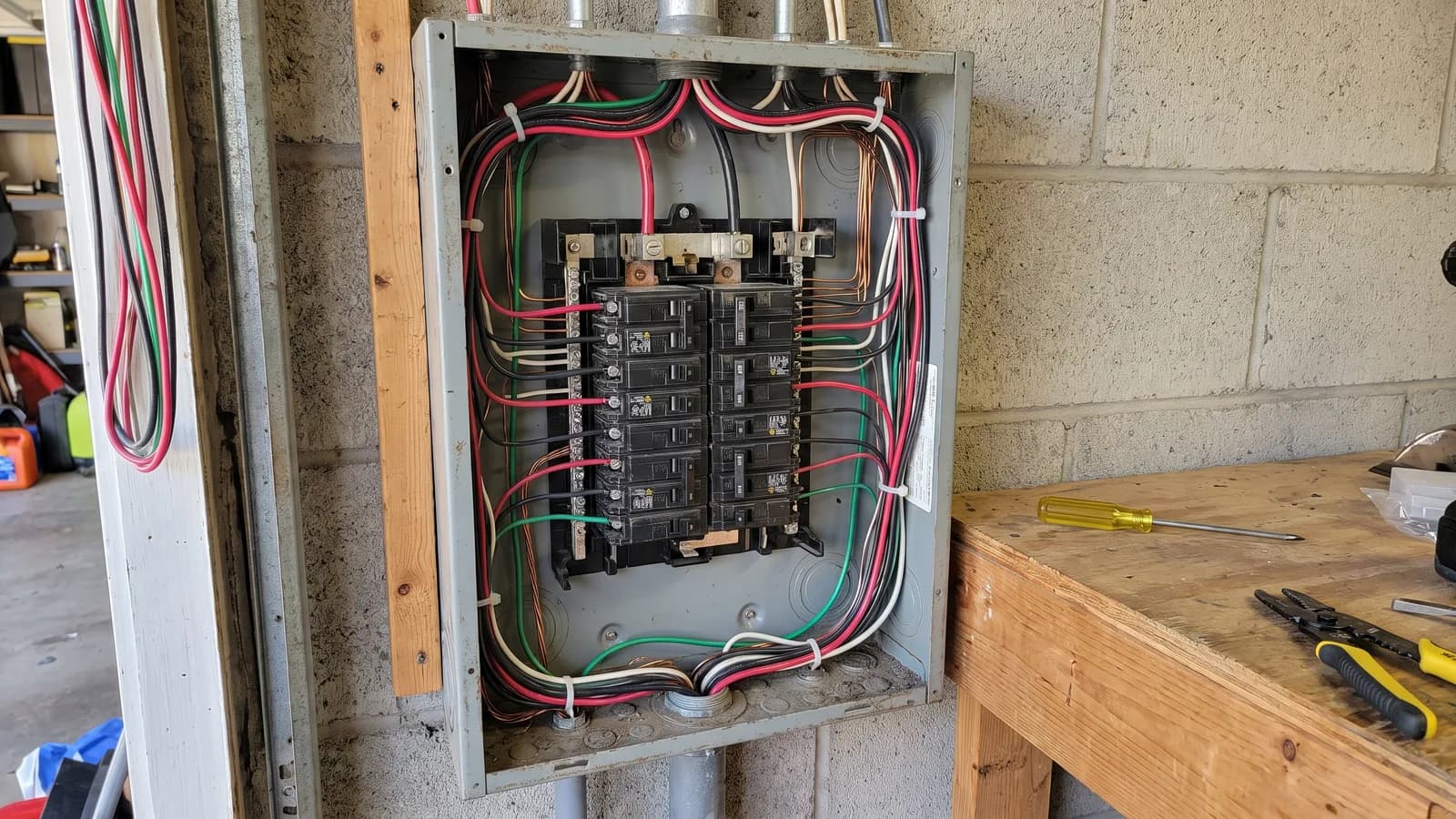
Upgrading or replacing an electrical panel in Georgia needs a permit and an inspection in essentially every jurisdiction that enforces the codes. A panel change touches the service entrance, the grounding and bonding system and every branch circuit in the house, which is exactly the work permit systems exist to catch. Georgia's electrical code is the National Electrical Code, 2023 Edition, with Georgia amendments.
Key takeaways
-
A service panel replacement or upgrade is permitted electrical work. Treat "no permit needed" advice as wrong until your building department says otherwise in writing.
-
Georgia's mandatory electrical code is the National Electrical Code, 2023 Edition, with Georgia amendments, adopted by the Department of Community Affairs.
-
Georgia deletes Part VIII, Electrical, from the residential code and substitutes the Georgia State Minimum Standard Electrical Code, so a house's wiring rules are not in the IRC.
-
O.C.G.A. 43-14-8 requires a license to engage in electrical contracting and contains no express homeowner exemption like the general contracting owner-builder rule.
-
A panel upgrade usually involves your electric utility as well as the building department, because the service drop or lateral has to be disconnected and reconnected.
-
Do I need a permit to replace an electrical panel in Georgia
Do I need a permit to replace an electrical panel in Georgia
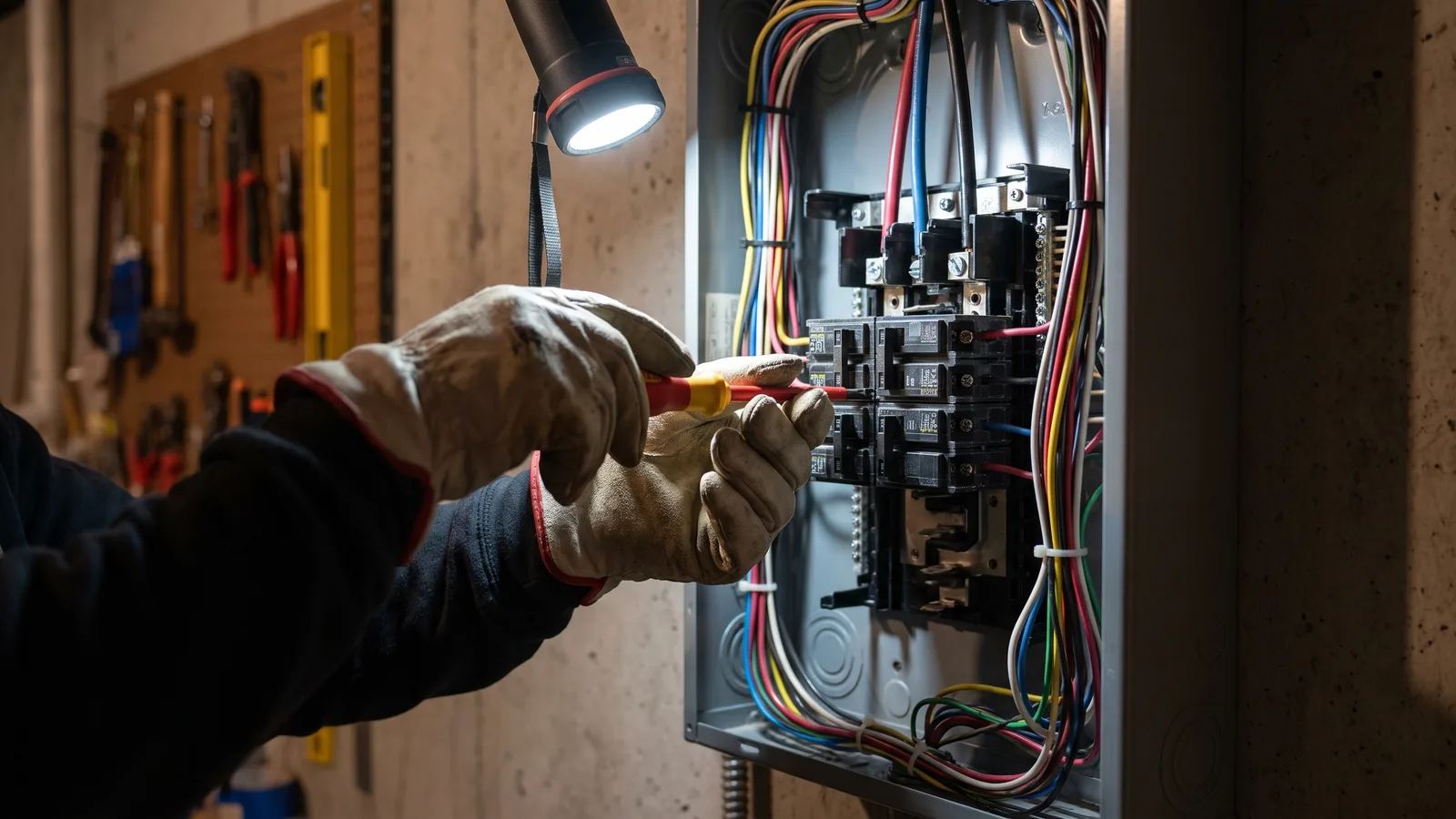
Yes, in any Georgia jurisdiction that enforces the state minimum codes, which is most of the populated state. A panel replacement is not a like-for-like appliance swap. It re-terminates every circuit in the house, it typically alters the grounding and bonding arrangement, and it often changes the service rating.
Georgia has no statewide list of work exempt from permits, because the state amendments delete IRC Chapter 1, where that list normally lives. So the exemption question is answered locally, and no local jurisdiction treats a service panel as minor work.
What code applies
Georgia adopts the National Electrical Code, 2023 Edition, with Georgia amendments as a mandatory state minimum standard code. The Georgia amendments to the residential code also delete Part VIII, Electrical, entirely and substitute the Georgia State Minimum Standard Electrical Code.
The practical effect is that your electrician is working to the NEC, not to a residential code chapter, and a jurisdiction may have filed local amendments on top. Local amendments have to be submitted to the Department of Community Affairs for review and filed after adoption, which gives you a way to check what your jurisdiction changed.
Can a homeowner pull an electrical permit in Georgia
This is where Georgia surprises people. The owner-builder exemption in O.C.G.A. 43-41-17(h) covers general contracting, not the licensed trades. Electrical sits in a different statute.
O.C.G.A. 43-14-8 provides that no person shall engage in the electrical contracting business as an electrical contractor without a valid license from the Division of Electrical Contractors, and it contains no express homeowner exemption. The statute is framed around engaging in the contracting business, so how a homeowner working on their own house is treated is decided in practice by the local building department.
The honest answer is that it varies. Some Georgia jurisdictions issue a homeowner electrical permit for an owner-occupied residence. Others require a licensed electrical contractor to pull it. Ask before you plan the work, and do not assume the owner-builder rule you read about carries across.
| Work | Who can normally pull the permit |
|---|---|
| Whole-house remodel as general contractor | You, under the 43-41-17(h) owner-builder exemption |
| Service panel replacement | Usually a licensed electrical contractor, confirm locally |
| Adding a branch circuit | Usually a licensed electrical contractor, confirm locally |
| Replacing a light fixture or switch | Normally no permit, but confirm locally |
Why the utility is involved too
A panel upgrade almost always requires the power to the house to be cut at the service point and restored afterward, and if you are increasing the service size the utility may need to change the service drop, the lateral or the meter base.
That makes the sequence matter. In most Georgia jurisdictions the pattern is: permit issued, work performed, building department performs the electrical inspection, the department releases the work to the utility, then the utility reconnects. An inspection that fails does not just cost a re-inspection fee, it can leave a house without power overnight.
Ask your electrician who is coordinating with the utility and what the release process looks like in that jurisdiction, because it differs.
What the inspector checks
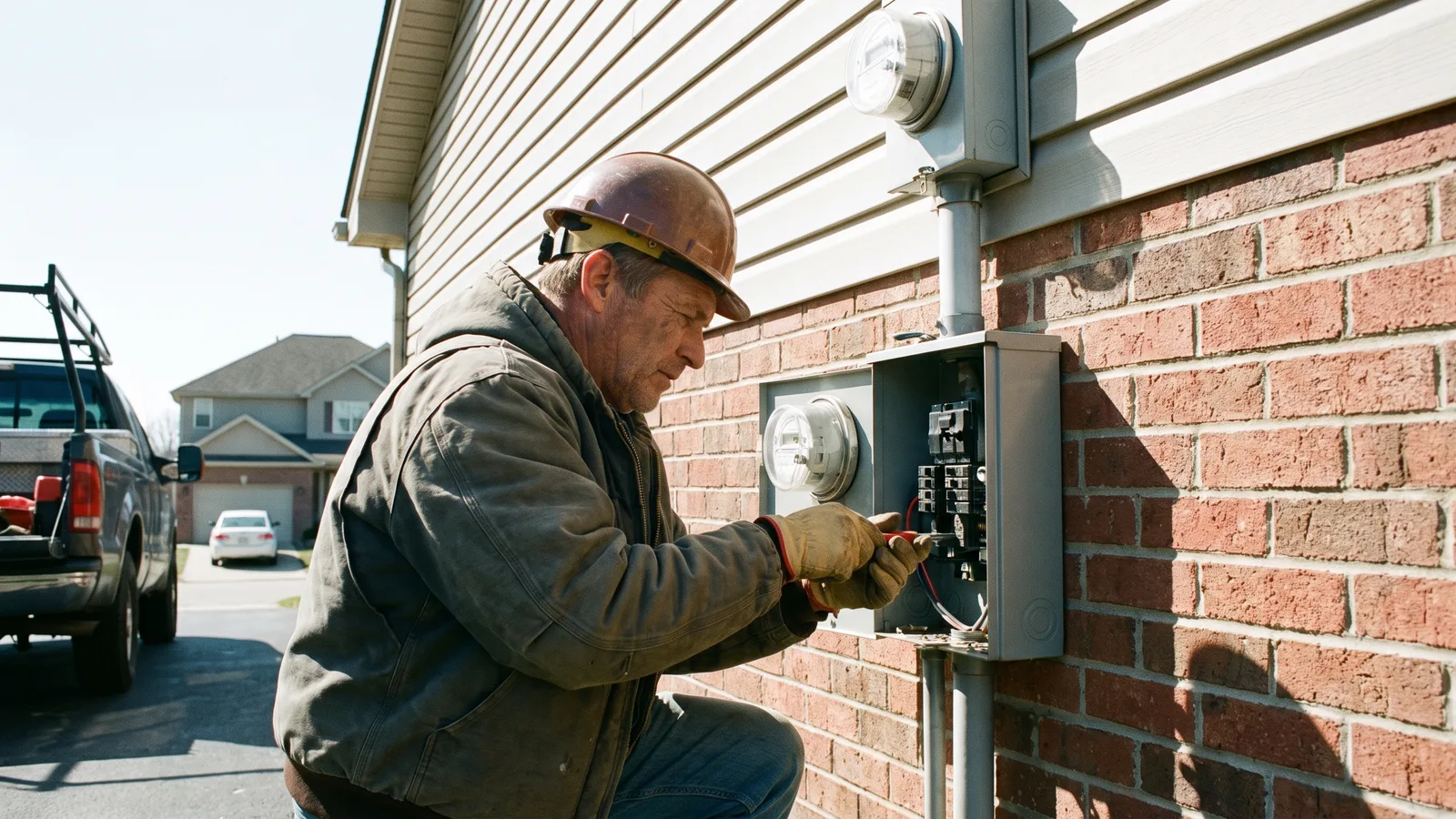
A service inspection is detailed. Expect attention to the grounding electrode system and its conductors, the separation of grounded and grounding conductors at the panel, bonding of the water and gas piping systems, conductor sizing and overcurrent protection, working clearance in front of the panel, breaker compatibility with the panel's listing, weatherproofing at the service entrance, and correct labeling of the circuit directory.
Two things fail more often than the rest: working clearance, because panels get installed in closets and behind shelving, and mismatched breakers, because a breaker that physically fits is not necessarily one listed for that panel.
Our take: this is the single worst project to do without a permit. Unpermitted panel work is invisible until there is a fire, an insurance claim, or a home sale, and it is the first thing a buyer's inspector photographs. The permit cost is trivial next to a denied claim.
What it costs to skip the permit
An unpermitted panel upgrade tends to surface at the worst moment. Buyers' inspectors flag panels routinely. Insurers ask about electrical work after a fire. And any future permit on the property can prompt the department to ask about work it never saw.
Correcting it usually means an after-the-fact permit, an inspection of work that is now closed up, and sometimes partial removal of finishes so the inspector can see connections. Where the original installer is long gone, the owner absorbs all of it.
What to do next
- Confirm the department that permits your address, which is not always the city in your mailing address.
- Ask whether that jurisdiction issues homeowner electrical permits or requires a licensed electrical contractor.
- Ask how the utility disconnect and reconnect is coordinated and who initiates it.
- Check whether the jurisdiction has filed local amendments to the electrical code.
- Plan for the house to be without power for part of a day.
- Run your project through the free permit checker, and see the electrical panel project page for typical documents and inspections.
Related reading: the Georgia permit overview explains what needs a permit in the first place, and the Georgia coverage page lists the counties and cities we cover. For everything assembled for your specific address, there is the Permit Prep Pack.