
Installing a Level 2 EV charger at home in Florida usually requires a permit. A Level 2 charger runs on a dedicated 240-volt circuit, which is electrical work that most Florida jurisdictions require to be permitted and inspected. Because it draws significant power, the circuit, wiring, and connection must be sized and installed correctly, so treat it as permitted electrical work.
Key takeaways
- A Level 2 home EV charger usually requires an electrical permit in Florida because it is a dedicated high-load circuit.
- The installation must be sized to your electrical panel's capacity, which sometimes reveals the need for a panel upgrade.
- EV charger work is generally excluded from the HB 803 exemption because it is electrical work.
- A licensed electrician should typically pull the permit and perform the installation.
Table of contents
- Do I need a permit for an EV charger in Florida
- Why does a home charger need a permit
- What about a standard plug-in Level 1 charger
- Will I need a panel upgrade
- EV charger charging levels compared
- A worked example: a garage charger in Orange County
- Does HB 803 cover EV charger installation
- What should I ask my electrician
Do I need a permit for an EV charger in Florida
In most Florida jurisdictions, yes. A Level 2 charger requires a dedicated 240-volt circuit, and installing a new high-load circuit is electrical work that building departments generally require to be permitted and inspected.
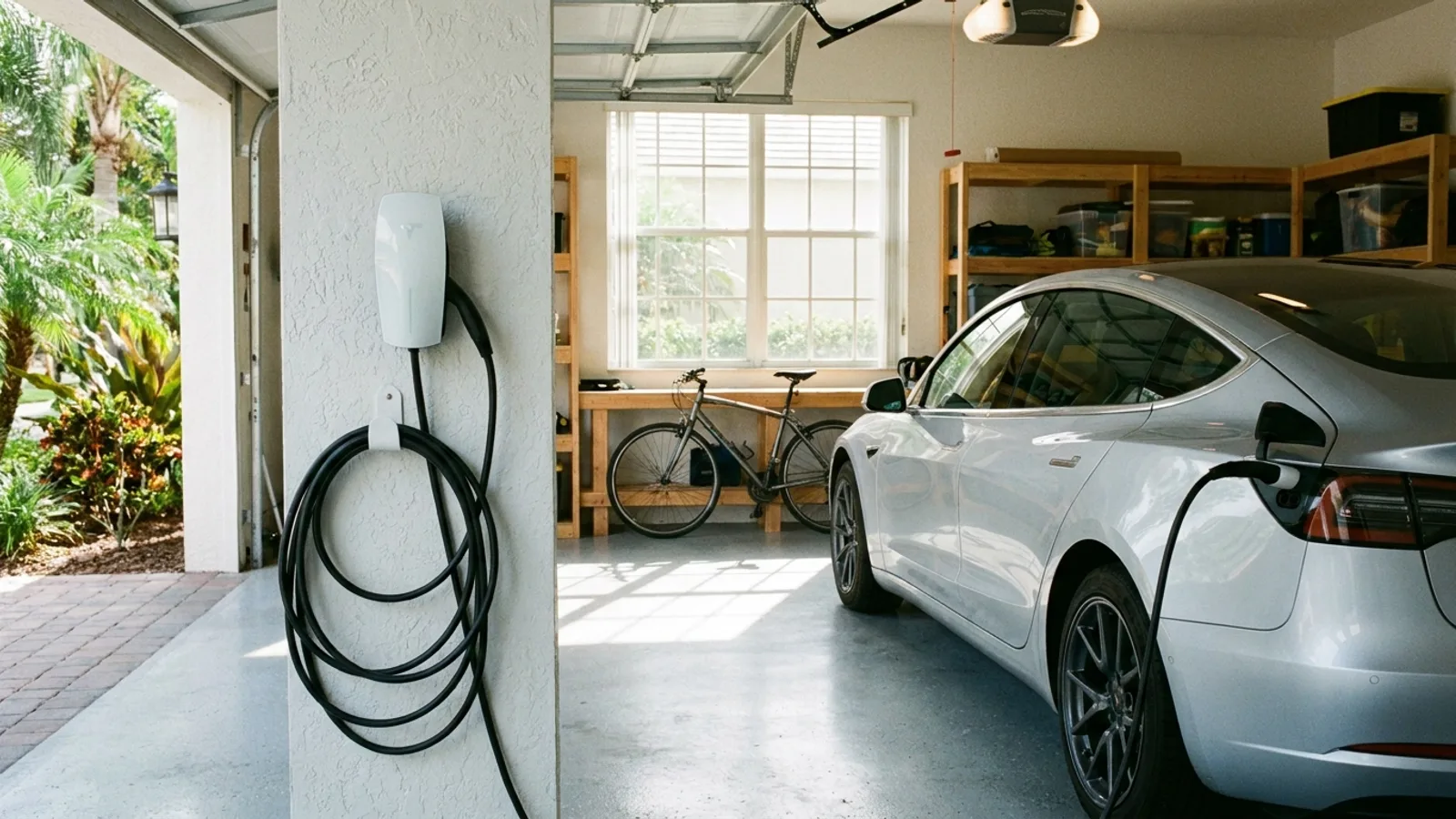
The permit confirms the circuit is sized correctly, the wiring is rated for the load, and the connection is safe. Because EV chargers draw a lot of power for long periods, getting this right matters for safety. Use the permit checker to frame the project.
Why does a home charger need a permit
A Level 2 charger adds a substantial continuous load to your electrical system, and an undersized circuit or wrong wire gauge can overheat. Permitting exists to catch exactly those errors before they become a fire risk.
The inspection confirms the breaker, wire, and connection all match the charger's requirements and your panel's capacity. Our guide on electrical panel upgrades covers the related work when the panel cannot handle the new load.
What about a standard plug-in Level 1 charger
A Level 1 charger that plugs into an existing standard outlet generally does not require a permit, because you are using an existing circuit rather than installing a new one. The difference is whether new electrical work is being done.
If you install a new outlet or circuit for charging, even a 120-volt one, that new work can require a permit. The trigger is the electrical work, not the car. When in doubt about a new circuit, confirm with your department.
Will I need a panel upgrade
Sometimes. A Level 2 charger's load has to fit within your panel's capacity, and older or heavily loaded panels may not have room, which can require a panel upgrade before the charger can be added. The electrician assesses this during planning.
If a panel upgrade is needed, it is its own permitted electrical project. Our electrical panel project page summarizes that work, and our guide on standby generators covers another common panel-related upgrade.
EV charger charging levels compared
| Level | Voltage | New circuit needed | Permit outlook |
|---|---|---|---|
| Level 1 plug-in | 120 volt, existing outlet | No | Usually none |
| Level 1 new outlet | 120 volt, new circuit | Yes | May require a permit |
| Level 2 | 240 volt, dedicated circuit | Yes | Usually required |
A worked example: a garage charger in Orange County
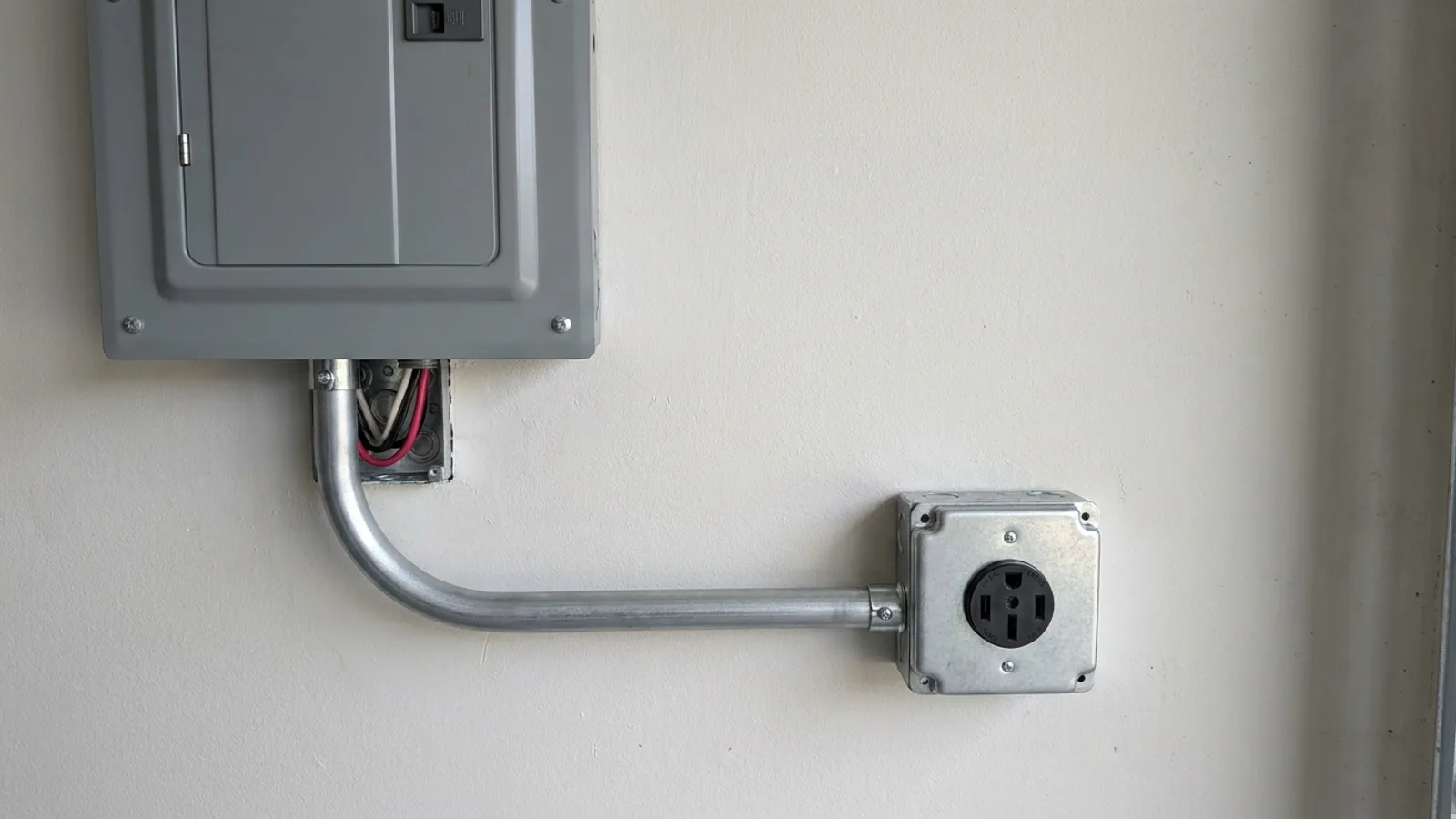
Consider a homeowner in Orange County installing a Level 2 charger in the garage. A licensed electrician checks the panel capacity, pulls an electrical permit, runs a dedicated 240-volt circuit, mounts the charger, and schedules the inspection.
The inspector confirms the breaker size, wire gauge, and connection are correct for the charger and the panel. Because the panel had spare capacity, no upgrade was needed, but the electrician confirmed that before starting. If capacity had been short, a panel upgrade would have come first.
Does HB 803 cover EV charger installation
No. The HB 803 $7,500 exemption excludes electrical work, and an EV charger installation is electrical work, so it does not qualify for that exemption. Our guide on whether HB 803 covers electrical work explains the exclusion in detail.
This means you should plan for a permit regardless of the charger's cost. The exclusion is about the type of work, not the price.
What should I ask my electrician
Ask whether the electrician is licensed, whether they will pull the permit, whether your panel has capacity, and whether the circuit will be sized for the charger. A licensed electrician pulling the permit keeps responsibility for the safe installation with them.
Confirm you will receive the permit number and that the final inspection will be scheduled. That documentation protects you and confirms the high-load circuit was installed correctly.
Our take: EV chargers are a fast-growing home project, and the temptation to treat one as a simple appliance install is real. It is not. It is a large dedicated circuit, so permit it, size it to your panel, and have it inspected.