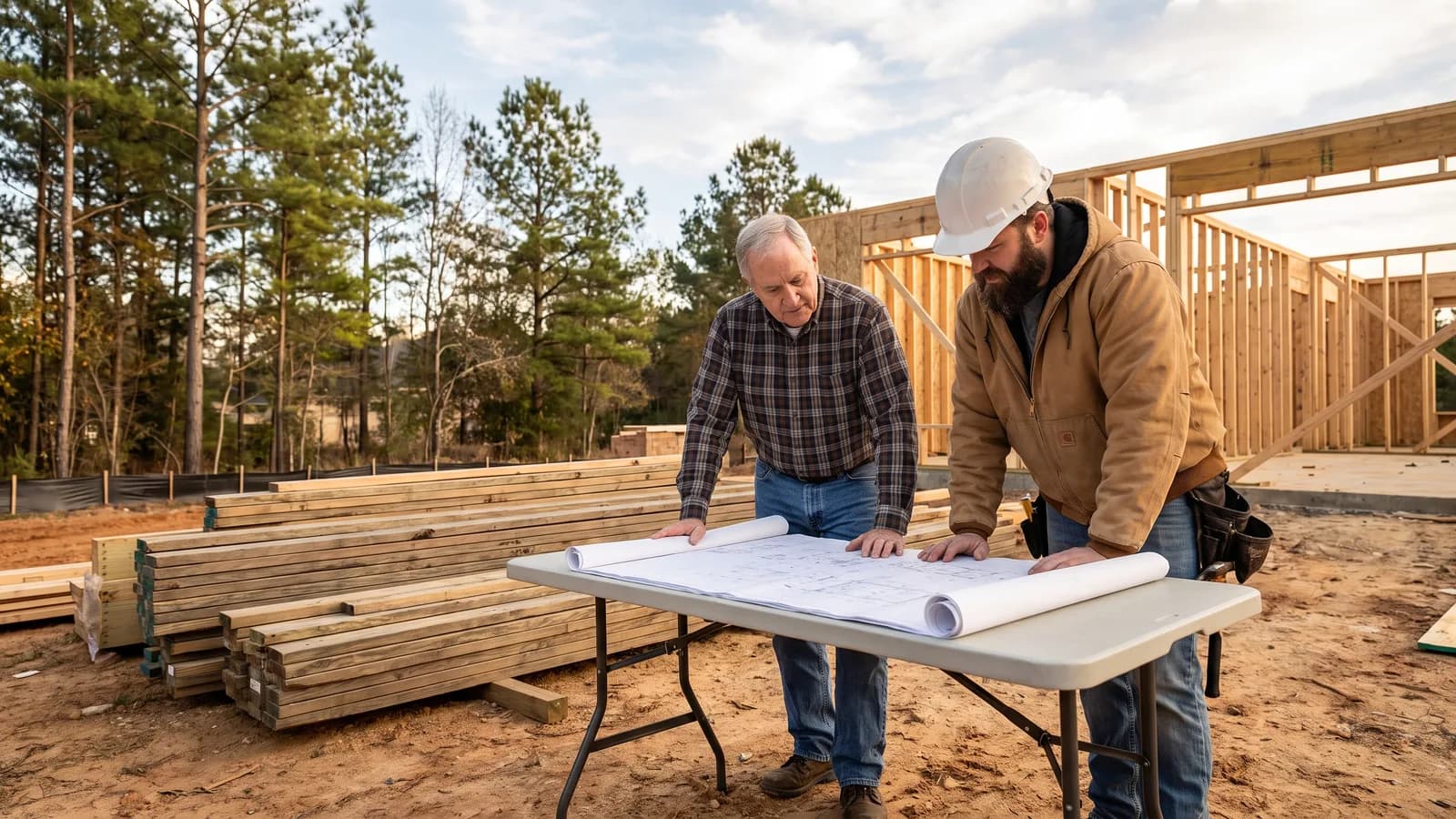
North Carolina writes far more of the permit process into statute than most states do. The permit requirement, the expiration clocks, the rule on changing plans, the inspector's right of entry, and the certificate that lets you move in are all in NCGS Chapter 160D, Article 11. That makes the process unusually predictable across the state, and it means a few specific things are legal obligations rather than local preferences.
Key takeaways
-
NCGS 160D-1110 requires permits before construction, plumbing, heating and cooling, and electrical work, with only narrow exceptions that all require a licensed tradesperson.
-
Every local government must provide inspection services under NCGS 160D-1102, so somewhere always has jurisdiction over your parcel.
-
NCGS 160D-1113 requires inspectors to make as many inspections as necessary, and gives them a right of entry at reasonable hours on presentation of proper credentials.
-
You cannot occupy until the certificate of compliance issues. Under NCGS 160D-1116, occupying without one is a Class 1 misdemeanor.
-
Stop orders can be appealed to the State Fire Marshal within five days under NCGS 160D-1114.
-
The certificate of compliance is the thing that lets you move in

What needs a permit in North Carolina
NCGS 160D-1110 requires all permits required by the North Carolina State Building Code before any of four categories of work: construction, reconstruction, alteration, repair, movement, removal or demolition of a building or structure; installation, extension or general repair of plumbing; installation, extension, alteration or general repair of heating or cooling equipment; and the same for electrical wiring, devices, appliances or equipment.
There are narrow exceptions for replacing a water heater and for replacing lighting fixtures, receptacles and switches, but every one of them requires the work to be done by a licensed tradesperson. They are not do-it-yourself exemptions, which is the most misread point in North Carolina permitting. Our water heater guide sets out the exact conditions.
The sequence, and what the statute fixes
Local procedures vary in their paperwork, but the spine is statutory.
- Identify your jurisdiction. Every local government must provide inspection services, but it may do so through its own department, a joint department, a contract with another unit, or by having the county inspect inside a city. See finding the right building department.
- Apply. For work costing forty thousand dollars or more, NCGS 87-14 conditions issuance on proof of licensure or a claimed exemption, plus workers compensation coverage.
- Plan review, then issuance.
- Build, without deviating. Changes need written approval first, under NCGS 160D-1112.
- Inspections as the work progresses, under NCGS 160D-1113.
- Final inspection and certificate of compliance, under NCGS 160D-1116, before anyone occupies.
| Stage | What NC statute fixes |
|---|---|
| Before work | Permits required, 160D-1110 |
| At application over $40,000 | Licensure proof and workers comp, 87-14 |
| After issuance | Six month and 12 month expiration clocks, 160D-1111 |
| During construction | Written approval for changes, 160D-1112 |
| During construction | Inspections and right of entry, 160D-1113 |
| If work is stopped | Appeal to the State Fire Marshal in five days, 160D-1114 |
| At completion | Certificate of compliance before occupancy, 160D-1116 |
Inspections, and the owner-builder catch
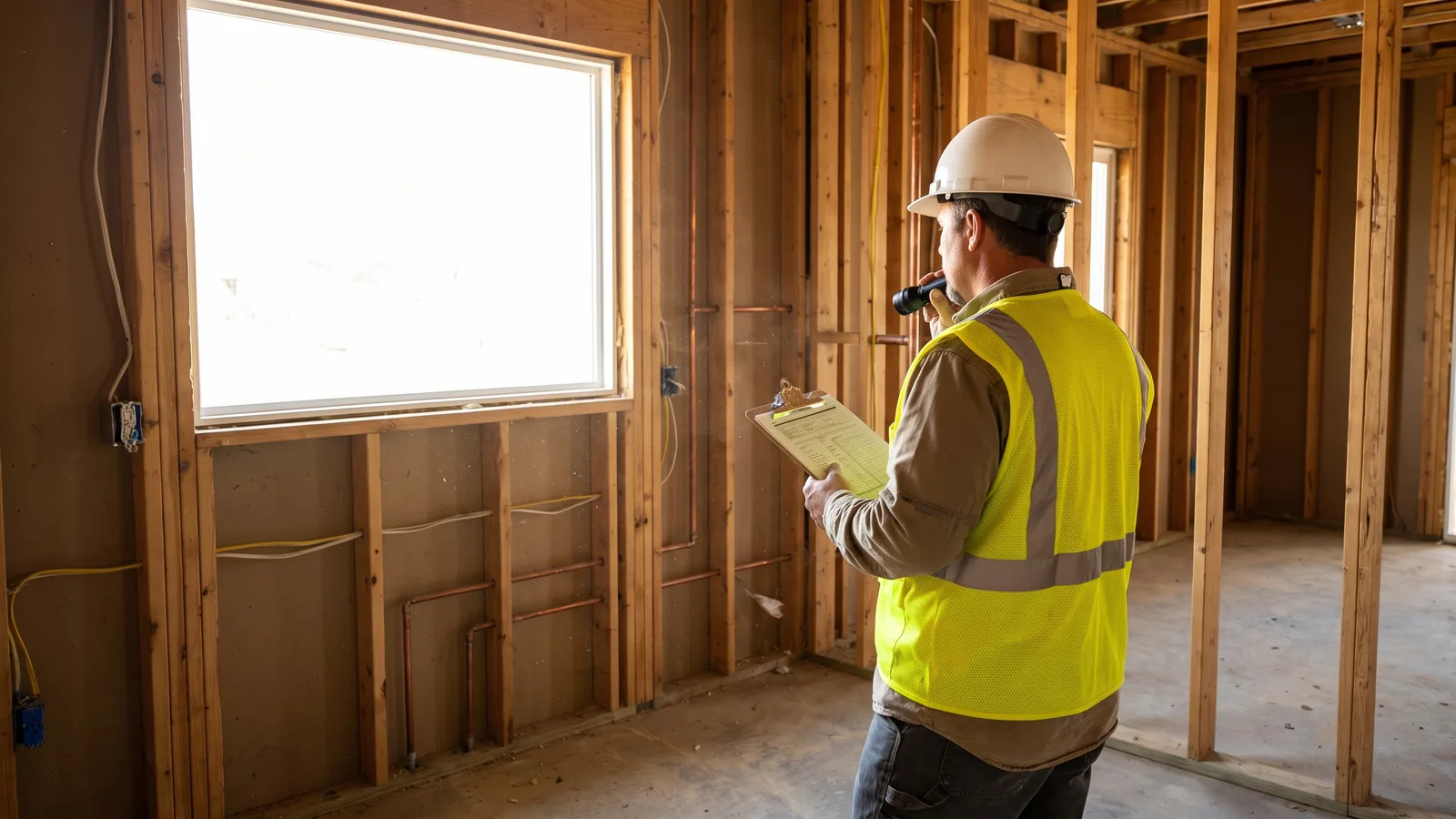
NCGS 160D-1113 requires local inspectors to make as many inspections as necessary to satisfy themselves that work is being done according to applicable law and the terms of the permit, and gives inspection department members a right to enter any premises within the department's jurisdiction at all reasonable hours on presentation of proper credentials.
The provision then adds a condition that owner-builders need to plan around. Where a building permit has been obtained by an owner exempt from licensure under NCGS 87-1(b)(2), no inspection shall be conducted without the owner being present, unless the plans for the building were drawn and sealed by an architect licensed under Chapter 83A.
If you claimed the owner exemption, every inspection has to fit your schedule. That is a real constraint on a working homeowner, and it is one of the practical arguments for having an architect seal the plans.
The certificate of compliance is the thing that lets you move in
This is the provision most worth knowing, and the one with actual criminal exposure attached.
Under NCGS 160D-1116, at the conclusion of all work under a building permit the inspector makes a final inspection and, if the work complies, issues a certificate of compliance. No new building may be occupied, no addition or enlargement may be occupied, and no altered or moved building may be occupied, until the inspection department has issued it.
A temporary certificate of occupancy is available where the inspector finds the building may safely be occupied before final completion, for a stated period and for all or part of the building.
And subsection (c) is unambiguous: any person who owns, leases or controls a building and occupies it, or allows occupancy, before a certificate of compliance or temporary certificate has issued is guilty of a Class 1 misdemeanor. Moving in early is not a paperwork problem in North Carolina.
If you are issued a stop order
You have a short, specific appeal route. Under NCGS 160D-1114, the owner or builder may appeal a stop order involving an alleged violation of the North Carolina State Building Code, or an approved local modification of it, to the State Fire Marshal or their designee within five days after the order is issued. Notice of appeal must be given in writing to the State Fire Marshal, with a copy to the local inspector, and the Fire Marshal promptly investigates.
Five days is short. If you receive a stop order and believe it is wrong, get the written appeal out rather than trying to resolve it informally first.
Our take: North Carolina's process is more predictable than most states because so much of it sits in statute rather than in each jurisdiction's ordinance. Two things deserve your attention above the rest: get written approval before deviating from the approved plans, and do not let anyone move in before the certificate of compliance. The first prevents a failed final. The second is a misdemeanor.
What to do next
- Confirm the office that permits your parcel, using our guide to finding the right building department.
- Ask for its application checklist and inspection schedule in writing at the start.
- Price the whole undertaking to see whether you cross the forty thousand dollar threshold in NCGS 87-14.
- If you are claiming the owner exemption, plan for being present at every inspection.
- Do not schedule a move-in date before the certificate of compliance is issued.
- Run your project through the free permit checker, or browse your county from the North Carolina coverage page.
The Permit Prep Pack assembles the documents, inspections and department contact for your specific address.