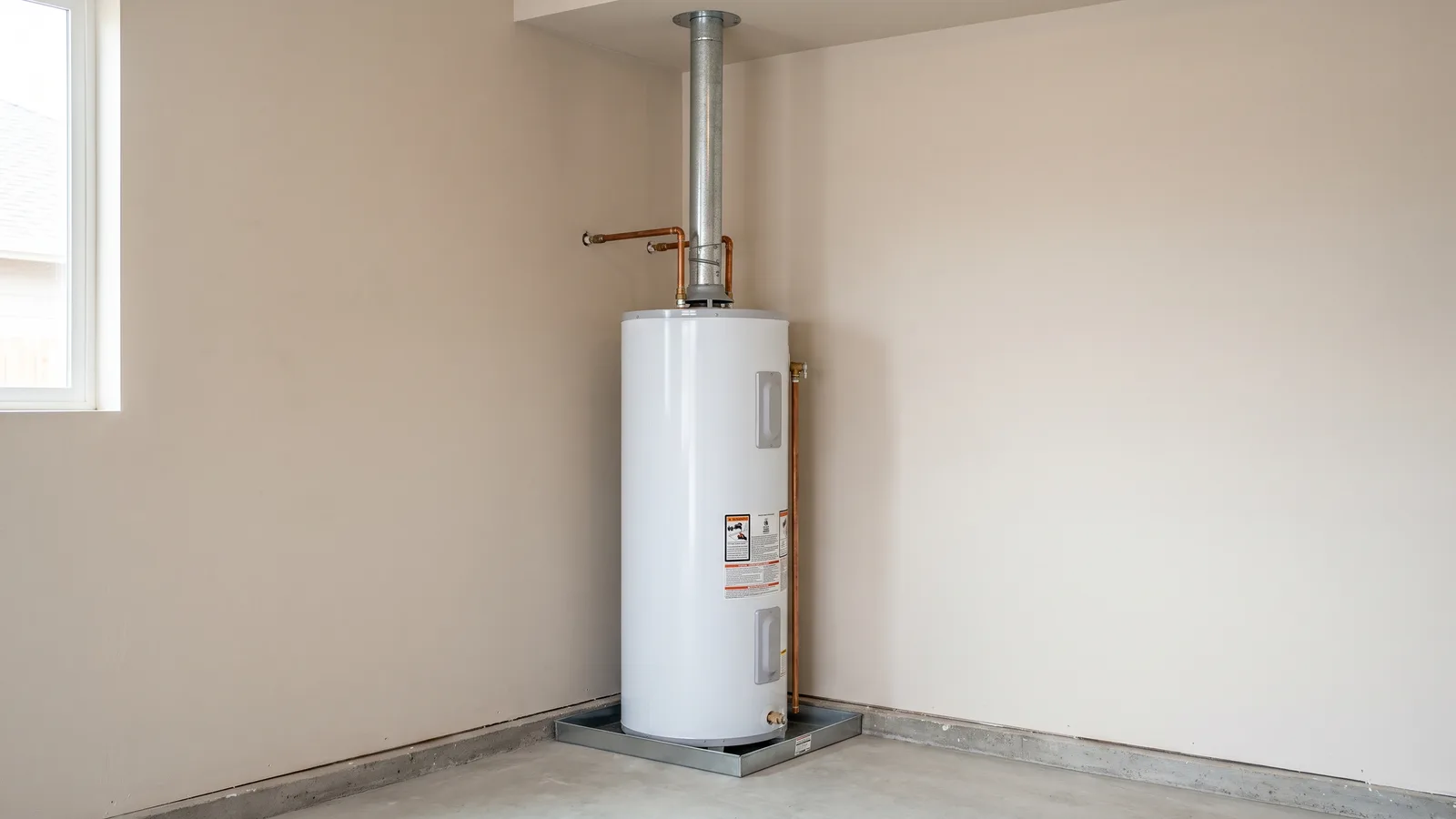
In North Carolina, replacing a water heater can be done without a permit, but only inside a narrow exception written into NCGS 160D-1110, and only when a licensed tradesperson does the work. There is no do-it-yourself version of this exception. If any part of the swap changes the fuel, the location, the capacity or the venting, the exception closes and you need a permit.
Key takeaways
-
North Carolina law generally requires a permit before installing, extending or generally repairing any plumbing system, under NCGS 160D-1110(a)(2).
-
A replacement water heater is excepted in a one- or two-family dwelling only if a person licensed under NCGS 87-21 performs the work, personally examines it at completion, and ensures a leak test has been performed on the gas piping.
-
The exception also requires no increase in energy use rate or thermal input, and no change in fuel, energy source, location, capacity, or the routing or sizing of venting and piping.
-
Connecting an existing branch circuit to a replacement electric water heater is separately excepted under NCGS 160D-1110(a)(4), but only if the new unit is in the same location with the same or less capacity and electrical rating, and the work is done by someone licensed under NCGS 87-43.
-
Because every version of this exception requires a licensed tradesperson, a homeowner doing their own water heater swap does not qualify for it.
-
Do I need a permit to replace a water heater in North Carolina
Do I need a permit to replace a water heater in North Carolina
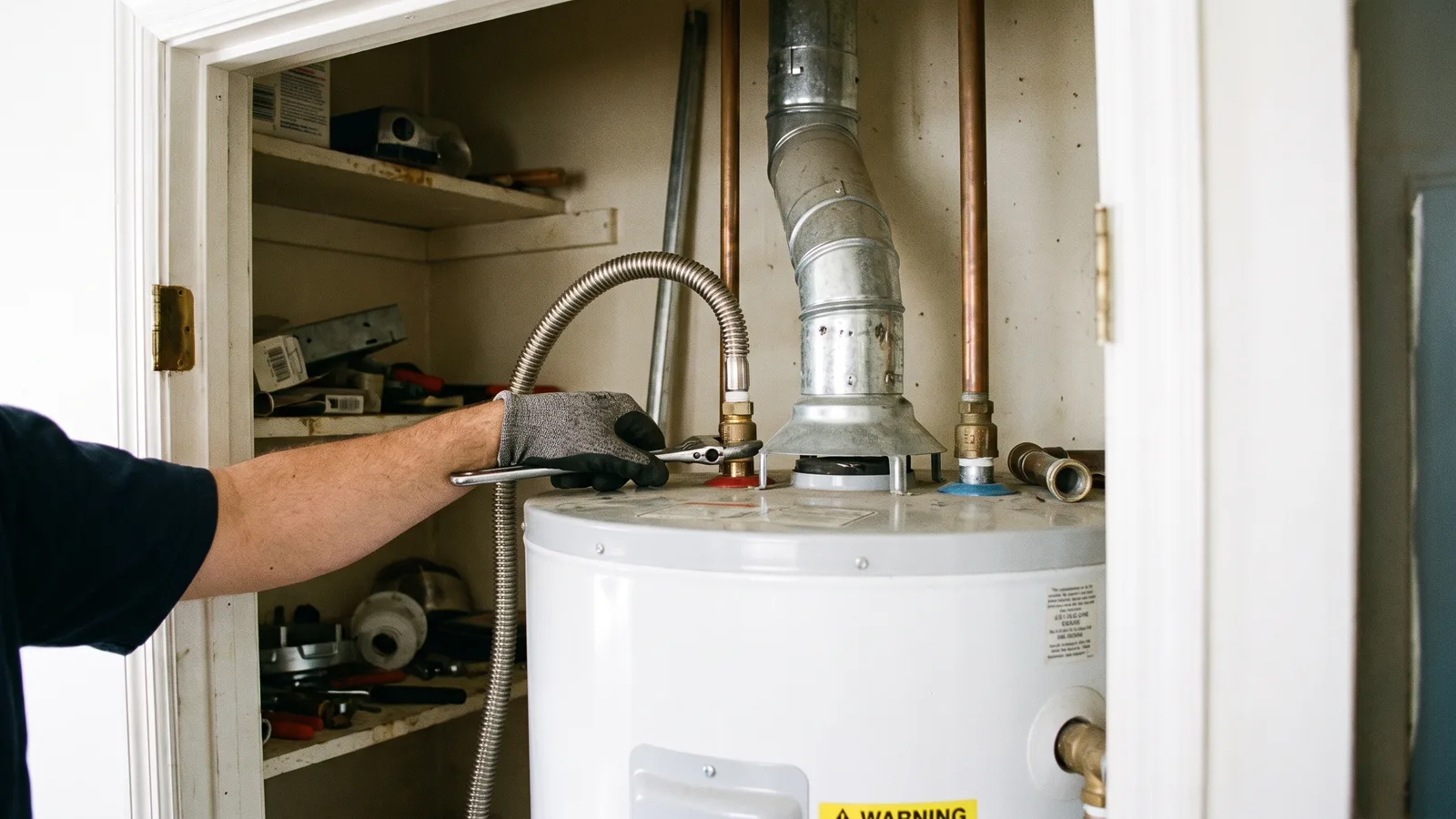
Usually no, if a licensed plumbing contractor does a like-for-like replacement in a one- or two-family dwelling. The permit requirement in NCGS 160D-1110(a)(2) covers the installation, extension or general repair of any plumbing system, and then carves out water heater replacement under specific conditions.
The carve-out is the whole story, so read it as a checklist rather than as permission. Every condition has to hold, and missing one puts you back to needing a permit.
What the replacement exception actually requires
The statute sets two groups of conditions, and both must be satisfied.
On the work itself, the person doing it must be licensed under NCGS 87-21, must personally examine the work at completion, and must ensure that a leak test has been performed on the gas piping.
On the equipment, the energy use rate or thermal input must not be greater than that of the water heater being replaced, and there must be no change in fuel, energy source, location, capacity, or the routing or sizing of venting and piping. The replacement must also be installed in accordance with the current edition of the North Carolina State Building Code.
| Situation | Permit needed |
|---|---|
| Licensed plumber swaps a 40 gallon gas unit for another 40 gallon gas unit in the same spot | No, exception applies |
| You move the heater from the garage to a utility closet | Yes, location changed |
| You go from a 40 gallon to a 75 gallon unit | Yes, capacity changed |
| You switch from gas to electric, or electric to gas | Yes, fuel changed |
| You replace a tank unit with a tankless unit | Yes, venting and piping change |
| You do the work yourself | Yes, no licensed installer means no exception |
Does a tankless conversion need a permit
Yes, essentially always. A tankless water heater changes the thermal input and almost always changes the routing and sizing of venting and gas piping, and often the electrical supply as well. Every one of those is a condition the exception requires you not to change.
Homeowners get caught here because a tankless swap feels like a replacement. Legally it is a new installation, and it is one of the more common sources of an open or missing permit discovered during a later home sale.
What about the electrical side of an electric water heater
There is a matching exception for the wiring, and it is just as narrow. NCGS 160D-1110(a)(4) generally requires a permit for the installation, extension, alteration or general repair of any electrical wiring, devices, appliances or equipment. In a one- or two-family dwelling, connecting an existing branch circuit to a replacement electric water heater is excepted if all of the following hold: the replacement is in the same location and of the same or less capacity and electrical rating as the original, the work is performed by a person licensed under NCGS 87-43, and the installation meets the current North Carolina State Building Code including the North Carolina Electrical Code.
Note the direction of that condition. Same or less capacity and electrical rating. Upsizing the unit or its circuit is not covered.
Can I replace my own water heater without a permit
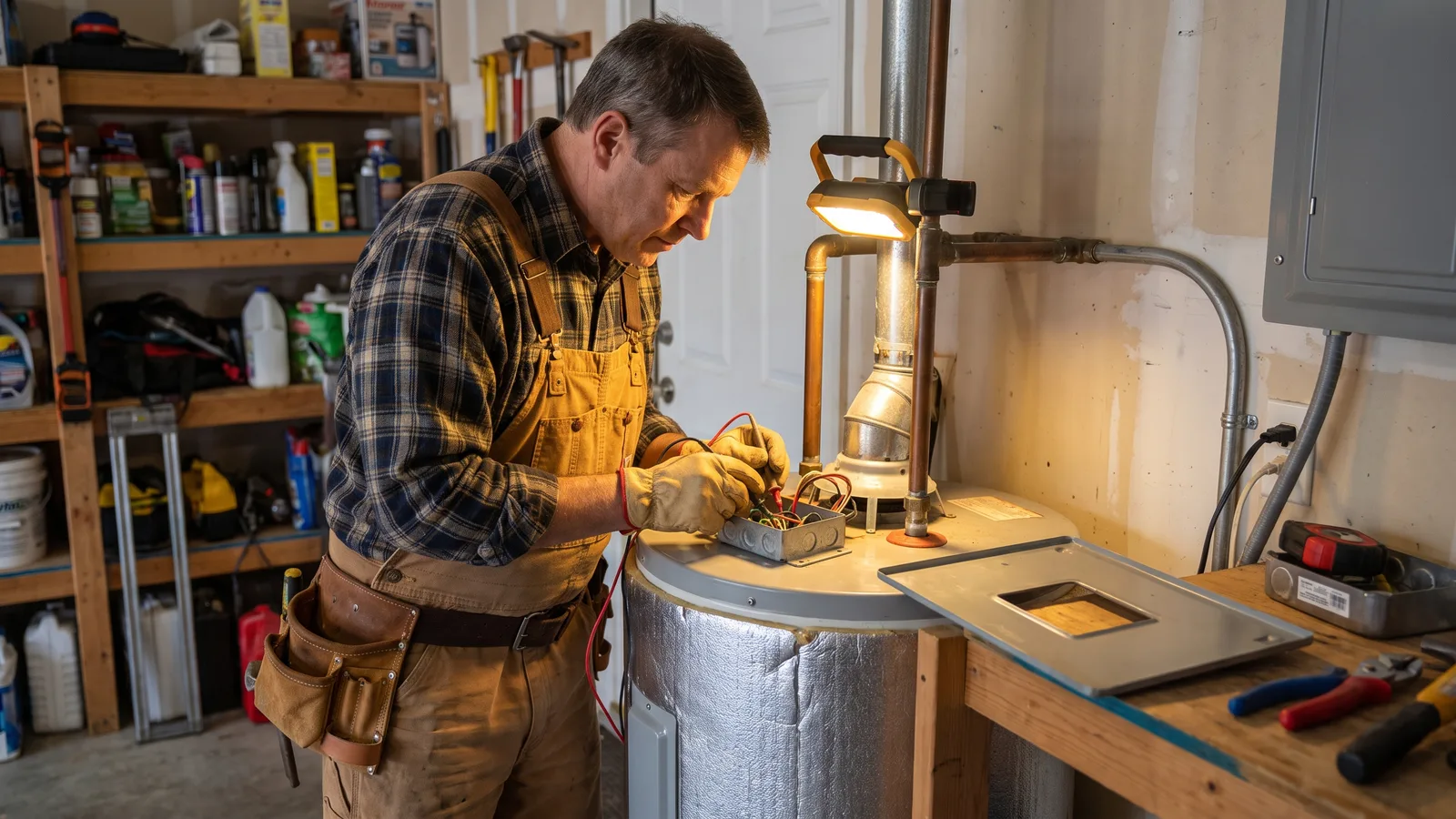
You can do your own work as a homeowner in many contexts, but you cannot use this exception to skip the permit while doing so. Both the plumbing and the electrical exception are written around a licensed person performing and examining the work. Remove the licensed person and the condition fails.
That is the most misread point about North Carolina water heater rules. The exception exists to spare a licensed contractor a paperwork trip on a routine swap, not to open a do-it-yourself lane.
If you plan to do the work yourself, treat it as permitted work, apply to your local building department, and get it inspected. Our free permit checker will tell you what your specific jurisdiction requires.
Why this is worth getting right
An unpermitted water heater is cheap to fix now and a genuine problem later. Missing permits surface during a sale, during an insurance claim after water damage, and during any future permit application on the same property. A gas unit with no documented leak test is a safety question, not just a paperwork one. Permitting it costs a modest fee and one inspection. Correcting it later costs an after-the-fact permit, possible exposure of the installation, and a delay at the worst moment.
Our take: read the exception as a list of things you must not change, not as a general permission. If a plumber licensed under 87-21 is doing a true like-for-like swap in the same spot, you are fine. In every other version of this project, pull the permit and stop thinking about it.
What to do next
- Write down what is actually changing: fuel, capacity, location, venting, piping and electrical rating.
- If anything on that list changes, plan on a permit.
- If nothing changes, confirm your installer is licensed under NCGS 87-21 for plumbing work or NCGS 87-43 for the electrical connection, and ask them to confirm the leak test on gas piping.
- Check your own jurisdiction's rules, since local departments can require more. Start from the North Carolina coverage page or run the free checker.
- Keep the invoice and any inspection record with your house documents.
Related reading: the North Carolina permit overview covers what needs a permit across all project types, and the water heater project page shows the documents and inspections typically involved in your area.